Apple to the core

Pismo
The elder statesman among computers in the DogHaus: a 500 MHz G3 "Pismo" PowerBook, circa 2000.

Steve Jobs made my life a whole lot easier.

Back in the day, when I was still full-time at The New Mexican and free-lancing cartoons and the occasional race report to VeloNews, it was all about hard copy. I’d FedEx the ’toons and fax the stories.

It was an imperfect system. VN was supposed to return my original art, but often did not, and a whole bunch of original work got lost during an office cleanup that shall forever live in infamy.

Then I got a Mac SE, a Hayes 1200-baud modem and accounts with AOL and CompuServe. Holy Mary, Mother of God — que milagro!

Suddenly we stringers could upload copy directly to the VeloNews BBS. ’Toons and photos still had to take the long way to press, but that would change, too, with the advent of more powerful Macs, faster modems and digital scanners. That little old country lane called the Internet suddenly was the Infobahn, and shipping a 1MB ’toon was no more difficult than sending an e-mail. Steve Jobs didn’t invent the World Wide Web, but he sure made it easy to navigate.
Little Al
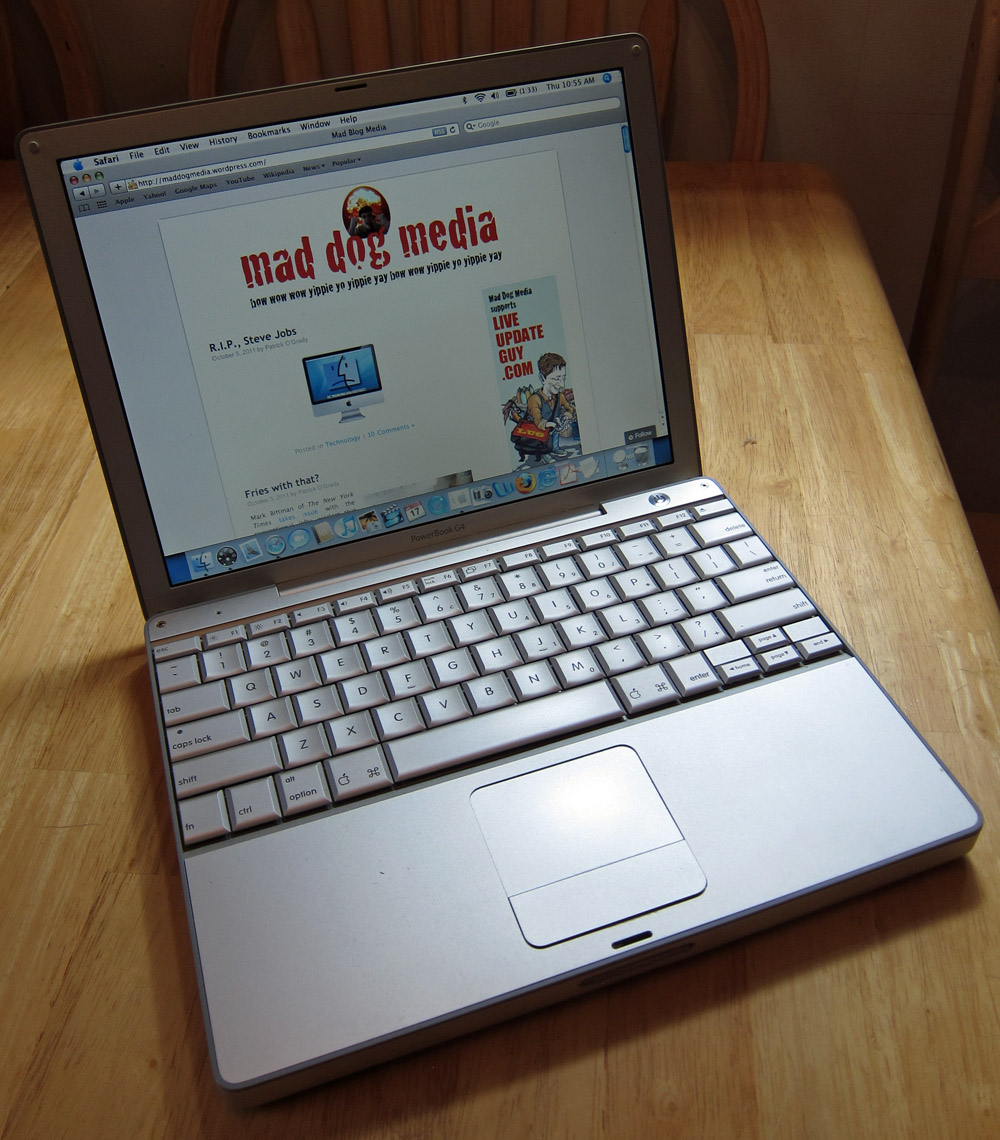
The 12-inch 1.5 GHz G4 PowerBook was the ultimate in MacPortability until the MacBook Air came along.

Two decades later I can look around my home office and see multiple examples of Steve Jobs’ vision come to life. I’m posting this on a 21.5-inch 3.06 GHz Intel Core 2 Duo iMac. On my drawing board sits an iPhone 3GS, charging. Next to the board squats a hot-rodded G4 AGP Graphics Power Mac that I use to digitize ’toons and store stuff. Behind me is a venerable G3 500 MHz “Pismo” Powerbook, one of my all-time favorite laptops.

In the living room you’ll find a 2.66 GHz Mini delivering streaming video to our TV, along with a 12-inch G4 1.5 GHz Powerbook and two MacBooks — my black 2006 Intel Core Duo and Herself’s white 2007 Intel Core Duo 2. My iPad 2 is in there, too. Herself’s is downstairs. Our iPod Touches are in the bedroom.

Last but not least, somewhere around here is a 12-inch G3 800 MHz iBook — it was my kitchen computer for a while until Herself spirited it away (she despises clutter).

MacBook
My primary road machine is a first-gen' Intel MacBook — like everything else around here, it's a little long in the tooth but still gets the job done.

And you know what? They all work, every last one of them. Burglars could clean me out of everything save the Pismo and I could still earn my little bit of living with that elderly laptop. Hell, the second Mac I ever owned, a Quadra 650, still worked when I finally caved to the anti-clutter lobby and sent it off for recycling last year.

“But Patrick,” you say, “you could have done your business on Windows machines just as easily.” Maybe so, but I doubt it.

Macs were made for people like me, non-geeks who wanted to think about the work, not the tool. The Apple GUI has always been simple and intuitive, and the hardware reliable and fairly simple to work on if you decided that you just had to peek under the hood.

Plus I always found Apple’s industrial design more pleasing to the eye. Windows machines looked cheap, mass-produced and blocky, like Soviet-era apartment buildings. Apple’s devices had graceful, swooping lines, odd color schemes and that cheery “Happy Mac” that once appeared at bootup but preceded its creator in death a while back.

Maybe that’s why I have such a hard time parting with them.

But I notice there are about 15 bikes in the garage and a half-dozen Canon cameras lying around the house, and it wasn’t all that long ago that there were four Toyota trucks parked in my driveway. So maybe I’m just a hoarder.

Fries with that?

Posole
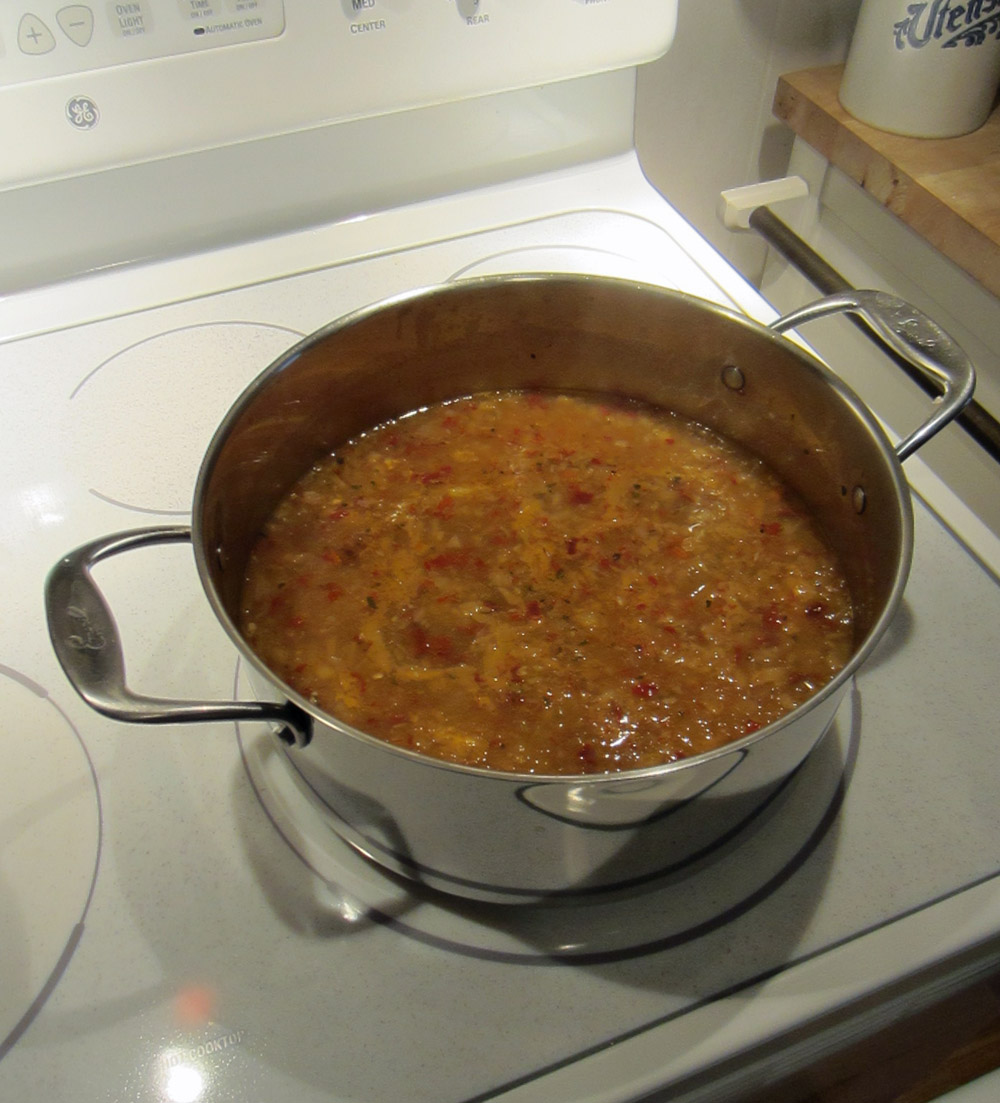
A pot of posole simmering at Chez Dog. Soups and stews were the first dishes I ever tackled, and they remain a favorite because of their relative simplicity of preparation and quantity of leftovers.

Mark Bittman of The New York Times takes issue with the conventional lefty wisdom that fast food is cheaper than home-cooked meals for cash-strapped families. Meanwhile, Tom Philpott of Mother Jones takes issue with Bittman’s taking issue, noting that he failed to consider the cost of labor in planning, shopping, cooking and cleaning up after a meal for four.

And labor it is, as any amateur hash-slinger will tell you. Cooking is something you must want to do in a society where underpaid people in paper hats hurl greasy feedlot meat and potatoes at you as you drive past from home to work and back again. We have TV to watch, goddamnit — we don’t have time for all that grub-rasslin’. Chaz Bono is on “Dancing With the Stars,” f’chrissakes!

I mostly want to cook, but I also have plenty of free time, being a professional unemployable whose tenuous grip on three part-time jobs depends upon my co-workers rarely having to deal with me in person.

And there was a time when I didn’t want to cook, mostly because I didn’t know how — nobody had ever taught me. When I was a kid, food showed up three times daily as if by magic. In college there were cafeterias. As a young journo’ I patronized restaurants, cadged meals from married colleagues or reheated ghastly frozen dinners.

I don’t recall the impetus, but eventually I taught myself to cook a few basic dishes — mostly soups and stews, one-pot meals that would have plenty of leftovers. I’ve branched out a bit over the years, tackling American, Asian, Italian, French and Mexican dishes, but my cookery remains fairly simple.

And yet even I sometimes find the process too laborious for words.

Now, granted, I tend to overdo. I roam all around town collecting mostly organic ingredients from Whole Foods, Ranch Foods Direct, Mountain Mama and Savory Spice Shop, occasionally scoring specialty items from the Santa Fe School of Cooking, Asia Pacific Market, the Colorado Farm & Art Market or Spencer’s Gardens.

I’ve acquired enough stainless pots and pans, cast-iron Dutch ovens, rice cookers, food processors, knives and cookbooks to open a very small and ultimately unsuccessful restaurant.

And I spend hours scouring the Innertubes for tasty treats like those served up in Martha Rose Shulman‘s New York Times column, Recipes for Health.

Thus, when sloth overcame me last evening I didn’t waddle out to the car for a quick trip to Mickey D’s. Instead, I consulted my refrigerator and pantry, then whipped up a simple Shulman dish — sautéed spinach with mushrooms — poured it over some al dente fusilli and sprinkled the lot with Parmigiano-Reggiano.

Now there’s a happy meal for you.

The 24 Hours of Colorado Springs

Clydesdale coming!
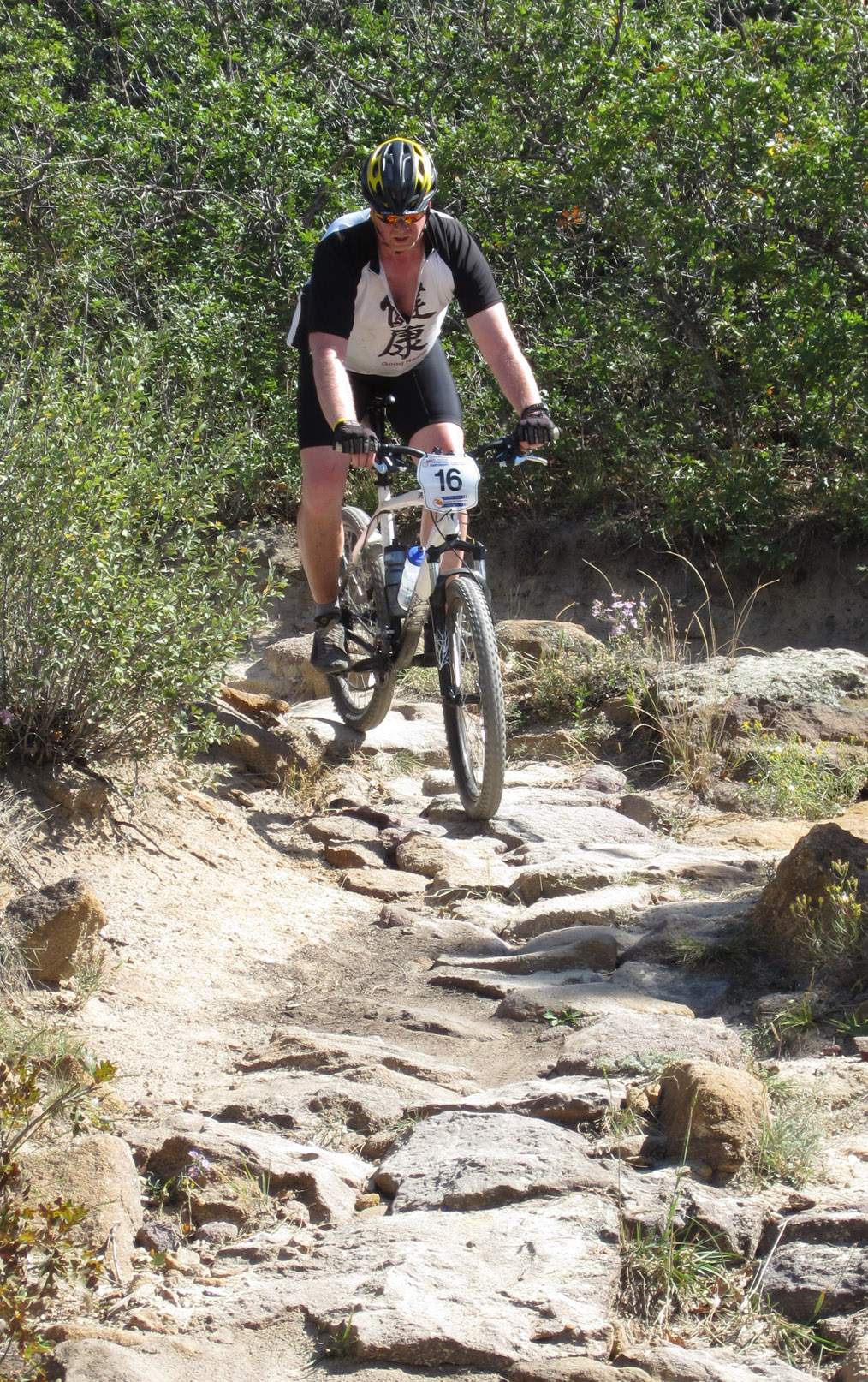
One of my people, a Gravitationally Challenged-American, tackles a bit of the ol' bouncy-bouncy.

Between bouts of working for The Man today I rolled over to Palmer Park to check out the 24 Hours of Colorado Springs, otherwise known as the USA Cycling 24-Hour Mountain Bike National Championships.

I couldn’t stay long, and I didn’t see much. Frankly, it didn’t look like there was much going on for an event that supposedly attracted more than 200 riders. But it is a 13.5-mile course with a shitload of technical bits, and I suppose folks could get spread out a bit. I’ve certainly found myself spread out more than once while riding Palmer Park.

I took a couple of snaps of riders descending a nice rocky bit near Austin Bluffs Parkway and Union Boulevard, but decided to spare one weary-looking woman the paparazzo treatment after she dismounted to gingerly walk the descent, saw me and my camera, and moaned: “Oh, man, don’t take a picture of me walking my bike. That’s just cruel.”