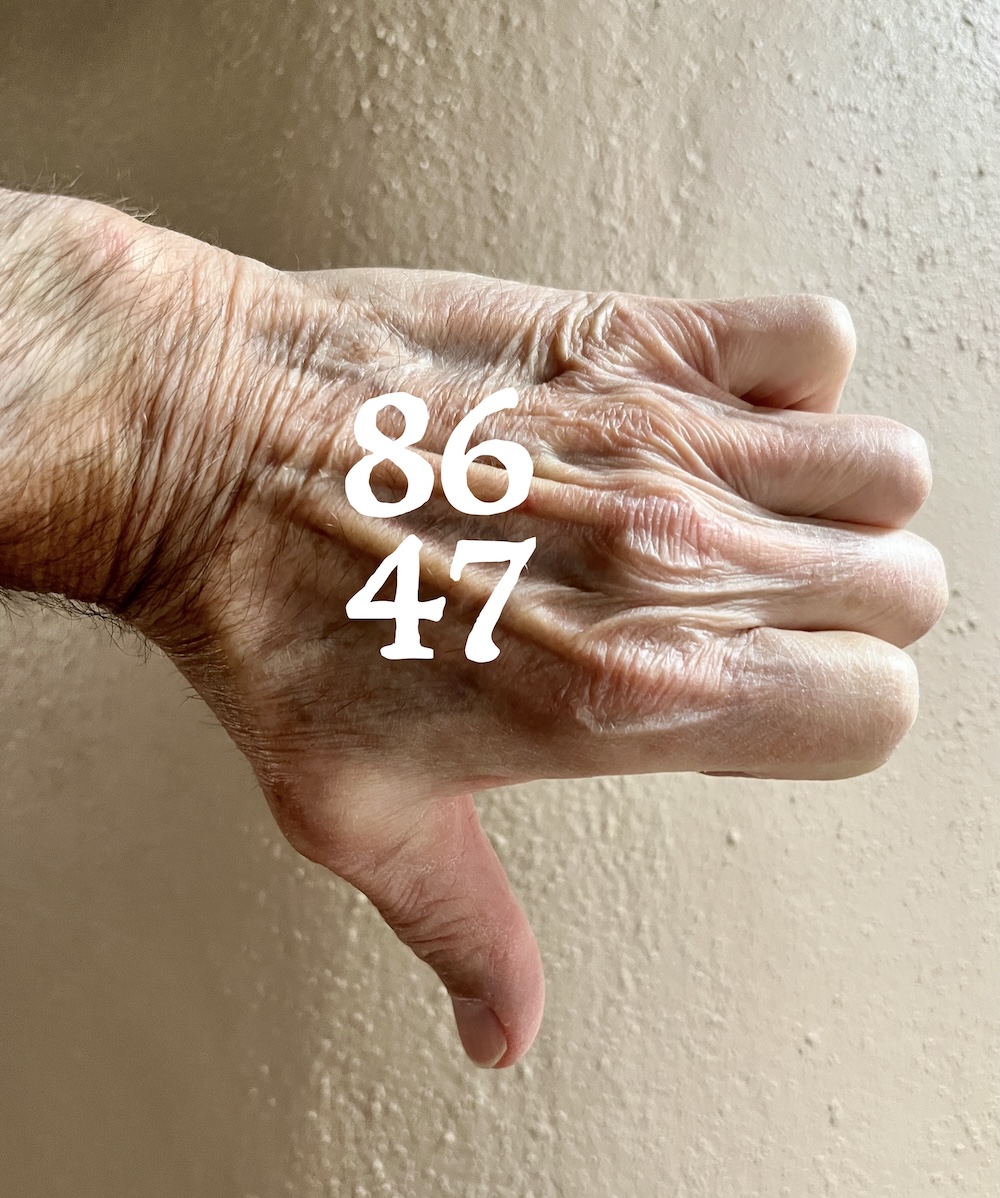
It’s -30- for Jim Lehrer, co-founder of “The MacNeil-Lehrer NewsHour” on PBS.
Lehrer started out as a print guy, and maybe that’s why I liked him. He worked for papers in Dallas, where he covered the assassination of John F. Kennedy, and then shifted to TV, where he and Robert MacNeil were all over the Watergate hearings. He went on to moderate a dozen presidential debates.
MacNeil praised Lehrer for his “very direct manner of interviewing” and his “extraordinary ability to listen.”
“You know the hardest thing to do on TV is listen,” he added.
Sometimes the hardest thing is to watch, especially given the motley crew of talking heads that fills screens these days. Unlike the bulk of them, Jim Lehrer will be missed. You can read his obit in The New York Timeshere.
One of our family jokes is, “’Ee’s not the Messiah, ’ee’s a very naughty boy!”
That was only one of the innumerable killer lines delivered over the years by Terry Jones, who died at home Tuesday. He was 77, and had suffered from primary progressive aphasia, a cruel disease that stripped him of his marvelous powers of communication.
As a member of Monty Python’s Flying Circus, Jones generally wrote with Michael Palin, co-directed “Holy Grail” and “Meaning of Life” with Terry Gilliam, and flew solo as director for “Life of Brian,” which gave us that family gag we use so often.
Condolences, peace, and egg and spam; egg bacon and spam; egg bacon sausage and spam; spam bacon sausage and spam; spam egg spam spam bacon and spam; spam sausage spam spam bacon spam tomato and spam, or Lobster Thermidor au Crevette with a Mornay sauce served in a Provençale manner with shallots and aubergines garnished with truffle pâté, brandy and with a fried egg on top, and spam, to Jones, his family, the surviving Pythons (“Two down*, four to go,” notes John Cleese), and their friends and fans.
* Cleese forgot to count the Seventh Python, Neil Innes. No spam for him.
William Greider went west on Christmas. He was 83.
His résumé was impressive, and eclectic. The Washington Post. Rolling Stone. The Nation. He found out where the bodies were buried, and he dug them up.
He worked with Hunter S. Thompson, and spoke kindly of him when the gonzo chieftain passed. And The Nation‘s John Nichols did likewise for Greider, noting:
I knew Bill as a quick-witted comrade in the press corps of too many campaigns to count, a generous mentor, an ideological compatriot, and an occasional co-conspirator. He taught me to see politics not as the game that TV pundits discuss but as a high-stakes struggle for power in which the Democrats foolishly, and then dangerously, yielded far too much ground to increasingly right-wing Republicans. … He wrote truthfully, boldly, consistently, without fear or favor, and without the empty partisanships of these awkward times. He was our North Star.
My old paperback copy of “Close Quarters” has taken a beating from reading and re-reading.
Goddamn, this is turning out to be an ugly day.
Larry Heinemann, who was the surprise winner of the National Book Award for fiction in 1987, died Dec. 11 in Texas. He was 75.
Heinemann won the award for “Paco’s Story,” but I read his 1977 novel “Close Quarters” first, and it is one of the best Vietnam War stories out there. Not a pretty story, but it was not a pretty war. None of them is. It was one of the books that made me glad I missed the party.
He did his year in an infantry battalion, then came home, went to school, and started writing.
“I was not one of those guys who got home and went to their room and shut up,” he told The Los Angeles Times in 1988. “I know guys who the war’s been eating up for 20 years. Anybody who asked me about it, I told them. I shot my mouth off about everything — the whorehouses, the endless hatred, the ugliness, the real work of the war. It took two to three years of talking to get the story out.”
Heinemann got more of the story out later, in a memoir, “Black Virgin Mountain: A Return to Vietnam.” His hometown paper wrote about it, and him, even including an excerpt.
Upon his return from Vietnam, he wrote:
I felt joyless and old, physically and spiritually exhausted, mean and grateful and uncommonly sad; relieved as if a stone had been lifted from my heart and radicalized beyond my own severely thinned patience: pissed off and ground down by a bottomless grief that I could not right then begin to express.
So, still sore and raw from the war I began writing.