
The next time you think to yourself, “What can one person do?” remember Nelson Mandela.
The next time you think to yourself, “What can one person do?” remember Nelson Mandela.
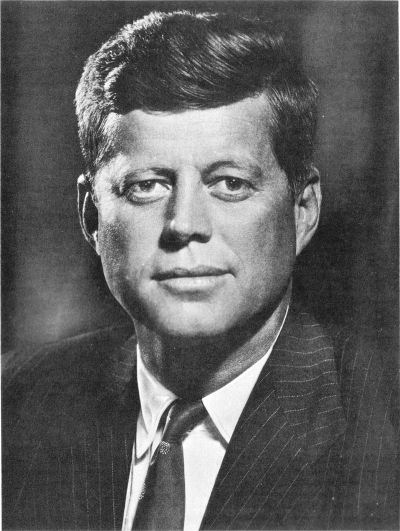
Nov. 22, 1963, may have been the day when I first realized that all was not as it seemed.
I was sitting in front of my fifth-grade class at Randolph AFB outside San Antonio, reading aloud to the other kids (yes, even at age 9 I had the mellifluous speaking voice we have all come to know and love), when The Authorities announced via loudspeaker that President John Fitzgerald Kennedy had been shot in Dallas.
That was it for school. Stunned, confused, we trudged home and, with the rest of the world, watched on TV as the young president was buried and Vice President Lyndon Baines Johnson sworn in to replace him.
Yeah, right. Replace Jack Kennedy. Like that could ever happen.
Forget everything you’ve learned about him since. For a 9-year-old Irish-American, JFK was as good as it got. Like my old man, he’d been in the war; like me, JFK was a swimmer. “PT 109” sailed well ahead of “The Ten Commandments” in my personal mythology, and “Profiles in Courage” may have been the first work of non-fiction that I ever read.
JFK wasn’t some baldheaded old warhorse like President Eisenhower, or a sweaty, shifty-eyed rodent like Richard M. Nixon — he was young, and brash, and when he went eyeball to eyeball with the Commies, guess who blinked first? Nikita Khrushchev and Fidel Castro, that’s who. Made it a little easier to crouch under the desk during duck-and-cover drills, knowing that Jack had our back.
Then, in a wink of an eye, he was dead. Gone. And some jug-eared Texican was calling himself the president. LBJ used Randolph as a landing strip whenever he had a hankerin’ to visit the ranch, and we went to see him a time or two, but it felt like bullshit to me. This guy was the president? Says fuckin’ who?
In the October-November issue of AARP The Magazine, Bob Schieffer recalls covering the assassination as night police reporter for the Fort Worth Star-Telegram. He likens the transition from Eisenhower to Kennedy to a key scene in “The Wizard of Oz.”
Remember how the movie started out in black-and-white, and then Dorothy opens her front door into this vibrant Technicolor? That’s how I think of the Kennedy administration. He brought style and grace, and inspired a generation to do something for their country.
I’ll carry that a step further. The assassination of John F. Kennedy revealed to some of us, for the first time, that there is a man behind the curtain, a shadowy, furtive figure that warrants our close and undivided attention, no matter what the Wizard says up front.
And while the Wizard loves to work his magic in rich, warm colors, the world often shows itself to us most truly in stark black and white.
• Editor’s note: As you might expect, Charles P. Pierce has some thoughts on this subject, too.

It’s hard to believe that it’s been four years since Marvin J. Berkman packed up his guitar for the final time and took his music elsewhere.
Marv’ and his sweetheart Judy were the best neighbors anyone could ask for, so when he passed on, and Judy decided to move away to be closer to family, we decided to buy the house they lived in. Just couldn’t bear the thought of some stranger getting the place.
I’m no mystic, but I like to think that one of the reasons our guests enjoy their stays at the House Back East™ so much is that some small part of the old saloon musician hung around after closing time to play a quiet encore, help them feel at home.
Good night and joy be with you all.
Ed Quillen left the party way too early.
Every time some greedhead with a talent for skinning the rubes floats a Barnumesque balloon full of canned farts and damned little else, I miss Ed and his quiver of curmudgeonly arrows.
Here’s one Ed aimed at tourism back in 1993:
“Tourism is the biggest industry in the world, and apparently it functions like any other industry — if there’s a conflict between telling the truth and making money, so much the worse for the truth.”
Writing of the perils of “health-care rationing” in 1994, Ed said:
“Here’s some news for our protectors in the U.S. Senate — unlike you, with your excellent, government-funded health plan that covers everything, most of us already have rationed health care. It’s rationed by what we can afford, or by how much our insurance companies will pay.”
And in discussing a plan to raise Colorado’s gas tax by a nickel per gallon back in 1987, Ed said the only problem he had with the concept was that it was about $9.95 short of what was needed.
A gas tax of $10 per gallon, he argued, would reduce street crime, air pollution and penny-ante tourism while giving a boost to carpooling, public transportation, cycling, walking, and something called “telecommuting,” which he confided was “how this column gets from Salida to Denver.”
“Raising the tax won’t even be a good start, though,” Ed concluded. “Get it up to $10 a gallon, and see how Colorado prospers while becoming a vastly better place to live.”
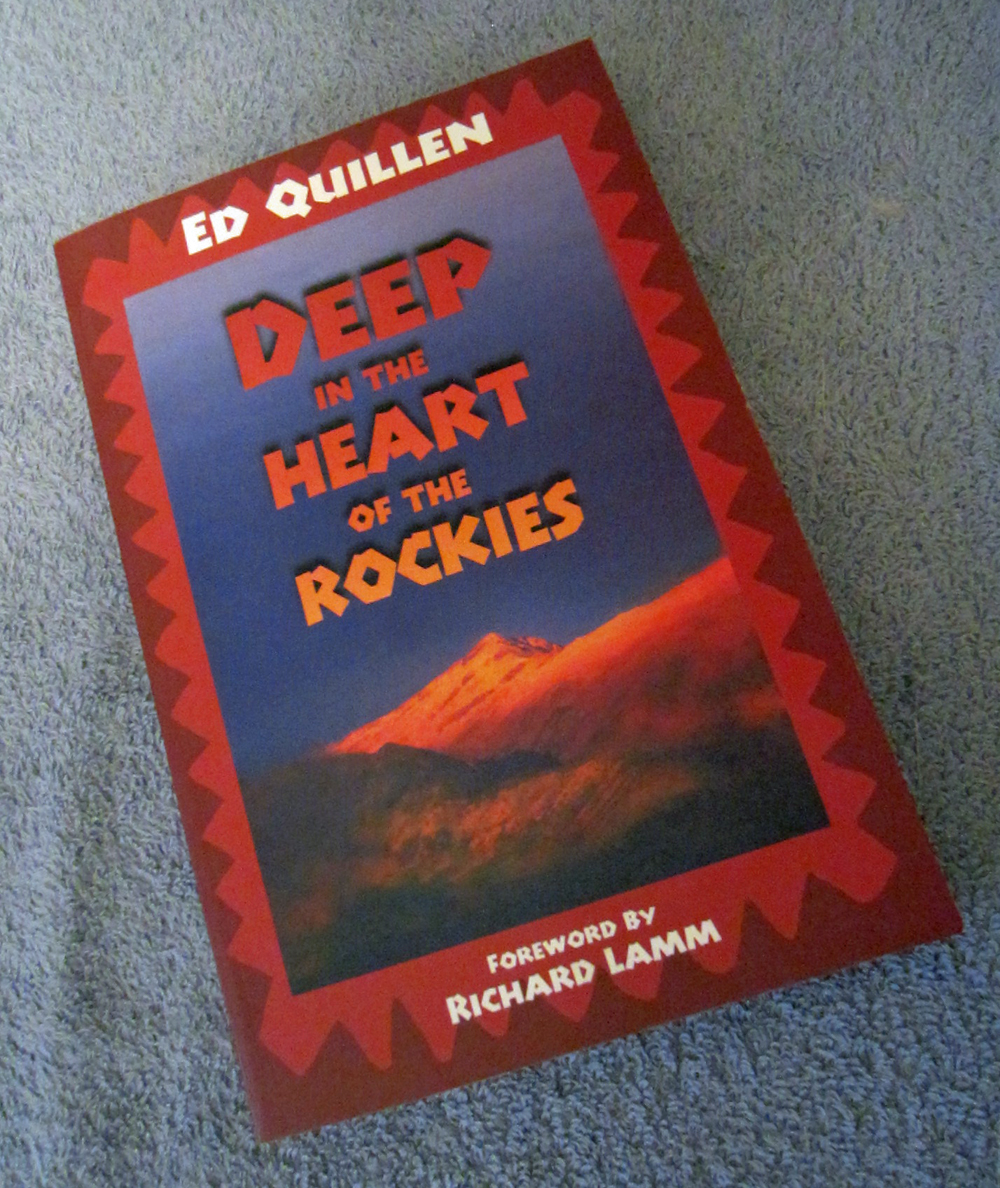
All these examples of Ed’s savvy come from his Denver Post columns circa 1985-98, compiled in the 1998 book “Deep In the Heart of the Rockies.”
Ed left us last year, but his words remain. And a new collection of Ed’s work from 1999 to 2012 is being assembled by daughter Abby Quillen, along with her husband, Aaron Thomas, Ed’s friend and colleague Allen Best, and friend of the DogS(h)ite Hal Walter of Hardscrabble Times, among others.
The book is a Kickstarter project, and if they don’t raise the minimum funds needed (a pittance of $5,500), the book won’t happen. I think it’s a thing worth doing, and have kicked in a couple of bucks.
Abby hopes to use the proceeds to fund a memorial bench, and perhaps a scholarship in Ed’s name for students interested in journalism or Colorado history.
But perhaps the best memorial to Ed would be the book itself, a reminder that the smart guys will not always be around to slap the hands of the hucksters trying to pick our pockets, or worse, and that we will have to start paying attention and raising a ruckus on our own behalf.

Mostly when the phone rings, I let it go to voicemail. There’s usually a robot on the other end, selling something, and reading it the riot act — to wit, Isaac Asimov’s Second Law of Robotics — is every bit as effective as shouting at the television.
But on Monday, I picked up, having recognized the name on the Caller ID. And that’s how I learned that our friend Ken Stauffer had died.
Ken and his family settled in the neighborhood before we got here, just across the street from the house we eventually bought. We shouldn’t have gotten along, I suppose. Left and right rarely do these days, and the Stauffers and O’Gradys would never have the same political signs decorating their respective yards come election season.
So what? The Stauffers were the sort of conservatives who put many a so-called progressive to shame. James 2:17 types who rarely talked the talk but walked the walk, Ken and his wife, Ellen, worked hard, lent a hand to those less fortunate than themselves, and raised three of the most interesting children I’ve ever met. Scott, Will and Margaret were neither intimidated by nor contemptuous of their elders, and in our years across the street we watched them blossom into fine adults.
We’d shoot the breeze and share a laugh in the street, break bread and tip a glass from time to time, enjoy all those little interactions that make a neighborhood more than a collection of boxes with roofs on them.
When the kids grew up and began scattering — Scott to the Army, Will and Margaret to college — Ken found a new job in Atlanta, and he and Ellen moved away.
The four of us went to dinner before they left for Georgia. It was the last time we would see Ken. His death at age 50 stunned his old neighborhood, where he is remembered as a dedicated runner and occasional bicycle commuter; a husky guy with a hearty laugh, who enjoyed jumping out of perfectly serviceable airplanes while attending the U.S. Air Force Academy; a “boyfriend” who perked up the little old ladies with his visits to the gym; and a devoted father who hoped his children would find lives they loved, as he loved his.
I spoke with Scott on Monday, and he was bearing the weight as best he could. He said the family had gathered around Ellen in Atlanta, and that he planned to write his father’s obituary, as I did for mine. Shortly afterward, on his Facebook page, he posted a photo of Ken helping Will get all dolled up for his wedding earlier this year.
“This is how I want to remember my father,” wrote Scott. “At his best, taking care of the people he loved. Thank you for all you did for us, Dad.”
 Mad Blog Media