R.I.P., George Gladney

My old mentor George Gladney.
Photo uwyo.edu

George Gladney has gone west.

You won’t know the name, unless you worked with him or read him at the Los Angeles Times, the Colorado Springs Sun, the Gazette Telegraph, The Denver Post, or the Jackson Hole News, or studied under him at the University of Wyoming in Laramie.

But George stands tall in my personal history. He was one of the people who showed me by word and deed that there was a place in the newspaper game even for those of us who were a bubble or two off plumb.

When I got hired as a copy boy at the Colorado Springs Sun I was at loose ends following a brief tour of the dead-end gigs available to a dropout from a third-rate college. George was the police reporter, as I recall, and came to the Sun from the L.A. paper.

Back in 1974 the newsroom was stiff with talent, the best possible haven for a wannabe cartoonist shambling out of his teens into nowhere special if he didn’t pull his hairy head out of his hippie arse.

Bill Woestendiek and his wife, Kay, ran the outfit, sister paper to the Las Vegas Sun in Sin City. Carl Miller, who would move on to helm The Denver Post, was city editor. Bill Buzenberg, who would rise to veep of news at National Public Radio, was his assistant and an investigative reporter.

Bill McBean, another reporter, would abandon his typewriter for a paper route, claiming afterward that he made more money from delivering the Sun than he ever did writing for it. That didn’t last; he eventually got back on the scribbler’s horse in Denver, at the Post.

I was an actual scribbler; a cartoonist, or so I thought. But an adviser at Adams State College had told me just how few full-time, paid editorial cartoonists there were in the country and suggested that I cast a wider loop, maybe consider taking a reporter’s job as my entrée, a foot in the door.

Well, there I was, with both feet in and my dumb ass for company. Not a reporter; just a copy boy. And I didn’t even have the chops for that. When Carl handed me a stack of press releases to rewrite I told him I didn’t know how to type.

“Better learn,” he replied. And I did, whenever I wasn’t stripping and sorting copy from the wire-service teletypes, running copy and art to and from composing and engraving, and doing other scutwork so real journalists didn’t have to.

I learned something from all these people, starting with typing, thanks to Carl, who also passed on some firm hints about how to write for newspapers. Bill Buzenberg let me tag along and watch him interview hookers for a piece on the massage parlors infesting Bibleburg. The Woestendieks let me sit in on the copy desk on slow nights, learning how to fit copy, size art, and write heds.

George and Bill McBean took me out for drinks, told me war stories, had me over to their houses for dinner, introduced me to their wives; I soaked up their experience like a bar rag and felt as though I had become part of a family.

When I left the Sun to go back to school, this time at the University of Northern Colorado, George told me he hoped I’d come back as a reporter. And I did. But not to the Sun — to the Gazette, the bigger of the two papers in town. Because George was there, this time on the city desk.

He helped me sneak in the back door as a contractor — a little glimpse of the future there, yeah? I compiled the annual industrial edition, drew a few cartoons, and even wrote a couple of stories before getting hired in early 1978 as a for-reals general-assignment reporter at $155 a week.

And that’s where the rubber met the road. As George’s obit notes, he was “a meticulous editor and dedicated teacher.” He was not above crumpling up your copy and tossing it back to you. (We were still working on typewriters in 1978, and other people in the newsroom could actually see it when an editor threw your copy back at you.)

After a few rounds of journalism badminton George would call me over and explain in detail, citing irrefutable examples, precisely why I was a toothless cog in the Gazette‘s well-oiled machinery. Sometimes he and his opposite number Joe Barber would tag-team me. This could be like getting tossed around the ring by Mad Dog and Butcher Vachon.

It was the school of hard knocks, for sure. But man, if you don’t get kayoed, you learn how to roll with the punches and throw a few of your own. As Carl had told me once at the Sun, “We can teach you more about newspapering in a year than you’ll learn in four at college.”

But Carl also insisted I go back to college. Once again, good advice at the precise moment it was needed. Because without that journalism degree I would not have been able to stay and learn at the Sun, or follow George to the Gazette, where I learned even more, in the company of comrades from other schools, other papers.

Sadly, I suspect Carl’s advice is no longer relevant. Back in the early Seventies, at the minor-metro papers that hired me, editors like Carl and George could spend some time breaking in the noobs. An assistant city editor would call you over to demand an act of contrition for some sin of commission or omission. A copy editor might have some thoughts about condensation and clarification. A typesetter could catch an error that had eluded everyone else and that observation would find its way back to you like a bad check.

If the error slipped past the typesetter, the page proofer, and the press check, and actually made it into print, the managing editor might want a word. This would be truly educational. Envision a very angry principal, swinging a larger “board of education.”

Even George made a few mistakes, and like good students we did too. (Actually, we did not require coaching in making these kinds of mistakes, but we were finally getting paid, and could afford to make bigger and better ones.)

This was why the list of phone numbers taped to a drawer at the city desk listed as many taverns, titty bars, alehouses, grog shops, gin mills, cantinas, and buckets o’ blood as it did home numbers. In extreme cases some expenditure of shoe leather was required, but by then we were seasoned reporters, kinda, sorta, and dogged in the pursuit of The Story, or whoever was supposed to write or edit it.

After a few years we all moved on to other opportunities, because in the newspaper game this is how you get a raise or a better job, or at least a different one. If you’re inclined to keep making some of the old mistakes or maybe acquire a few new ones, it’s also how you get a fresh nest to shit in.

George suggested I start keeping a journal, and Lord, have I ever kept ’em.

George eventually left the newsroom entirely and settled down in academia, where he could continue gently and relentlessly squeezing the dumbass out of young eejits afflicted with delusions of grandeur.

One of his students recalls: “I learned so much from that man that I still find myself quoting him and referring to him as someone who influenced my life in important and meaningful ways.”

Me too. And you as well. You probably never read George Gladney, or worked with him, or studied under him. But if you’re reading this, you are under his influence.

Because it was George who told me back in 1974 that I should start keeping a journal. And that’s just another word for “blog.”

Marching forward, looking backward

Calm down, ye amadáin, I’ve not a drop taken: That’s a Guinness 0 so.

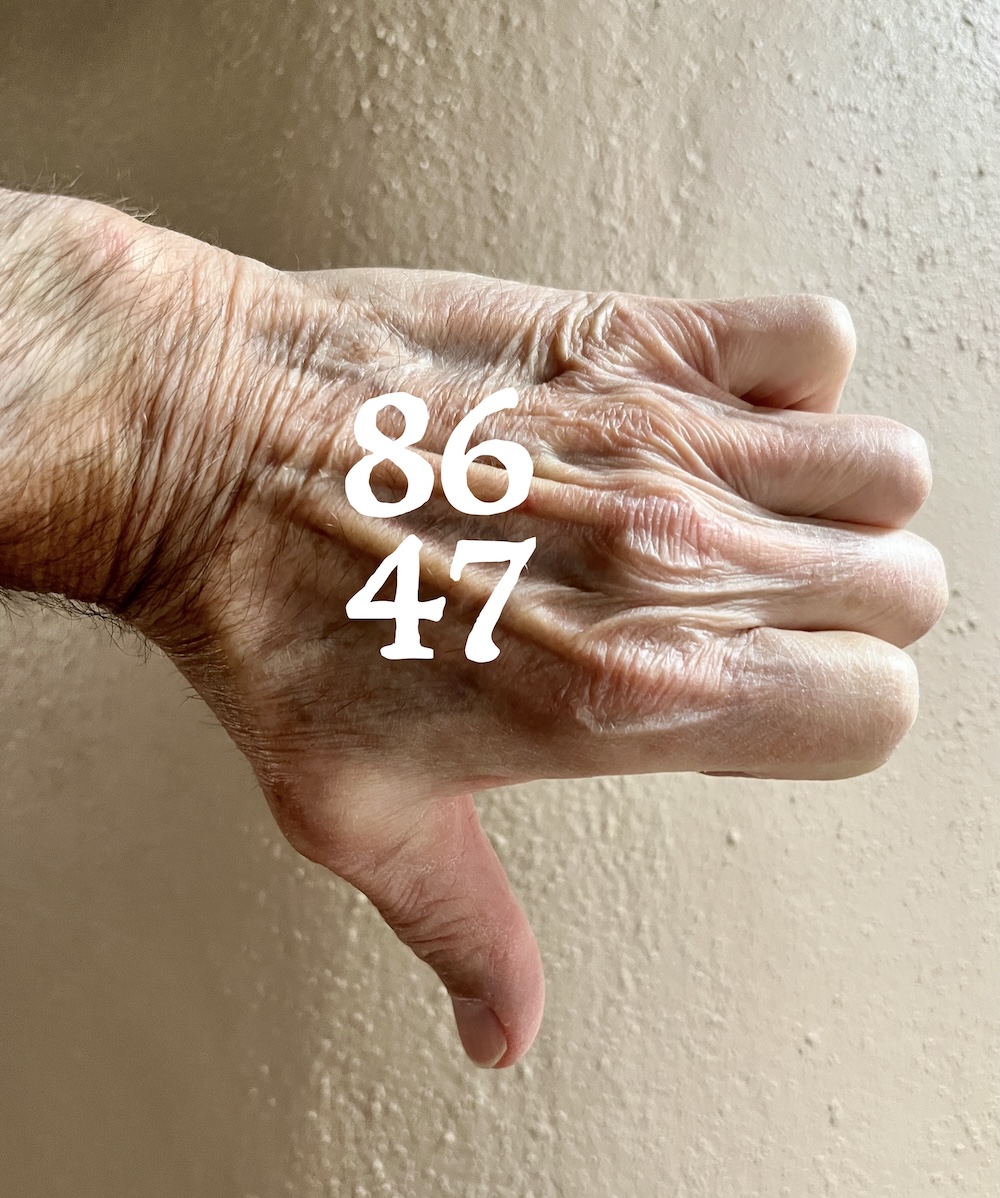
Birthdays. Some of us get overserved, others get 86’d with the cork barely out of the bottle.

Whoever’s in charge of this party seems a bit random. Can’t tell the top shelf from the well, the class from the dross. Proper ladies and gents given the shove while the most appalling tossers have the run o’ the place.

Take me, if you can bear to. Here I sit, roaring up on an age at which I had fully expected to have been stone dead for at least 39 years. Upended many an office pool I did.

“Who picked 69? 69? Well, doesn’t matter, because the bugger is still alive!”

Turn your radio on.

Meanwhile, there’s many an empty stool in this shabby shebeen. Where’d everybody go? They were all here just a minute ago. …

Herself is back east with family and friends to raise a belated parting glass to a lifelong friend carried off by COVID last fall.

I’m right here, having charge of the cat. But recently I spoke with one of my old pals, the former Live Update Guy Charles Pelkey, who has taken a few sucker punches since a cancer diagnosis a dozen years ago but is still on his feet in Laramie, all bouncers be damned.

It may be my birthday that’s on tap come Monday, but I’d buy Charles a round to celebrate his most recent lap around the sun, may it not be his last. Lucky for me and my 401(k) I don’t drink anymore; I don’t think he does, either. ’Tis unknown the amount of money our younger selves could piss away in a proper pub.

At the publisher’s expense, of course.

But that’s neither here nor there.

And anyway, it’s the thought that counts.

So belly up to the bar — unbeknownst to the landlord, who is manhandling another tray of industrial lager to the hoops-watching gobshites glued to the TV in the back of the pub, we’re uncorking an 18-year-old, double-cask, single-malt episode of — yes, yes, yes —  Radio Free Dogpatch. And sláinte to yis.

P L A Y    R A D I O    F R E E    D O G P A T C H

• Technical notes: There was an inordinate amount of racket in and around El Rancho Pendejo this week, but after a series of false starts I was finally able to nail something down using my trusty Shure SM58 mic and the Zoom H5 Handy Recorder. Editing was in Apple’s GarageBand, with a sonic bump from Auphonic. Music and sound effects are courtesy of Zapsplat, Freesound, and Your Humble Narrator.

R.I.P., David Lindley

David Lindley has taken his act on the road for the final time.

Damn, but that dude could play. And play anything with strings, with anyone who was up for it, according to his obit in The New York Times.

His collaborators included Jackson Browne, Bob Dylan, Dolly Parton, Warren Zevon, Ry Cooder, Iggy Pop, Graham Nash, and David Crosby. And that’s just the shortlist.

Writes Alex Williams:

Ever on the hunt for new sounds and textures, Mr. Lindley had “no idea” how many instruments he could play, as he told Acoustic Guitar magazine in 2000. But throughout his career he showed a knack for wringing emotion not only from the violin, mandolin, banjo, dulcimer and autoharp, but also from the Indian tanpura, the Middle Eastern oud and the Turkish saz.

That’s a dude you want on your album. He could probably play Celtic harp, rusty bedsprings or a chain-link fence if you needed it.

My people and me, we mostly knew Lindley from his work with Browne on albums like “For Everyman” and “Running on Empty.”

That first album was a who’s who of the musical world when it came out in 1973. Hear that raging piano in the background of “Red Neck Friend?” That would be Rockaday Johnnie, a.k.a. Elton John. Also in the mix on “For Everyman” — Crosby, Joni Mitchell, Sneaky Pete Kleinow, Jim Keltner, Don Henley, Glenn Frey, and Bonnie Raitt.

Our musical world is running a little closer to empty without Lindley, but that big band in the Next World just keeps on filling up.

It’s nobody’s business but the Turk’s

I ain’t opening that door. I’ve seen “Poltergeist.”

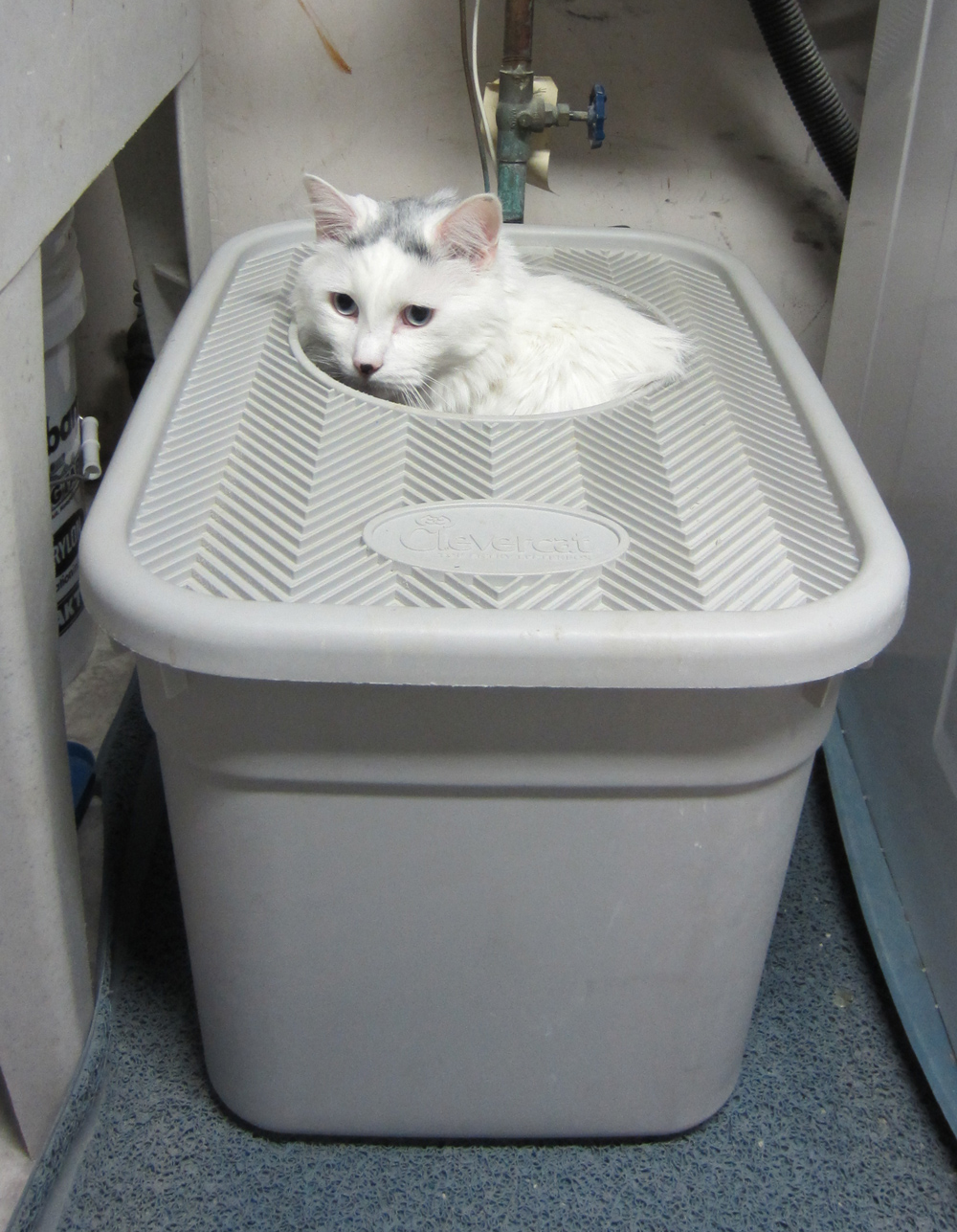
Miss Mia Sopaipilla was being a pill as I performed my coffee ritual this morning, so after a couple sips to get the motor running I figured I’d best tend to the litter boxes.

There’s one in the guest bathroom’s tub and another in the spare room where we contain Mia’s restless nature at night. This two-holer setup is a relic of the Before-Time, when we had two cats. Field Marshal Turkish von Turkenstein (commander, 1st Feline Home Defense Regiment) insisted upon having his own personal latrine, and one feels obliged to give a 16-pound cat pretty much anything he deems mission-critical.

I dealt with the tub box first, and yep, it had seen action overnight. Then I headed for the spare room and noticed the door was closed.

Well, hell, I thought. No wonder Mia was pitching a bitch. She was locked out of her quarters. So I opened the door, gave that litter box a cursory inspection, and … it had been used too.

So I cleaned that one up, hauled what had become a sizable bag of feline exhaust outside to the trash, came back inside and asked Herself, “Why’d you close the door to Mia’s room?”

“I didn’t close the door,” she sez to me she sez.

“Well, I sure didn’t,” sez I.

A moment of silence.

“Mother?” she inquires, glancing around.

No reply.

I doubt it was Herself the Elder. She was never much of an eater, and while she had a great head of hair she wasn’t a furry, barring the occasional chin whisker. Plus, I don’t think her shade could squeeze into that litter box, which has a lid on it. It would have been undignified, even in extremis.

When Turks attack.

No, I’m inclined to suspect the Turk. My old comrade had an interesting sense of humor that encompassed leaping at you from hidey-holes, flashing the bathroom lights at us the night he died, and triggering a hallway smoke detector that requires a stepladder to reach as I was rehabbing a broken ankle.

Now there was a cat who found a loo with a lid to be an awful tight fit. He had to poke his blue-eyed brain-box out of the one we kept downstairs in Bibleburg. We called his bathroom breaks “driving the Turkentank.”

When you gotta go, you gotta go, they say. But if you’ve gone, do you gotta come back? If you do, leave the door open, or at least crack a window. Maybe light a match. I’m trying to enjoy my coffee here.

The Commander inspects his (purely defensive) chemical-weapons stockpile.

R.I.P., Mary Pigeon

Heather, Beth, Mary, and Shannon in 2004.

Herself the Elder, a.k.a. Mary Gaye (Kerr) Pigeon, went west on Thursday in Albuquerque. She was 89.

Born in 1933 on a farm in East Texas, the youngest of 10 children, Mary raised three girls of her own and spent a quarter-century working for Oak Ridge Associated Universities (ORAU) in Oak Ridge, Tenn.

Her father, B Kerr, was a sharecropper. Her mother, Mary M. Kerr, was a homemaker.

Mary attended schools in Nacogdoches and Abilene, graduating from Abilene High School in 1951. Afterward she studied at Massey Business College in Nacogdoches.

In 1958 she married Robert Pigeon of Ontonagon, Mich.

Their first child, Beth, was born in 1960 in College Station, Texas. Shannon (Herself) was born a year later in Nacogdoches. And Heather was born in Frederick, Md., in 1962, after the family moved east so Robert could take a position with the Atomic Energy Commission.

With all three children in school, Mary went to work. In Frederick, she took a job with the First Baptist Church. When the family relocated to Oak Ridge in 1980, Mary signed on with the First Presbyterian Church.

Two years later, the couple divorced. Her ex eventually remarried, but Mary never did.

In 1992, Mary began working at ORAU, in a temporary position. It proved anything but. By the time she retired 23 years later — at the age of 82 — she was the executive assistant to a vice president in health communication. Mary loved that job and was proud of her accomplishments at ORAU.

Armed with quick wit and sharp tongue, Mary did not suffer fools gladly. But she had a lighter touch with animals, particularly cats, and supported the Helping Paws Animal Network of Oak Ridge.

She devoured mysteries on her Kindle, especially Susan Wittig Albert stories. Other pastimes included crossword puzzles, dining out, shopping, spending time with family and her wide circle of friends, and binge-watching episodes of “The Big Bang Theory.”

Beth, Mary and Shannon share a giggle in The Duck! City circa July 2021.

In her later years Mary wanted to be closer to her daughters, moving first to an apartment in Palm Bay, Fla., near Beth, and then to assisted living in Albuquerque, near Shannon.

She arrived in The Duck! City just as the novel coronavirus began triggering lockdowns in elder-care facilities, and endured quarantines in tiny rooms, conversations with loved ones through closed windows and/or over the phone, vaccinations, and masking, all piled atop the traditional indignities of advancing old age.

In her final year, with restrictions lifting, Mary was able to rejoin the wider world, enjoying in-person visits with family and friends, getting her hair and nails done, shopping, and going out for meals.

Shortly after her 89th birthday, COVID finally found her. It did not keep her long.

Survivors include Beth and Darren Morgan of Woodsboro, Md.; Shannon and Patrick O’Grady of Albuquerque; and Heather and Bill White of Smyrna, Tenn.; two grandchildren and five great-grandchildren; and several nieces and nephews.

No services are planned. Come spring, Mary will return to East Texas, where memory took her in her final days.