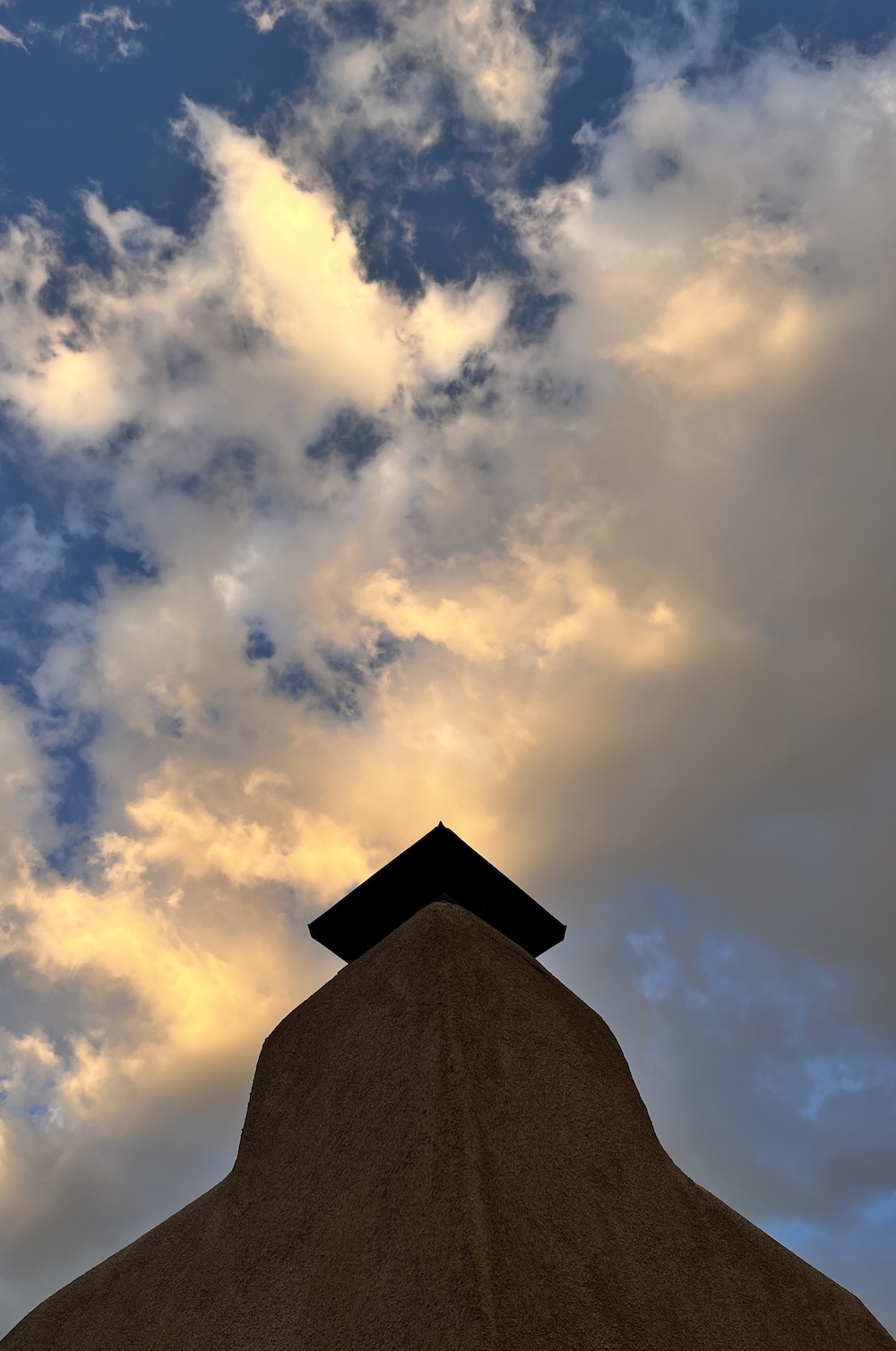
It’s only our bedroom chimney. You go to war with the Barad-dûr you have, not the Barad-dûr you might want or wish to have at a later time.
OK, lemme see if I’ve got this right. …
Pope Naked I, the Unclothed Emperor, Avatar of Peace and Very Stable Genius, elbows into a Middle Eastern pissing contest without checking with Congress, an elite cadre of drunkards, turncoats, lickspittles, ring-kissers, and Keyboard Kommandos at his side.
Next he unilaterally declares a cease-fire — a short while later the belligerents mumble, “Yeah, right, cease-fire, sure. …” — and get right back to murdering each other.
Finally the Warrior Pope finds a convenient camera to holler into, barking that the belligerents “don’t know what the fuck they’re doing,” when it seems pretty clear to even the most casual observer that when it comes to killing each other, these people are at the top of their class.
Does that about cover it? I think I’m all caught up now.
Q. Is it not obvious to anyone that the Empire is as strong as it ever was?
A. The appearance of strength is all about you. It would seem to last forever. However, Mr. Advocate, the rotten tree-trunk, until the very moment when the storm-blast breaks it in two, has all the appearance of might it ever had. The storm-blast whistles through the branches of the Empire even now. Listen with the ears of psychohistory, and you will hear the creaking. — Hari Seldon fencing with the prosecutor while on trial for disturbing the peace of the Emperor’s realm, in the first book of Isaac Asimov’s “Foundation” series
Confirmation bias is real, and not always self-inflicted.
Case in point: Last night some of us were gnawing on current events in an email chain when in a fit of grim despair I wrote the following:
• • •
Call me cynical, but I think the idea of reviving manufacturing in the United States is a pipe dream, pure and simple.
Americans crave cheap shit, and they want to be paid top dollar for doing … something fun. Not living in a city-sized factory cranking out the iPhones and watching their bunkmates jump off the roof when it all gets to be too much. Being an “influencer” means you never have to jump off a roof unless you really need the clicks and there’s some drone down there with a net to catch you.
What are Americans qualified to manufacture in the near future that their fellow Americans (or anyone else) want to buy? Who’s gonna risk their capital building factories, arranging supply lines, finding/marketing to customers? The long view meets the short attention span and the minimalist skillset. Hilarity ensues. Or not.
The developing world is busy making and selling us shit in hopes of becoming us someday so their kids don’t have to work as hard as their folks did.
I can see small-scale stuff happening here. High-priced bespoke artisanal products (Moots comes to mind).
But most of what I see right now, day to day, is white collar and service industries, and a big, big gap between the two.
Also, consider A.I. and the increasing use of robotics in everything from package delivery to surgical procedures. Any domestic manufacturing developing in the next few decades might need humans only to troubleshoot/reboot the System from time to time and calibrate/lubricate the machinery. Until It figures out how to service Itself without the expense and hassle of the dwindling, unreliable and tiresome human element.
• • •
Well. How d’ye like them apples? Mighty pleased with myself I was, too. Especially after I read this analysis by Binyamin Appelbaum this morning in The New York Times. (The link is a gift; no need to subscribe.)
Appelbaum, the lead writer on economics and business for the NYT’s editorial board, did the heavy lifting to confirm my shoot-from-the-lip bias. Well done indeed, Binjy old scout.
He cites French historian Fernand Braudel, who examined the rise and fall of titans like Amsterdam, London, and yes, New York, taking the long view “because he didn’t want to make too much of short-term pain or setbacks.” Appelbaum explains: “It was an approach that he said he developed to maintain his equanimity during the five years that he spent in German prisoner-of-war camps during World War II, refusing to make too much of ‘daily misery’ or the latest scraps of news.”
Back in the Day™, according to Braudel, finance replaced manufacturing and merchants became bankers — ““a society of rentier investors on the lookout for anything that would guarantee a quiet and privileged life” — moving hither and yon in search of return on investment, regardless of whichever Napoleon of the moment sat squawking on his papier-mâché throne.
And they didn’t bring everyone along for the ride.
Appelbaum gives a light backhand to the latest monarch who wants the rubes to think he can turn back time with a wave of his scepter: “Expanding manufacturing is a goal increasingly shared by elected officials across the political spectrum, but Trump is trying to overhaul the rules of global trade with all the finesse of a do-it-yourselfer living in a house while renovating it, and the disruptions are shaking the global economy. “
And then from beyond the grave Braudel steps forward to give Beelzebozo the coup de grâce, patting him on that ridiculous combover, shaking his head with a smile, and murmuring, “Putz.”
Again, Appelbaum:
“Braudel, who died in 1985, probably would have regarded the president as nothing more than a cork bobbing on the currents of history. If he was right, no matter the president or policies, America’s era of economic domination is ending and its political hegemony is unsustainable. If he was right, it’s time to accept that our second-rate status is inevitable and irreversible.”
Thus we recall another wise fellow, George Santayana, who in “The Life of Reason” wrote: “Those who cannot remember the past are condemned to repeat it.”
Headlined “The Church of the Open Road” — perhaps a riff on “The Church of the Rotating Mass,” which may be a Maurice “Dirt Rag” Tierney creation — it’s McCann’s recollection of a bike tour some four decades ago. On the road to nowhere, or so he thought when he set out.
A Catholic when he began, he encountered tiny Louisiana chapels and Texas megachurches, Southern Baptists and holy rollers (no pun intended). Slept in a pew, worked in a church camp. Inclined to listening, open to revelation, he collected stories as he went.
I won’t spoil this story by summarizing it. Give it a read.
Also, cast not your eyes upon the illustration. There may be some hidden meaning in there, but if so, it is obscured by a lack of historical verisimilitude. Forty years ago bicycles had neither integrated brake/shift levers nor disc brakes (especially not on the drive side). They did, however, have chainrings (and chains), freewheels, pedals, and external cables.
A journey of a thousand miles may begin with a single pedal stroke. But for Christ’s’ sake, you gotta have the pedals.
I’m gonna go out on a snowy limb here and say it was probably a good idea that the Soma Pescadero and I had our maiden voyage yesterday rather than today.
Yesterday it was knickers and arm warmers; today it’s green tea and bloggery.
Cruel it isn’t, though. Not at the northern edge of the Chihuahuan Desert, where we haven’t seen any sort of precip’ in the better part of quite some time.
Here is no water but only rock Rock and no water and the sandy road The road winding above among the mountains Which are mountains of rock without water If there were water we should stop and drink Amongst the rock one cannot stop or think Sweat is dry and feet are in the sand If there were only water amongst the rock Dead mountain mouth of carious teeth that cannot spit Here one can neither stand nor lie nor sit There is not even silence in the mountains But dry sterile thunder without rain
Whew! That Eliot feller would’ve made one helluva blogger, amirite? “The poet’s mind,” he once said, “is in fact a receptacle for seizing and storing up numberless feelings, phrases, images, which remain there until all the particles which can unite to form a new compound are present together.”
He also wrote: “Immature poets imitate; mature poets steal.”