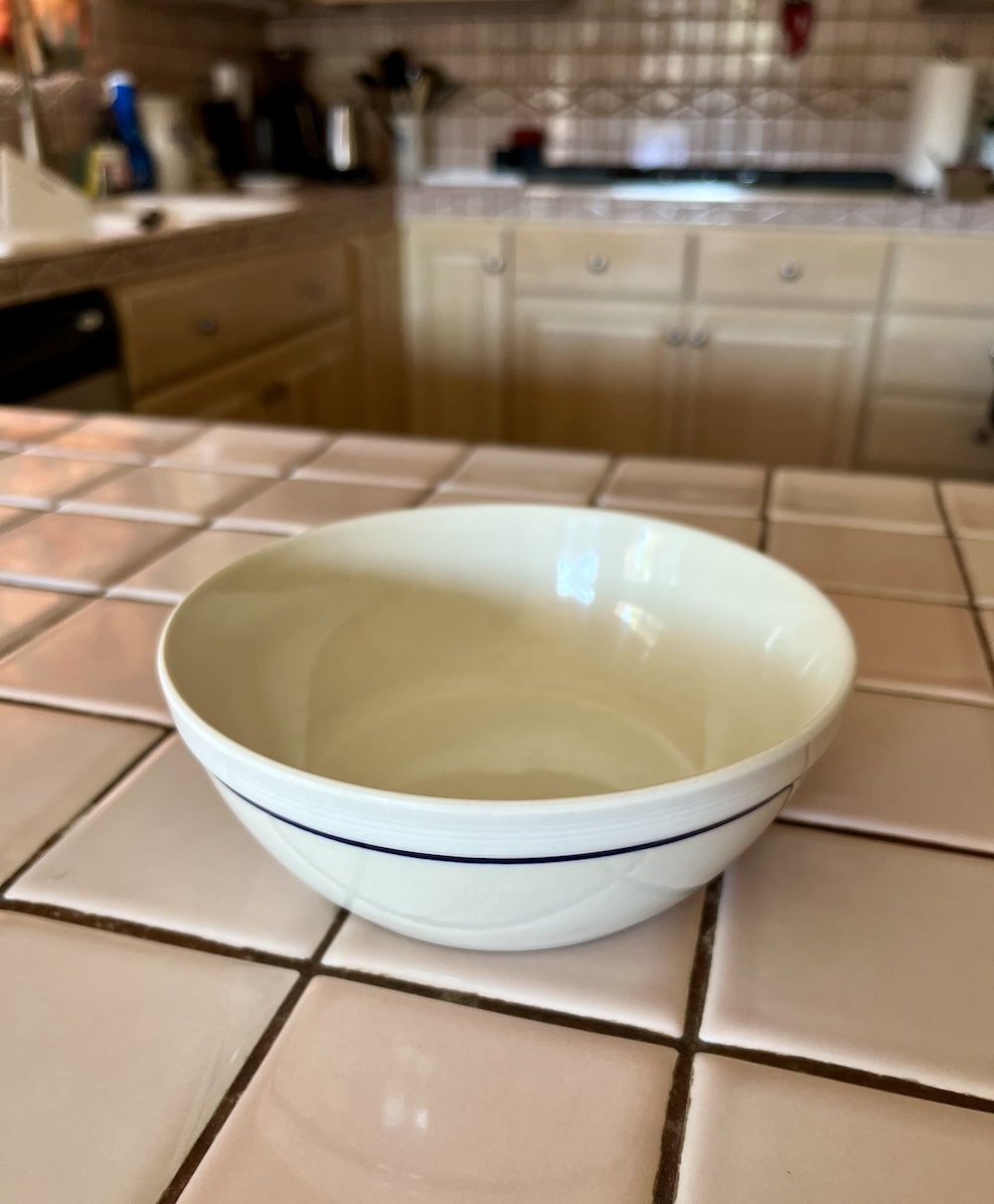
A bowl, empty

This bowl would be super with some soup in it.

I’m not very interested in my opinion of football.*

A scrawny child, I clearly wasn’t cut out for the game, and never really paid it any mind growing up. That I chose competitive swimming as my sport at age 8 should tell you much. It certainly told my dad a thing or two.

Swimming was a great sport for a bookish kid who mostly lived for the undiscovered country in his head. Especially the distance events. Back and forth I’d glide between flip turns, undisturbed by cheering spectators (our meets never drew much of a crowd, and what you hear in the pool is mostly a dull rumble) or the jeering of teammates (that would come in the locker room, after the meet).

Frankly, the whole attraction of sports — especially the stick-and/or-ball variety — eluded me. Just one more opportunity for public failure and vituperation. I had school for that; a new one every couple of years. I liked being outdoors doing things, but bristled at structure and governance.

I just wanted to, y’know, like, do shit, an’ shit.

Swimming in its individual aspect was basic. “Swim fast.” That about covers it. The sportiest components were the relay events, medley and freestyle. Teamwork was very much in play there. If one guy screwed the pooch, three others had to unfuck that mutt. Lots of shrinkage in the ol’ Speedo if you were swimming the anchor leg and starting a handful of seconds down.

Too much pressure for The Kid. I just wanted to go back up into my head and play with my toys. And after 10 years in the pool I did exactly that, after a half-hearted attempt to make the swim team at Adams State College in my first quarter there.

I’d discovered drugs and alcohol in high school, and turned out they had them in college, too. Even better, my parents were back in Bibleburg, where I couldn’t hear them asking why I was growing all that hair, digging Jimi at top volume (“Actin’ funny and I don’t know why. …”) and quitting the swim team after we went 11-0 in the South Central League in 1969-70 (coach didn’t like all that hair either, and I didn’t like coach trying to repo my varsity letter).

I did eventually get into sports, obviously. Bicycling was my gateway drug. I started cycling to lose weight, tackled the occasional century, and began watching what little of the Tour de France I could find on American TV. Eventually I entered a time trial, just to see what would happen, and the bug bit. To coin a phrase, I was off to the races.

When I quit newspapering to freelance for bicycle magazines I described it as a marriage of profession and passion. And I watched the marquee events the way my countrymen watched football, only with less frequency and considerably more difficulty. American TV didn’t cover bike racing the way it covered football — it was strictly soft-focus, personality-driven, 30-seconds-of-action fluff, centered on the Tour, with a soundtrack nobody could dance to, especially in cleats.

Some years later a cyclocross promoter once gave me a pirated videotape of a World Cup race that had been converted from PAL to NTSC so we Yanks could get in on the fun. It was like watching cyclocross underwater, through swim goggles, on acid. Dieter Runkel was pioneering top-mounted brake levers. John Tesh was conspicuous by his absence. I watched it over and over and over again.

But over the decades it got to be too much of a good thing to stay good. Everything I did to earn a living — reporting, writing, editing, cartooning, website maintenance, live updates — had something to do with bicycling. And I burned a lot of daylight doing those things instead of doing the actual bicycling. I quit racing, skipped group rides, and finally lost all interest in watching the races. Does a line cook watch cooking shows on his days off?

I knew bicycling was a business. One of the magazines I worked for covered the business of bicycling. After the Pharmstrong years anybody who didn’t know pro cycling was a business would definitely flunk a dope test. But it was starting to feel like bicycling was giving me the business.

In the end, I got my own dope-slap from the invisible hand of the market. The vulture capitalists swooped down and did what buzzards do — eat and shit, eat and shit — and as my earning opportunities dwindled my love for cycling rekindled. I quit watching, and got back to doing.

First to go was pro cycling. Leave that noise to The Wall Street Journal, I thought. Or The Lancet. And maybe Interpol.

Now I can’t remember the last Tour I watched. So you can bet the farm that I didn’t watch the Super Bowl yesterday. I don’t have any idea who won — hell, I don’t even know who played.

Herself tells me that the MVP was someone name of “Bad Bunny.” Bugs I know, but he played baseball and raced cross country, dabbled in bullfighting, even boxed a bit.

“Bad Bunny?” Jesus. And they call football a “sport?” At least pro cycling had Cannibals and Badgers.

* Hat tip to Jim Harrison, who was speaking of Boston in his book, “Wolf: A False Memoir.”

Unreal estate

The Adventure Cycling Association HQ in Missoula.

Looks like the tussle between the Empire and the Rebellion is coming down to … a vote?

What, no starships, no light sabers, not even a Silca in the spokes?

Well, good on ’em, sez I. May the best argument win.

The Empire’s case for selling the Adventure Cycling Association’s HQ can be found on the ACA website.

The Rebellion’s case against the sale I have cut-and-pasted below, from email, because it’s the argument I support.

A quick disclaimer: I probably shouldn’t be weighing in here. I’ve let my ACA membership lapse, and most of the people I remember from the time I spent reviewing bicycles in my own peculiar way for Adventure Cyclist have left the organization.

But I remember fondly my years orbiting the periphery of the outfit as a sort of weirdo-at-large. I also remember a dark time when, if I found myself short of funds due to questionable financial practices and yet desirous of strong drink and/or powerful drugs in quantity, I would pawn one of my handguns to tide me over until payday.

That sort of behavior, like selling your home and then renting space in it, is not smart. But at least I could always get my handgun back without much fuss.

So, if I had a dog in this hunt, it would bark, “NO!”

With that said, up the rebels! Their argument follows:

Dear Members and Friends of Adventure Cycling,

If you are a current member of Adventure Cycling, you may have recently received a letter from the organization’s new executive director, Andy Williamson, urging members to vote for the sale of our Missoula headquarters at 150 E. Pine Street. The organization has received an offer of $2.55 million for the building and property. While we appreciate the financial challenges facing the organization, we believe selling this building—the debt-free, member-funded heart of Adventure Cycling—is the wrong solution at the wrong time.

Our goal is not confrontation but clarity. Below we address several points made in Andy Williamson’s message and explain why keeping the headquarters is central to Adventure Cycling’s recovery and long-term vitality.

1 · Financial Stability Requires Rebuilding, Not Liquidation
Andy Williamson states the $2.55 million sale would provide a financial“runway.” In truth, this is a one-time infusion that consumes a core endowment asset with limited long-term benefit. Independent analyses from former staff and Life Members demonstrate that Adventure Cycling can balance its budget without selling the building, through right-sizing the staff, leasing unused space, restoring donor confidence, and rebuilding programs. The building itself can generate revenue via tenants while continuing to serve as the organization’s public face. Once sold, that stream—and the underlying equity—are gone forever.

2 · An “Underutilized” Building Is a Symptom, Not the Cause
Andy’s letter cites an ‘underutilized, aging building’ that houses only seven staff. Yet that is a management choice, not an inherent flaw. Adventure Cycling’s earlier success stemmed from a dedicated staff working together under one roof, where spontaneous collaboration and shared purpose fueled innovation. Bringing staff back to Missoula—full- or part-time—would revive this culture and improve member service. National studies confirm that in-person collaboration increases creativity and performance, benefits that cannot be replicated through a fully remote structure.

3 · Deferred Maintenance Is Manageable
The building is fully paid for and exempt from property tax. Historical operating costs average roughly $25,000 per year for utilities, insurance, and routine upkeep. Moreover, the Life Member Fund and donor community stand ready to support maintenance when engaged transparently. Selling a building because of manageable upkeep costs is fiscally shortsighted.

4 · Membership Decline Reflects Lost Engagement, Not “Aging Out”
Leadership attributes falling membership to demographics. In fact, ACA’s own data show that the older cycling cohort is growing, not shrinking, nationwide. Membership losses track instead with reduced programs,rising dues, and the diminished services now offered through a remote staff . Restoring value—through vibrant tours, high-quality publications, and responsive outreach—will rebuild membership far more sustainably than selling headquarters property.

5 · Mission and Identity Depend on Place
For nearly 34 years, 150 E. Pine Street has welcomed cyclists from around the world. It is part museum, part visitor center, and wholly symbolic of Adventure Cycling’s mission to inspire, empower, and connect people to travel by bike. Relinquishing ownership of this “Mecca of bicycle travel” would fracture that identity. The building embodies continuity, credibility, and community trust—qualities no lease-back agreement can replace.

6 · Constructive Alternatives Exist
Rather than liquidating assets, ACA should implement the actionable recovery strategies already outlined by longtime members and advisors:

  • Re-establish balanced budgets where expenses match income;• Rebuild the interconnected ‘engagement funnel’ of routes, tours, membership, magazine, and advocacy;• Lease unused building space to compatible nonprofits or outdoor businesses;
  • If necessary, borrow short-term funds against the equity of the headquarters building;
  • Launch a donor appeal linked to the 50th Anniversary celebration;
  • Recruit new leadership and board members with proven nonprofit and financial expertise.

These measures strengthen the organization while preserving its heritage and its home.

7 · A Vote NO Is a Vote for Adventure Cycling’s Future
Selling the headquarters might ease today’s cash flow but would undermine tomorrow’s foundation. Adventure Cycling has weathered crises before—each time by relying on the passion, generosity, and ingenuity of its staff and members, not by selling the assets acquired over decades.

We therefore urge every eligible member to vote NO on the proposed. Keep Adventure Cycling rooted in Missoula, where it began and where its mission still thrives.

The fact that ACA was cash positive at year-end 2023 makes this proposed building sale especially troubling. For that reason, the members of Save ACA will be voting NO on the sale of the building.

You have that same opportunity—but timing is critical.If you are not a current member, you must join or renew by 7:59 a.m. Monday, November 3 to be eligible to vote. Voting will take place between 8a.m. November 4 and November 24 through the official voting page.

With respect, determination, and gratitude, the members of Save ACA:

Dan Burden
Lys Burden
Greg Siple
June Siple
Jim Sayer
Sheila Snyder
Cyndi Steiner
Ginny Sullivan
Gary MacFadden

The turn of the screw

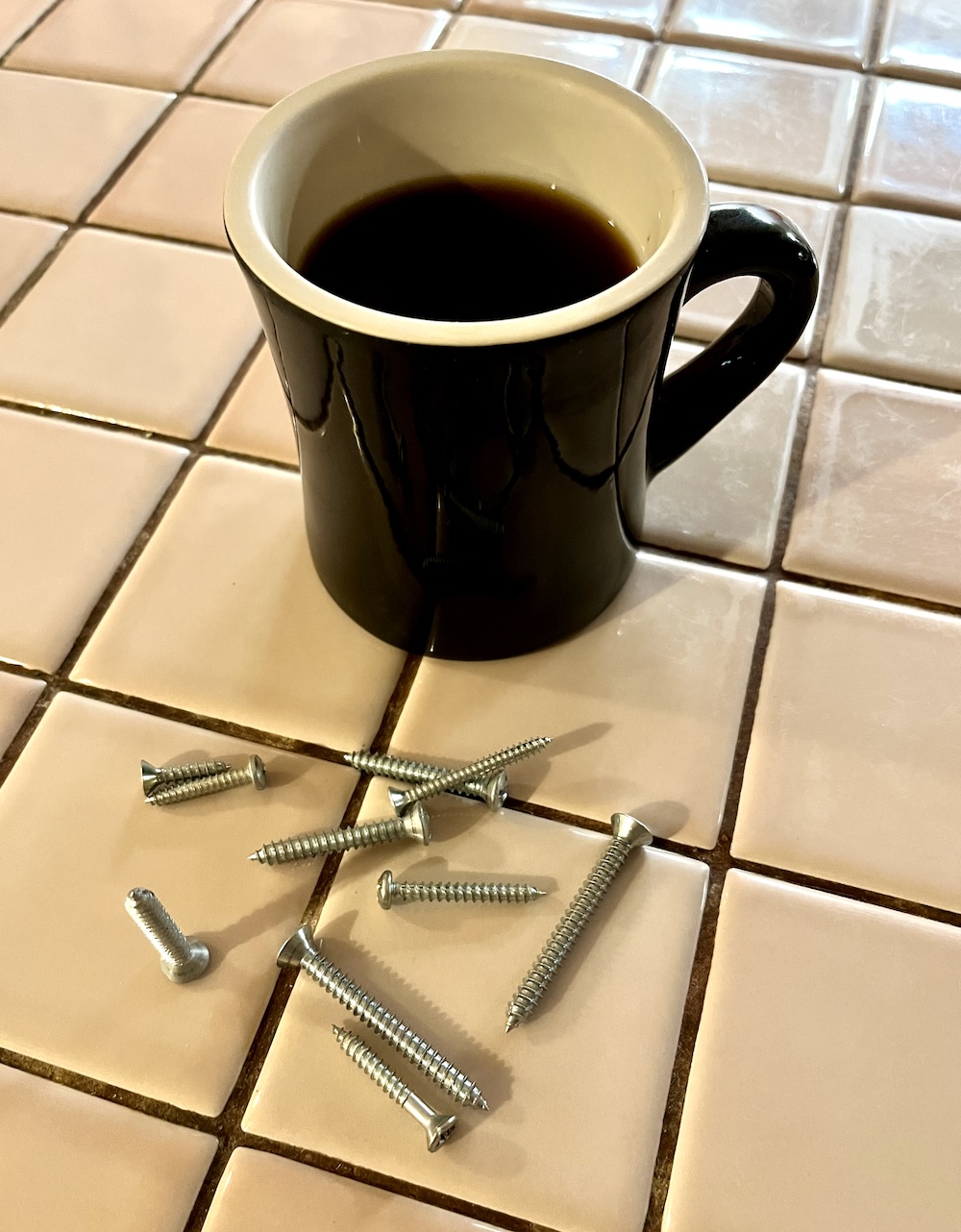
“When I said ‘I’ll take it black,’ I didn’t mean this black. …”

Cost of coffee? Up nearly 21 percent. Cost of screws from Taiwan, America’s No. 1 supplier?

Just ask the Taiwanese, who make screws for everything from bathroom cabinets to data-center fans.

Margins are thin and getting thinner, as is the herd of manufacturers, thanks to The Pestilence’s 50 percent tariffs on steel and aluminum, plus competition from mainland China on product and the homegrown computer-chip industry for workers and government support.

Kent Chen of Sheh Fung Screws Company told The New York Times that his orders are down 20 percent compared to this time last year.

“Everything is in pause mode. A lot of our customers said, ‘We’ll see,’ but then we didn’t receive many orders.”

Oh, he got his orders, all right. Same as the rest of us.

“Assume the position!”

We are so screwed. Ain’t enough coffee in the world for this bullshit. Especially at these prices.

The straight poop

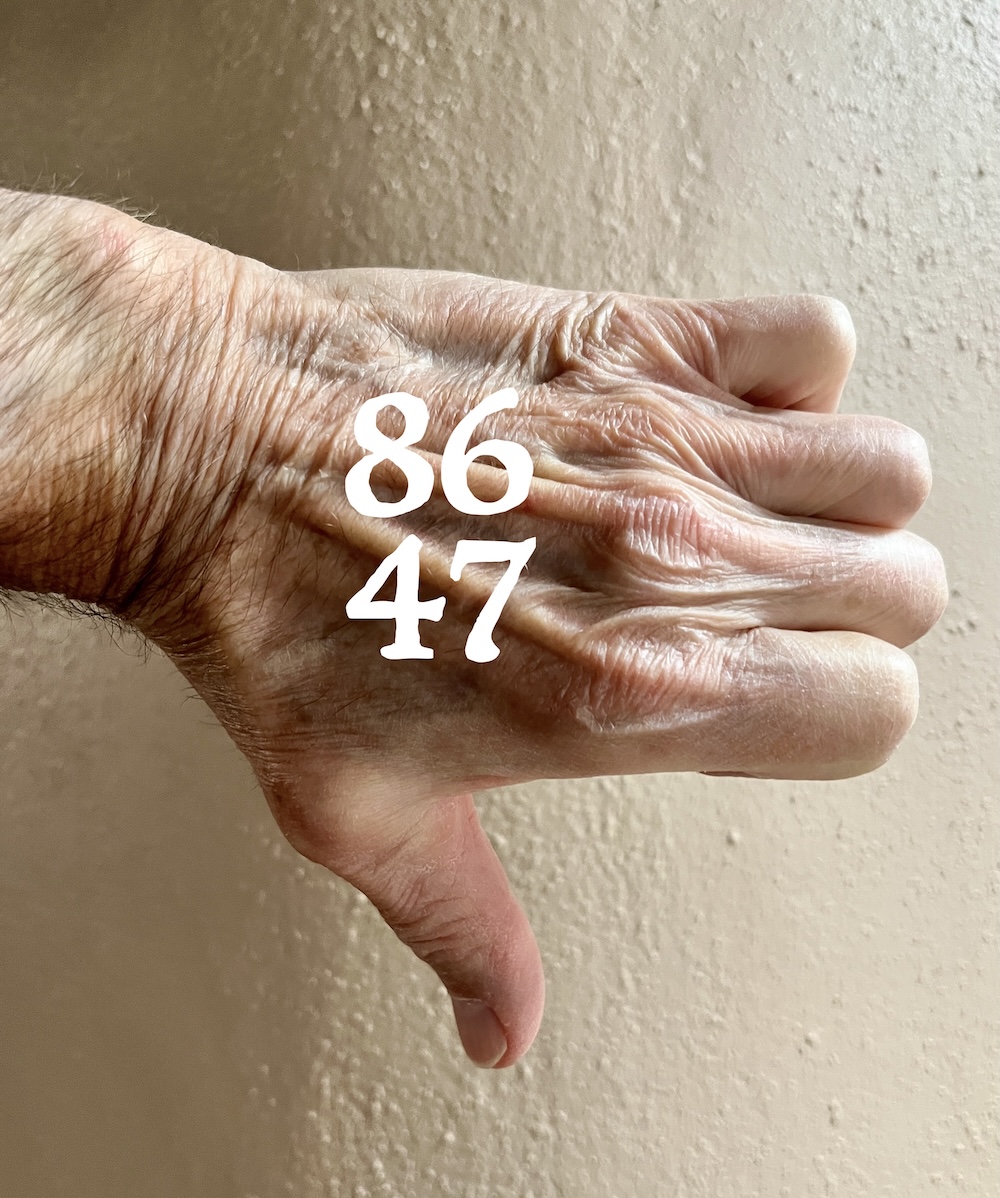
The Shit Show! Coming to a … well, it’s already here. Has been since Jan. 20.

Is there a wall left unbeshitted in the Benighted States? If he flings it, it might stick?

“Department of Defense” to be rebranded as “War Department?” OK, one syllable instead of two, so I suppose he might be able to say it without drooling all over his tie. And he could even spell it, maybe. The first word, anyway. If someone spots him the “W” and the “r.”

But when his country wanted him to go to war Cadet Bonespurs was all about playing defense, right here at home.

Hundreds of Koreans ICEd at the construction site of a Hyundai-LG battery plant in Georgia as our two nations struggle to negotiate one of his fabled “deals?” Are these the drug mules with cantaloupe-size calves that screeching racist dipshit Steve King was raving about when some folks — the press, mostly — gave a runny shit what he thought or had to say?

No, this lot had to cross an ocean instead of a river. Talk about your “bad hombres.”

And taking over the 9/11 memorial and museum in New York City? Which commemorate a disaster in which he did … fuck-all? Other than jack his jaw in complete and utterly pampered safety, like the REMF he is and always will be, that is.

Damn. Those Epstein files must really be the shit. He’d bomb Harvard to keep that story out of the news cycle.

Democracy dies, yadda yadda yadda

Slogans, like talk, are cheap.

Ho, ho. I beat the rush to the exit after The Washington Post‘s management stepped on its editorial dick by declining to endorse a candidate in the pestilential erection. I had already canceled my account based on the plummeting value of their homepage, not the cowardice of the ownership.

Not long ago the WaPo was beating The New York Times like a dusty rug when it came to good, old-fashioned, nut-cutting hard news. Now they pretty much both stink, but at least Mother Times offers some good recipes to take the vile smell out of your nostrils. Plus she still employs a friend of mine.

So I’ll try to forget that the topside of today’s homepage is spattered with shit like “25 Jump Scares That Still Make Us Jump,” “What’s It Like to Tail the Vice President?,” and “Nobody Told Me This Would Happen to My Body in My 40s.”

I’d serve up a critique of the content, if I had clicked on any of it. Alas, I moved on with great haste.

At least the NYT doesn’t start bullshitting you right up there in the flag, like the WaPo. “Democracy Dies in Darkness,” me bollocks. What management does in the darkness you can see in the balcony at any adult theater. Tidy up afterward and check the phone to see if anyone Bezos has business with has invited you to a cocktail party. No? Might as well go lay off a few columnists, if they haven’t all quit already. Only one opinion counts at the newspaper in the nation’s capital, even if it’s mostly being expressed from mansions in Miami, SoCal, or low earth orbit.

Of course, if Jesus Hitler prevails on Nov. 5, it won’t mean much to the WaPo’s owner. Bezos is a podium billionaire, runner-up on the Bloomberg Billionaires Index. And when JH (No. 432) croaks any and all contracts with Blue Origin because Elon (No. 1) was the last guy in the Oval Office to kiss his ass when the deal went down, well … maybe the internment camps can double as Amazon fulfillment centers.

Hey, a dollar isn’t red or blue. It’s green, baby.