The cars always win

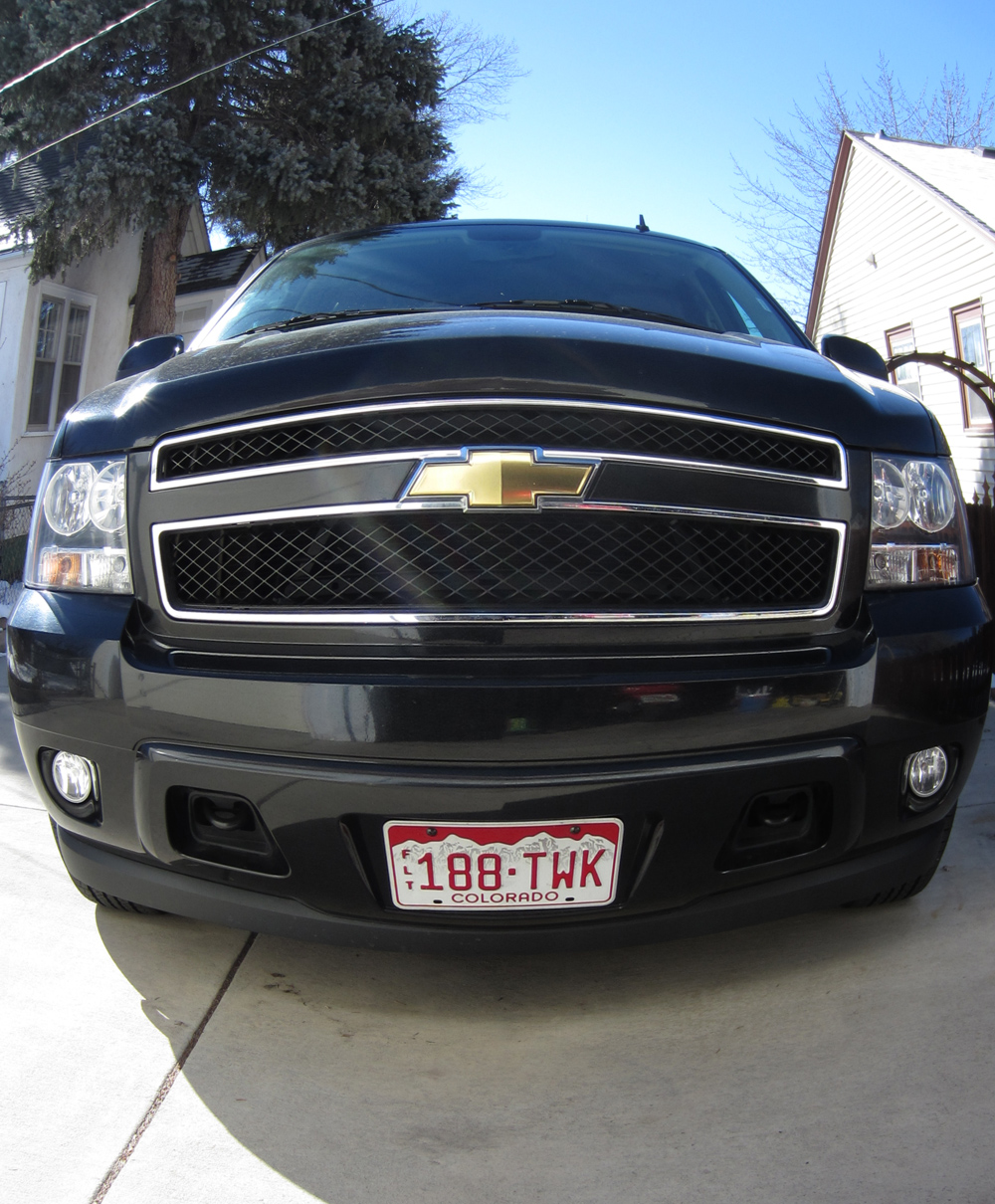
The giant Chevy Tahoe rental tank that Herself drove to Function Junction to handle some library bidness back in 2012. Sumbitch was bigger than the house we lived in.

The headline is lifted from a piece in The Atlantic about Noo Yawk Gov. Kathy Hochul croaking what would have been the nation’s first first congestion-pricing plan for traffic, charging motorists a fee to shoulder (fender?) their way into the ultra-swank Manhattan central bidness district.

The idea was to reduce traffic and pollution while raising money to improve the subway system.

Author Sarah Lasgow concedes that such a scheme could work in very few places in the Land of the Free. But one of them should’ve been the Big Apple, with its wide variety of transportation possibilities, among them subways, buses, and commuter rail.

Yet even if congestion pricing were only ever implemented in New York City, it would have been a signal that U.S. politicians could shake up the nation’s rigid transportation systems in the service of cutting back emissions. That cars appear to have won out even in New York shows how little room there might be for us to try anything different.

Sigh. I’m strictly a hick from the sticks, a rube who’s never even visited Noo Yawk, but I remember being seriously impressed with the mass transit in San Francisco during my first visit, back in the Seventies. I drove to that hilly town from Colorado in a Datsun pickup, four-speed manual, and was I ever glad to park that rig for a spell and find some other way to get around, something that didn’t involve me trying not to stall out as the light turned green on some ski slope of a Gay Bay intersection.

The bus system we had in Bibleburg was a bad joke, one that told you what you already knew: You want to get around in this town, you best get you a car, son!

But in San Francisco bus travel actually seemed feasible, to say nothing of a whole lot easier on the clutch. Plus, if you were lucky and happened to be at the right stop, around 10th and Judah, you might see some giant bald woman in black leather with a little dude on a leash, like an organ grinder’s monkey. Now and then she’d pop him on the noggin and he’d bounce up and down, grinning like a jackass eating yellowjackets.

This is about the time I realized that Gilbert Shelton was not always working strictly from imagination when he penned The Fabulous Furry Freak Brothers.

Speaking of ways to get around, especially to places where juicy artisanal tacos are sold, my man Mike Ferrentino has a delightful piece up on NSMB about achieving the flour tortilla state of mountain biking despite the braying naysaying of beautiful hippie taco vendors and broplow drivers.

Snow joke

I guess we can leave the skinny skis in the garage.

Well, it must be true, if both The New York Times and The Washington Post simultaneously catch up to the sad story about Rio Verde Foothills, where dreams go to die in the dust.

It’s an old story, with the new wrinkle being Scottsdale finally putting a cork in water sales to Rio Verde, saying it had to consider its own residents first and foremost. From the WaPo:

“The city cannot be responsible for the water needs of a separate community especially given its unlimited and unregulated growth,” the city manager’s office wrote in December.

The stories share a squeaky wheel — Cody Reim, who has a wife and four kids, works for the family’s sheet-metal business, and is looking at a water bill that could surpass the tab for his mortgage, when he’s not chatting up the national press. Again, from the WaPo:

“I thought, this is the United States of America, we do so much in humanitarian aid to other countries that don’t have water, they’re not going to let taxpaying citizens of this county go without water,” he said.

“You don’t think this could happen,” he added. “You have this belief that there’s going to be help.”

I have sympathy for the Reim family. Like them, we chose to live in a sandbox — the northern edge of the Chihuahuan Desert — and our water gets humped uphill to El Rancho Pendejo via a series of pumping stations. If we paid what this liquid gold is actually worth, or had to fetch it here by bike or burro, you can bet your ass we’d use a lot less of it.

Either that or we’d move to where the water is. Yet here we are.

Deciding to build your base camp in the desert is magical thinking going toe to toe with mathematics. As John Fleck observes in his ongoing Dead Pool Diaries, decent runoff this year will not change the fact that Colorado River water is overallocated and always has been.

“It’s just arithmetic!” he says.

If God wanted us here, He would’ve stored more agua fria under the rocks and cacti. But clearly He wasn’t expecting quite so much company.

“Hey, you come to the desert to get wisdom, 40 days and nights, tops. And then you go back where you came from. You silly sods never went back.”

Car park

“Why do American cities waste so much space on cars?”
Uh, because they’re climate-controlled living rooms that go places?

A good newspaper not only reports the news, it stimulates debate on the issues of the day.

And this piece by Farhad Manjoo in The New York Times — “I’ve Seen a Future Without Cars, and It’s Amazing” — is certainly going to set some chins wagging.

But hoo-boy, talk about your roadblocks:

Given how completely they rule most cities, calling for the outright banishment of automobiles can sound almost ludicrous. (We can’t even get people to agree to wear masks to stop the spread of a devastating pandemic.)

In other words, don’t swap the Escalade for an e-bike just yet, Sparky.

One more minor quibble: I think this sentence — “Manhattan, already one of the most car-free places in the country, is the best place to start.” — is just a wee bit Noo Yawk-centric.

How about starting with a smaller space, like Santa Fe? Wall off the actual walkable/bikeable bits from the metastasis that surrounds them, provide car parks around the perimeter, and encourage people to engage in muscle-powered transportation.

Pedicabs will be available for hire, but you’re gonna have to show me a serious hitch in your gitalong or other qualifying infirmity before you make someone else haul your fat ass around town. The penalty is crucifixion (first offense).