The Essential Works of Skid Marx

Let the rolling classes tremble. …

The proletarians have nothing to lube but their chains!

Wait a minute. That’s not right. …

The proletarians would also want to butter their chamois, lest they suffer knots on their knuts during pedal revolutions. When V.I. Lenin wrote “What Is to Be Done? Burning Questions of Our Movement” in 1902 he was not recommending remedies for saddle sores.

Yeah, it’s another Labor Day entry.

I’d been invited to smash the State at a rally in Fanta Se, but that was looking like an all-day affair, and with (a) it being Monday, and (2) Herself inbound from a long weekend in Minnesota, I had trash and recycling bins to set out and retrieve; sheets, pillowcases and towels to launder; plants to water; hummingbird feeders to wash and refill; the usual feline maintenance; and a general all-round, stem-to-stern, rapid reassembly of a living space in which only one-third of the occupants really cares about any sort of Better Homes & Gardens tidiness.

Guess who. Here’s a hint: It ain’t me or Miss Mia. I’ve always done my best work under deadline pressure, but I can guarantee you I’ve cut a few corners here today. The self-criticism session will be grueling.

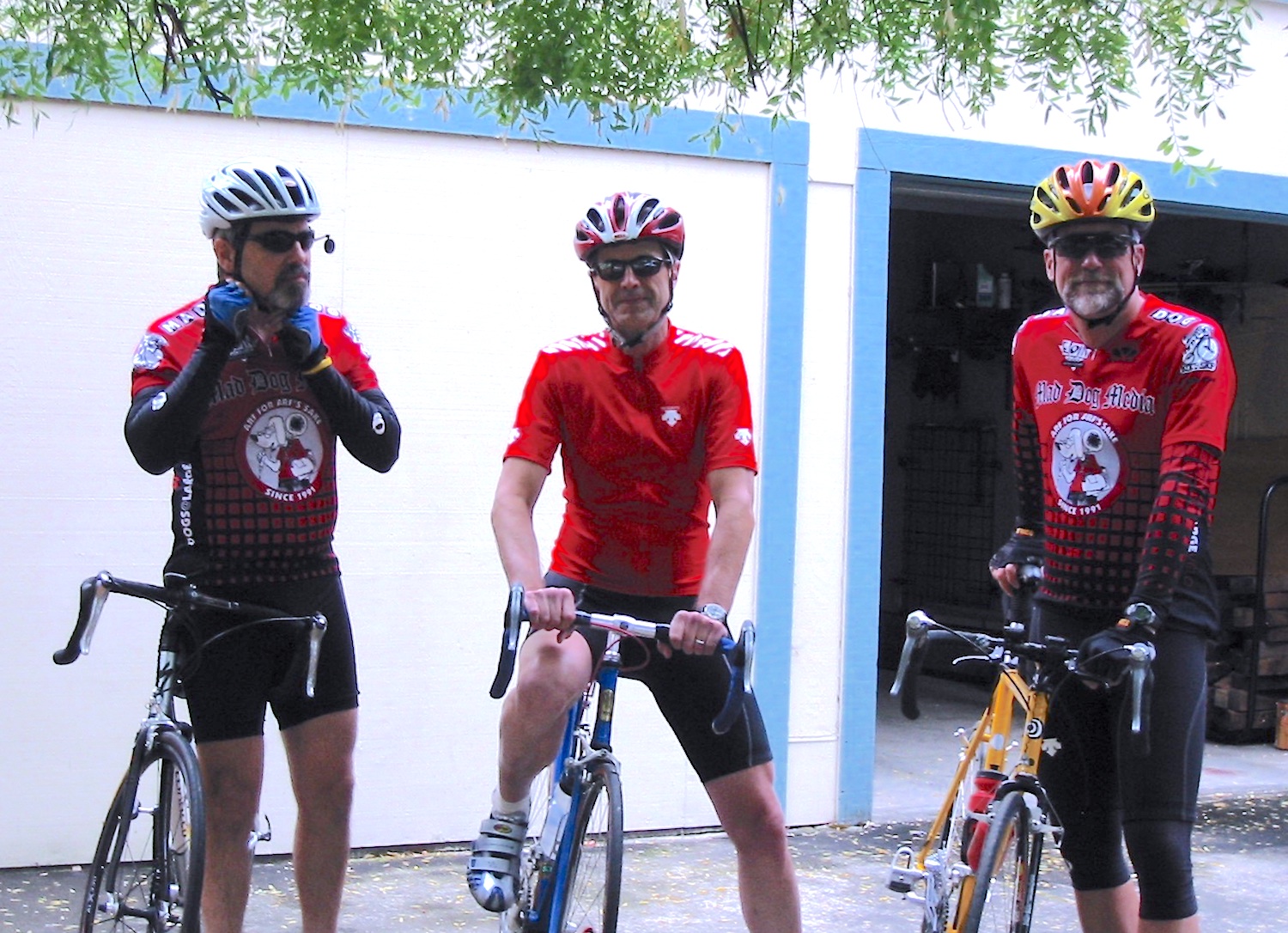
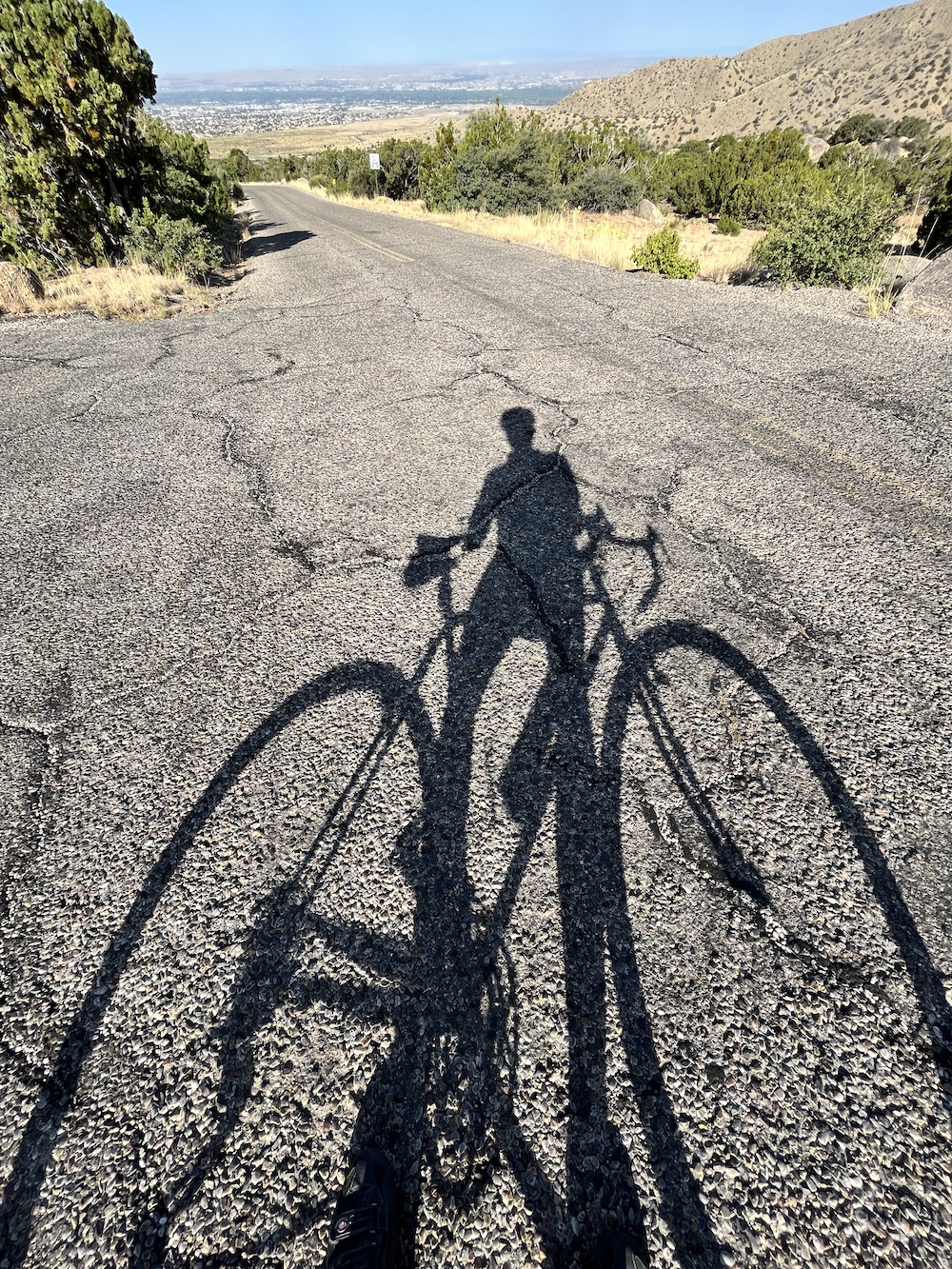
So, anyway, instead of invading the capital with my socialist brethren and sisthren I spent a couple hours cycling around the foothills with my geezer comrades in what proved to be a delightful debut for September 2025 before buckling down to the task(s) at hand..

I flew the red jersey and took all my pulls. “From each according to his ability, to each according to his needs,” etc. And I stood by valiantly as one of our number was waylaid by a reactionary goathead or shard of glass. The lumpenproletariat traditionally recycles beverage containers at roadside, via passenger-side windows, during revolutionary holiday weekends.

“Glassholes,” as one comrade muttered.

When I returned home to a frugal working-class lunch I discovered that there were two — two! — Labor Day rallies right here in The Duck! City. And I had missed both of them.

The comrades in PR are way off the back here. I’m gonna have to start paying closer attention to my socialist-media accounts.

R.I.P., Bill Baughman

Big Bill McBeef, shredding the gnar. | Photo by Lolly AdventureGirl (lifted from FaceButt)

Our last track is a skull. — “Braided Creek: A Conversation in Poetry,” by Ted Kooser and Jim Harrison

The letter was returned, marked “Deceased.”

This is how my friend Michael Schenk stumbled across Bill Baughman’s final footprint in our lives, when one of his annual Schenk-family newsletters, sent via snail mail, bounced back from Bill’s last known address in Bibleburg.

Michael emailed me on Wednesday: “Bill Baughman passed away! Have you heard about this?”

No, I had not. And I immediately set out to learn the details.

Which … were not forthcoming.

No obituary in the Gazette. No other trail that I could backtrack via Google, DuckDuckGo, or Bing. Michael’s call to Bill’s former employer yielded only a vague reference to “health problems.”

Well, yeah. Sorta goes without saying, eh?

Bill was not always easy to catch, especially on the bicycle. But if true, this would be a breakaway unprecedented. We had always been able to find him again, somewhere. A bagel shop. A Mexican restaurant. At home, gaming, in his air-conditioned computer closet.

Old Dogs at the O’Neill farewell: Foreground, Joan Stang; background, Bill Baughman, Your Humble Narrator, Herself, and Karl Stang.

Herself and I last caught up with Bill in 2022, in Manitou Springs, during a celebration of life for another old velo-bro, John O’Neill. John, Bill, and his longtime friend Bill Simmons were among the O.D.s (Original Dogs) who joined me when I left Rainbow Racing to form Team Mad Dog Media-Dogs at Large Velo.

In those early days we trained a ton, barking Liggettisms at each other — suitcases of courage were opened, pedals danced upon or turned in anger, elastic snapped — on the Highway 115 rollers to Penrose and back; up Highway 24 through Manitou to Woodland Park and beyond; down to the racetrack south of Fountain, occasionally adding the dreaded Hanover Loop; or around the 1986 world-championships course at the Air Force Academy.

On race weekends we’d bunk three and four to a room in skeevy motels at Pagosa Springs, Durango, Crested Butte, and elsewhere. I was a popular roomie because I always packed my Krups espresso machine on road trips. The Bills proved extra popular with me after I broke a collarbone at Rage in the Sage; Simmons abandoned his own race to take charge of my bike, and Baughman drove me, my bike, and my truck back to B-burg.

Some three decades later, during our conversation at O’Neill’s sendoff, Bill seemed subdued, maybe even a wee bit sad, not at all his usual rollicking self.

His mother, ex-wife, and a son had all passed. He and Simmons had been out of touch. And he had been been hit by a car while riding his road bike, which snatched a knot in his fearlessness; he was avoiding both road and trail, and when he cycled at all he stuck to a few local bike paths. He drank only at home.

It seemed a stunning retreat by a renowned battler who, sweating tequila from a margarita marathon as the peloton thundered along, would turn a baleful eye on anyone who groused about the pace and growl, “Shut up and ride.”

Still, Bill looked good, as though he’d put on a few pounds. He’d always been thin as a frame pump. Holding his wheel during a group ride as he executed his famous “Marksheffel Plan” — an attack near the bottom of the long climb up the east-side road of that name — was like trying to draft a shark’s fin.

We talked about getting together again, the way people do when they reconnect, however briefly, to send some other old friend west. And after Herself and I got back to ’Burque I emailed him. He never replied.

How can someone just drop off the face of the earth with only the U.S. Postal Service taking the slightest bit of notice? I mean, sure, “Neither snow nor rain nor heat nor gloom of night stays these couriers from the swift completion of their appointed rounds.” But you’d think Google might have the jump on them these days, especially since Jan. 20.

Facebook, the Pony Express of the AARP, was basically useless. The number I had for Bill Simmons was no longer in service. Cindy O’Neill, John’s widow, hadn’t heard the news until Herself passed it along.

And then I remembered: Amber Shaffer, who catered O’Neill’s farewell gathering, was not just a part of his Colorado Running Club crew — she was once a neighbor of Bill’s on the east side of B-burg, not far from the ancestral home of the O’Gradys on South Loring Circle. Ours really is a small world at times.

Late Friday afternoon I called Amber at Roman Villa Pizza; she said that yes, she had learned via text of Bill’s passing late last year, and … and that was all she knew. Fridays are busy in the restaurant racket, so I thanked her, promised to drop in for a meal next trip through town, and said goodbye.

Looks like Bill has dropped us all again, dancing on the pedals, the elastic snapped for good. I hope there was a frosty pitcher of margaritas waiting for him at the finish.

Let’s sing him off. This one goes out to all my friends who’ve died.

Adiós, muchachos, compañeros de mi vida

Sign of the times: A fond farewell to Jim Martinez.

Jim “Jethro” Martinez has gotten canned for the final time.

I should’ve taken a picture. It would’ve been one of the few times when someone pointed a lens in Jim’s direction and he didn’t immediately point to his johnson just as the shutter clicked.

Sample photo only. Jethro not included.

Because I was at a celebration of my old amigo’s life. And Jim was in a Chock full o’Nuts coffee can.

It was a nod to “The Big Lebowski,” of course. Also, there were “The Blues Brothers” — brother Larry and Jim’s son, Kelly — who wore dark sunglasses on Saturday as they spoke of their loss to a standing-room-only crowd at the Bull & Bush Brewery in Glendale, Colorado.

Hey, it could’ve been worse. Jim and the El Rancho Delux gang watched a ton of “Miami Vice” Back in the Day®, so it’s nothing short of miraculous that Larry and Kelly weren’t stylin’ like Sonny and Rico.

Or maybe costumed as characters from another old favorite, the Firesign Theatre’s “The Further Adventures of Nick Danger, Third Eye.”

“Where am I?”

“You can’t get there from here.”

Since 1971, the scene of the crime(s).

Me, I went for the “Outside Bought REI and Went to Whole Foods” look: Santa Fe School of Cooking cap, Timberland fleece vest, Patagucchi flannel shirt, Levi’s 505s, Darn Tough wool socks and low-rise Merrell hikers.

One of the many things Jim taught me was how to dress more like Possibility and less like Probable Cause. Another was how many times you can play your favorite Merle Haggard cassette in your own truck without Jim snatching it out of the deck and tossing it out the window at 85 mph somewhere in Utah. (The answer: One time too many.)

Anyway, it was good that I stepped up my fashion game a bit for the celebration of my old friend’s too-short life. Because this wasn’t just the old El Rancho crew, even though we were all in the Bull, shouting at each other over drinks as in daze of yore.

Former Denver Mayor Wellington Webb and his wife, Wilma, were in the house, as was the mayor’s former press secretary, Andrew Hudson, who got us started down memory lane with tales of working (and goofing) with Jim.

Hizzoner likewise delivered a fond remembrance of his longtime fixer, whom he called his “Luca Brasi,” as Jim’s cigar-puffing pals from the Smoking Cave lined up along one wall like an honor guard.

Kelly, Larry, and Andrew Hudson.

For me, the sentimental journey reached its peak when Kelly backstopped Larry as emotion took him off-script during his remarks. Whenever someone told Larry how fortunate Kelly was to have his support after his dad’s sudden passing, Larry replied that it was the other way around. His nephew is a remarkable, self-possessed young man, running smooth on a strong blend of dad and mom.

Mom — the love of Jim’s life, Teri Sinopoli — was in the crowd with her sisters. So were Jim’s sis, Betty Jo, and her husband, Tom; Larry’s wife, Sherry, and their sons, Stefan and Will; Stan the Man; Rudi Boogs and his wife, Tanysha; cousin Guillermo. Lots and lots of cousins, real and aspirational.

I was honored far beyond any merit of mine to be called a brother on Saturday, though anyone who didn’t know the backstory must’ve wondered how this blue-eyed, baldheaded old gabacho with a mug like a dried-up creek bed could’ve been any kind of kin to these beautiful people.

“Oh, one day we thought we smelled a dead raccoon in the attic and found him up there in a nest of old girlie magazines, mumbling something about where was his daddy the mailman. Didn’t seem right, so we brought him downstairs, gave him a little chile. Bad idea. Never feed a stray perro. He ain’t all there, and he’s too often here, like evil tidings from DeeCee.”

I wish Jim’s mom, Lucy, had been there to chide me for making myself scarce in recent years. But she has a lot of mileage on the odometer, even more than the rest of us, and wasn’t up to the journey. And anyway, I wasn’t really a franchise player.

Her son had a deep bench, and never more so than on Saturday at the Bull. Friends and family. Young and old. Colleagues and co-conspirators. Politicos and pendejos. Tales were told; photographs submitted as evidence; the legend rewritten and amplified.

Chris James “Jethro” Martinez always left the light on and the door open. What a blessing it was to have crossed his threshold, to be made welcome, to feel at home; to feel like family.

A slice of watermelon

In the pink.

Here’s a tasty bit of watermelon for all the veterans in the audience — sunrise over the Sandias — from your friendly neighborhood pinko.

Let’s also give a thought to all those who aren’t around to see it on Veterans Day 2024. Some of them might be a little upset with us for surrendering to the fascists they fought.

R.I.P., Rob Coppolillo

Rob Coppolillo (left) and longtime Friend of the Blog Michael Porter, who supplied the pic.

The great outdoors is a little less great this morning because Rob Coppolillo is no longer here to show it to us.

Rob was one of the people who made VeloNews worth reading Back in the Day®. But he was more than just another velo-scribe; much, much, more.

He was into cycling, sure. And he wrote about it, too, with skill and style. But he also skied and climbed; guided expeditions (certified by the American Mountain Guides Association and International Federation of Mountain Guides Associations); wrote stories and books; spoke French and Italian; owned and operated Vetta Mountain Guides; and with his wife, Rebecca, fathered twin boys, Luca and Dominic. Rob was a twin himself.

The details remain thin, but something went horribly wrong during a Canadian trip Rob was guiding this past week and he was taken from us. Our old friend Charles Pelkey, who worked more closely with Rob than I did, mourns his passing at his Facebook page. Here’s a brief outtake:

We’d known each other for nearly 30 years, since we met during our times at VeloNews. We traveled in the same circles, be they here in the U.S. or in Europe. He had a remarkable wit and was always there when a friend needed him. He came and sat with me at the Medical Center of the Rockies on days when I was stuck in a chair getting filled with noxious chemo’ chemicals for cancer 13 years ago. Believe it or not, he even made that seem fun. We hadn’t talked in years, but I called him just a couple of weeks ago. We didn’t miss a beat. Within minutes we were regaling each other with stories about cycling, mountaineering, old friends and, above all, our kids.

Stories about cycling. I’m something of a pack rat, and though I recently found the strength to discard all my back issues of VeloNews, I plumbed the depths of a couple old hard drives and unearthed a few pieces Rob wrote for the mag back when he, Charles and I were still members of the club in good standing.

My favorite was about the 2001 Eroica. It showcases Rob’s love for the sport; his admiration of the legendary hardmen, the bare-bones bicycles they rode, and the courses that challenged them; and his storytelling skill.

It even provides a glimpse of where bicycle racing would be headed a couple decades later, which was back to where it began, albeit with more sophisticated machinery.

The story follows below. Peace to Rob, his family, and his many friends.

Campioni del passato: Racing’s heroic past lives once more in Italy’s Eroica

By Rob Coppolillo

Each September, the heroes of the road gather in the little town of Gaiole for the Eroica. This old-school bike race covers 125km of winding gravel and paved roads in one of Italy’s most famous regions, the wine-growing land of Chianti, in the heart of Tuscany. On September 30 last year, a Sunday, the heroes departed Gaiole through sheets of rain and streaked toward the muddy vineyards to prove their worth astride bicycles from another era, costumed in clothing from times past. The greatest of them soon fell behind the leaders during this arduous edition of the Eroica. …

Fifty-five kilometers into the day, Luciano Berruti stood and summoned the considerable force necessary to propel himself and his 35.2-pound single-speed 190 Peugeot at the base of another climb. The course fell precipitously in switchbacks from the hill town of Radda, then launched riders at the valley’s opposite wall, toward the ancient fortified castle of Volpaia. Berruti led his competition into another of the countless hills on a road of pulverized white stone. His woolen shorts sagged from suspenders, waterlogged from two-and-one-half hours of cascading rain. Foggy, mud-splattered goggles on his helmetless head and a thickly woven Cicli Gerbi jersey framed the grimace of exhaustion and ferocity on the 58-year-old’s face.

David Maddalena followed, having ceded five seconds at the initiation of the 15-percent grade. Maddalena — an Italian with an anglicized first name — had twisted his shifting rod to find the easier of his two gears, and the maneuver required two hops of his rear wheel to reseat the chain. He glanced down to confirm the change, then raised his face towards the few spectators hardy enough to endure the weather. Ashen and soaked, Maddalena parted his lips in a smile, belying the effort required to keep Berruti in check on the hill.

Nearly a minute later the world champion’s jersey arrived, aglow under dark skies and against the lush chestnut- and oak-forested hills. Luigi Luzzana, 62 years strong, defiantly churned the pedals of his celeste Bianchi as water channeled down grooves in the broken road. He heaved mightily as he climbed, passing the vineyards of the some of the world’s greatest red wines — Pergole Torte, Querciagrande and the Antinori family’s Chiantis. The bearded Luzzana gave nothing away in his expression, save for the eyes. They followed the curve in the road just ahead that led to Berruti and the finish, more than 70km away.

Though the starter’s whistle had unleashed more than 60 riders at the line that morning, the race had truly been reduced to four heroes by this point, and the last of these trailed some minutes behind Luzzana — Ermes Leonardi, another champion in his 60s. As the three others began the grade up Volpaia, Leonardi stood on the shoulder of the narrow ribbon of asphalt leading into Radda. He had suffered his fourth flat of the day, and after stripping his last tubular from his shoulders and mounting it, he threw a leg over the top tube and began pursuit. His wool jersey hung heavily on his body. The Italian national champion’s shirt, printed with the familiar logo of Legnano and sporting world champion’s piping on the sleeves — presented itself in a darker shade of blue, with streaks of road grime running vertically.

The race would last another four hours. Countless young competitors would retire, asking with eyes diverted toward the slick road surface, “What’s the quickest way back to Gaiole?” Their synthetic clothing and modern bicycles, most nearly 20 pounds lighter than Luciano Berruti’s Peugeot, were no help in the most unique road cycling race in Europe.

• • •

The Eroica challenges and honors cycling’s heroes, past and present. At most races, the youthful, fit and fast riders command the spotlight; and true, at this year’s Eroica, a young rider arrived first, wearing Lycra shorts, sporting 10 speeds on his rig and even a fashionable sprout of facial hair. A few spectators offered him polite applause, but the real champions of the day were the men who were hours behind at that point. Men like Luzzana, Berruti, Leonardi and Maddalena.

There are no hard-and-fast rules for the Eroica. The style with which one competes, the ethos of one’s approach to the bike; these count more at the finish than does time. The race asks only that one pedal in honor of the increasingly scarce spirit that inhabited the hearts of the greats, Merckx, Van Looy, Binda and Bottechia. Show up and ride, offer up your sweat on the altar of these gods. Perform your genuflection in wool shorts and a jersey, astride a 30-pounds-plus bicycle with just a few gears, and chances are your prayers will carry you further, even if your deliverance comes that much more slowly. The Eroica has everything to do with the ride and cares little for dramatic finales.

This year marked the fourth edition of the Eroica. I arrived in Gaiole the night before the race with Enrico Caracciolo, a journalist and photographer specializing in cycle-tourism in exotic destinations such as Madagascar, Alaska, Iceland, New Zealand … and the dirt roads in and around Tuscany.

At the local gymnasium in Gaiole was an exhibit to make any cyclophile weep in ecstasy. More than 50 vintage bicycles, including an 1890 Clement with a single gear and wooden rims (ridden the year prior by Luciano Berruti!) led visitors through the evolution of the machine. Antique jerseys and even a few restored Vespas and Lambrettas whetted everyone’s appetite for Sunday’s race.

Don’t think of it as just a bike race, though. The Eroica is the crown jewel in a righteous conservation movement. Due to increasing pressure from automobile-based tourism and modernization, the remaining bianche strade — or white roads — in Chianti are in peril of being paved under, just like the pavé of northern France. Furthermore, desirable cycling destinations like Tuscany, Provence, and even Napa Valley and Sonoma County, run the risk of selling their souls to four-lane highways and motor lodges.

The race’s founder and director, Giancarlo Brocci, a medical doctor by education who has since left the practice to pursue his passion of promoting cycling, is in the process of organizing what he calls the Chianti Cycling Park to help include the bicycle in Chianti’s future, as well as that of Italy and the rest of the world.

The evening before the Eroica, Brocci explained his strategy. “We hope to build a cycling park here in the Chianti, with the help of the Siena tourism office, local businesses and the towns in the area,” he said. The park would feature itineraries catering to all abilities, from 10km-a-day tourists, to the seasoned cyclist looking for rides of up to 100 miles in a single outing. Carraciolo has been instrumental in developing many of these routes.

After launching the program in Chianti, Brocci plans to export the model to other cycling areas in Italy, such as Umbria and Piemonte. Indeed, the Eroica may in fact grow over the coming years into a mammoth, 200km-plus course which cycle tourists could ride throughout the year, or in stages. The goal is to make it a yearly classic, with a formidable course and established route to be ridden all year, but raced one day in the fall. Signs at each of the course’s many intersections would lead followers along the quiet back roads, through some of Italy’s most beautiful cycling territory.

• • •

The Eroica may be a cornerstone in Brocci’s movement to protect and preserve one of the world’s great cycling landscapes. But it also acts as a moving monument to a paradise lost in cycling, that once-upon-a-time world inhabited by an endangered species: the complete rider, impervious to fatigue, inmune to pain, unflappable no matter the circumstance, those who’ve passed to the pantheon of gods alongside Kelly, Hinault and Janssen.

“When I’m riding, I don’t feel pain, I only think of pedaling,” Berruti said at the start of this year’s race. During the 2000 edition, when Berruti rode the 1890 Clement, his costume included leather cycling shoes from the period. The cleat and pedal pressure eventually sliced both his feet across the ball, an injury he only discovered at the finish, which counts two-thirds of its course on bianche strade.

“It’s a different mentality,” Berruti says with a smile, describing his ride. The diminutive gentleman from Liguria exemplifies the courage in cycling, the great sacrifices, the unassailable endurance, bulletproof perseverance and blue-collar tenacity. In short, he overflows with the qualities so rarified in today’s world of pretty-boy superstars who quit as many races as they finish, who highlight their hair, who speak of themselves in the third person.

Another telling anecdote: The 35-pound Peugeot upon which Berruti performed in this year’s Eroica has been to the summit of L’Alpe d’Huez. The bike, a black beast complete with wooden rims, an uncushioned leather saddle and one gear — a 44×23 — should be a museum piece, but Berruti finesses it on the descents, wills it up the climbs, drives it along the flat sections.

“On L’Alpe d’Huez, after four kilometers I thought I wouldn’t be able to ride it, but I rode the whole way without stopping,” he says, smiling. “Some of it even sitting down.”

Again, that’s a 44×23 on a 35-pound bike…and he’s 58. His wife of 32 years, Sofia, shakes her head and smiles.

• • •

Berruti dove onto the descent from Volpaia, leading Maddalena down the rutted road. The route bisected the fortified town, squeezing between walls just wide enough for a Fiat. Berruti never once dragged a foot, despite the inch-deep channels of water on the road, the loose gravel and hairpin turns.

Maddalena, riding a five-speed yellow Legnano from the ’50s, followed with the world champion, Luzzana, just behind. He’d eventually join the pair at the bottom of the descent, while Leonardi refueled at the rest stop high on the hill. There, riders ate bunches of grapes plucked from the fields nearby and downed glasses of red wine and mineral water.

It was at one such rest stop that Berruti waved a small, aluminum bottle beneath my nose. “You think I’m joking, here, smell!” he roared. Grappa, the horrid, distilled, 120-proof Italian beverage made from the leftover skins, seeds and stems of grapes used for wine. He had been drinking grappa for the first 50km of the race.

By the time Berruti and his three companions neared the line, another 70km after the descent off Volpaia, more than six hours after departing, the “winners” had changed, showered and eaten a pasta meal prepared by the race organization. The town square in Gaiole in Chianti had morphed into a scene from 100 years ago, complete with artisans pounding out horseshoes, vintage automobiles sputtering through the piazza, and a marching band providing the soundtrack for the festival honoring cycling and its champions. The rain had stopped, and slanting, afternoon sunlight settled over the Chianti.

Several hundred spectators crowded around the traguardo, craning necks and readying cameras to catch a glimpse of the hard men who had braved the day’s rain and hills. Around a gradual left-hand bend came Berruti, and Sofia smiled next to me. His fourth Eroica, finished, safe and sound.

Horns, cheering and wild applause greeted Luzzana, Berruti and Maddalena. Leonardi, the oldest of the four, rolled through and quickly found a cigarette.

“Ah, I should quit, eh?” he laughed, and added magnanimously, “It was difficult today.”

During the closing festivities, it seems as though Enrico and I allowed the enthusiasm and emotion to overcome us, and we’ve committed to riding the Eroica in 2002. Andy Hampsten’s touring group, Cinghiale Cycling Tours, will end its SuperTuscan itinerary at the race next year on September 29, and word is the former Giro winner will ride as well. I’ll go through with it, if only in the hopes of absorbing a little of the spirit that makes the Eroica what it is.

See you in Gaiole in Chianti, next September. The gods willing.