Pissing and moaning

This started out smelling like rain, but what did we get?
Nothing but heartache.

They promise rain, but all we get is fire.

The North American Monsoon is a couple of days late. And I expect a few long-haul truckers may be running behind schedule too, with a 30-acre brush fire closing eight miles of Interstate 40 westbound, from Zuzax to Carnuel, and the eastbound lane of NM 333 from Tramway to Tijeras.

The thing lit up 5-ish yesterday evening with a real stiff wind from the east, and here at El Rancho Pendejo we could see aircraft trying to piss it out, so as the crow and/or smoking ember flies it was a good deal closer to home than we like. Many local roadies, among them Your Humble Narrator, get their kicks on NM 333, a.k.a. Old Route 66.

We had gotten a whole bunch of not much in the way of journalism about the fire by bedtime last night — a paywall from the Journal and a couple drive-bys from the TV people — so, after checking New Mexico Fire Info a few times we decided to roll the dice and hit the rack.

Today we awakened to another warm, dry morning and very little in the way of news about our neighborhood scorcher. There’s some confusion about whether I-40 is open again, but it seems certain that 333 is a no-go this morning as a bridge and power lines get a look-see.

The good news is that the monsoon is back on the menu today. It goes without saying that we will believe this when we see the blessed water falling from the skies. Who knows? The local journos might even give it a writeup.
‘Virga’ mi verga

Wet dream.

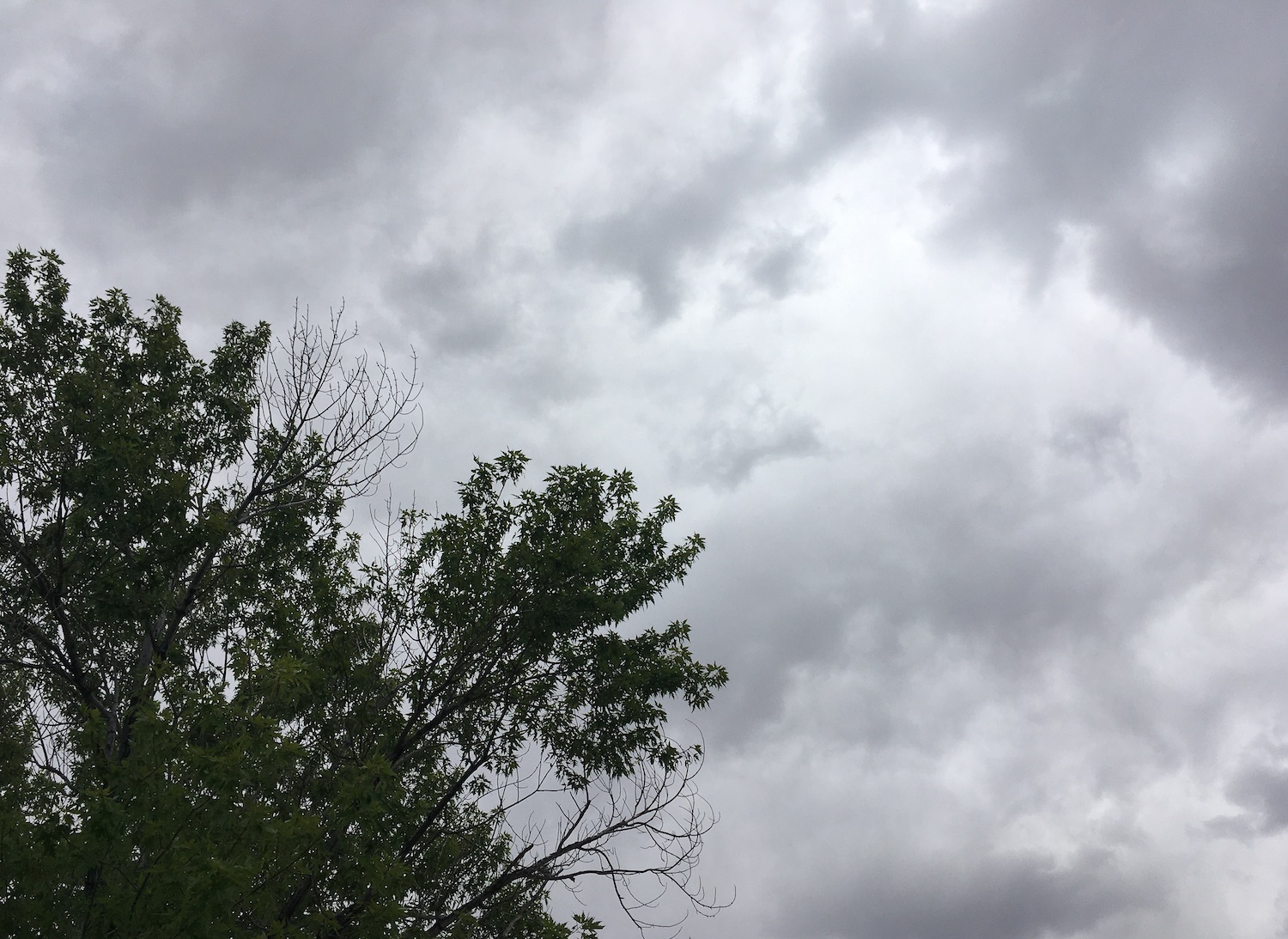
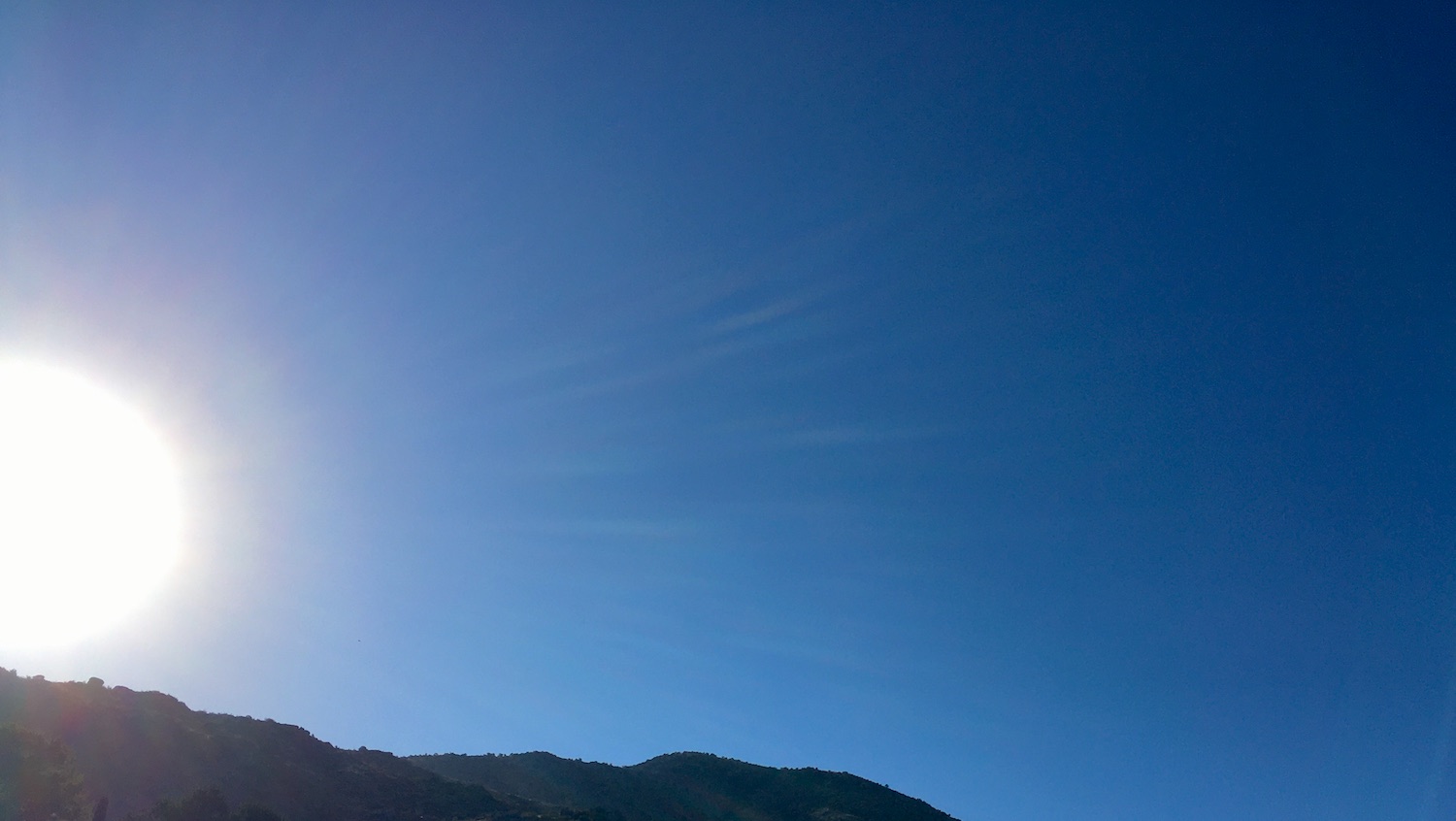
The NWS calls it “virga,” which means “rain that evaporates before it reaches the ground due to very dry air above the surface and below cloud base.”

But they should really call it “verga,” which means “dick,” which is what you get. And a dry hump it is, too.

Rain? Sheeyit. We got better odds of seeing a sensible gun-control measure clearing the Senate and Beelzebozo doing the perp walk.

We was robbed

Good morning, sunshine.

The weather wizards were talking a double-digit possibility of a sprinkle yesterday. But talk don’t water the cacti, son! What we got was nada, and plenty of it.

Our Acu-Rite widget claims we last got precip’ on March 30, a whopping 0.14 inch, but I don’t remember that. My training log mentions rain on March 22, and after that, bupkis.

“We are having a very bad year,” observes John Fleck.

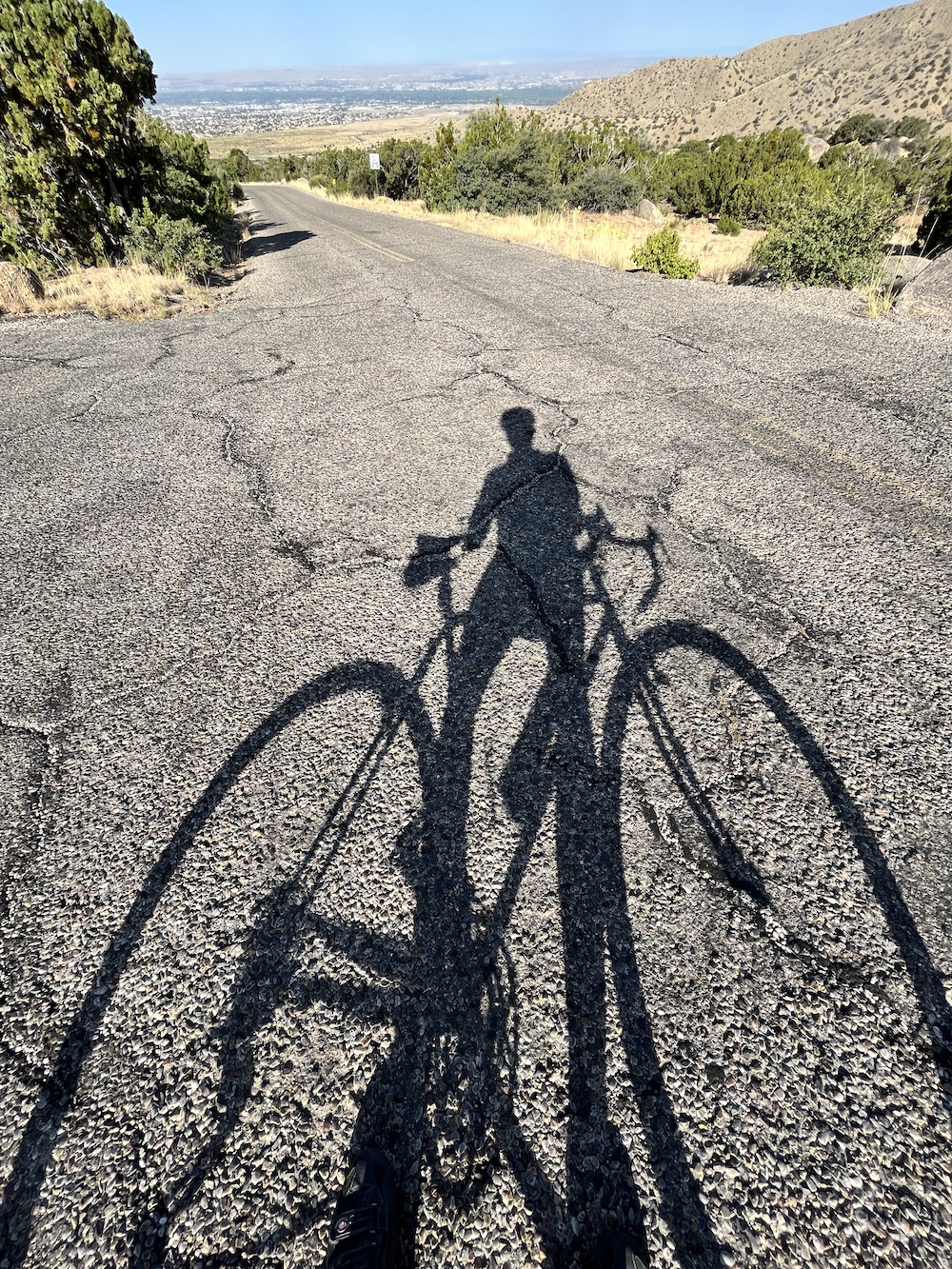
Riding my bike to a meeting with folks trying to figure out how to cope with climate change seemed appropriate signaling, but mainly bikes are fun, as my friend Charlie likes to say, and I pretty much ride mine everywhere I can.

After the meeting, I took the long way home, which involved a dirt trail through the riverside woods along Albuquerque’s reach of the Rio Grande. It was shady and cool on a hot afternoon, but the glimpses of the river were painful. Sometime around midday flow dropped below 300 cubic feet per second, which probably means nothing to most everyone, so I’ll put it this way – it’s just a hair above one tenth of the normal flow for this time of year.

Yow.

Southern California is restricting water use for 6 million people, and I would not be surprised to see our local water coppers taking measures before much longer. I’ve spotted a flotilla of Albuquerque-Bernalillo Water Utiility Authority vehicles cruising the Foothills lately, and they can’t all be meter readers.

Even Arizona is contemplating a “new normal,” though the last I looked the thinking was running very far afield indeed, from desalinization projects in Mexico to pumping water from the Mississippi Basin rather than restricting use of a diminishing supply.

Meanwhile, as the wind blows and the temperature rises, while the swamp coolers begin to bubble and air conditioners to whir, the power grid seems to be a few watts shy of the load.

Phrases like “rolling outages” and “worst-case scenarios” are getting tossed around as neighboring grids find they have no spare power to share and the aforementioned shortage of our old pal water threatens hydroelectric generation. And the buck stops … uh, where, exactly?

“The problem is there is nobody in charge,” said M. Granger Morgan, a professor of engineering at Carnegie Mellon University. The national power grid, he said, is a patchwork of regional systems designed to be guided by market demand in each area. Federal regulators have limited authority over it, and many states have constrained their own power to manage energy resources as part of a deregulation push that took hold in the 1990s.

“We don’t have the national regulatory arrangements and incentives in place to implement this energy transition in a coherent and rapid-enough manner,” Morgan said.

Oh, good. For a second there I thought we might be in trouble.

Tonight on ‘The Voice’ . …

Y’think?

Well, how’s this for the fiery frosting on the smoldering cake that is May in New Mexico?

I wish that whoever is making these prank calls on the Lord’s behalf would find some other pasatiempo. Some of us are gullible and will act on spiritual advice like “Kill all those people” or “Set the bosque on fire.”

When I hear a Voice saying shit like that, I consult a couple of the other Voices in residence between my ear-holes.

“Aw, that’s Nyarlathotep. He’s just fuckin’ witcha. Don’t pay him no nevermind unless you like rubber rooms and tuxedos with wraparound arms.”

It’s liable to get real interesting real fast around here. The forests are “closed,” but a quick assay of The Duck! City’s foothills trails finds them very much open.

If these trails are forced to absorb all the recreational traffic that ordinarily would be spread throughout the Cibola, they’re gonna clog up faster than The Big I at drunk-thirty on Friday.

I eyeballed a half-dozen trailhead parking lots on my ride this morning and not a one of them was empty, though Elena Gallegos seemed to be less busy than usual.

But it was Thursday. Let’s see what the weekend brings. I hope it’s not more red-flag warnings.

The sneezin’ season

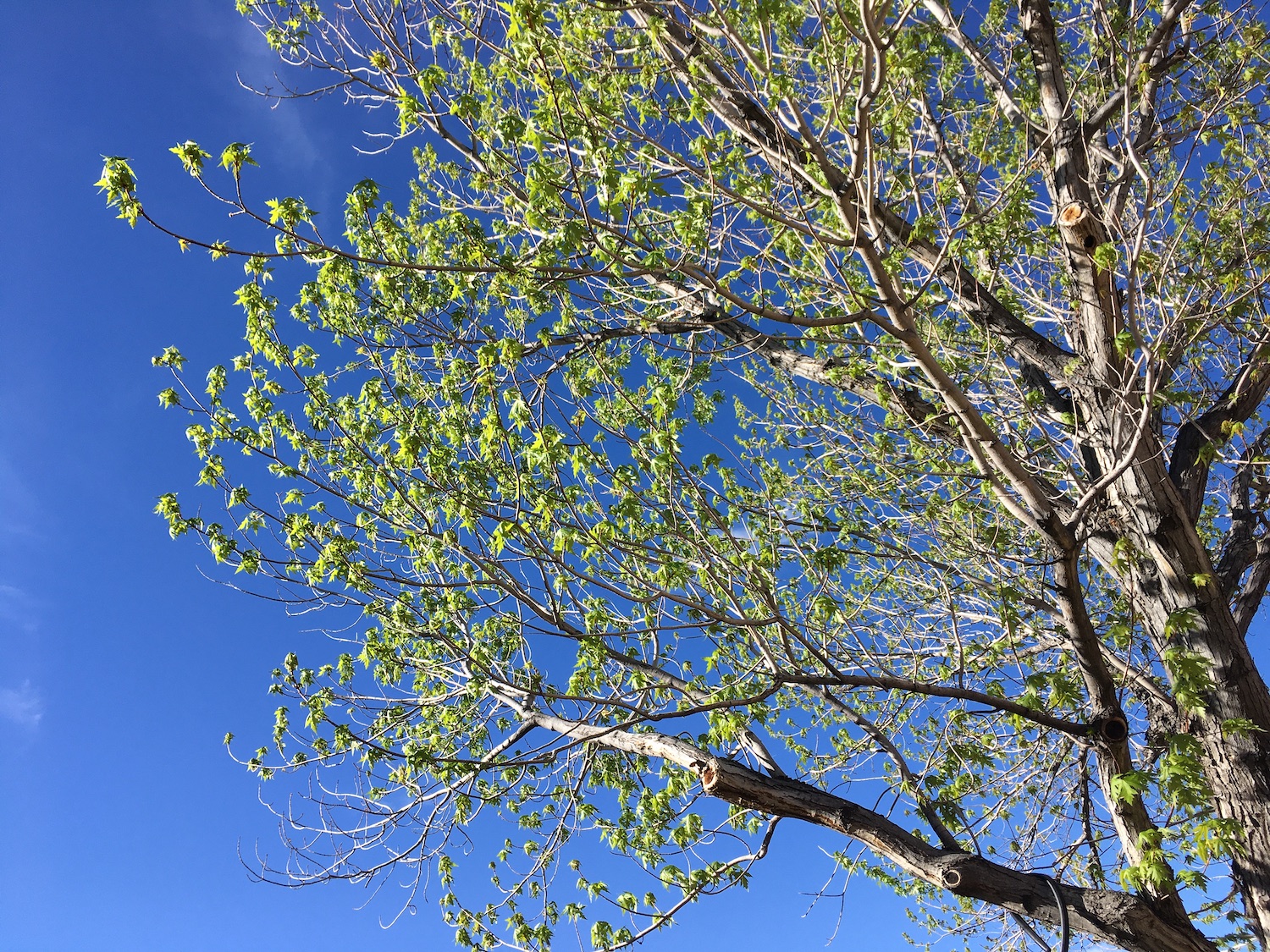
The maple is leafing out nicely.

I’ve seen it twice now, at the NPR website and in the AARP Bulletin, so it must be true: Allergy season is getting worse.

(I’ve also seen it in our Kleenex consumption, if you’re looking for empirical evidence.)

The gist of it is that warmer temperatures mean your sneezing starts earlier in the spring and lasts longer come fall. And the hotter the climate, the bigger the pollen output.

“This is another unintended consequence of climate change that hasn’t been explored that much,” says Allison Steiner, a professor of atmospheric sciences at the University of Michigan and an author of the study. “It has a big impact on human health.”

Warmer and drier also means more fires, and we have several going on at the moment, the worst of them down at Ruidoso. The McBride Fire has taken more than 200 homes and at least two lives, and thousands are under evacuation orders. There was zero containment as of last night.

“But it’s not even fire season yet!” you exclaim. You’re looking at last year’s calendar, Hoss.