OK, we all could use a good laugh these days — These days? Most days! — and I got one texted to me late last night by a couple of guitar-playing pals in California.
The cartoonist is Michigan’s own Dave Coverly, and you can catch his act at speedbump.com. Buy his book, prints, or original artwork while you’re there. He’s done a couple of these eye-chart gags and they’re all killer. Also, dogs and cats. What’s not to like?
Those of you who share my buddies’ fondness for pickin’ and grinnin’ — I’m looking at you, Pat O’B — should give this one a look-see. I haven’t tried it yet, but I did some research and Dave’s eye chart is 20/20.
• Update: I asked Dave (belatedly) for permission to reproduce his cartoon here, and he tells me that it’s a doctored version that musicians have been passing around for a while now. There’s another that uses notation from Bach’s Toccata and Fugue in D Minor. I should’ve picked up on it because the voice balloon and chart don’t match his other work. Derned Innertube pirates are everywhere, and it seems they’re all in a band.
You won’t know the name, unless you worked with him or read him at the Los Angeles Times, the Colorado Springs Sun, the Gazette Telegraph, The Denver Post, or the Jackson Hole News, or studied under him at the University of Wyoming in Laramie.
But George stands tall in my personal history. He was one of the people who showed me by word and deed that there was a place in the newspaper game even for those of us who were a bubble or two off plumb.
When I got hired as a copy boy at the Colorado Springs Sun I was at loose ends following a brief tour of the dead-end gigs available to a dropout from a third-rate college. George was the police reporter, as I recall, and came to the Sun from the L.A. paper.
Back in 1974 the newsroom was stiff with talent, the best possible haven for a wannabe cartoonist shambling out of his teens into nowhere special if he didn’t pull his hairy head out of his hippie arse.
Bill Woestendiek and his wife, Kay, ran the outfit, sister paper to the Las Vegas Sun in Sin City. Carl Miller, who would move on to helm The Denver Post, was city editor. Bill Buzenberg, who would rise to veep of news at National Public Radio, was his assistant and an investigative reporter.
Bill McBean, another reporter, would abandon his typewriter for a paper route, claiming afterward that he made more money from delivering the Sun than he ever did writing for it. That didn’t last; he eventually got back on the scribbler’s horse in Denver, at the Post.
I was an actual scribbler; a cartoonist, or so I thought. But an adviser at Adams State College had told me just how few full-time, paid editorial cartoonists there were in the country and suggested that I cast a wider loop, maybe consider taking a reporter’s job as my entrée, a foot in the door.
Well, there I was, with both feet in and my dumb ass for company. Not a reporter; just a copy boy. And I didn’t even have the chops for that. When Carl handed me a stack of press releases to rewrite I told him I didn’t know how to type.
“Better learn,” he replied. And I did, whenever I wasn’t stripping and sorting copy from the wire-service teletypes, running copy and art to and from composing and engraving, and doing other scutwork so real journalists didn’t have to.
I learned something from all these people, starting with typing, thanks to Carl, who also passed on some firm hints about how to write for newspapers. Bill Buzenberg let me tag along and watch him interview hookers for a piece on the massage parlors infesting Bibleburg. The Woestendieks let me sit in on the copy desk on slow nights, learning how to fit copy, size art, and write heds.
George and Bill McBean took me out for drinks, told me war stories, had me over to their houses for dinner, introduced me to their wives; I soaked up their experience like a bar rag and felt as though I had become part of a family.
When I left the Sun to go back to school, this time at the University of Northern Colorado, George told me he hoped I’d come back as a reporter. And I did. But not to the Sun — to the Gazette, the bigger of the two papers in town. Because George was there, this time on the city desk.
He helped me sneak in the back door as a contractor — a little glimpse of the future there, yeah? I compiled the annual industrial edition, drew a few cartoons, and even wrote a couple of stories before getting hired in early 1978 as a for-reals general-assignment reporter at $155 a week.
And that’s where the rubber met the road. As George’s obit notes, he was “a meticulous editor and dedicated teacher.” He was not above crumpling up your copy and tossing it back to you. (We were still working on typewriters in 1978, and other people in the newsroom could actually see it when an editor threw your copy back at you.)
After a few rounds of journalism badminton George would call me over and explain in detail, citing irrefutable examples, precisely why I was a toothless cog in the Gazette‘s well-oiled machinery. Sometimes he and his opposite number Joe Barber would tag-team me. This could be like getting tossed around the ring by Mad Dog and Butcher Vachon.
It was the school of hard knocks, for sure. But man, if you don’t get kayoed, you learn how to roll with the punches and throw a few of your own. As Carl had told me once at the Sun, “We can teach you more about newspapering in a year than you’ll learn in four at college.”
But Carl also insisted I go back to college. Once again, good advice at the precise moment it was needed. Because without that journalism degree I would not have been able to stay and learn at the Sun, or follow George to the Gazette, where I learned even more, in the company of comrades from other schools, other papers.
Sadly, I suspect Carl’s advice is no longer relevant. Back in the early Seventies, at the minor-metro papers that hired me, editors like Carl and George could spend some time breaking in the noobs. An assistant city editor would call you over to demand an act of contrition for some sin of commission or omission. A copy editor might have some thoughts about condensation and clarification. A typesetter could catch an error that had eluded everyone else and that observation would find its way back to you like a bad check.
If the error slipped past the typesetter, the page proofer, and the press check, and actually made it into print, the managing editor might want a word. This would be truly educational. Envision a very angry principal, swinging a larger “board of education.”
Even George made a few mistakes, and like good students we did too. (Actually, we did not require coaching in making these kinds of mistakes, but we were finally getting paid, and could afford to make bigger and better ones.)
This was why the list of phone numbers taped to a drawer at the city desk listed as many taverns, titty bars, alehouses, grog shops, gin mills, cantinas, and buckets o’ blood as it did home numbers. In extreme cases some expenditure of shoe leather was required, but by then we were seasoned reporters, kinda, sorta, and dogged in the pursuit of The Story, or whoever was supposed to write or edit it.
After a few years we all moved on to other opportunities, because in the newspaper game this is how you get a raise or a better job, or at least a different one. If you’re inclined to keep making some of the old mistakes or maybe acquire a few new ones, it’s also how you get a fresh nest to shit in.
George suggested I start keeping a journal, and Lord, have I ever kept ’em.
George eventually left the newsroom entirely and settled down in academia, where he could continue gently and relentlessly squeezing the dumbass out of young eejits afflicted with delusions of grandeur.
One of his students recalls: “I learned so much from that man that I still find myself quoting him and referring to him as someone who influenced my life in important and meaningful ways.”
Me too. And you as well. You probably never read George Gladney, or worked with him, or studied under him. But if you’re reading this, you are under his influence.
Because it was George who told me back in 1974 that I should start keeping a journal. And that’s just another word for “blog.”
It’a rough ride for a Hal Walter bike. | Photo: Hal Walter
• Editor’s note: My old pal Hal Walter hasn’t been writing much lately. He’s a busy fellow, with a jackass ranch in Crusty County, a coaching gig in Weirdcliffe, and a kid at college in Shredville. But he dashed off this paean to the humble beater bike the other day and slipped it under my door.
By Hal Walter
Let me just start by saying that writing is just like riding a bike. If you haven’t done it in a while then you might as well embrace the squeaks, rust and scratched paint. Similarly, since I won’t likely be entering the Stone King Rally or even the Leadville Race Series MTB in my final 14 years of average life expectancy, I ride beater bikes.
Or not. My road bike, a 32-year-old Trek 1200, has been hanging in the garage for about 31 years. Because: I live four rugged miles from pavement and Colorado drivers are cray. Aside from the rotted rubber, it’s in mint condition.
My other bikes are off-road contraptions, what I call SUBs (Sport Utility Bikes). They are mostly bikes people have given to me over the years. A vintage Specialized Rockhopper was “gifted,” which certainly is not a verb, by friends when their guide service went belly-up. Also, I have an antique Trek Liquid 30 cross-country deathtrap with deadly brake-lever shifters. The third is a Trek Farley fat bike I actually bought as a demo for $500 — a massive sum for equipment that gets treated like a rock hammer on a college geology field trip.
My bikes ride tailgates on dusty roads (at least on the newer truck, which actually has one) or get tossed into the bed of the beater truck. They get left out in the rain and snow and cosmic rays. When they squeak I hose them down with WD-40. Well, sometimes, anyway. Usually they quit squeaking if you just keep on riding them.
Why do I even have bikes? I use them quite regularly — probably more than most cyclists — for cross-training and recovery exercise. I often ride a bike while coaching high-school cross country athletes or my son who runs college cross and track.
I also use them as transportation in my side hobby of training wild burros for pack-burro racing. I can trailer a burro away from the ranch, run it home. Then I hop on the bike, ride back to my rig, throw it in the bed and drive home. I don’t care how this looks and I often don’t wear a helmet.
A couple weeks ago the fat bike flew out of the bed of the gateless truck on a stretch of washboard. It glanced off the stock trailer I was towing, then cartwheeled into the borrow ditch. I saw this in the rearview mirror and stopped to find that, other than a scuffed handlebar grip, it seemed fine. I rode it at cross-country practice that evening.
I had planned to send that bike to college with my son, so I ended up taking it to a shop to have the frame assessed and for a tune-up: $106 total. Now the thing is like new and standing unlocked in a rack in front of the dorm. Basic transportation for a college kid. I understand they have security cameras in place, and it is at least under a roof.
During my recent travels I stopped at a high-end bike shop to see the wares. I was astounded that these things now cost thousands of dollars. I mean like $4,000 to $10,000. I got the hell out of there at high speed.
I could never own such a bike and it’s not only because I can’t afford the payments. I don’t even want one. Then I would have to take care of it, keep it indoors, worry about people stealing it, etc. This is one borrow ditch I’m steering clear of.
Besides, sooner or later someone will give me a new beater. Somebody has to ride these things.
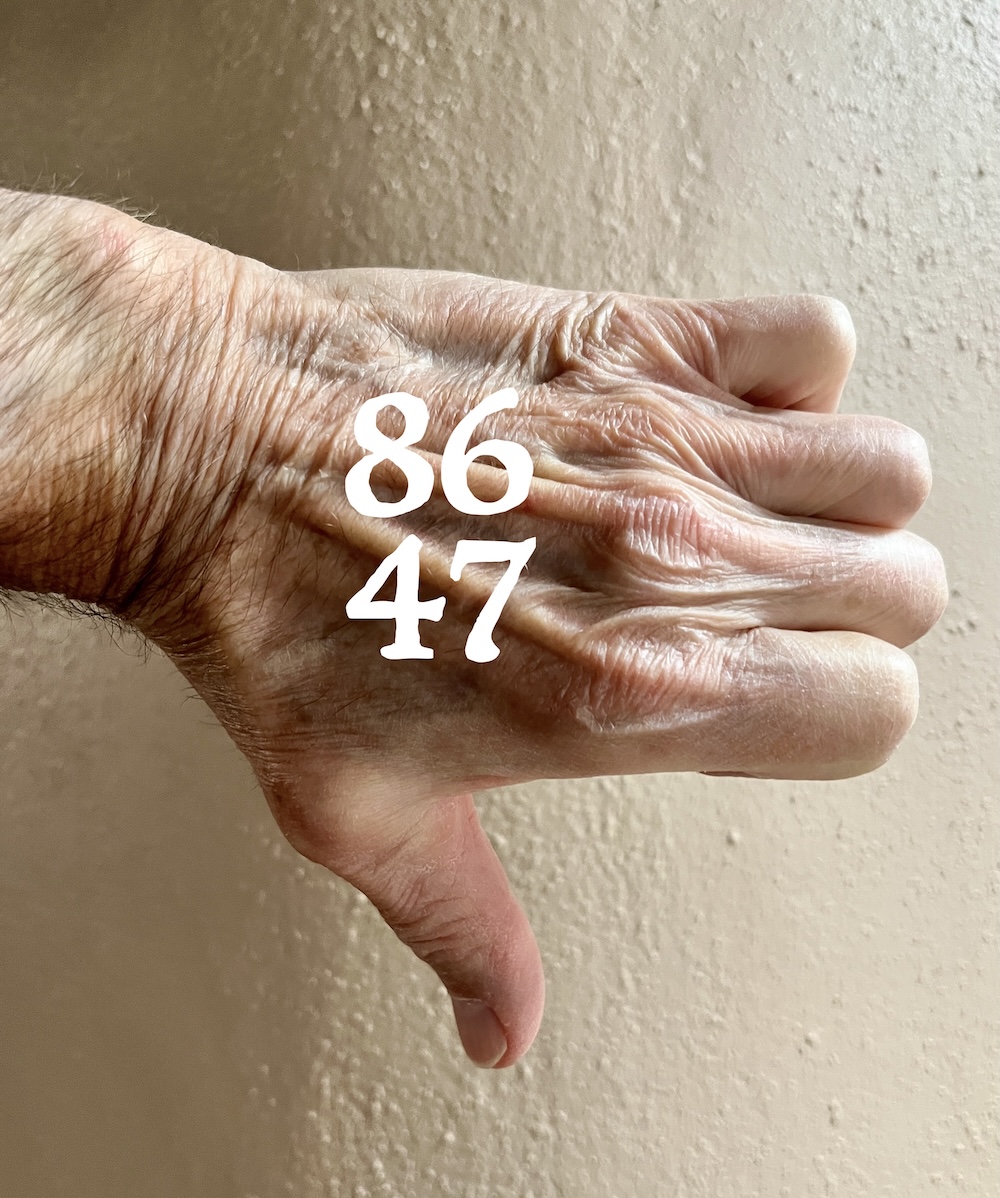
Ho hum. I see some deep-pockets blowhard strolled in and out of court again yesterday, without consequences, as per usual. Not even a mug shot.
Shit, I’ve done more time than this blabbering plastic sack of fast-food farts, a serial liar who cheats at golf and would sell his idiot children to the Saudis, if he could find one dumb and mean enough to buy them for sex toys and/or dog food.
And I didn’t have to lip off to the cops, DAs, or judges to get jugged, either.
No, that would’ve been one of my bros, the dude who told the graying Colfax beat cop with the rookie partner: “You can’t arrest us for walking out of a bar with a beer.”
Ho, ho. Wrong again.
This regrettable incident took place in the Glory Days, when my friends and I were basically ambulatory recruiting posters for the War On Drugs. We’d have let the feds put our faces on a “Know Your Enemy” flyer if they paid us in cocaine and Stoli.
None of us was wealthy. We had no well-connected allies. We had dedicated ourselves to scaling new heights of impairment and then tumbling down the other side into a crusty rental house that used to be part of a Glendale nursery. For plants. Not children.
And thus we learned how to talk to cops. Be polite. Rely upon the short, simple words you can still pronounce without drooling. Don’t let the nice flatfoot see the devils raging behind your blood-red eyeballs.
And never, under any circumstances, tell a cop, “You can’t arrest us for [insert your offense here].”
My friend forgot this cardinal rule — only for a moment — but that’s all it takes. Loose lips sink ships, especially when the crew is hammered. And so we all got a fun ride in the drunk wagon and a night to remember in the Denver calaboose, where we met some fascinating people.
One was a duster (crazed on PCP), and he was quickly awarded the entire drunk tank for his earsplitting arguments with people or Things who were not there. We more numerous but much less scary drunks got packed into two-man cells so we could enjoy the floor show from a safe distance.
Another was a glum-looking permed and pastel-leisure-suited gent who had gotten popped for soliciting a hooker who turned out to be a vice cop. He could see his apartment from our cell, but not his wife inside it. He was not looking forward to seeing her in his new digs.
We got sprung in the morning without charges. Go and sin no more, you silly little shits, they told us. But goddamn it, we did our time.
If only we’d been riot-inciting former presidents of the United States whose Florida resort’s crappers were overflowing with national secrets instead of addled stoners getting sideways with a Colfax cop.
We’d have been back in the Satire Lounge before closing time.
Calm down, ye amadáin, I’ve not a drop taken: That’s a Guinness 0 so.
Birthdays. Some of us get overserved, others get 86’d with the cork barely out of the bottle.
Whoever’s in charge of this party seems a bit random. Can’t tell the top shelf from the well, the class from the dross. Proper ladies and gents given the shove while the most appalling tossers have the run o’ the place.
Take me, if you can bear to. Here I sit, roaring up on an age at which I had fully expected to have been stone dead for at least 39 years. Upended many an office pool I did.
“Who picked 69? 69? Well, doesn’t matter, because the bugger is still alive!”
Turn your radio on.
Meanwhile, there’s many an empty stool in this shabby shebeen. Where’d everybody go? They were all here just a minute ago. …
Herself is back east with family and friends to raise a belated parting glass to a lifelong friend carried off by COVID last fall.
I’m right here, having charge of the cat. But recently I spoke with one of my old pals, the former Live Update Guy Charles Pelkey, who has taken a few sucker punches since a cancer diagnosis a dozen years ago but is still on his feet in Laramie, all bouncers be damned.
It may be my birthday that’s on tap come Monday, but I’d buy Charles a round to celebrate his most recent lap around the sun, may it not be his last. Lucky for me and my 401(k) I don’t drink anymore; I don’t think he does, either. ’Tis unknown the amount of money our younger selves could piss away in a proper pub.
At the publisher’s expense, of course.
But that’s neither here nor there.
And anyway, it’s the thought that counts.
So belly up to the bar — unbeknownst to the landlord, who is manhandling another tray of industrial lager to the hoops-watching gobshites glued to the TV in the back of the pub, we’re uncorking an 18-year-old, double-cask, single-malt episode of — yes, yes, yes — Radio Free Dogpatch. And sláinte to yis.
P L A Y R A D I O F R E E D O G P A T C H
• Technical notes: There was an inordinate amount of racket in and around El Rancho Pendejo this week, but after a series of false starts I was finally able to nail something down using my trusty Shure SM58 mic and the Zoom H5 Handy Recorder. Editing was in Apple’s GarageBand, with a sonic bump from Auphonic. Music and sound effects are courtesy of Zapsplat,Freesound, and Your Humble Narrator.


 Mad Blog Media