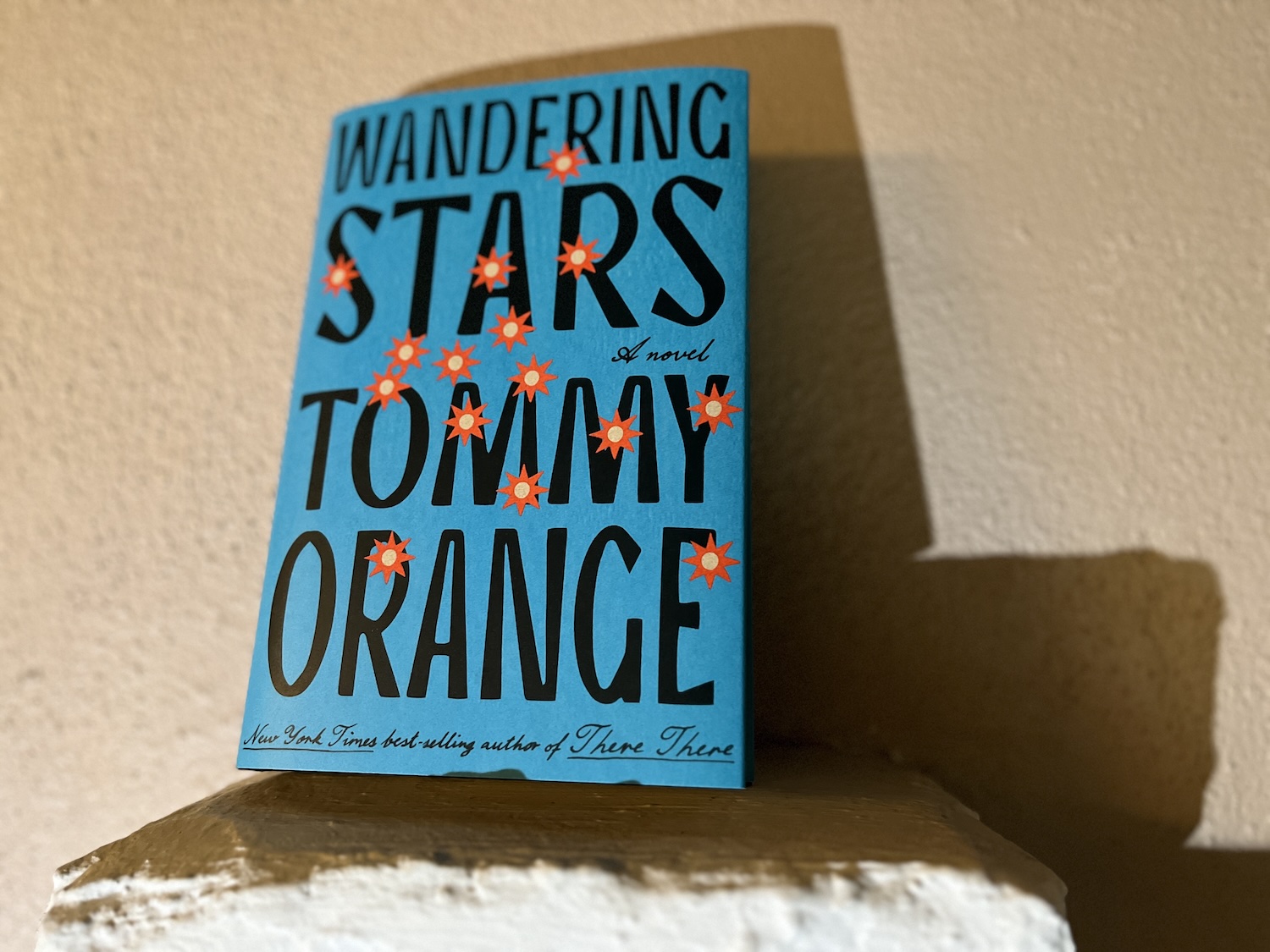
The MacArthur people call it both “a sequel and a prequel” to the previous work, and it’s not a lazy bedtime read. The first pass through I found myself speedreading it, a vile habit I can’t seem to shake. It’s like driving the interstate instead of William Least Heat-Moon’s blue highways. You get where you’re going, but you miss a lot of scenery.
Now I’m taking my time and enjoying it more. Orange, a native of Oakland, Calif., and an enrolled member of the Cheyenne and Arapaho Tribes of Oklahoma, covers a lot of territory as he takes us back and forth in time, from the Sand Creek Massacre of 1864 to the echoes of the climactic gunfire in “There There.”
With one eye on another orange tale-teller I found one passage particularly apt for Indigenous Peoples’ Day.
Opal Viola Bear Shield, who is on the lam for a number of reasons — no spoilers here, read the book — is giving her unborn child a Cheyenne perspective on dogs, white people, and bloodlines (the child’s father is half white, and a white family’s dog, Cholly, is on the lam with them).
He’s one of these mutts you don’t know what kinds of breeds are in him and you don’t much care because he seems all his own in the eyes. Well he’s only got the one eye, but it’s got more life in it than I’ve seen in some men with two. And I’ve seen worse men than those with no life in their eyes. It’s worse when they know what they want and they’re hungry for it, white men in this country, they come to take everything, even themselves, they have taken so much they have lost themselves in the taking, and what will be left of such a nation once they are done?
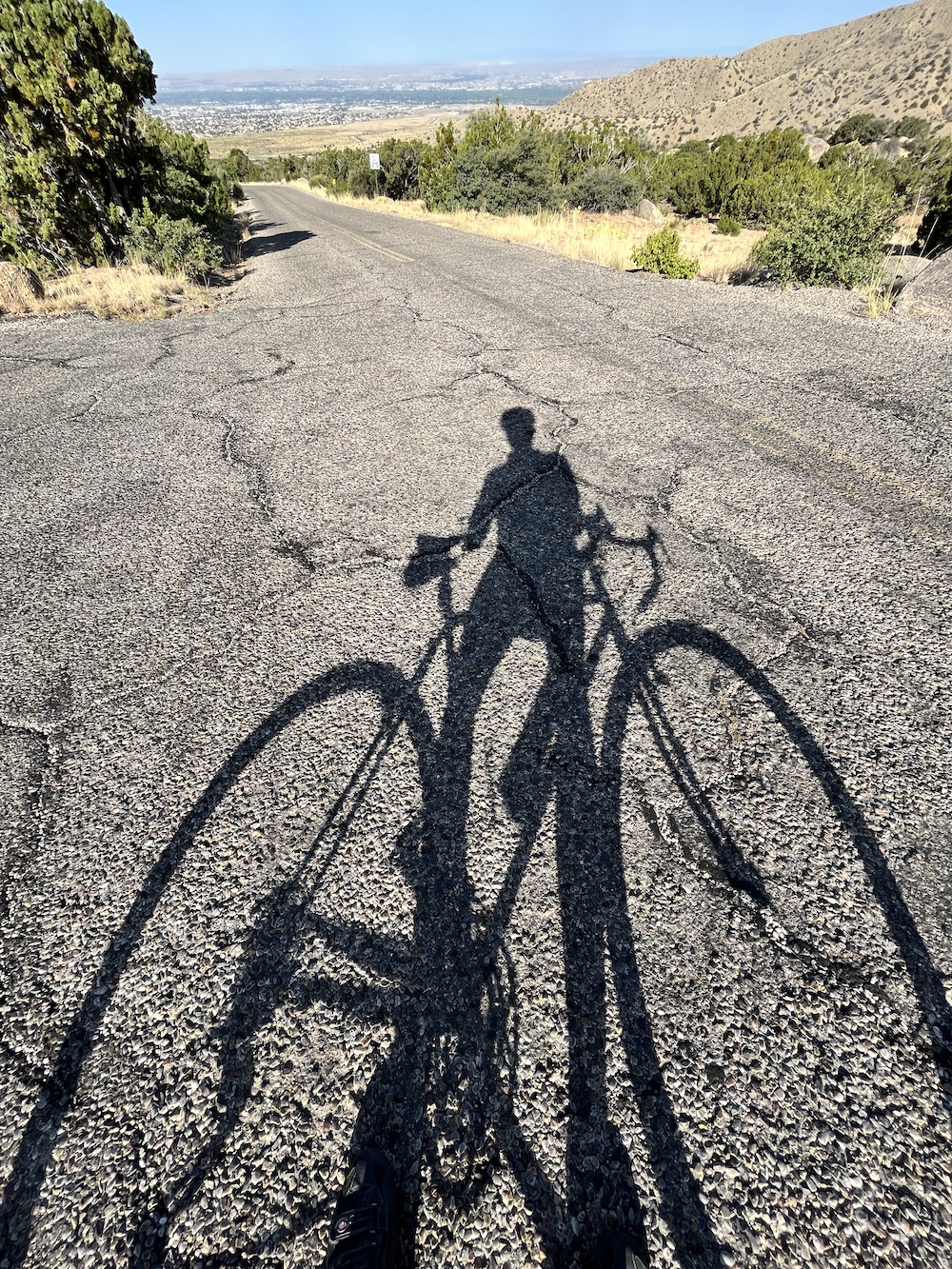
Herself joined me for a ride on Friday, her first of 2025. We covered a moderate distance at a leisurely pace. The idea was for her to ease back into the activity while we looked for Gambel’s quail in the foothills. Not to eat. Just to see.
Both missions were accomplished. The high point was a pair of quail leading a dozen or so thumb-sized chicks through the scrub.
Back at the ranch, I glanced at Herself’s dusty, cobwebbed old Barracuda A2T mountain bike, slouched on two flats in a corner of the garage.
It’s so old I can’t remember just when I acquired it. But I remember where. Durango, during some long-ago Iron Horse Bicycle Classic, possibly the 1995 edition. So, exactly 30 years ago.
That would’ve been the year that Barracuda was sold to Ross Bicycles — you can read more about the company’s history here — and was blowing out Taiwan-built Tange Ultimate frames for $75 a pop during the Iron Horse.
“Why not?” I thought, being a cash-strapped freelancer trying to make his mark in Bibleburg. So I snatched one up and Old Town Bike Shop built it for me with some stuff I had on hand and a few bits I had to buy. (Sound familiar?)
There’s an anonymous RockShox elastomer fork, Deore V-brakes and levers, Crank Bros. Candy pedals, STX triple crank and rear derailleur with XT front, GripShift twist-shifters, Avenir stem and Zoom bar, and a mismatched wheelset — Mavic 230 SBP rim and anonymous hub (front) and Araya TM18 rim with Parallax hub (rear). A Terry saddle perches atop some ugly-ass no-name seat post.
And that was the high point of the 1995 Iron Horse for me. I had a shit road race, pulling a hamstring on Coal Bank Pass while leading a chase group and still facing the ascent of Molas Pass plus a snowy, wet descent into Silverton — “Worst time I’ve ever had at Iron Horse,” as I wrote in my training log — and spent the rest of the holiday weekend limping around Durango, covering the Roostmaster and the cross-country MTB race for VeloNews.
So, for the 30th anniversary of all that, I replaced the tubes in the Barracuda’s tires, checked the shifting, and took ’er for a spin round the cul-de-sac to see if everything worked.
Q. Is it not obvious to anyone that the Empire is as strong as it ever was?
A. The appearance of strength is all about you. It would seem to last forever. However, Mr. Advocate, the rotten tree-trunk, until the very moment when the storm-blast breaks it in two, has all the appearance of might it ever had. The storm-blast whistles through the branches of the Empire even now. Listen with the ears of psychohistory, and you will hear the creaking. — Hari Seldon fencing with the prosecutor while on trial for disturbing the peace of the Emperor’s realm, in the first book of Isaac Asimov’s “Foundation” series
Confirmation bias is real, and not always self-inflicted.
Case in point: Last night some of us were gnawing on current events in an email chain when in a fit of grim despair I wrote the following:
• • •
Call me cynical, but I think the idea of reviving manufacturing in the United States is a pipe dream, pure and simple.
Americans crave cheap shit, and they want to be paid top dollar for doing … something fun. Not living in a city-sized factory cranking out the iPhones and watching their bunkmates jump off the roof when it all gets to be too much. Being an “influencer” means you never have to jump off a roof unless you really need the clicks and there’s some drone down there with a net to catch you.
What are Americans qualified to manufacture in the near future that their fellow Americans (or anyone else) want to buy? Who’s gonna risk their capital building factories, arranging supply lines, finding/marketing to customers? The long view meets the short attention span and the minimalist skillset. Hilarity ensues. Or not.
The developing world is busy making and selling us shit in hopes of becoming us someday so their kids don’t have to work as hard as their folks did.
I can see small-scale stuff happening here. High-priced bespoke artisanal products (Moots comes to mind).
But most of what I see right now, day to day, is white collar and service industries, and a big, big gap between the two.
Also, consider A.I. and the increasing use of robotics in everything from package delivery to surgical procedures. Any domestic manufacturing developing in the next few decades might need humans only to troubleshoot/reboot the System from time to time and calibrate/lubricate the machinery. Until It figures out how to service Itself without the expense and hassle of the dwindling, unreliable and tiresome human element.
• • •
Well. How d’ye like them apples? Mighty pleased with myself I was, too. Especially after I read this analysis by Binyamin Appelbaum this morning in The New York Times. (The link is a gift; no need to subscribe.)
Appelbaum, the lead writer on economics and business for the NYT’s editorial board, did the heavy lifting to confirm my shoot-from-the-lip bias. Well done indeed, Binjy old scout.
He cites French historian Fernand Braudel, who examined the rise and fall of titans like Amsterdam, London, and yes, New York, taking the long view “because he didn’t want to make too much of short-term pain or setbacks.” Appelbaum explains: “It was an approach that he said he developed to maintain his equanimity during the five years that he spent in German prisoner-of-war camps during World War II, refusing to make too much of ‘daily misery’ or the latest scraps of news.”
Back in the Day™, according to Braudel, finance replaced manufacturing and merchants became bankers — ““a society of rentier investors on the lookout for anything that would guarantee a quiet and privileged life” — moving hither and yon in search of return on investment, regardless of whichever Napoleon of the moment sat squawking on his papier-mâché throne.
And they didn’t bring everyone along for the ride.
Appelbaum gives a light backhand to the latest monarch who wants the rubes to think he can turn back time with a wave of his scepter: “Expanding manufacturing is a goal increasingly shared by elected officials across the political spectrum, but Trump is trying to overhaul the rules of global trade with all the finesse of a do-it-yourselfer living in a house while renovating it, and the disruptions are shaking the global economy. “
And then from beyond the grave Braudel steps forward to give Beelzebozo the coup de grâce, patting him on that ridiculous combover, shaking his head with a smile, and murmuring, “Putz.”
Again, Appelbaum:
“Braudel, who died in 1985, probably would have regarded the president as nothing more than a cork bobbing on the currents of history. If he was right, no matter the president or policies, America’s era of economic domination is ending and its political hegemony is unsustainable. If he was right, it’s time to accept that our second-rate status is inevitable and irreversible.”
Thus we recall another wise fellow, George Santayana, who in “The Life of Reason” wrote: “Those who cannot remember the past are condemned to repeat it.”
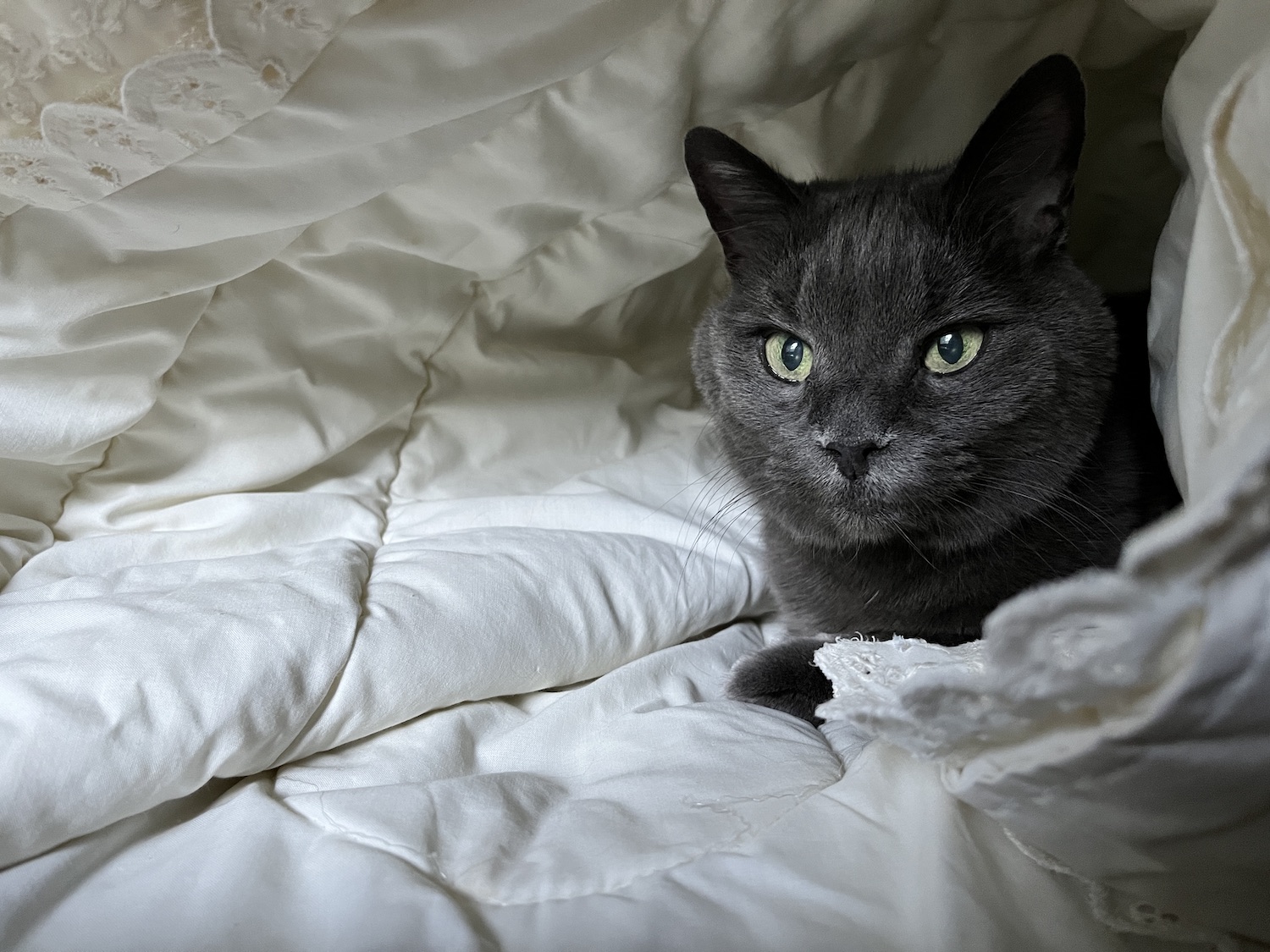
Miss Mia Sopaipilla mans (cats?) the National Affairs Desk in our bedroom.
It was not quite 4:30, and I was not quite up.
I was awake, rolled up in the blankets like a strip of bacon in a breakfast burrito. But I was in no rush to get unwrapped, gnawed on, and shat out by Election Day 2024.
My Gonzo pin, a gift from a friend during my own Gonzo period.
Like Mike’s bankruptcy in “The Sun Also Rises,” it has finally arrived: “Gradually and then suddenly.”
Don’t worry. I haven’t been reading Ernest Hemingway in the run-up to The Big Show. No, I’ve been wallowing in bits of this and that from Dr. Hunter S. Thompson.
The Good Doktor wrote madly about The Edge, until he finally stepped over it. Nineteen years later, dead by suicide, cremated, and shot from a cannon by Johnny Depp, he still has more class — albeit in a certain Hell’s Angels style — and gave more service to his country than many a president.
Writing about the Hell’s Angels in his book of the same name, HST described people like the ones Herself recently saw herding flamboyantly Trump-flagged pickups up and down Tramway, horns honking:
“They are out of the ball game and they know it, (so) they spitefully proclaim exactly where they stand … Instead of losing quietly, one by one, they have banded together with a mindless kind of loyalty and moved outside the (establishment) for good or ill. (That) gives them a power and a purpose that nothing else seems to offer.”
He may have been a bit premature with the second volume of his “Gonzo Papers,” titled “Generation of Swine: Tales of Shame and Degradation in the ’80s.” If he had kicked his dope-soaked alter ego Raoul Duke to the curb and survived to see this generation of swine — HST would be 87 today — he might have looked back on the ’80s with a certain fondness, even longing.
Describing the difference between the ’60s and the ’80s, between the Watergate and Iran-Contra scandals, he wrote:
The criminals in Watergate knew they were guilty and so did everybody else; and when the dust cleared the crooked president was gone and so were all the others. They were criminals and they had the same contempt for the whole concept of democracy that these cheap punks have been strutting every day. …”
Don’t you wonder what he’d have had to say about the 45th president — impeached twice, beaten in his bid for re-election, tried to reverse the defeat with violence and chicanery, obviously insane, declining hourly — and still within a whisker of winning a second term, going two for three? I know I do.
HST mentioned that guy only in passing, as far as I can recall. But he took note of Joe Biden’s first major presidential-election meltdown over a plagiarism scandal at law school in the ’60s. The candidate who hopes to succeed Biden, Vice President Kamala Harris, had won her first election — as San Francisco district attorney — just three years before HST died in 2005.
So, yeah. HST left the party too early for a change, and more’s the pity. He wasn’t always right, and sometimes wasn’t even readable. But when he was on his game the Good Doktor could walk with the King. Or savage him. I can’t think of anyone I’d rather be reading right now as we all tiptoe toward The Edge once again.
Here he is again, quoting John Keats instead of his personal fave, the Book of Revelation:
“Beauty is truth, truth beauty,”—that is all Ye know on earth, and all ye need to know.”
“I would like to tell you how genuinely proud I am to have men such as your son in my command, and how gratified I am to know that young Americans with such courage and resourcefulness are fighting our country’s battle against the aggressor nations.” —Lt. Gen. George C. Kenney, Allied air chief in the southwest Pacific, in a 1943 letter to my grandmother, Clara Grady, noting her son’s receipt of the Distinguished Flying Cross
Kind of a gloomy November morning here in The Duck! City.
But not as gloomy as it must have been back in the Forties, when the men of the 433rd Troop Carrier Group were fighting the Japanese in and around New Guinea.
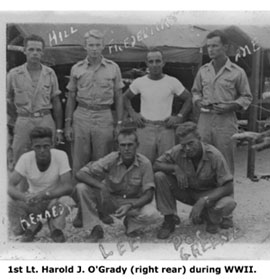
I was surfing lazily across the Innertubes when I stumbled across a Library of Congress collection of interviews with some of the men who served in the 433rd with then-1st Lt. Harold Joseph O’Grady, who was awarded the Distinguished Flying Cross in 1943 but rarely discussed his wartime service, even with family.
One of the interviewees, another Harold — Harold E. “Vick” Vickers — discussed his service from right here in Albuquerque back in 2005, and again in 2012. What a small world it is.
Vick wanted to be a pilot like my old man, but didn’t have the vision for it — “You had to have perfect eyes,” he said — and so he served in a support role, in operations, with the 433rd.
And he had to take ahold to get that job. He enlisted in what then was called the U.S. Army Air Corps (later the Army Air Forces), but instead found himself in the Signal Corps. Vick wasn’t having any of that — he fought to be Air Corps and got his wish.
“Be careful what you wish for,” they say. And they ain’t just a-woofin’.
Vick was supposed to ship out — for real, on an actual ship out of San Francisco — but wound up ordered to travel to New Guinea with the air crews in a formation of brand-new C-47s.
His plane blew an engine and missed the departure, and once the aircraft was squared away his crew had to play catchup, solo, with a brand-new navigator, island-hopping across the Pacific to Brisbane and finally to Port Moresby, New Guinea, which had yet to be pacified by the Allies.
And that’s where things got really hairy. Not a memoir for the faint of heart. It gave me some idea of why the old man might not have been eager to share his war stories with snot-nosed kids.
Here’s to Vic, Hank, and all the rest of the men and women who did their best in far-off lands, especially the ones who never came back to tell their tales.



 Mad Blog Media