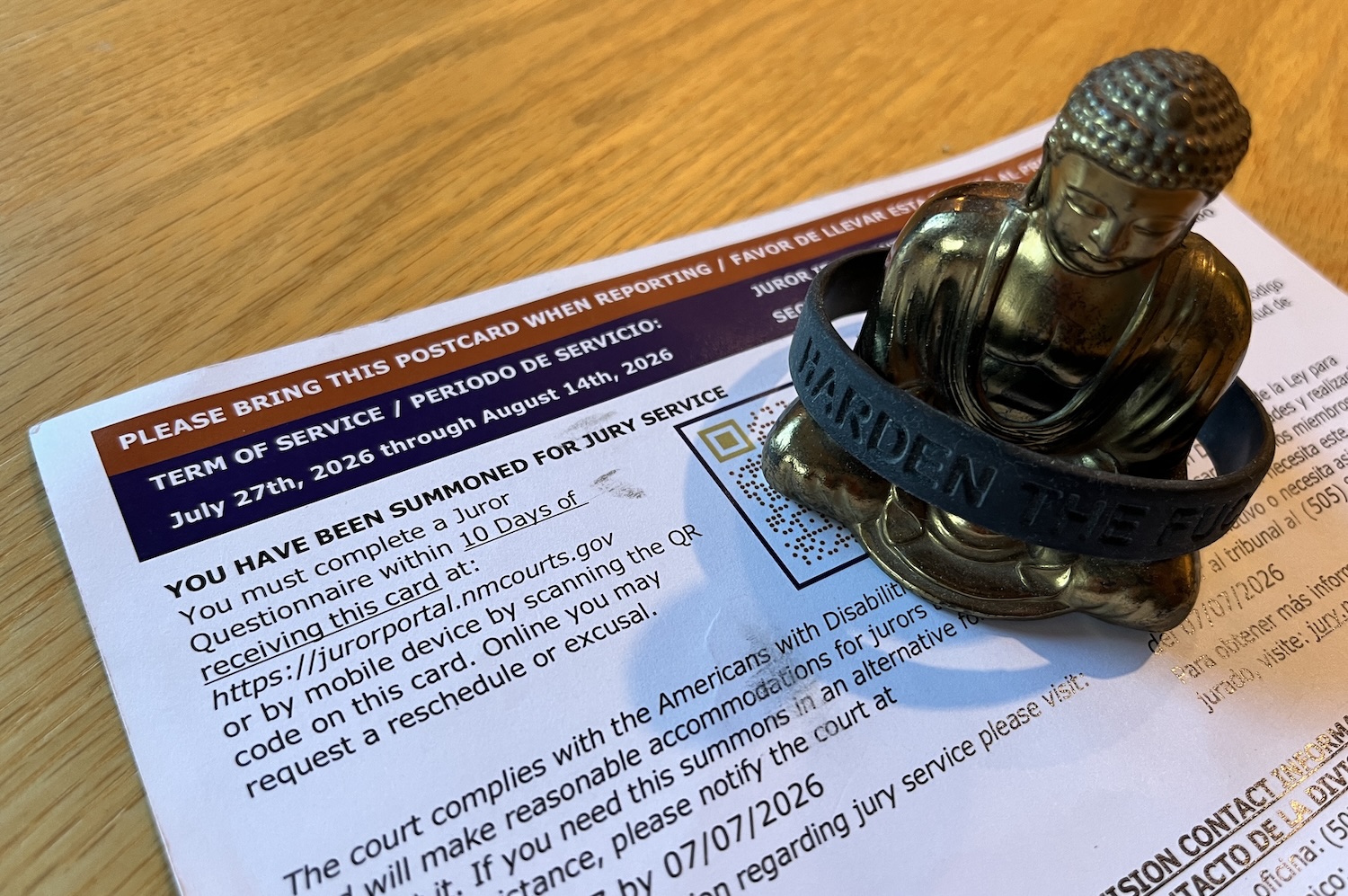
‘A grave matter’

“Harden the fuck up,” says the Buddha.

I beg to urge you, everyone:
life-and-death is a grave matter,
all things pass quickly away;
each of us must be completely alert:
never neglectful, never indulgent.

—The evening message of sesshin at the Diamond Sangha, from “Taking the Path of Zen,” by Roshi Robert Aitken

Well, they finally caught me.

Not the cops. The court.

Specifically, the Second Judicial District Court, which needed a few good people — more than a few, actually — to help them resolve a number of pressing legal matters on what one court staffer last week called “a typical busy Monday.”

I thought voir dire would put me back on the streets with all possible speed, for reasons obvious to readers of this blog. When the lawyers started asking if anyone present had ever been in a car crash I opened with getting hit by a train when I was 20. I have other, lesser tales, and usually save getting creamed by an 81-car, 7,000-ton Burlington Northern for the closer, which, frankly, I thought it would be.

“All right, I’m out of time — thanks for coming out, everybody, you’ve been a wonderful audience!”

But the number of pressing legal matters was high and the bar for jury service low and I got yanked over it and into a jury box.

• • •

I won’t tell you I was eager to serve, but I was curious, because the case was auto vs. two-wheeler. Reckless driving resulting in death. If the defendant were found not guilty of the top charge, the jury would consider a descending series of lesser charges.

Our jury seemed a well-chosen crew. Two of us had owned Vespas, a third rode some lesser scooter, and at least one was a motorcyclist. Three or four of us also bicycled, on asphalt, dirt, and gravel. I assume we were all motorists. One was a freshly minted driver who’d only been prowling the mean streets of The Duck! City for a few months. We were old, young, and in between; white collar, blue collar, retired; brown, white, black; men and women.

As the lawyers did their thrust-and-parry thing, questioning eyewitnesses, police officers, crash reconstructionists, and a medical examiner, it seemed clear why the state felt comfortable going to trial. Even the defense conceded that their client was speeding in the center lane, ran a red light, struck the two-wheeler, and its rider died. The state’s case made a bathysphere look like a $2 Walmart tea ball.

I’ll spare you the gory deets. And while I doubt The Algorithm will splash this bush-league blog post far and wide across the Innertubes, for reasons that will be made clear I’m not going to give chapter and verse of the facts in the case. Speeding, ran the red, someone died. Pretty basic stuff.

• • •

Anyone who’s spent any time in court knows it lacks the polish of the TV shows. Attorneys fumble for words and thumb through reams of paper. The technology is temperamental. Witnesses can be confused or combative. Questions you might have raised as lawman or lawyer go unasked.

The burden of establishing proof of guilt beyond a reasonable doubt lay with the state, the judge reminded us, and toward that end the prosecutors supplied the bulk of the witnesses, along with surveillance video from two businesses near the scene of the crash; police lapel-cam footage with audio; audio from a 911 call; information downloaded from the auto’s airbag-control module (event data recorder); and stills of the scene, crash debris, both vehicles, and “the decedent,” as the defense insisted the crash victim be called.

The defense insisted upon a number of things, among them their client’s actions after the crash. The defendant did not flee the scene; wasn’t argumentative when interviewed by police; and did not try to foist responsibility for the crash onto “the decedent.”

The defendant’s attorneys, focused on reasonable doubt, were less generous in that regard. The strategy seemed to be, “If it were not for this rando rocking the two-wheeler we wouldn’t even be here, wasting everyone’s valuable time.”

• • •

The usual hokum ensued. Did the two-wheeler make an improper right turn while exiting a gas station, entering the center lane rather than the curb lane? Possibly, but there was no concrete evidence of this; the rider may have entered the curb lane and then moved left to the center.

Was the rider’s helmet properly secured? This hoary old trope, decades past its sell-by date, is lifted straight from the F1 key on any lazy cop-shop reporter’s computer keyboard: (tap) “The victim was not wearing a helmet.”

That helmet? It was a full-face model. Could it have prevented the rider from hearing the defendant’s vehicle as it accelerated through the red light? If you are sensing a theme here, it is that when it comes to helmets, you are damned if you wear one and damned if you don’t.

Footage from the gas station’s surveillance camera showed rider and two-wheeler as they actually were at the time: bright colors, tail light and headlight, helmet. And when leaving the pump for the pavement, it appeared that the rider glanced left, possibly to check for oncoming vehicles.

• • •

That was just the sound check. Next, the rock ’n’ roll.

The defense argued that it made sense in terms of safety for their client to run the light. The defendant, already a few minutes late for work, was speeding, after all; it would’ve been impossible to stop before entering the intersection. Traffic at that hour was light, no other vehicles had begun crossing under the green, and the center lane ahead seemed free of any and all obstructions.

Further, once it became evident that such was not the case, it appeared that their client tried to avoid the collision, coming off the gas, braking, and steering slightly to the left. But it was too late. The impact destroyed the two-wheeler and hurled its rider up the road, with helmet ripped off. The rider sustained a number of severe injuries and died at the scene.

That’s pretty much it. The disputants rested their respective cases, then delivered closing statements. And the judge sent us off to the jury room.

• • •

It seemed clear to me that the defendant’s decision to put foot through firewall and run the red was the first and most important link in the grim chain of events that followed. It was reckless. The judge’s instructions regarding the law and how we must proceed were complex, but we muddled through, and after we picked a foreperson and discussed areas of concern a few jurors who had been on the fence picked a side. Guilty as charged. The vote needed to be unanimous.

It was not.

The defense had found the one weak link in our chain. The magic words that broke it were “reasonable doubt.”

Several of us tried to bring our lone holdout around but it was fruitless. Our foreperson reported the deadlock to the judge, who gave us more time to deliberate. Heels remained dug in. Not even a solid alternate-universe hypothetical from a juror with a strong schoolteacherish vibe could prevail. It went something like this:

What if the defendant had not been speeding? Then it would’ve been possible to stop for the red light. The rider of the two-wheeler would have turned from the gas station into the road without incident and shortly thereafter would have been sitting in a café somewhere, eating a breakfast burrito. The motorist would have been a few more minutes late for work.

No sale. We remained at 11-1.

Once again the judge asked us, one by one, whether more time for deliberation might help us reach a unanimous verdict.

No, your honor.

And that was that. Dismissed.

• • •

As a junior-varsity cartoonist and columnist I grew accustomed to seeing my arguments dismissed. Not everyone was buying what I was selling.

I try to be a tough customer myself, but I’ve been played often enough to know that refreshing breeze cooling my nether regions means my pants are puddled around my ankles again. About three times out of five, if I’m on form and the wind is right, I can I.D. bullshit if I catch a good, strong whiff of it. And in that courtroom I smelled it coming from the defense. Eleven people agreed; one did not. That’s all it took.

Could/should our holdout have avoided jury service through a more vigorous winnowing process or by pleading extenuating circumstances and requesting a rescheduling or excusal? Maybe. The doubt seemed unreasonable, more emotional than intellectual. But what it seemed like to me was irrelevant. Move to strike, your honor. …

• • •

As a young reporter I was dragooned into covering a water-board meeting. The information was made available and I couldn’t for the life of me make any sense of it. The editor was not amused. Was I a poor choice for the task? Could I have declined the assignment, or tried harder? Yes, yes, and yes. In any event, somebody had to do it and it was my turn in the barrel.

As it happened, another reporter was able to cobble together the story I could not write. Journalism is a team sport.

And, as it turns out, so is the law. It’s my understanding that a new trial has already been scheduled and a new jury will be selected. Maybe I’ll go back as a spectator, if there’s nothing good on TV.
It never rains, but. …

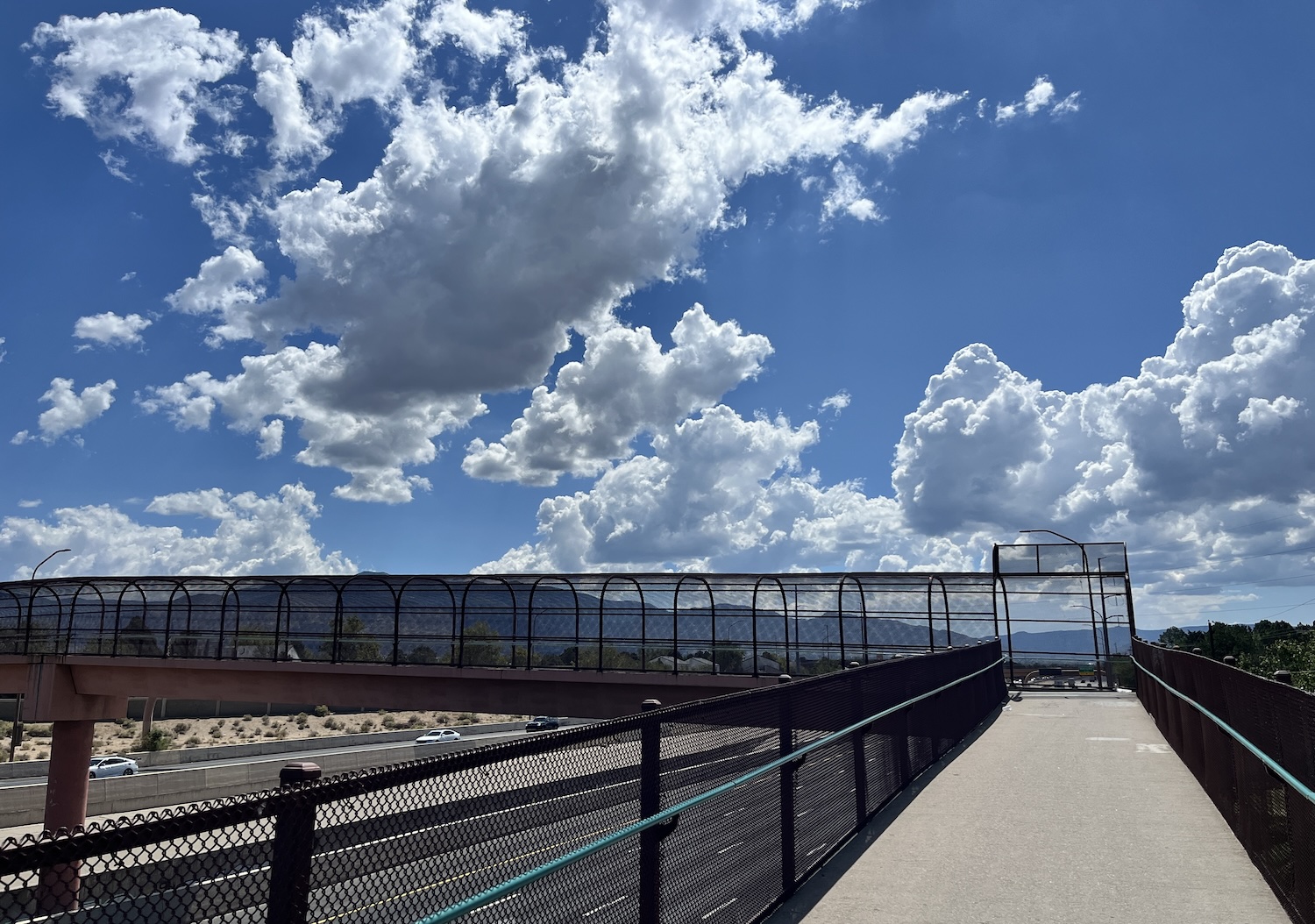
Crossing over I-40 near Winrock Town Center aboard the Soma Saga (canti edition).

We’ve been enjoying the occasional sprinkle in late July, all told about a half-inch of moisture in our dusty little corner of the sandbox.

Sure helps keep the mercury on the down-low. The air conditioning gets to take five, as does the irrigation system.

Why, a fella can even wait until 9 in the a.m. to get out for a bike ride without risking spontaneous combustion. Luxury!

I’ve been logging more miles lately — 131 last week, 123 the week before, 130 the week before that — not just because the weather has been delightful, but because it gets me away from the MacBook Pro, which seems to have visited Taco Bell without me and has been shitting all over my desk.

I’ll spare you the links. You’ve seen them all anyway.

Now, I could take a claw hammer to that laptop, make it shut up. But the MacBook Pro is not the news; it’s just a delivery system. It’s not the Beast; it’s not even letting it in. It’s just making it available in case I want a peek.

“And now, here’s Ash with the weather!”

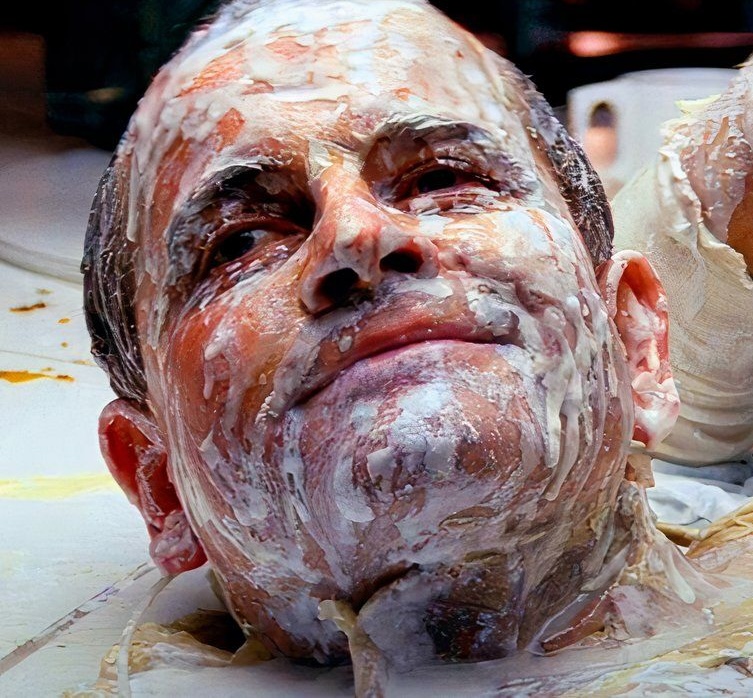
Remember Parker beating the tar out of Ash in “Alien” and all the good that did him? Ash was a grinning, disembodied head in a puddle of goo — literally a talking head, still bringing the news and analysis, like some interstellar anchorman for “The Weyland-Yutani Newshour” — and before long everyone on the Nostromo was Purina Alien Chow except for Ripley, Jonesy the cat, and the alien.

And Ripley was still getting nothing but bad news. Especially when, just as she was getting ready to back the escape pod out of the garage, up pops the alien with a solid impression of Jack Nicholson in “The Shining” — “Heeeere’s Johnny!” — and she had to have been thinking, “Goddamnit, all I wanted to do was take a little ride, get away from all this ‘Wet cleanup on Aisle 4’ shit for a while. …”

And Ripley didn’t even know about the next three movies in the queue. Talk about your long days in the office.

The bike is my escape pod. I check it for aliens before I hop aboard.

And while I bring a bot along, I keep that sumbitch locked down tight. If he manages to pop off somehow, well … he’s just a feeble old iPhone 13 Mini, and I’m pretty sure I can whup his ass in a fair fight.

The longest day

Tick tock, etc.

Hot town, summer in the city, as the fella says. Welcome to the summer solstice in the Year of Our Lard 2026.

It’s 76° at 15 minutes after the big hour of 9 a.m. here in The Duck! City, with a high of 95° expected — three degrees above normal but well short of the record of 103°, set all the way back in 1981, when “Bette Davis Eyes” by Kim Carnes topped Billboard’s Hot 100 as Ronald Reagan shredded the social safety net while bulking up the Pentagon.

Well, there you go again. … Good times. Maybe not. Better than now? Your mileage may vary.

Where there’s heat, there’s often fire, and it should go without saying that we have a few: Deer Canyon, south of Mountainair; Osha Canyon, south of Placitas; Rio, at Mesa de la Gallina; and Elk, in the Pecos Wilderness.

Rather than add my little flame to this hot mess I whipped up cool smoothies for breakfast: Mango, strawberries, banana, yogurt, honey, rice milk, and a sprinkle of Vietnamese cinnamon.

Up north my man Hal Walter was putting the finishing touches on his Substack series, “The Blur Goes to College,” which over the past two years chronicled son Harrison’s adventures in higher education. And I do mean “higher” — The Blur attended college at 10,000 feet, in Leadville, after growing up at 8,800 feet outside Weirdcliffe.

Hal’s plan is to transform the Substack chronicle into a physical book, with a cover by noted Leadville artist and old pal Craig Schreiber. Mine is to go for a ride before it gets too bloody hot.

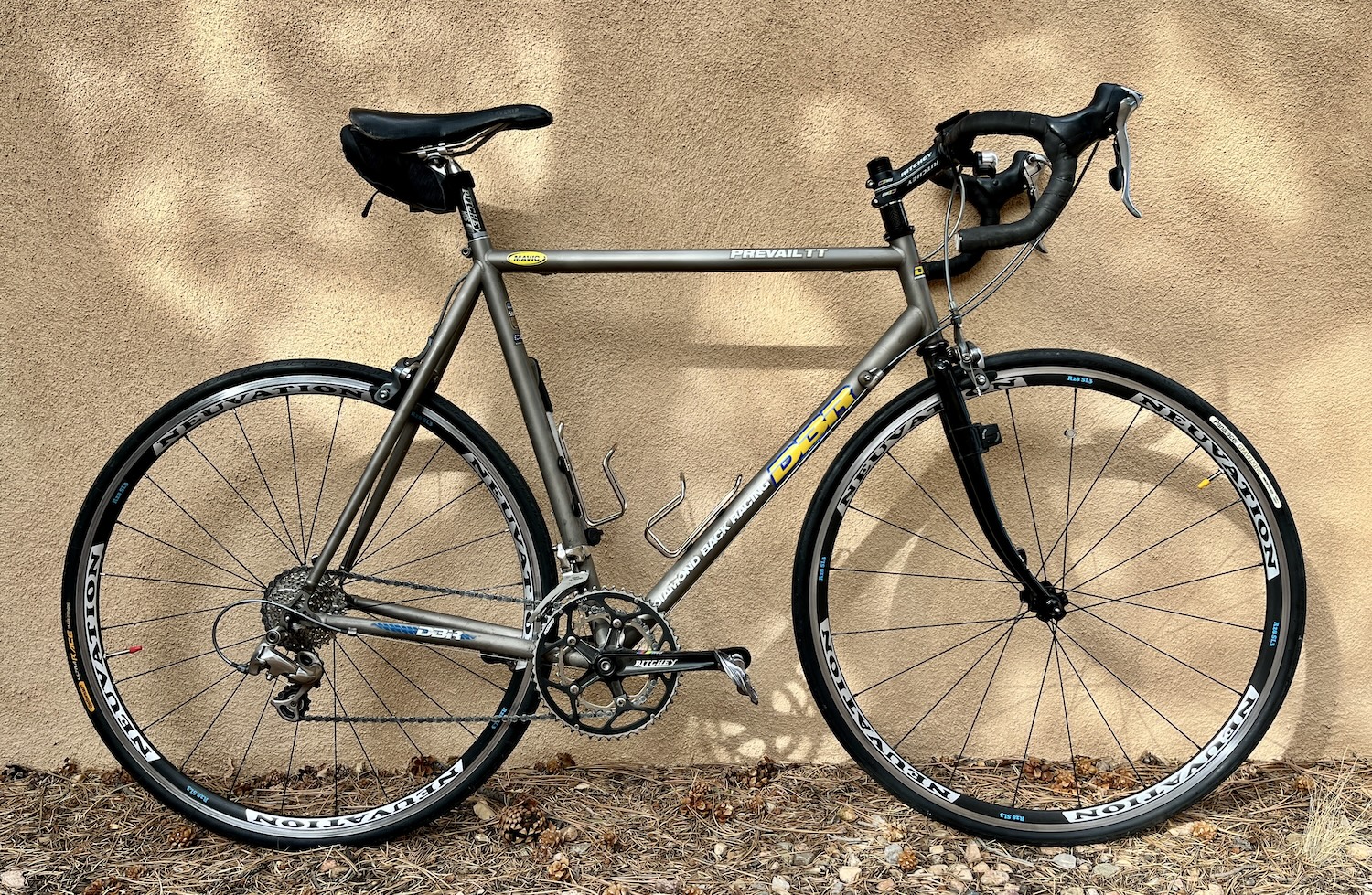
The DBR Prevail TT.

I can’t go all the way back to 1981 for a bike — that year I had just abandoned a Seventies Schwinn when I fled The Arizona Daily Star and Tucson for parts unknown, shortly after my father’s untimely death in Bibleburg.

But I can time-travel back to 1994, when I bought a DBR Prevail TT from John Crandall at Old Town Bike Shop in that very same town.

Do you believe in magic?

R.I.P., Dave Mitchell

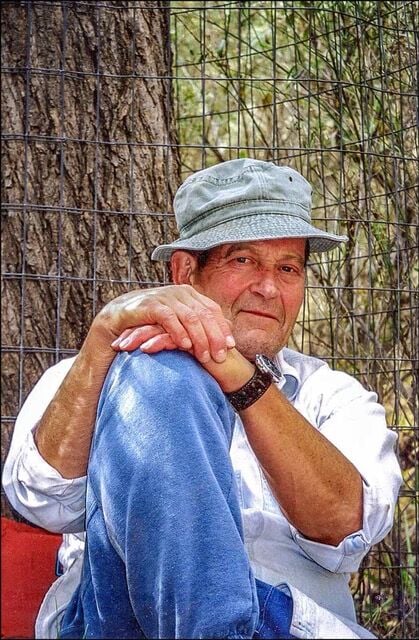
David Mitchell. Pic by Bob Albano, lifted from The New Mexican.

My last boss in the newspaper game, David Mitchell, has gone west. He was 90.

Dave found me roaming the streets back in the summer of 1988, about six months after I got laid off by a chain of weeklies in the north-Denver metro. I was one raggedy-ass mutt back then, but he must have seen some potential I didn’t realize I had, because he hired me to work the copy desk at The New Mexican and afterward gave me the run of the newsroom until he himself got the shove in 1991 for pissing off the big boss, owner Robert McKinney.

I was running out of options and unemployment compensation when Dave summoned me to Santa Fe for an interview. A job I thought was mine at the Ventura County Star-Free Press in California had gone to somebody else, and while New Mexico was short on ocean views, I was in no position to be picky about locale, or much of anything else.

So I was decked out in my best looking-for-work kit when I walked into Dave’s newsroom, coat, necktie, the works, hoping to make a good impression. He was clad in Santa Fe casual, gives me the up-and-down, and says, “You didn’t have to get all dressed up for us.”

Well. Shit. Lost dog comes home.

Dave wasn’t just a newsman, he was a “news” man. As in “Fuck a bunch of features, bring me the news.” Old school. Tough but fair, and hard to impress, especially when he had one foot on your chair and was leaning over you like a ton of bricks getting ready to fall, daring you to feed him some weak line of bullshit.

I think I managed to impress him exactly once, when I was still on the copy desk. A story about a potential school-superintendent hire seemed oddly familiar to me, and then I remembered where I’d seen it before.

“This is from a Marx Brothers movie,” I told the city desk. The city desk didn’t believe me. The library was just down the street. I was right. A school-board member was having our reporter on. Dave gave me a $50 bonus and another long look, the kind that you’d give to a little green man who just stepped out of a flying saucer parked on your lawn.

When the Ventura paper got back in touch to offer me that job I’d been so sure was mine, until it wasn’t, I said thanks all the same, but Dave Mitchell pulled me off the breadline when I had nothing in my pockets but a pair of hands, and I’ma dance with the one what brung me.

I eventually escaped the copy desk and just sort of wandered around the newsroom, working for Pancho Morris on the sports desk, and Denise Kusel at the weekend arts magazine Pasatiempo, dusting off my reporting chops to write some cycling copy, taking some snaps with a camera Pancho laid on me, even helping with a redesign of the newspaper that introduced me to the wonderful world of Apple products.

I didn’t know it at the time, but I was slowly working my way towards a whole new career, as a freelancer. And shortly after McKinney sacked Dave over a series of stories looking into environmental hazards at Los Alamos National Lab, with my mom slipping into dementia up in Bibleburg, well … I got right after it. Herself and I had been married less than a year, the publisher had been asking pointed questions like, “Are you still here?” and I figured it would be best for all of us if I were not.

I was already freelancing cartoons and copy to VeloNews in Boulder. Bicycle Retailer and Industry News came next, co-founder Marc Sani being a Santa Fe riding buddy. These steady gigs lasted for a lot longer than they should have, and they led to other work too, like my stint with Adventure Cyclist, whose editor Mike Deme brought me aboard not for my touring expertise — I didn’t have any — but because he liked the way I wrote.

So, thanks, Dave. I don’t know where I would’ve wound up if you hadn’t taken a chance on me way back when. But it sure as shit wouldn’t have been here, happily married, safely retired, and with a couple bucks in the bank too, typing up some memories on a Mac in New Mexico.

Invasion of the Circulation Snatchers

A little trip down Memory Lane to The New Mexican, circa 1991.

Since I’m not road-tripping this holiday weekend, what say we do a bit of time-traveling?

Shortly after I joined The New Mexican in 1988, publisher Robert McKinney reclaimed that paper from the soulless zopilotes at Gannett. He’d sold it to them in 1976 on the condition that he would retain editorial and managerial control, but just two years later took them to court, alleging breach of contract.

It took a while, but McKinney beat them like a chicken-thieving mutt, returned as publisher in 1987, and in ’89 reacquired the paper he’d first bought in 1949 for a cool half-mil’, but this time paying a slightly higher price: “his remaining Gannett stock, then worth about $33 million,” according to The New York Times.

Today The New Mex remains one of the rarest of birds — a locally owned newspaper. McKinney’s daughter, Robin McKinney Martin, is the big boss.

And once again a McKinney is getting set to throw some hands with Gannett — this time, down south, where those bandidos own and operate the Las Cruces Sun News.

Now, I’ve not read that paper in ages. I do look at its website now and again, and every time I wonder why in hell I bothered.

This is what the American daily newspaper looks like in The Year of Our Lard 2026: the journalistic equivalent of the walking dead. A zombie, full of canned “news” from elsewhere, edited and printed out of town, far from its readership, if any. Check the “contact us” page: Just three staffers listed there — a news director, a news reporter, and a sports reporter.

Now check the contact page at The New Mex.

One name you won’t see there is Julia Gentin. She’ll be joining The New Mex in July to work in Doña Ana County — home of the Sun News — as the Santa Fe paper’s first bureau journalist for southern New Mexico.

“Yes, we’re growing our newsroom and expanding our coverage area,” writes executive editor Bill Church.

It’s an ambitious project, and I’ll be interested to see how it shakes out. Santa Fe and Las Cruces are very different places, and The New Mex is not the acme of perfection. Neither is the Albuquerque Journal, likewise locally owned. No newspaper is.

And speaking of zombies, I wonder whether McKinney — who died in 2001 — might be suiting up for the battle from The Beyond.

Some Gannett drone once called him an “old coot” in a memo. Which was accurate. But I don’t think he liked it.