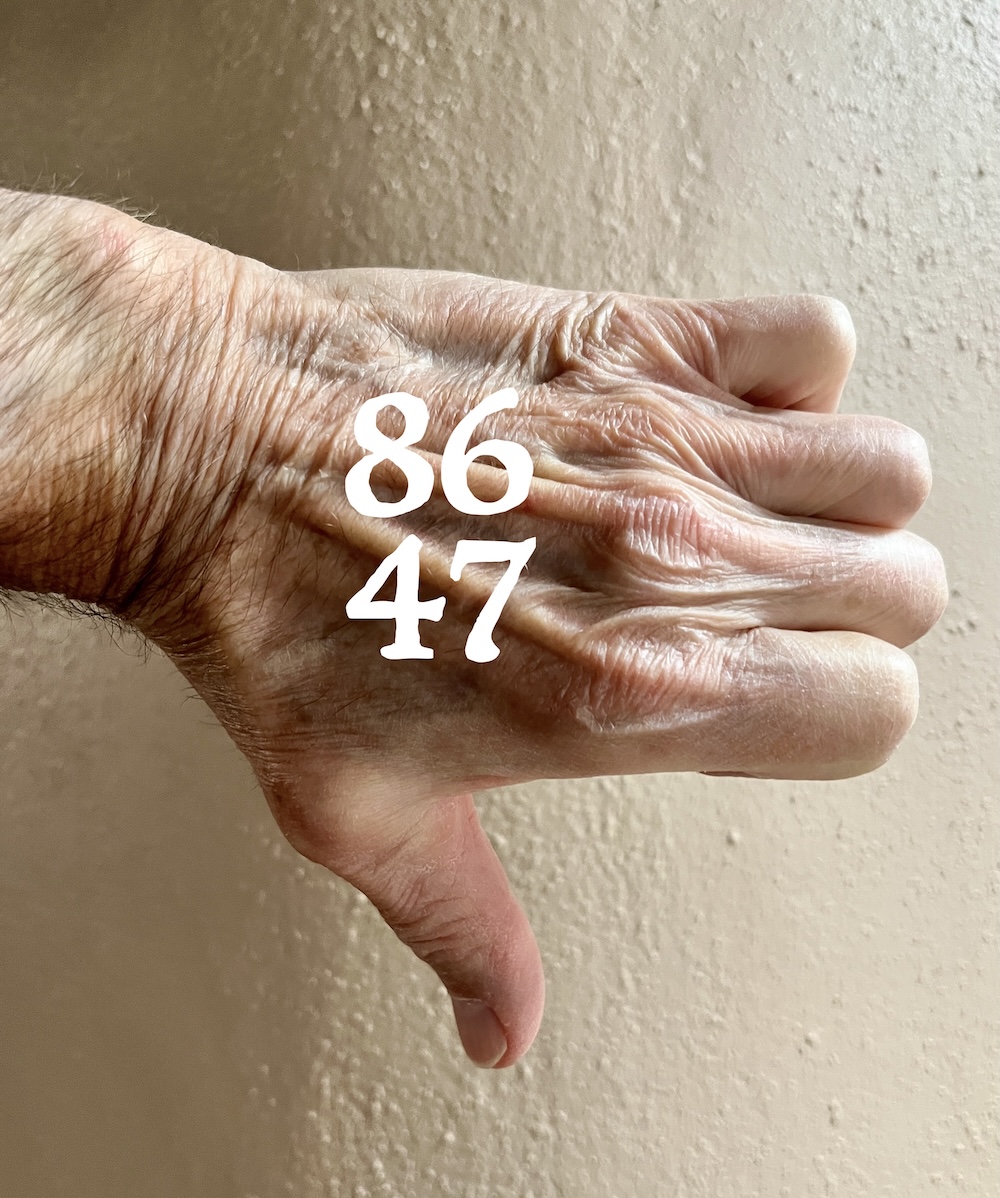

Above you’ll see the latest example of what The New York Times finds consequential this morning.
At upper right on the homepage was more Pulitzer bait: “Should you delay your morning caffeine? Some influencers say that doing so can offer benefits. We looked at the evidence.”
Well. Shit. I thought we had a couple-three wars, the trial of a former president, and some vigorous debate over whether Supreme Court justices are answerable to anyone who isn’t a yacht bro going on. But I remain slightly muddled by the Snotlocker Surprise and may have missed a memo.
This other bullshit — what the hell, let’s add “Hundreds of readers told us their favorite soundtracks. Which came out on top?” — is strictly from the Whisky Dick Department; soft and useless.
It’s bad enough that editors are assigning this shit and parking it up top on the homepage and app. If people are actually burning 17 minutes of their day reading it we’re in more trouble than I thought. Especially if they haven’t caffeinated yet.
Wind and other things that blow kept my bike mileage in the double digits last week, which would not be such a bad thing if it weren’t for my addiction to the news.
After spending too much time in front of the monitor and not enough behind the handlebar I came this close (finger and thumb so close together that you couldn’t slip the homepage of the Albuquerque Journal between them) to canceling all my subscriptions. Bad news, badly written, barely edited, and poorly presented.
The motto of The New York Times used to be “All the News That’s Fit to Print.” At lesser journals wiseguys often revised it to “All the News That Fits, We Print.” In the Age of the Bottomless Internet it might be “All the News We Print Gives You Fits.”
Practically nobody needs to know most of this stuff, much less write about it.
“The rise of executive butlers.”
“At-home IV drips are the latest luxury building amenity.”
“We tried to pet all 200 dogs at the [Westminster Dog Show]. Here’s what it all felt like.”
Newspapers have always provided a spoonful of sugar to help the medicine go down, of course. But once the sheer volume of treacle was limited by the traditional 60/40 ratio of ads to news, which constrained page count; editors’ desire to focus on what was actually important, like, uh, the fucking news; and publishers’ insistence that the final package turn a profit.
There is no bottom to the Internet, no satisfying its endless appetite. Ever fed a baby bird? Imagine one the size of NASA’s Vehicle Assembly Building, but with a basement that extends all the way to Hell.
Whew. Now. All this being said, I have stumbled across two items you might enjoy reading over your morning coffee, shot of whiskey, or morning coffee with a shot of whiskey in it. And surprise, surprise: They both come from the godsend that rescued me from pulling an oar in the sinking longboat of daily newspapering, the wonderful world of bicycling.
First: The Washington Post presents a fabulous report by Peter W. Stevenson on Indiana University’s annual Little 500 bicycle race, made famous by the only cycling movie worth the price of a frame pump to put it into the ditch, “Breaking Away.”
It’s not clear who shot all the video and photos — Stevenson, a video producer, is credited on some, but not all — but they really help tell the story. And I love the still of the Kappa Alpha Theta rider hovering in midair over her saddle during a remount.
Second, The Cycling Independentgives us an essay by Laura Killingbeck, “A Good Time at the Dollar Store.” Killingbeck, free to explore after three months of housesitting, sings a soggy hosanna to the joys of the open road, a song I’m always eager to hear.
I’m supposed to do a short ride in the foothills with my fellow geezers this morning, but Killingbeck makes me want to strap some camping gear to a Soma and wobble off on a skull-flushing tour of wherever. Shucks, it’s not even sleeting here.
I’m not even pretending to understand how my mind works (or doesn’t) anymore.
What sane person wakes after a restless sleep with the songs “Paint It Black” and “Wand’rin’ Star” conflated into a mental Spotify loop? Something like:
Do I know where Hell is? Hell is in “hello” I have to turn my head Until my darkness goes
—”Paint Your Wagon Black,” Jagger, Richards, Lerner, Lowe & O’Grady
Just picture, if you dare, Mick Jagger and Lee Marvin croaking along in duet before your first cup of coffee, after a long Night of the Worm Moon. As earworms go this will not crack anyone’s Top 40. Not even in Hell.
Barking my shins on ancient pop-culture references as I stumble drowsily through my hoarder’s skull with the Voices cackling at my missteps — A 1966 Rolling Stones hit? A 1969 musical-comedy miss? And what’s all this about worms? — is hardly a recipe for refreshment.
Whose fingerprints are all over this sonic crime scene, anyway? Well, Clint Eastwood, whose various shoot-’em-ups I have seen far too many times and may have triggered (har har har) my Magnum fetish, is said to have called “Paint Your Wagon” “Cat Ballou II.” You may recall that the Jane Fonda flick “Cat Ballou” — which, like “Paint Your Wagon,” co-starred Lee Marvin — was filmed in part in the Wet Mountain Valley, near the old home place I call Weirdcliffe.
Then we have the Nitty Gritty Dirt Band cameo in “Paint Your Wagon.” Years before Herself and I set up shop outside Weirdcliffe I got to hang around backstage at a whole passel of NGDB shows throughout Colorado, thanks to some San Luis Valley bros with connection to the Nitty Grittys’ road manager.
Worms, you inquire? Night before last, I was revisiting the Don Marquis collection “The Lives and Times of Archy & Mehitabel,” in which Archy threatens to organize a revolutionary society of insects — The Worms Turnverein — to avenge themselves upon their human oppressors. The works of Marquis, along with Frank Herbert’s sandwormy “Dune,” and “The Short-Timers,” the book by Gustav Hasford that was the basis for “Full Metal Jacket” — whose closing credits roll to “Paint It Black” (also, note the Lee Marvin reference at the Hasford link) — are among the books I’ve read many more times than once.
Michael Herr, who worked with Hasford and director Stanley Kubrick on the “FMJ” screenplay, wrote another of my favorite books, “Dispatches,” which with “All Quiet on the Western Front” by Erich Maria Remarque may be tied for the best book about war ever written. From the vantage point of someone who’s never been there and done that, anyway.
I know, I know. This is an awful lot of fuel for a mighty small fire. Happily, Herr, Hasford and Herbert never sat in with the Dirt Band, and Kubrick and Marquis never made a musical (“Paint Your Ornithopter?” “Cat & Roach Ballou?”) so let’s count our blessings. We already have more than enough to keep us awake at night, and most of it is nonfiction.
The Associated Press takes up busking to help cover the lost revenue as Gannett and McClatchy say it’s -30- for them. Photo lifted from Jake Wildwood & Co., which looks like a really interesting operation. Plus their shop cat, Kazoo, could be a twin to Miss Mia Sopaipilla.
When I was a sprat learning my trade at the Colorado Springs Sun one of my jobs was to strip and sort the wire-service copy from the newspaper’s various teletypes, which supplied news and features from outfits like United Press International, The New York Times, and The Associated Press.
Mostly they’d just grumble along like everyone else in the newsroom, dutifully punching out bits of this and that. But occasionally they’d go wild, ringing bells like Quasimodo on meth, for big-ticket items like Tricky Dick’s resignation or the Symbionese Liberation Army going up in flames.
The teletypes and their bells are long gone, but the wire services remain. At some outfits, anyway.
But the “newspapers” of Gannett and McClatchy will soon be drastically reducing their use of The Associated Press, according to their corporate overlords via The New York Times.
The reasoning, such as it is, came laid out in the sort of grandiose and spurious bushwa favored by the mouthpieces who speak on behalf of that famous First Amendment advocate, Slander N. DeFame.
“Between USA Today and our incredible network of more than 200 newsrooms, we create more journalism every day than The A.P.” That’s Kristin Roberts, the chief “content” officer of Gannett, in a company memo. Anyone purporting to speak for journalism who frames it as “content” is farting higher than his or her arse.
That also goes for Lark-Marie Antón, a spokescreature for Gannett, who issued a statement proclaiming that ceasing to use AP articles, photos, and videos “enables us to invest further in our newsrooms.” Ho, ho, etc. I looked up “investment” in The AP Stylebook and it said nothing about gutting newsrooms, idling presses, and selling the buildings that once housed them both.
McClatchy, a once-proud news outfit based in Sacramento, was snatched up out of bankruptcy four years ago by the hedge fund Chatham Asset Management, ending 163 years of family control.
The new owners subsequently were charged with “improper trading of certain fixed income securities” and took a $19 million hit in fines and disgorgement, a story that apparently went uncovered in McClatchy publications.
But they don’t need the AP, either. Kathy Vetter, McClatchy’s senior vice president of news and audience, said in an email that the decision means her masters “will no longer pay millions for content that serves less than 1 percent of our readers.”
Like the ones who might like to know whose drawers the hedge fund is pulling down, hey? One doesn’t find piano playing of such quality in any old whorehouse. Bravissimo!
Thus our sources of information about the world outside the corporate boardroom — or inside it, for that matter — continue to dwindle. Back to you, Chet.
“I’m tellin’ ya, dude, you gotta quit reading the news. Holy shit, is that a cat?”
A rabbit just sprinted through the cul-de-sac with a cat not far behind.
Looks like another one of those days.
Anybody else feel like that rabbit? Jaysis H., every time I looked over my shoulder yesterday there was some fresh slobbering nightmare gaining on me. Satchel Paige was right.
Aleksei Navalny. Fani Willis. Avdiivka. Brian Wilson.
At least it bounced Swaylor Tift off the front pages. For a while.
Not so that other newsmaker. I counted 14 stories mentioning his name (curse it, yes) on The New York Times homepage. True, a few were duplicates that appeared both high up and down low, in Opinion, Analysis, U.S. News, U.S. Politics, The Upshot, or In Case You Missed It (as if you could).
I will confess taking pleasure in reading about the steel-tied boot to the wallet pocket Judge Arthur F. Engoron gave him and his trouser-stains (*some extended appeals may apply).
“That’ll be $450 million, please. Will this be cash or charge? And did I mention that you can’t run so much as a hot-dog cart in Hell’s Kitchen for three years? Well, you can’t. Meanwhile, the vig’ will be $2.7 mil’ per month, and don’t make me come looking for you or we add a finger to the tab.”
I have absolutely zero faith that any of this shit will stick to him, of course. But I like to think that he finally caught a whiff of it while his orange blossomed into purple and he pitched ketchup bottles at his shysters. What I’d really like to see is him slipping in it as he tries to outrun a tremendously yuuuuuuuuge cat.