
There was bad blood on my dad’s side of the family. We never learned the cause of it, and while we met his mother, sister and various cousins from the O’Grady clan, his brother remained a mystery.
The two men didn’t speak for something like a quarter century, and while a reunion was finally arranged while I was off at college, I don’t have the impression that the hatchet was ever completely buried, though my uncle and I share a middle name.
Dad rarely discussed his World War II service beyond the light bits, like occasionally ferrying some celebrity around, and while we got some hints as regards his war years from Mom, I came to think of her as something of a fabulist, a storyteller, putting a bit of spin on every tale. As a copy editor I retained a healthy skepticism.
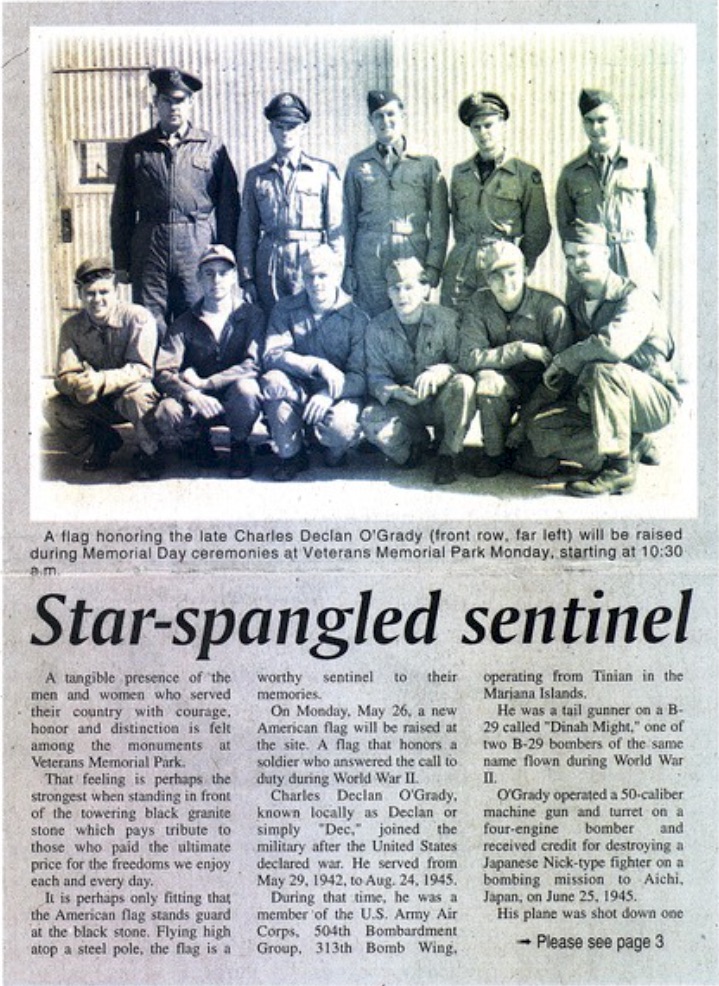
But whaddaya know? While casting about for a fresh take on the old man’s war for today’s Memorial Day post, I stumbled across a newspaper report confirming pretty much everything I’d heard about his brother, Charles Declan O’Grady.
Like Dad, Uncle Dec was a member of the U.S. Army Air Corps, but assigned to the 504th Bombardment Group, 313th Bomb Wing, operating from Tinian in the Mariana Islands. While Dad flew C-47s out of New Guinea, Uncle Dec was occupying the other end of the aircraft as a tail gunner in a B-29, the “Dinah Might.”
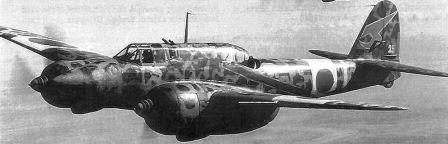
He was credited with destroying a Japanese fighter during a mission to Aichi Prefecture in Japan, on June 25, 1945. The very next day, Dec’s bomber was shot down over Ise Wan bay, near Nagoya, one of the largest centers of the Japanese aircraft industry; he bailed out and was rescued by a Navy sub, one of seven crew members to survive.
Twice wounded during the war, Dec was honorably discharged in August 1945, returned to his law practice in Perry, Fla., and eventually was elected Taylor County judge.
Dad, as you will recall, stayed in the Air Force until his 30 was up; he didn’t retire until I was in my first year of college.
And I didn’t meet Uncle Dec until Dad’s funeral, eight years later.

 Mad Blog Media