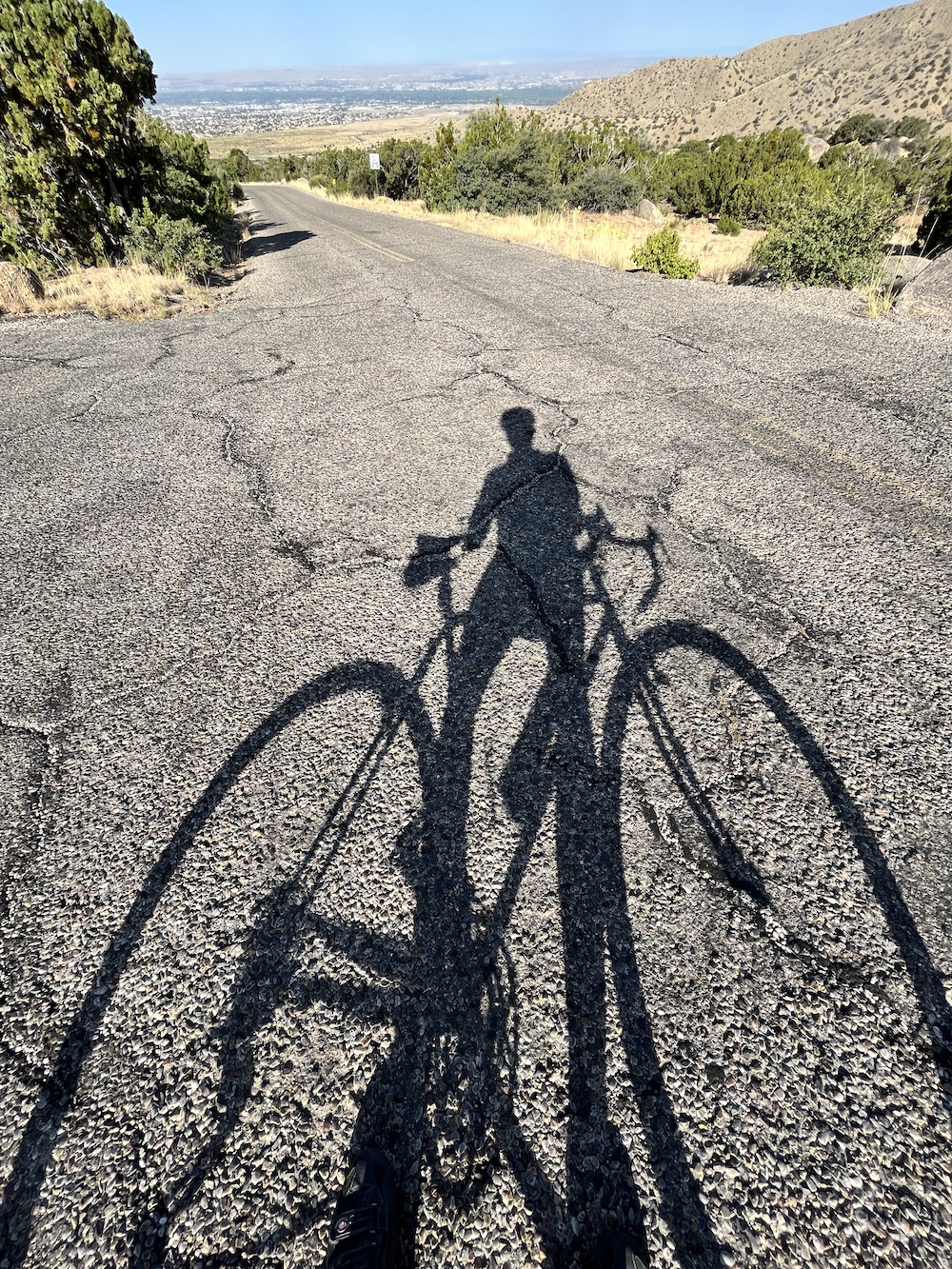
Beats me how I wandered off into the garment district. But here we are, so let’s just roll with it.
I was searching various hard drives for background on my soon-to-be-history Voler jersey racket. Then I was telling someone the bee-in-the-jersey story from Back in the Day®, when we lived in Crusty County and VOmax made my team garb.
Anyway, at some point in the excavation I unearthed a Bicycle Retailer column from 1999 that discussed this very kit. And as Le Tour is due to kick off next month, I thought I’d brush off the dust and cobwebs and trot it out for inspection.
• • •
Maillot Jaune vs. Yellow Jersey
— The First Draws Cheers,
Bui the Other Prompts Jeers
Clothes make the man. Naked people have little or no influence in society.— Mark Twain
With Marco Pantani, Jan Ullrich and Bjarne Riis skipping the Tour de France this year, look for yours truly to be wearing the yellow jersey.
OK, not the yellow jersey. But a yellow jersey.
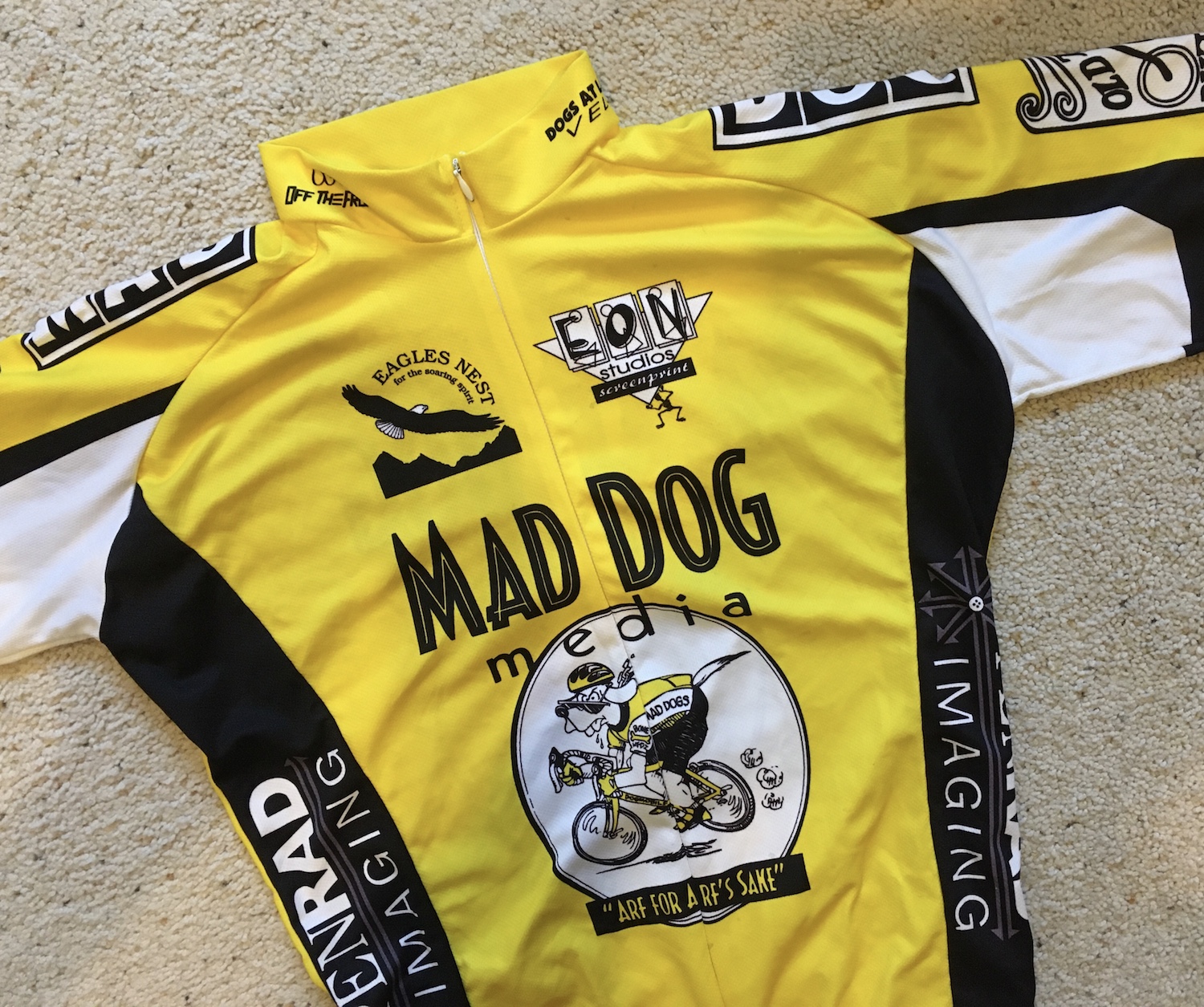
Specifically, the new Team Mad Dog Media/Dogs at Large Velo jersey from VOmax Team Apparel. It just happens to be yellow. Bright yellow. A vitamin-C-megadose, kidney-stone, construction-vehicle kind of yellow, festooned with black and white graphics. Perfect camouflage for ambushing Californians from a meadow bright with dandelions.
“Bumblebee,” said my wife.
“Hope ONCE doesn’t sue you,” said VOmax’s Adam Myerson.
“Cool,” said I.
Sadly, not everyone shares my fashion sense in this rustic backwater, where “going for a ride” typically involves a hay-burning quadruped or a rusty pickup and a sixpack of Rocky Mountain brain marinade.
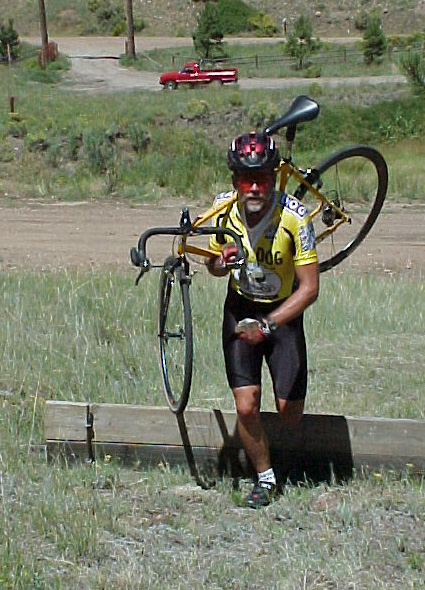
You Look … Marvelous? I badgered a couple of friends into riding with me the other day. When I rolled into their barnyard, clad in my new finery, they commenced to hooting and clutching their sides like hillbillies suffering from a bad batch of white lightning.
Mary phoned my wife, chortling, “You let him out of the house like this?” Hal, a retro-grouch prone to the literary gesture, declined to ride anywhere in the Rocky Mountain West with me unless he could wear his woodland-camo’ jumpsuit and street-hockey helmet as a counterpoint to my flashy Lycra and visored Giro.
These, mind you, are people whose idea of fun is burro racing, a form of dementia peculiar to central Colorado that causes the victim to run marathons on mountain trails while tethered to a jackass. Doesn’t matter what you wear — people are going to shake their heads when they see a guy doing that, whether he’s wearing a T-shirt and shorts or a thong bikini and spike heels.
A Jackass of a Different Color. I tell Hal and Mary that they might find a bike ride a pleasant respite from jackass rambles now and then if they’d acquire some of the new-fangled doodads that make cycling more fun — clipless pedals and shoes designed for riding rather than running; suspension forks to soften our corrugated county roads; garments that wick a little better than a beach towel. But they’d rather be uncomfortable than funny-looking.
Me, I’ve been funny-looking for years, clad in unnatural-fiber garments from Rio Grande Racing Team, Sangre de Cristo Cycling Club, Rainbow Racing and Dogs at Large Velo. Each new jersey always made me feel as though I were a part of something special, somehow set apart from the other Day-Glo geeks wobbling around on two-wheelers. A racing jersey was a garment not just to be worn, but to be lived up to.
So when my sunny new DogShi(r)ts and summery weather hit the Wet Mountains more or less simultaneously, it was if a light had clicked on in a cartoon balloon over my head: “Hey, dude … if you want to look more like a banana and less like a grapefruit in that jersey, you’d better start riding your bike.”
Here Comes the Sun. First, I got a neighbor to brush-hog my rabbitbrush-clogged cyclo-cross course and started hitting it once or twice a week. Between ’crosses, I rode laps on my favorite 10-mile circuit, half pavement and half dirt, with plenty of gradual climbing. I even dusted off the road bike, which sees less daylight than Charlie Manson, and went for a few dirt-free rides to Wixson Divide and back.
It wasn’t all golden. Headwinds and hills reminded me that I’m in OK shape for a 45-year-old libelist, but entirely unfit for racing; no point in shaving the legs for a couple thousand miles yet. A cattle-truck driver played mirror tag with me on a potholed, 45-mph descent to Mackenzie Junction. And a bee who thought I was his mama dove inside my brand-new jersey on a shoulderless plummet down Highway 96, causing me to fishtail to a halt on the gravel shoulder and start peeling like a stripper on speed.
Still, there have been moments. The other day, while I was doing some artless laps on my ’cross course, a passing sport-utility vehicle slowed, then stopped; whoever was inside stayed to watch for a couple go-rounds.
I’ll never race the Tour. But for a few minutes there on a summer’s day, I was in the yellow jersey, people were watching, and no one was laughing.



 Mad Blog Media