
Black Woodstock

You’re never too old to learn. Especially when you start from a base of ignorance.

I didn’t learn about the 1921 Tulsa Race Massacre until 2019, when it came to HBO in “Watchmen.”

And I didn’t hear about the 1969 Harlem Cultural Festival until 2021, when Ahmir “Questlove” Thompson carved a mountain of forgotten concert imagery into a Black Mount Rushmore, creating the documentary “Summer of Soul” for Hulu.

The Tulsa massacre was buried with its victims for reasons that should be all too obvious. And the Harlem Cultural Festival was strangled by the largely white Woodstock — until Thompson brought the late Hal Tulchin’s long-buried footage back to life.

In an interview with The New York Times, Thompson said:

For nearly 50 years, this just sat in a basement and no one cared. … History saw it fit that every last person that was on that [Woodstock] stage now winds up defining a generation. Why isn’t this held in the same light? Why was it that easy to dispose of us? Instead, the cultural zeitgeist that actually ended up being our guide as Black people was “Soul Train.”

We watched “Summer of Soul” last night, and man, what a blast from the past it was. So many cuts from the pivotal days of this whiteboy’s personal soundtrack.

David Ruffin, fresh from an acrimonious split with The Temptations. A young Gladys Knight and the Pips, very much on their way up. Sly & the Family Stone. B.B. King. Hugh Masakela. Stevie Wonder. The 5th Dimension. The Edwin Hawkins SIngers. And artists whose work I didn’t come to appreciate until later, like Max Roach, The Staple Singers, Mahalia Jackson, and Nina Simone.

All of them on stage in Harlem’s Mount Morris Park, playing for a largely Black audience of 50,000 people at a pop, guesstimated at 300,000 over six shows. Admission: Free.

And to think all that sound and glory wound up in a basement tomb, waiting for someone to roll away the stone.
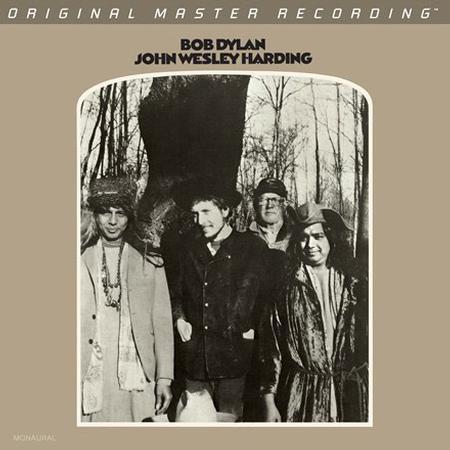
Happy birthday, Bob Dylan

The Master’s eighth studio album.

I backed into Bob Dylan, the way you might bump into an interesting character at someone else’s party.

“Mr. Tambourine Man?” The Byrds sang me that one. “Blowin’ in the Wind?” Peter, Paul and Mary. “All Along the Watchtower?” Heard it first from Jimi Hendrix. I don’t think I really got into the guy that Chazbo Pierce calls “The Master” until “John Wesley Harding” came out in 1967, shortly after my family moved from San Antone to Bibleburg.

My friends and I played the shit out of that one, and then I started rooting around through his back catalog.

I lost interest after Bob found the Lord, though I dug “Gotta Serve Somebody” and “Everything Is Broken.” These days I only have the old stuff — “Blonde On Blonde,” “Blood On the Tracks,” “Bringing it All Back Home,” “The Freewheeling Bob Dylan,” and “Highway 61 Revisited.” You’ll find more killer tracks on those five albums than most singer-songwriters could produce in five lifetimes.

As Thomas McGuane put it in “Nothing But Blue Skies”:

No one compares with this guy, thought Frank. I feel sorry for the young people of today with their stupid fucking tuneless horseshit; that may be a generational judgment but I seriously doubt it.

Extra-Credit Dylan:

• At Esquire, Charles P. Pierce discusses the old soul of The Master.

At The New York Times, Jason Zinoman calls Dylan our most underrated comic, arguing that he belongs “in the pantheon of great Jewish funnymen.”

The Free New Mexican Air Force?

From the Albuquerque Journal:

“Do you have any targets up here?” the pilot of American Airlines Flight 2292 asks Federal Aviation Administration traffic controllers. “We just had something go right over the top of us. I hate to say this, but it looked like a long, cylindrical object that almost looked like a cruise missile type of thing moving really fast right over the top of us.”

Was it Mescalito riding his white horse? Or The Free New Mexican Air Force?

¿Quien sabe, ese? Rolllllllllllllllllllllllll another one … just like the other one. …