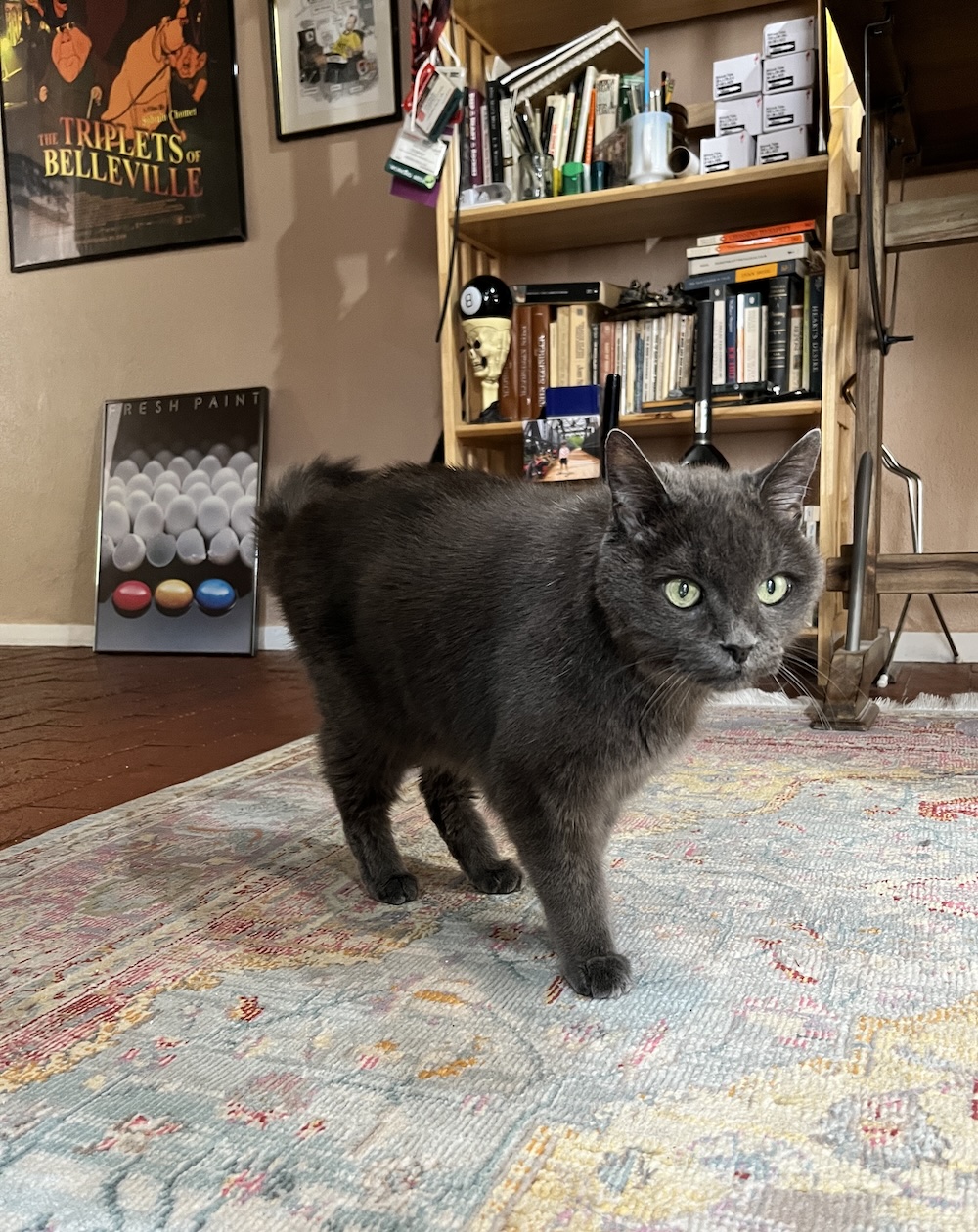
“Always scribble, scribble, scribble! Eh! Mr. Dog?”
What I need is a manifesto.
Everybody has one. How are The Authorities to understand why you act the fool if you don’t provide some sort of owner’s manual? A map detailing the weed-strangled, varmint-infested trails between your hairy ears?
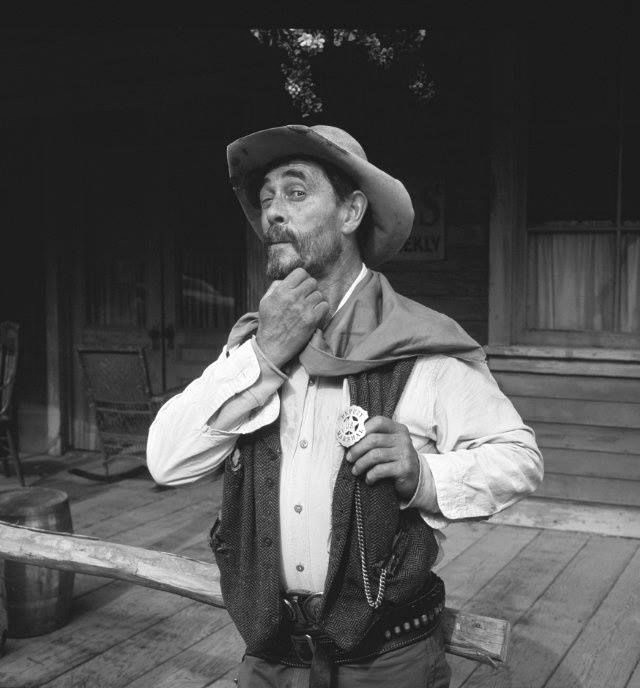
Fun Fact: The word “manifesto” has its roots in Latin, deriving from the noun manus, which means “hand,” and festus, the scruffy character who in 1964 replaced Chester Goode as Marshal Matt Dillon’s deputy on the TV oater “Gunsmoke.”
Don’t let him bite you.
Thus “manifesto” means “Hand of Festus,” or, more accurately, “Fist of Festus,” something often found in some miscreant’s face.
As in season 12, episode 17 of “Gunsmoke,” titled “Mad Dog,” in which Festus believed he’d been bitten by a rabid mutt and was on the brink of a hideous death, which for some reason led him to beat the snot out of Goober from “The Andy Griffith Show,” who was on leave from Mayberry and moonlighting as a bad man.
So I’m thinking my manifesto should say something like “Don’t act like an evil Goober unless you’re after a puck in the gob,” which should suit the ever-shortening national attention span.
And maybe we should throw something in there about how you don’t want to get bit by no mad dogs neither. As Festus has taught us:
That hydrophobia, it’s a pretty sorry way to die, ain’t it, Doc? You know, a fellow gets shot, why, he’ll just fall flat on his face. Oh, he might kick a couple of times, that’s what makes the crowds turn out. But what I mean is he won’t go just snatching off his clothes and sashaying around trying to bite folks.
Of course, that advice may be coming a little late for a few of the strutting mutts who really need it. But don’t try to pin the rap on me, just because I suddenly have a manifesto. Their rabies ain’t my doing. I wouldn’t bite ’em with your teeth.
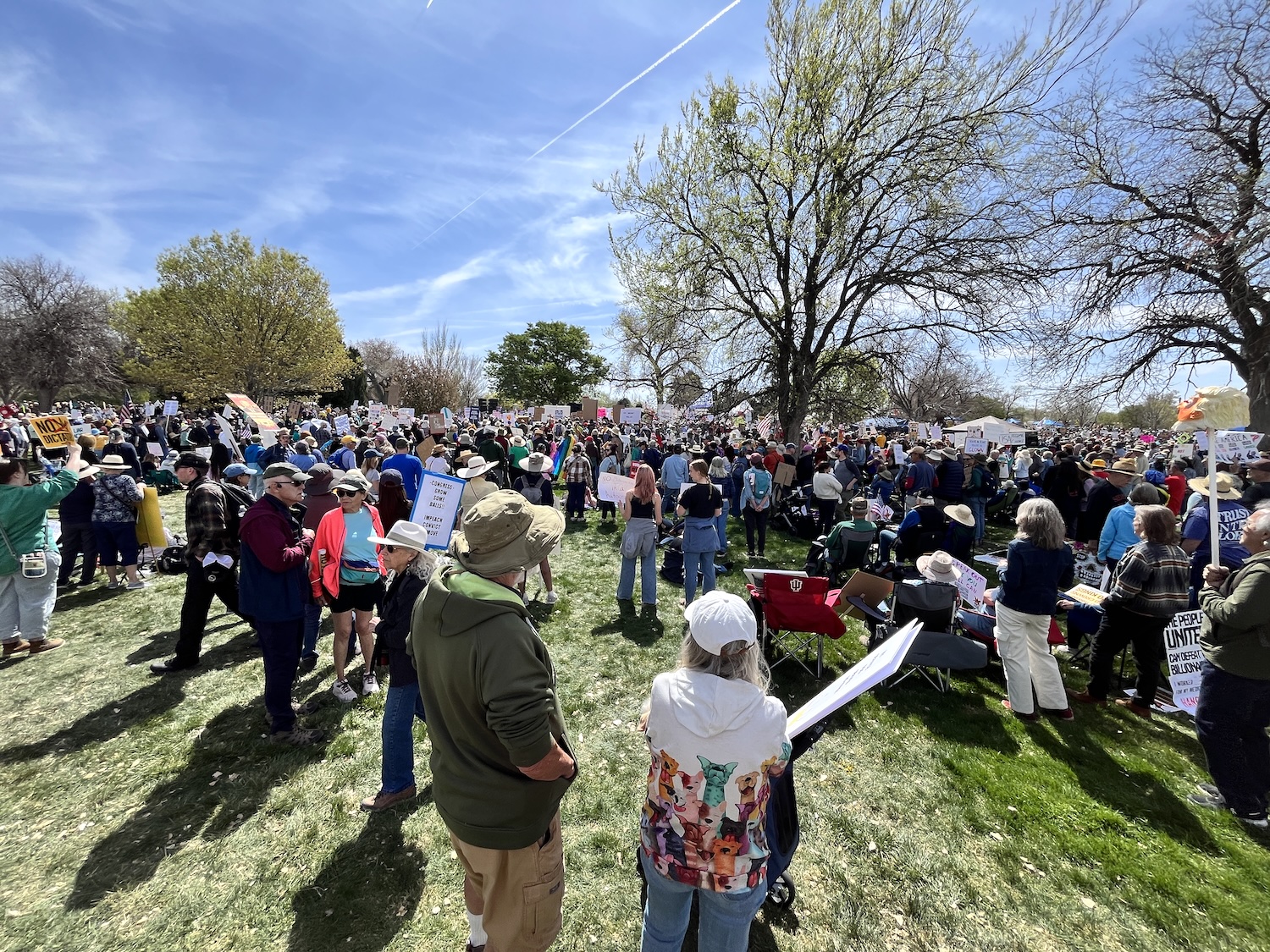
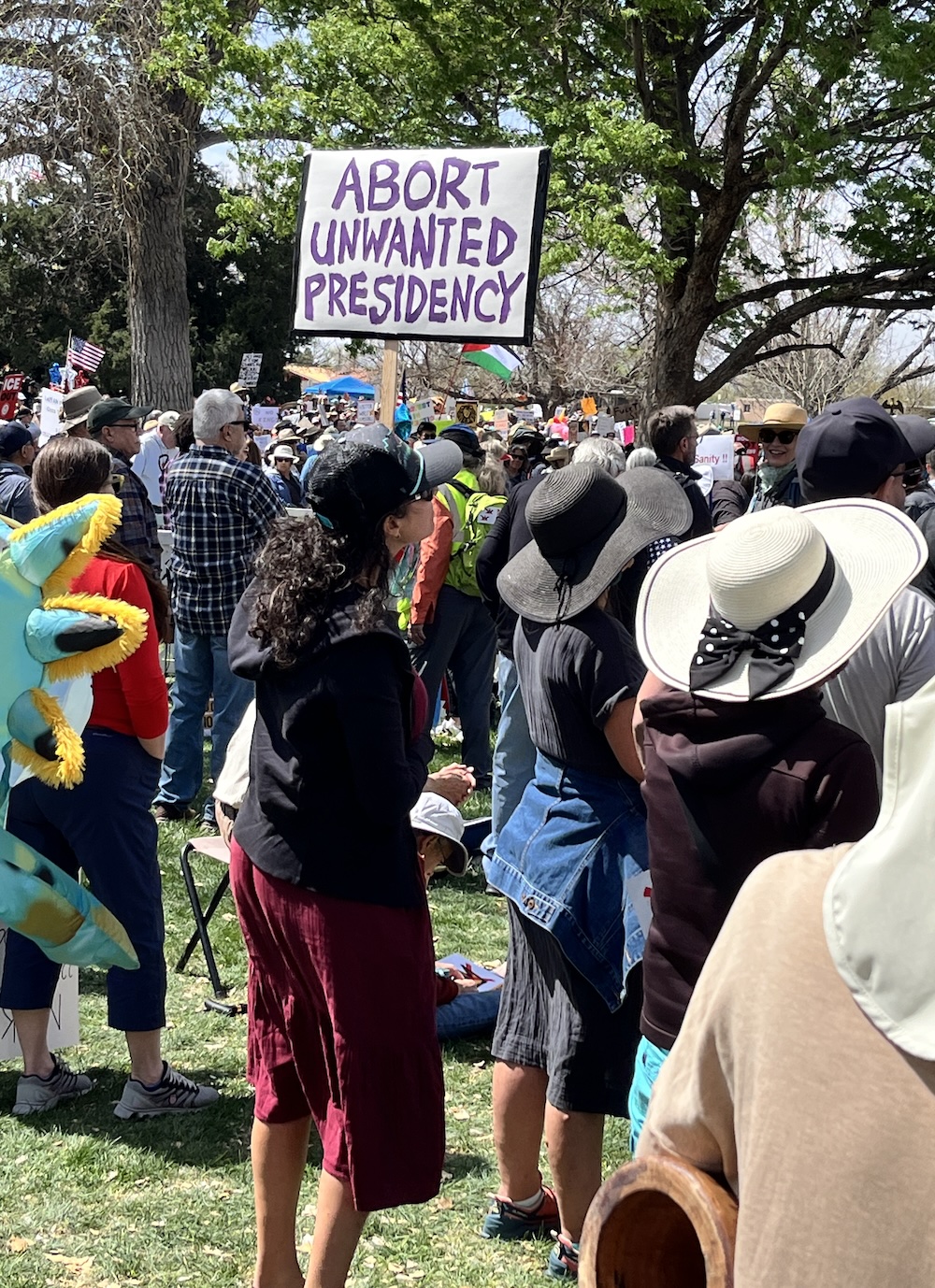
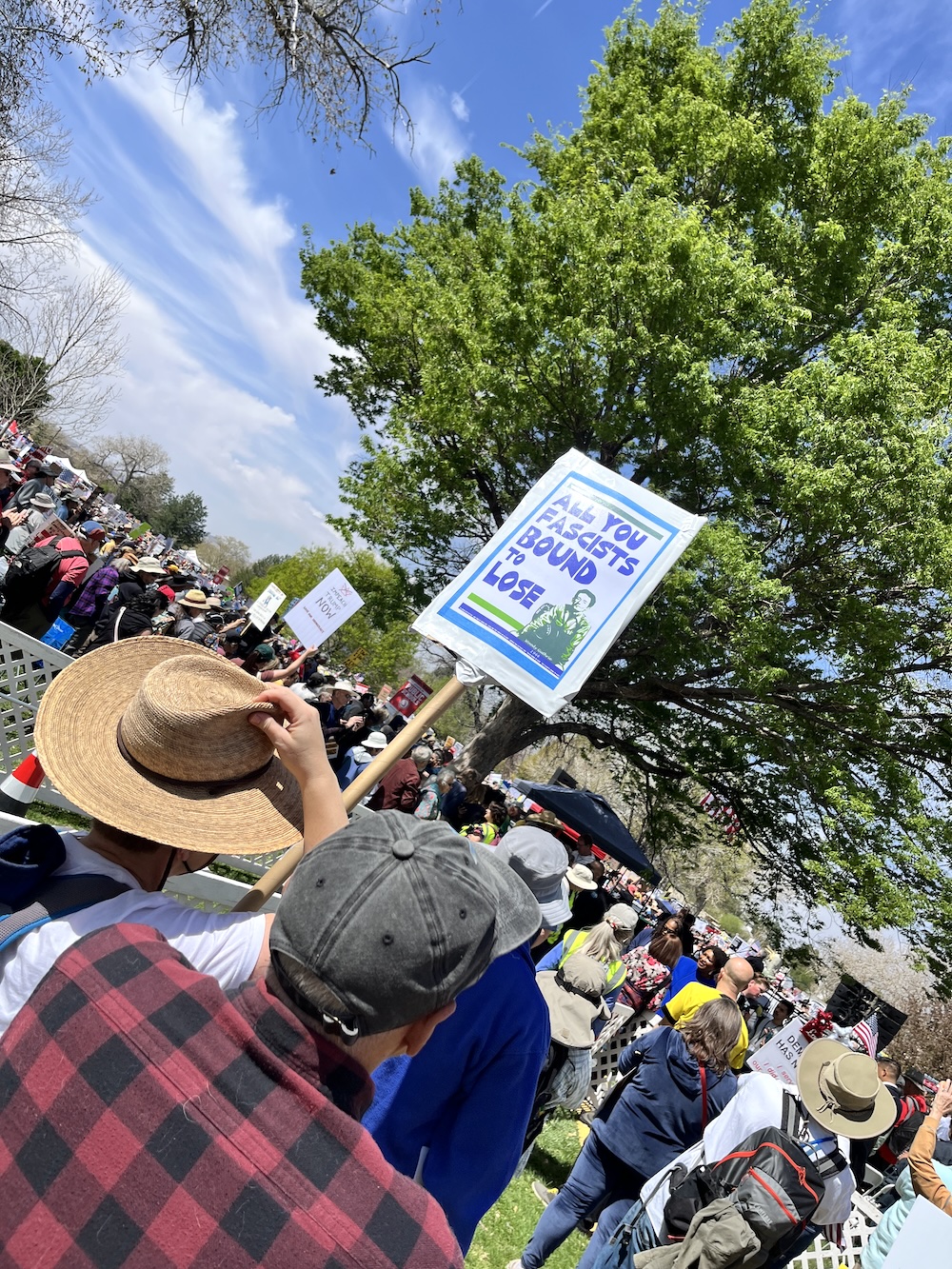
And the crowd, while still heavy on gray hair (and no hair), seemed to have more young people than did the previous editions.
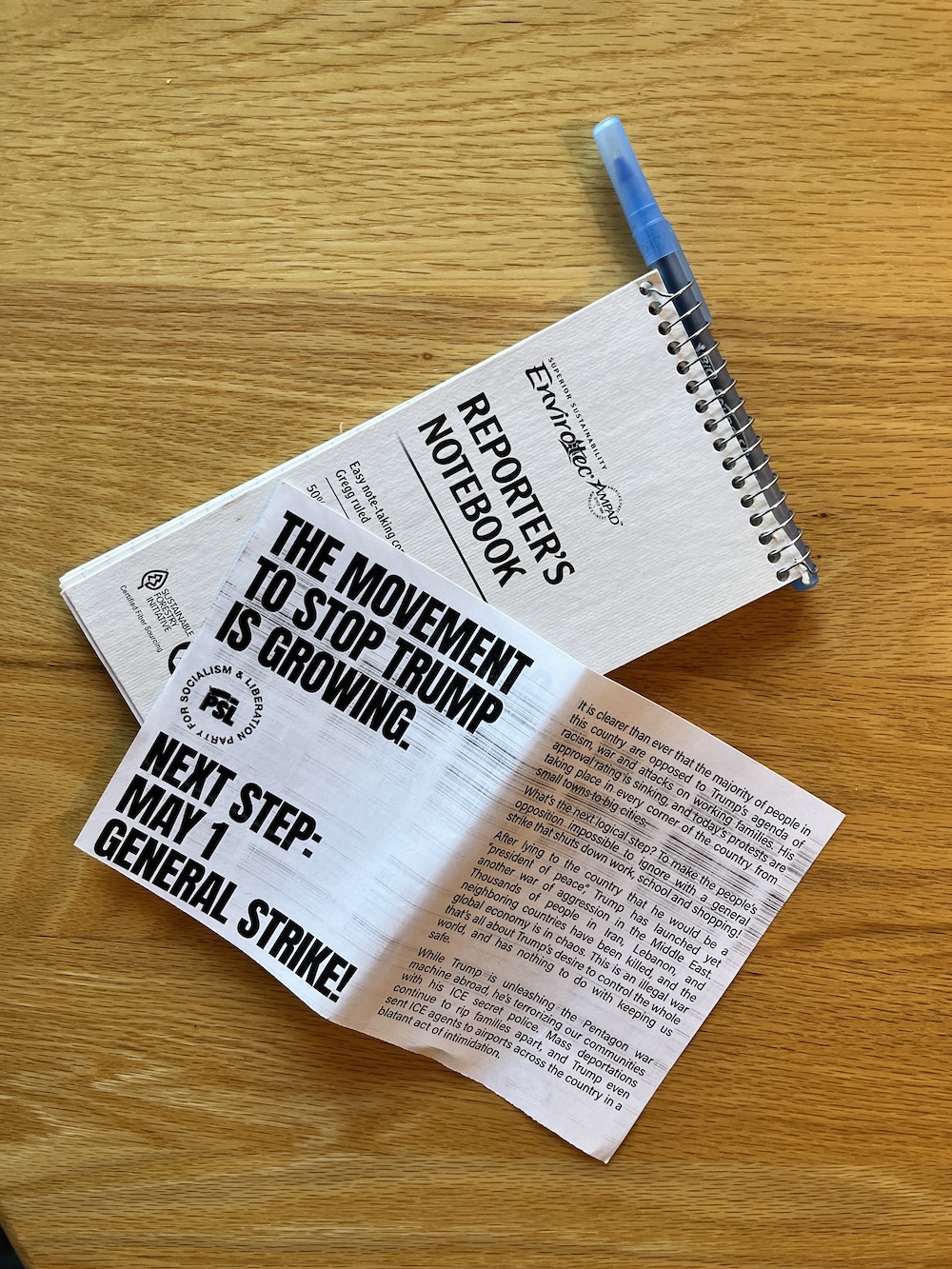
A couple of smiling young folks from the Party for Socialism and Liberation buttonholed us, passing along a flyer for a May Day rally and general strike. The Democratic Socialists of America said they’d be around, but once again, no confirmed sightings.
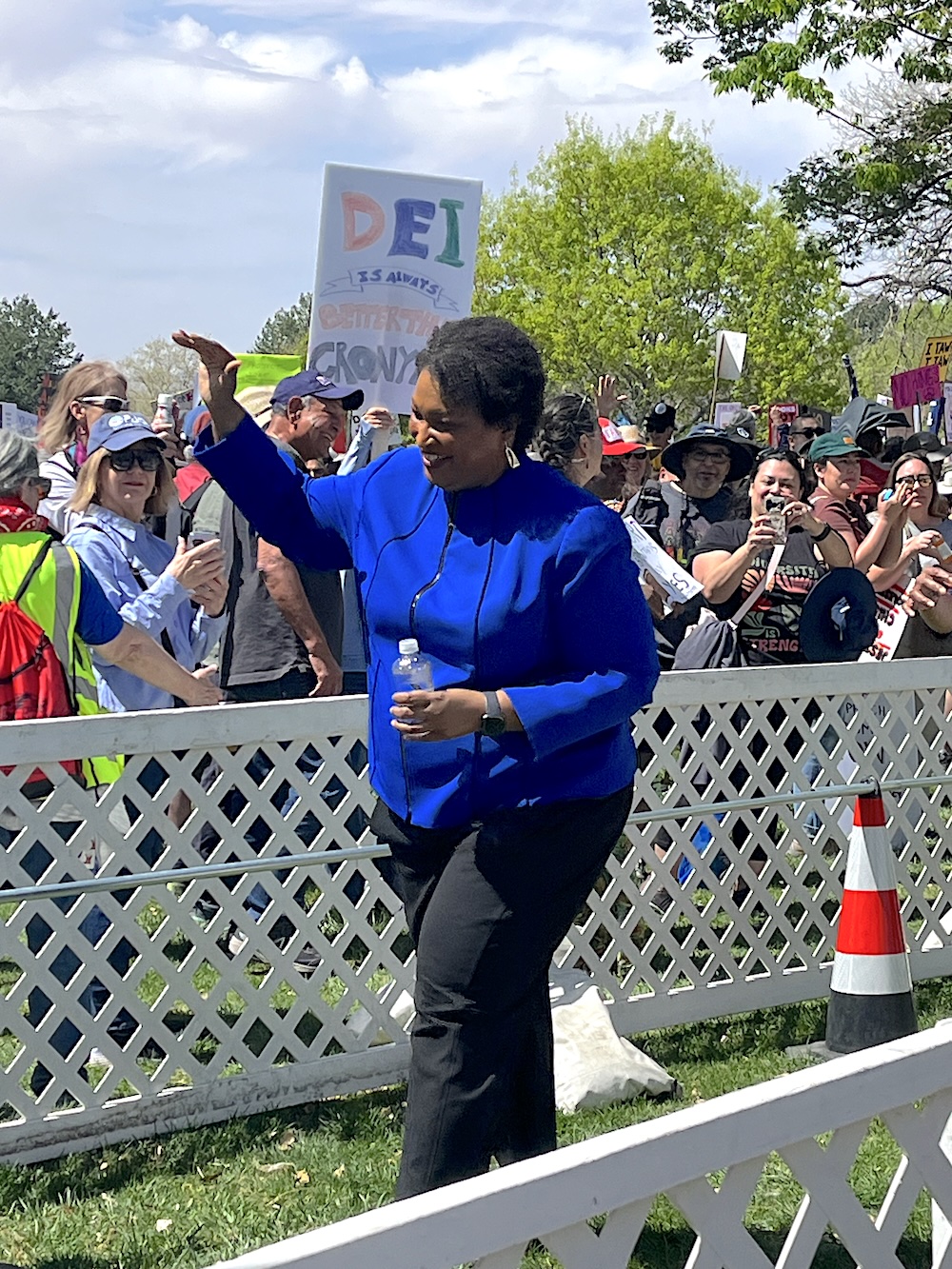
But emcee Robert Luke seemed to have some trouble generating a solid call-and-response from the throng, which really didn’t get fired up until special guest speaker Stacey Abrams brung the heat. (Respect to the band ShyGuy, which tore up a stout cover of Green Day’s “American Idiot.”)
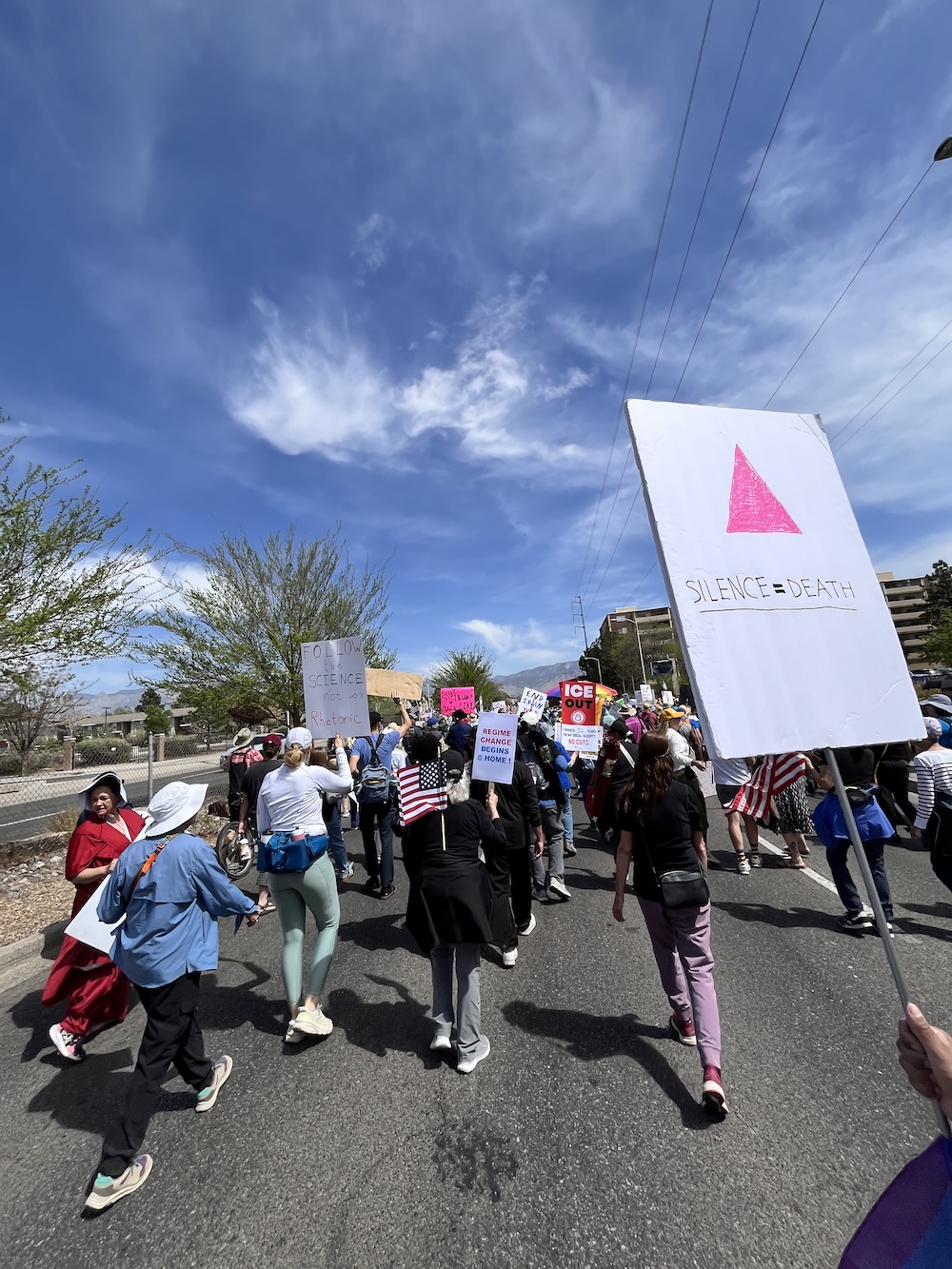
It was the march that put a smile on my face. The 3-mile route from the park wound north on San Mateo, east on Montgomery, south on Louisiana, and back to the park via Comanche, and we flat filled our half of the road, singing, chanting, and waving at passersby.
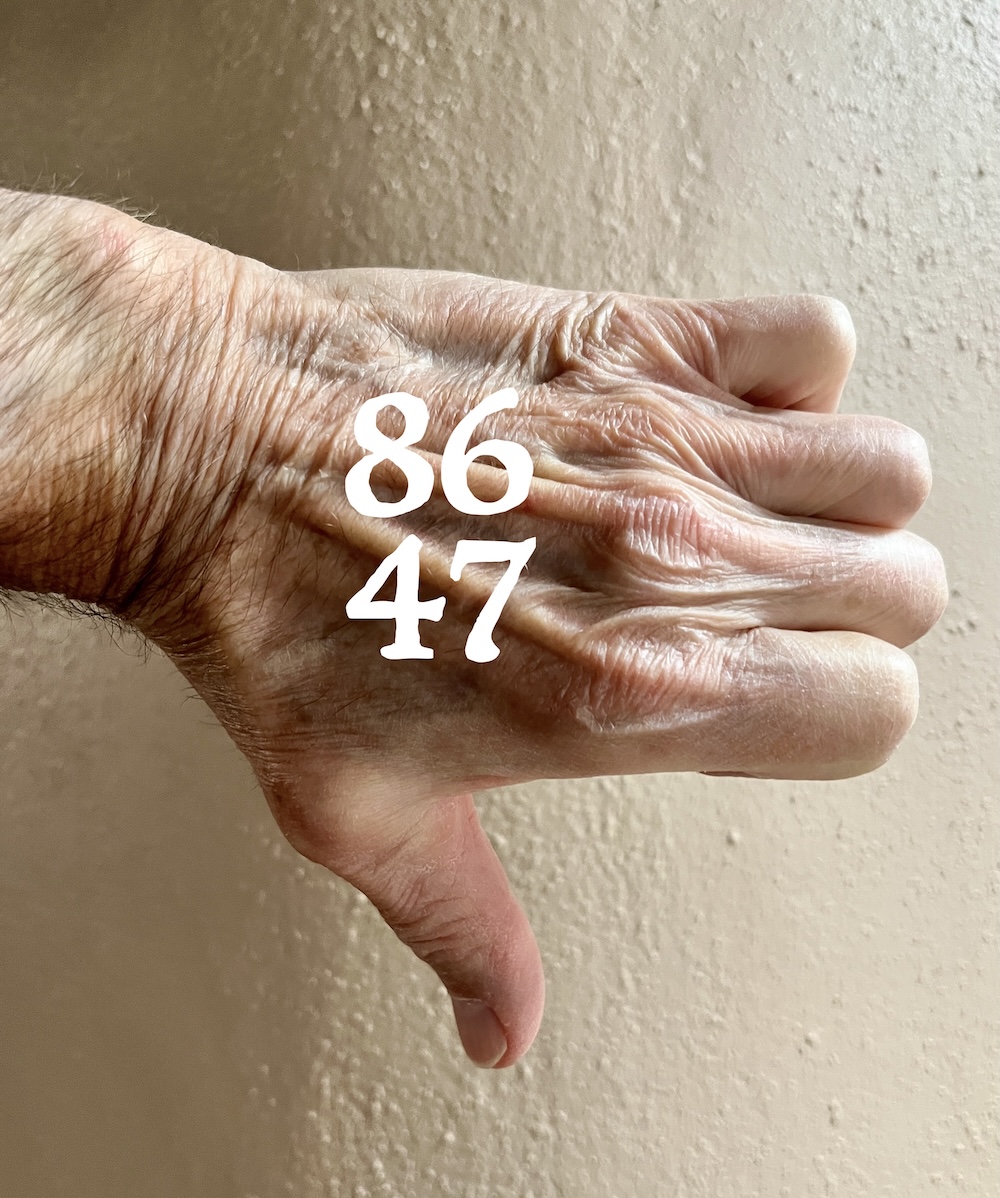
One group of youngsters could really sing, at one point tackling Queen’s “Bohemian Rhapsody,” with enthusiasm if not 100 percent accuracy. Lots of horn honking, most of the single-digit salutes involving an upraised thumb, and only one small, semiorganized group of dissenters at the far side of Comanche and Louisiana, with a sign that said something like “No Commies or Socialists In Our Neighborhood.”
I sang, “I am a commie, and so is your mommy” at them. Not as melodious as the kids, but what the hell, I ain’t Bruce Springsteen. Anyway, you know the rule: While smashing the State, kids, keep a smile on your lips and a song in your heart.
50,000 people? That’s what they say. …O, indeed. Our body politic, our choice.Stacey Abrams was in town to campaign for Deb Haaland (photo by Herself).Come back, Woody Guthrie. …The march was epic. I thought we were near the front until we turned from San Mateo onto Louisiana. The front was turning onto Comanche.Props to the Party for Socialism and Liberation. They keep meeting the people where they are.
Last June, more than five million people took to the streets across more than 2,100 events during the coalition’s first day of action. Then, more than seven million people protested across more than 2,700 events last October. The March 28 mobilization is the next step in this growing movement, with organizers anticipating it will be one of the largest single-day nonviolent nationwide protests in U.S. history.
It’s not a riot going on, or at least it shouldn’t be. And with any luck at all we won’t all wind up on Cellblock No. 9, wearing bruises and zip-ties. Here in The Duck! City we’re gonna be in a park, with shade trees and music, even a march! (Cue the revolution scene from “Reds,” but without all that winter garb.)
Rallies and marches can feel a tad performative, mostly because they are. But they help you remember that you’re not alone, it’s not just you or the Voices in your head, there really is something of a problem here, and if we’re lucky, and there are enough of us intent on doing something about it, we can use ballots instead of bullets because the last game in town that needs a shot in the arm these days is the funeral racket.
A mass thumbing of the national noses may also give an atomic wedgie to a certain diapered dictator at some point during his 24 hours per diem of TV-watching, assuming the legacy media actually turns on and tunes in.
Which is always something of an assumption. So, before you head out the door to your local No Kings gathering, call a couple TV stations and invite them to join the party.
No, not that party. Whaddaya think this is, a Warren Beatty movie?
Gas prices on March 9 along Tramway Boulevard between Lomas and San Bernardino.
Monday’s chores were medium-heavy and I didn’t get a chance to ride until late afternoon.
It was going to have to be a short one, and I was thinking I should just go for a run instead.
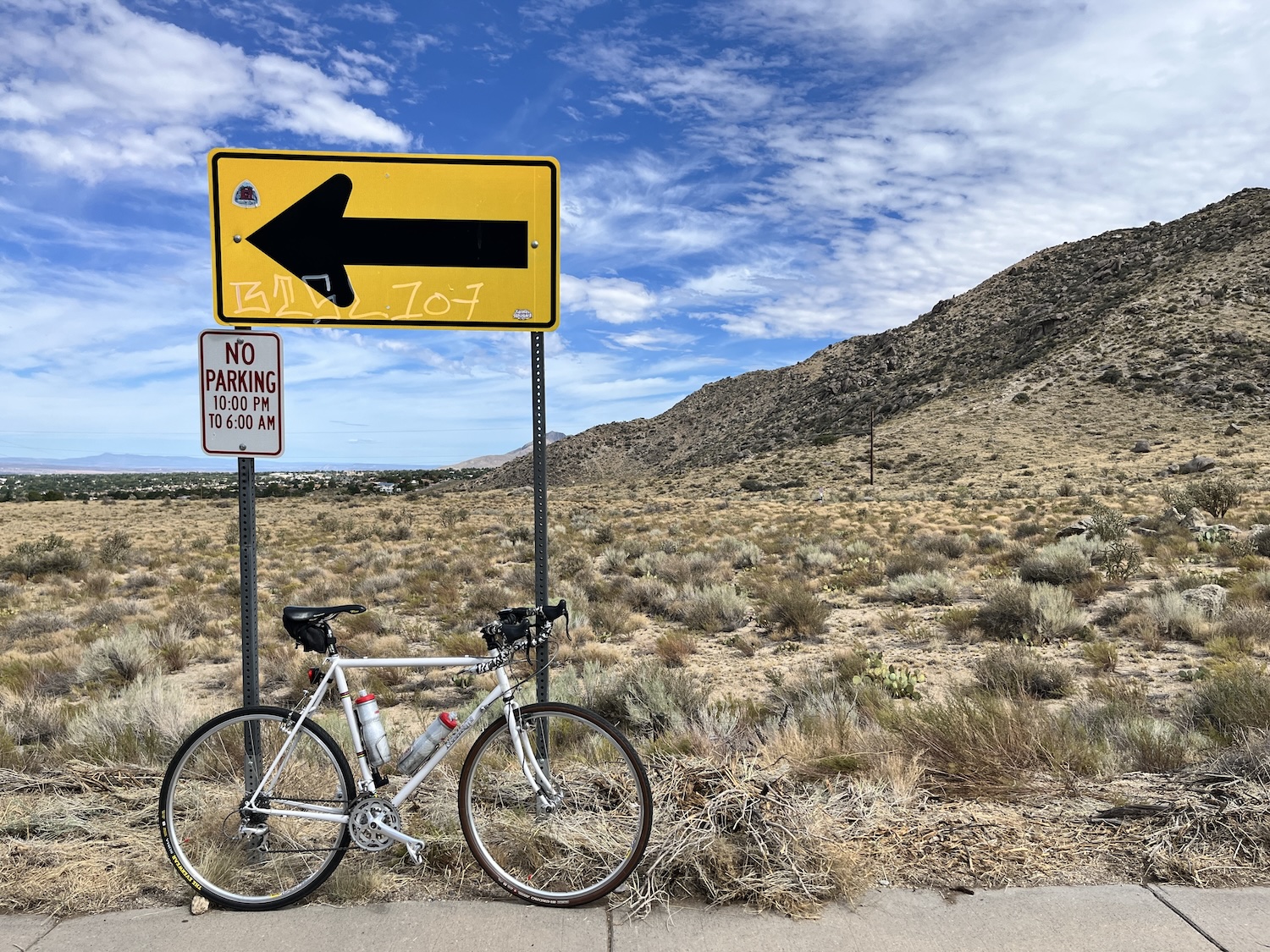
But it was a gorgeous day — 77°! — and the forecast for today was looking a little less favorable. So I kitted up, grabbed the Rivendell Sam Hillborne, and set off for a brief inspection tour of gas prices at four stations along Tramway.
As you know, “the roaring economy is roaring like never before,” and though I’ve seen no signs of this at the grocery or anywhere else, The Pestilence says it is so and thus I must be mistaken. Wouldn’t be the first time.
I rarely drive, gassing up the ol’ rice rocket about once every three months or so. And lately I’ve quit collecting receipts because the pumps’ printers are usually on the fritz and damme if I’m stumbling into the kiosk to stand in line with the proles waiting to pay for their Slim Jims, malt-liquor 40s, and coffin nails, whatever they haven’t already shoplifted.
But I’m pretty sure that the last time I filled up — before we decided to bomb Iran into democracy — the price per gallon for regular was $2.83. And yesterday it was as you see above.
Winning? Your mileage may vary, as the fella says.
This may become a regular feature here at Ye Olde Dogge House. Feel free to chime in with the gas prices in your neck of “the roaring economy.” In the meantime, I have a year’s worth of grocery receipts to examine. I suspect that if there is any roaring to be heard as a consequence, it will be coming from me.
The two men were so very different in so many different ways — one a conservative white, born into an admiral’s family in San Diego; the other a liberal Black, spurned by birth father and stepfather in the segregated South — yet both came to immerse themselves completely in their respective roles, impatient with and often heedless of direction.
My favorite version of Duvall was Mac Sledge, the washed-up, alcoholic country singer-songwriter in the 1983 film “Tender Mercies.” He looked like post-Muskogee Merle Haggard and sounded like — well, like Robert Duvall if he’d gone outlaw with Willie and Waylon, because he sang the damn’ songs, after test-driving his pipes with a country band and motoring around East Texas “looking for accents,” according to The New York Times.
But Duvall likewise was top-notch — or maybe top gun — in “The Great Santini,” a 1979 movie based on the book of the same name by Pat Conroy. The titular character he portrayed, Marine fighter pilot Lt. Col. Wilbur “Bull” Meecham, reminded me very much of a certain Southern-fried Air Force colonel who flew C-47s out of New Guinea during World War II.
Duvall’s favorite role was that of Augustus McCrae, a crusty old ex-Texas Ranger in the 1989 TV miniseries “Lonesome Dove,” based on the Larry McMurtry novel … a revelation that weirded me right the hell out because that book is on my nightstand right now, as I’m between books I haven’t already read a few hundred times. Gus is right up there as characters go, and Duvall knew it.
“Let the English play Hamlet and King Lear,” he told interviewers, “and I will play Augustus McCrae, a great character in literature.”
Jackson had the misfortune of being the understudy to the Rev. Dr. Martin Luther King Jr., and after King’s assassination he spent the rest of his life auditioning for that elusive starring role. Some in the Southern Christian Leadership Conference thought him a spotlight hog, and some outside the SCLC found him easy to caricature, especially the white folks who ran the big casino — though plenty of them stopped laughing after he turned in strong performances as a presidential candidate in 1984 and ’88.
He lost the nominations to Walter Mondale and Michael Dukakis, who went on to get beaten like rented mules by Ronald Reagan and George H.W. Bush, and Jackson gave up tilting at that particular windmill.
Jackson continued trying to remind America that there were choices other than wrong right, hard right, and centrist, though as The Times notes, “for all his rhetorical thunder the Democrats never fully embraced his vision of an unashamedly liberal party based not on the white middle class but rather on his coalition of poor and working-class people of all colors.”
More’s the pity.
I don’t remember who I voted for in 1984. I was in a union then, and it’s possible that I pulled the lever for the old commie Gus Hall, because after brief flirtations with the Socialist Workers Party, the October League and the Communist Party (M-L) I occasionally enjoyed being a red pain in the ass. And no way was I gonna vote for a Hollywood cowboy who wasn’t Robert Duvall.
Four years later I was all about Gary Hart, until he self-destructed, and then I caucused for Jackson, for all the good it did him. His people charged that Colorado slow-walked its count to give Dukakis a boost going into the Wisconsin primary, but in the end, Jackson lost the caucus and the nomination to Dukakis.
Later that year at the behest of political pals I worked one event for the Democratic candidate. The people his campaign sent to Denver proved to be outlandish assholes, so much so that I didn’t bother to vote come November. It seemed pointless, another dry well in a decades-long drought. Barack Obama was light-years away.
But Jackson didn’t give up. And neither did Duvall. Both continued to find roles to play, and both helped make our lives worth the price of admission. Peace to them, their families, fans, and friends.