Notes from the road, part 3

A soggy “see ya later” to Bibleburg.

I was thrice blessed as I prepared to leave Bibleburg last Wednesday, an hour earlier than I had planned.

First, I had slept in a bed, in a room, not in my car parked in front of the hotel. I gave a thumbs-up to the stealth camper I spotted as I left to get coffee, for hiding in plain sight in the rain-drenched parking lot. But s/he got two thumbs down for being so obvious about it: a towel tucked into the top of a cracked rear window; clothing, water jugs, and other “not a guest here” hints strewn all over the front seats; and so on. Respect your adversary, dude.

Could’ve been a hotel employee, times being what they are. But still, style counts.

Second, the Starbucks across the road had that very morning begun opening at 5 a.m. instead of 6. Ordinarily I brew my own coffee on the road, but lately the hotels inflict these Keurig monstrosities upon us instead of mini-coffeemakers whose carafes can be repurposed for an AeroPress brew.

Pity that the smoke detectors dislike my little MSR IsoPro camp stove. “Outside use only,” kids. Just ask the guest in the Honda Hilton.

And finally, third: I was leaving Bibleburg an hour earlier than I had planned.

I always like leaving the B-burg, and leaving early is even better than not going there at all. I find myself in sympathy with my mom, who when we were transferred there in 1967 looked at downtown through a prism of memory from the 1940s and recoiled.
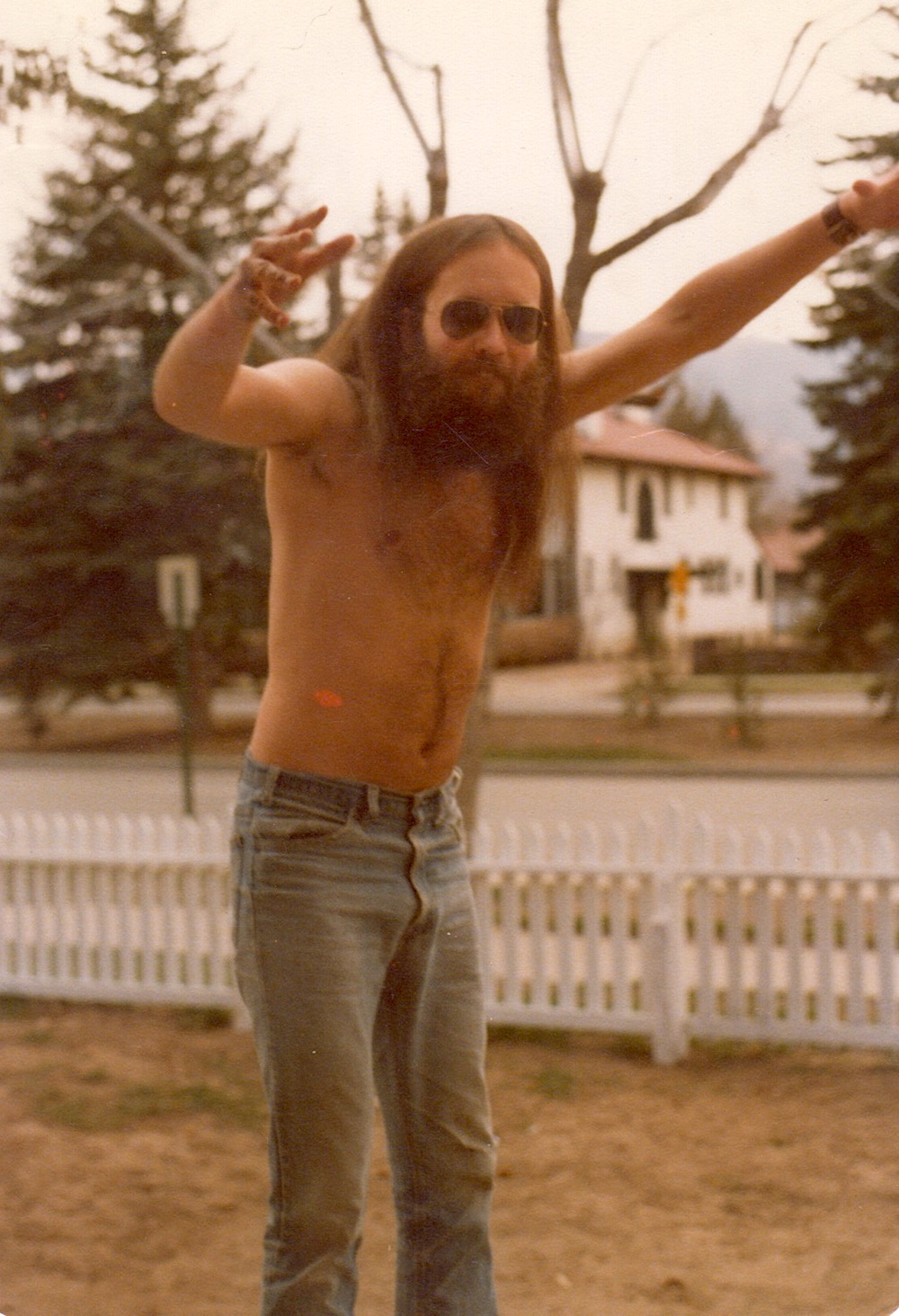
Yes, they let this work at the Gazette. I guess they really were libertarians.

Ten years later a colleague at the Gazette would say that anything east of Hancock Avenue wasn’t Colorado Springs, and mom would’ve agreed. I certainly did.

In my Gazette years I was living in an old Victorian carved into apartments at Cascade and San Miguel, right next door to The Colorado College, just north of what was still called “downtown.”

But when the O’Gradys first arrived we set up housekeeping east of Academy Boulevard, 3.5 miles into the prairie from my colleague’s Hancock border. Nearly six decades later, South Loring Circle feels almost urban.

The town goes ever on and on, to paraphrase Bilbo Baggins. In this instance toward Kansas, not Mordor, though the differences between the two may be undetectable to political scientists. (Hint: Mordor had mountains.)

I’ve left the place more times than anywhere else, which probably says more about me than it does about B-burg. And this trip I was ready to skedaddle again after just four days. The rain, the postapocalyptic state of the roads, the endless high-speed conga line of traffic — two final tallboys of Starbucks and I was on my way.

• • •

It was hairy from jump. Pitch black and still raining, with fog to boot, and despite mopping all my windows and mirrors with a towel before leaving I was flying blind for a few scary minutes until the a/c defogged the glass. Not optimal when you’re merging onto I-25 from Briargate Parkway at 75 mph with a few thousand of your closest — and I mean closest, as in halfway into the hatchback — friends.

Paging Graham Watson. …

The weather remained gloomy. I didn’t bother putting on sunglasses until I was past Raton. Creeks had become rivers and rivers were inland seas. Ponds appeared magically like Brigadoon. Folks who parked their trailers in low-lying areas found themselves with rudderless houseboats.

There were enough sunflowers at roadside for a regiment of Graham Watsons, guarded by ravens perched on fenceposts. Lots of fat black cattle living large in the tall salad. I fought the urge to stop at McDonald’s and instead yelled “Go home!” at vehicles with Texas plates.

Skidmarks demarking various unscheduled off-ramps to left and right with “Damaged Guardrail Ahead” signs for headstones. A giant shitbox bearing a plate reading “IH8UALL.” Making America great again, one vanity plate at a time.
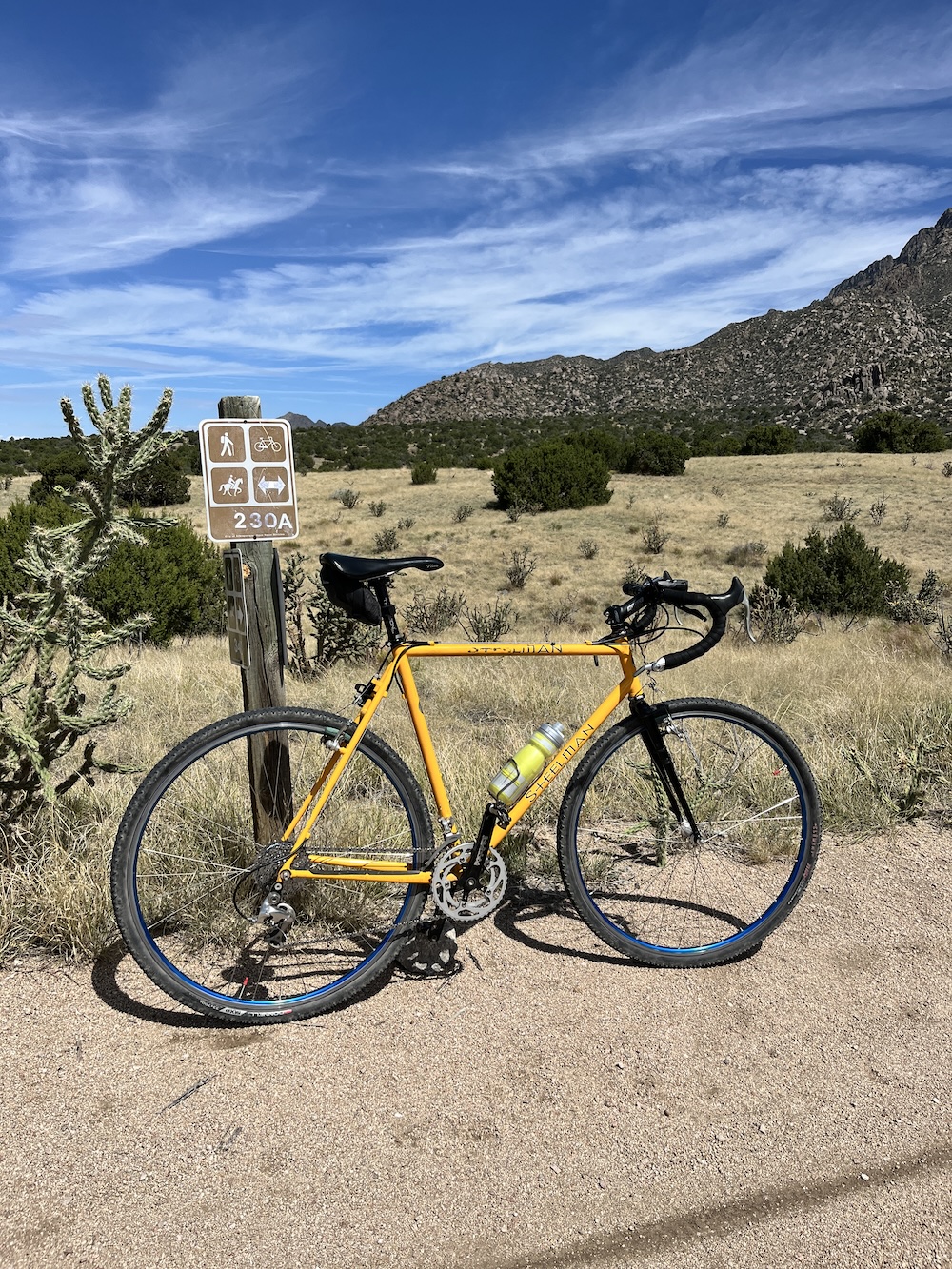
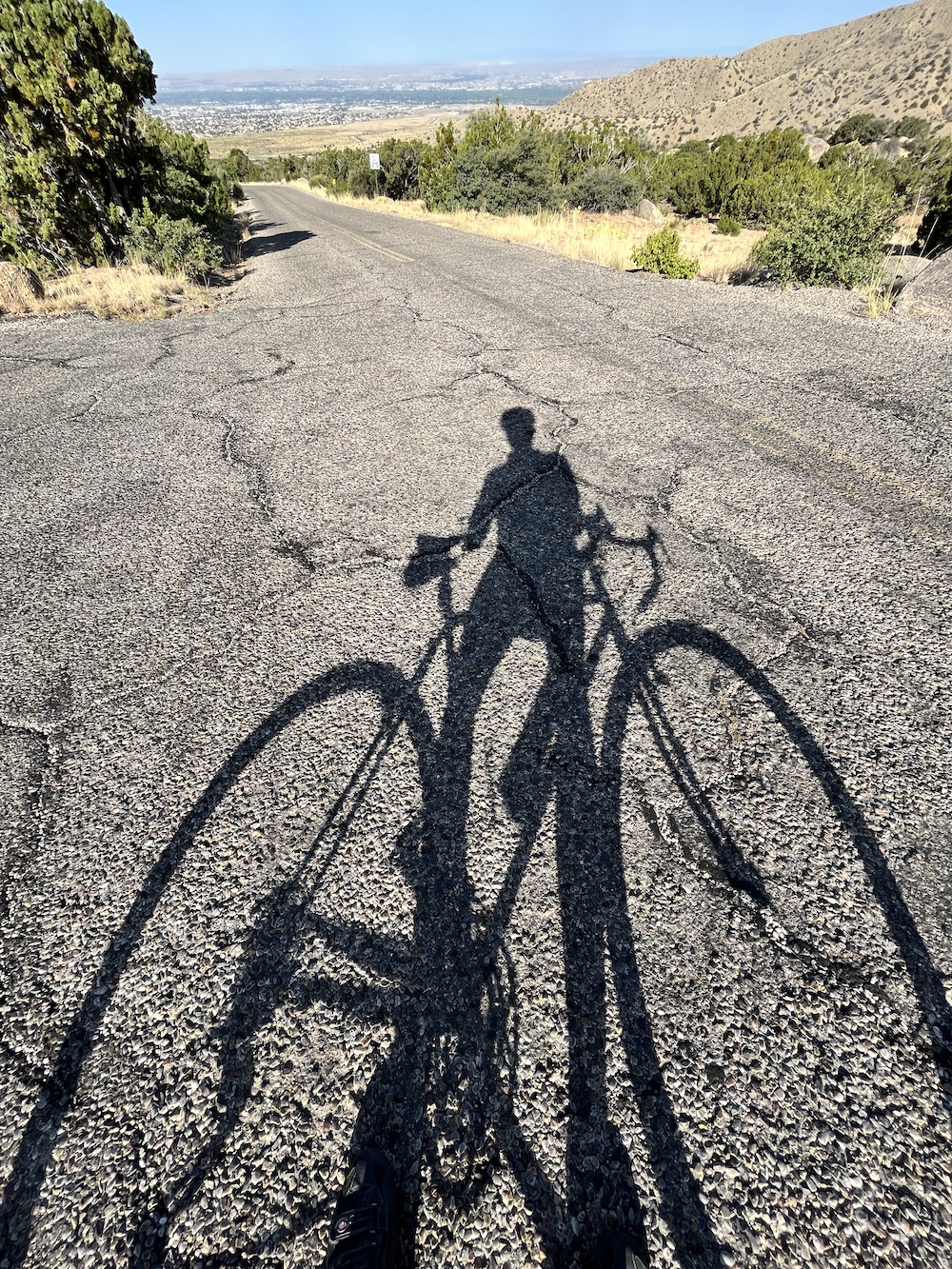
My Steelman puddle-jumper, sans puddles.

In six hours flat, with one stop for gas, I was back at the ranch. My training-log entry for the day reads, simply, “Nothing.”

But the next day I was on the old Steelman I’d hauled with me to Bibleburg, tooling around the sun-splashed Elena Gallegos Open Space, a smile on my lips and a song in my heart.

Home again, home again, jiggity-jog; the desert’s the place for this salty ol’ dog.
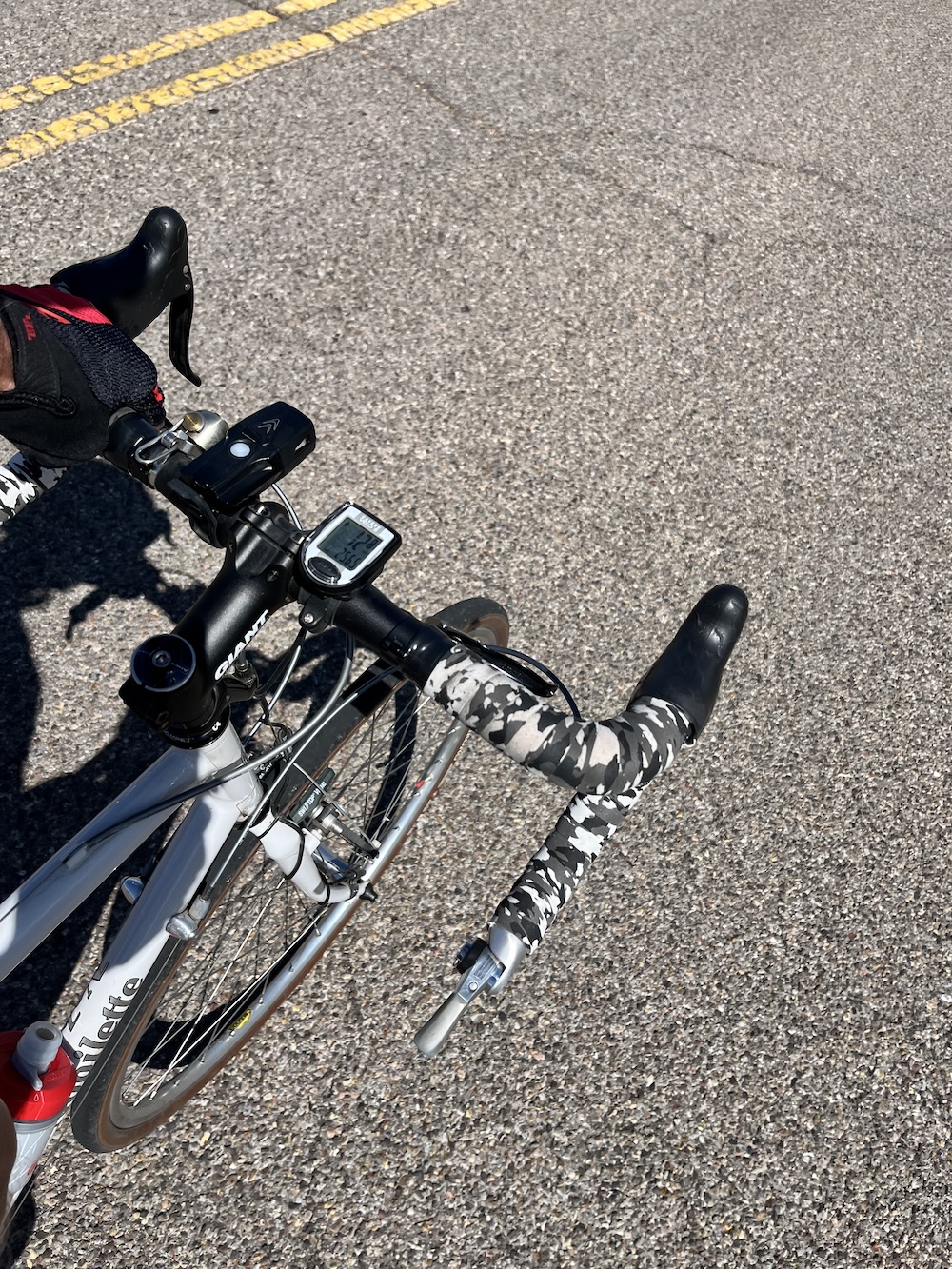
The Essential Works of Skid Marx

Let the rolling classes tremble. …

The proletarians have nothing to lube but their chains!

Wait a minute. That’s not right. …

The proletarians would also want to butter their chamois, lest they suffer knots on their knuts during pedal revolutions. When V.I. Lenin wrote “What Is to Be Done? Burning Questions of Our Movement” in 1902 he was not recommending remedies for saddle sores.

Yeah, it’s another Labor Day entry.

I’d been invited to smash the State at a rally in Fanta Se, but that was looking like an all-day affair, and with (a) it being Monday, and (2) Herself inbound from a long weekend in Minnesota, I had trash and recycling bins to set out and retrieve; sheets, pillowcases and towels to launder; plants to water; hummingbird feeders to wash and refill; the usual feline maintenance; and a general all-round, stem-to-stern, rapid reassembly of a living space in which only one-third of the occupants really cares about any sort of Better Homes & Gardens tidiness.

Guess who. Here’s a hint: It ain’t me or Miss Mia. I’ve always done my best work under deadline pressure, but I can guarantee you I’ve cut a few corners here today. The self-criticism session will be grueling.

So, anyway, instead of invading the capital with my socialist brethren and sisthren I spent a couple hours cycling around the foothills with my geezer comrades in what proved to be a delightful debut for September 2025 before buckling down to the task(s) at hand..

I flew the red jersey and took all my pulls. “From each according to his ability, to each according to his needs,” etc. And I stood by valiantly as one of our number was waylaid by a reactionary goathead or shard of glass. The lumpenproletariat traditionally recycles beverage containers at roadside, via passenger-side windows, during revolutionary holiday weekends.

“Glassholes,” as one comrade muttered.

When I returned home to a frugal working-class lunch I discovered that there were two — two! — Labor Day rallies right here in The Duck! City. And I had missed both of them.

The comrades in PR are way off the back here. I’m gonna have to start paying closer attention to my socialist-media accounts.

Notes from the road, part 2

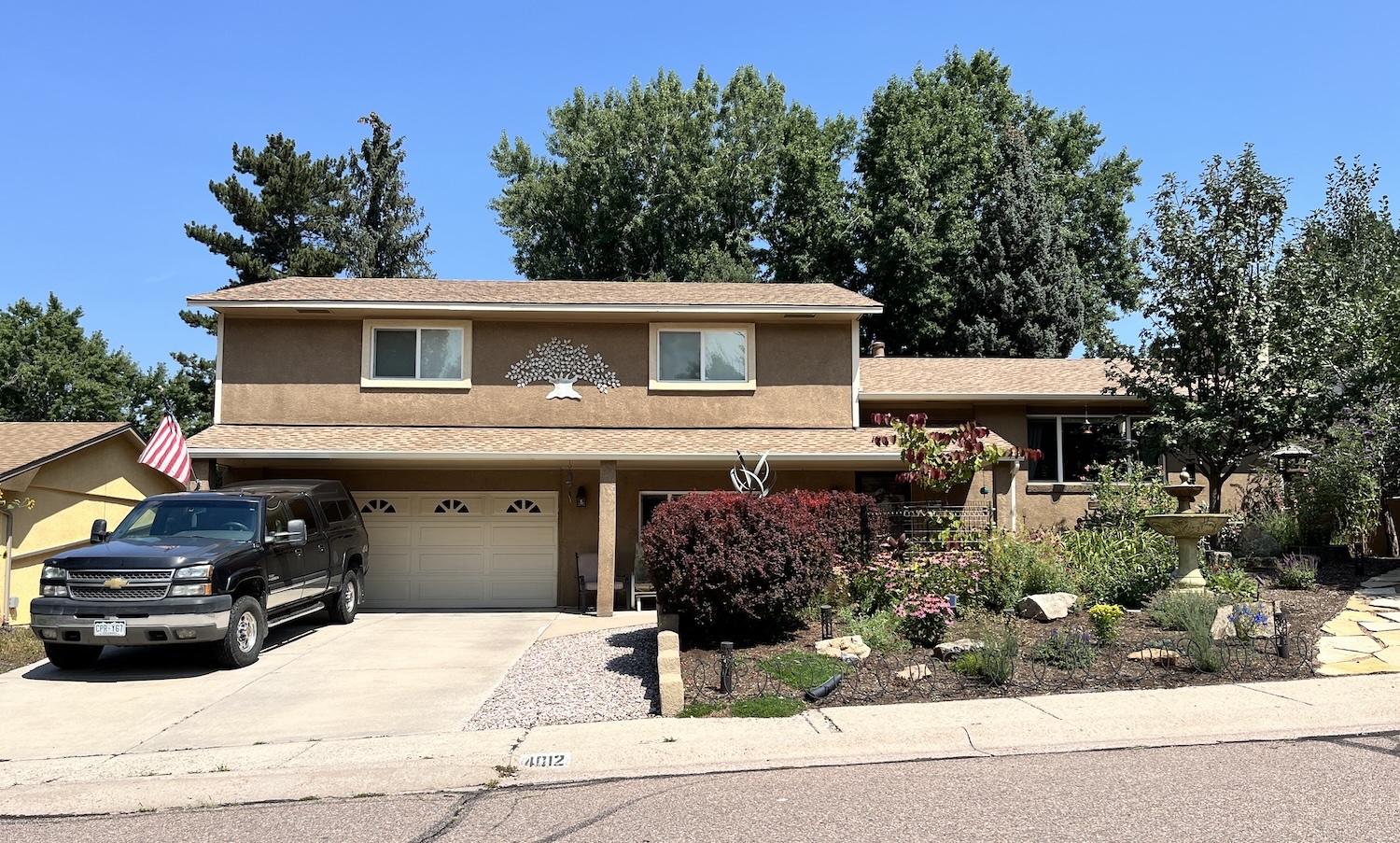
The O’Grady family mansion, circa 2025. I like what the latest owners have done with the place.

When someone asks me, “Where are you from?” I reply: “We were an Air Force family. Moved around a lot. I’m not really ‘from’ anywhere.”

But if I am “from” somewhere, it’s probably Colorado Springs.

Several versions of me have lived there off and on since 1967, when the old man got transferred for the final time, from Randolph AFB, Texas, to Ent AFB, Colo.

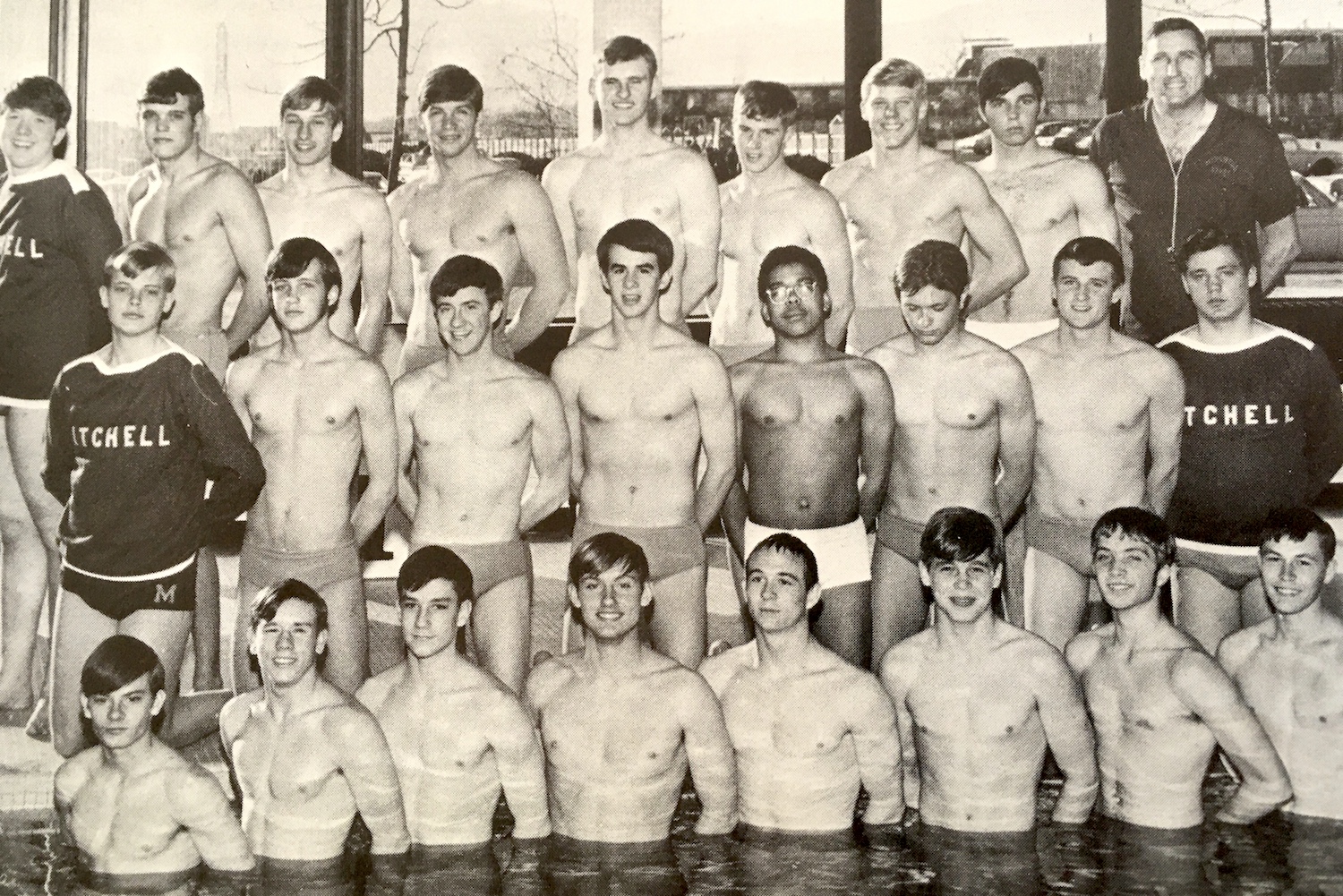
The Mitchell High School swim team in 1970, the year we went 11-0. Find the dork, win a prize.

Junior-high dork. High-school swimmer, gradually making the transition from dork to drinker and doper. College dropout sampling the blue-collar lifestyle. Rookie newspaperman. Rookie freelancer, freshly married, the two of us trying to make a few bucks while riding herd on my demented mom for free rent in the family castle. Pro freelancer, in our own home, the wife having reinvented herself as a librarian after a whirlwind tour of the University of Denver’s masters program. The drugs were long since in the rear view, and before we left for Albuquerque in 2014 the tonsil polish would be history, too.

I make my tour of duty there about a quarter-century, all told, which may be a long-enough stretch for Bibleburg to qualify as a hometown. For sure I have a love-hate relationship with the place.

And isn’t that practically the dictionary definition of “home?”

The place has a reputation for conservatism, which is ironic, in that the last actual conservative to run the joint was its founder, Gen. William Jackson Palmer, who saw to it that his successors would not be permitted to plant endless hectares of ticky-tacky rooftops and retail on every square inch of the place when he was gone.

Monument Valley Park, briefly the home of the Mad Dog cyclocrosses.

His legacy includes the donation of land for Monument Valley Park, North Cheyenne Cañon Park, Palmer Park, and Bear Creek Cañon Park, all of them stellar places for riding the ol’ bikey-bike or just hanging around in. He founded the Gazette, too, but we can hardly blame him for what happened there.

The place has been a haven for Birchers, Klansmen, and Nazis in my own lifetime, along with various tribes of generic libertarian fuckwits whose fontanelles closed up too soon (see Doug Lamborn, et al.). Indeed, there was a time when our cyclocrosses in Palmer’s parks drew about half the entrants typical of a Boulder or Denver race, because those posie-sniffing tree-huggers were afeared someone might beat some Jesus Goldwater into them if ever they dared venture south of the Palmer Divide.

In the Springs, “conservative” means “penny-wise, pound-foolish,” or in the vernacular, “We ain’t paying for shit until it breaks, and maybe not even then.”

Back in 2010, the city was shutting off streetlights — 8,000 to 10,000 of them — to save money, suggesting that anyone who liked to be able to see the muggers creeping up on them should “adopt” their friendly neighborhood light.

The adoption fee “may be tax-deductible,” one city mouthpiece noted, suggesting donors “consult a tax expert.” Because nobody wants to pay taxes to keep the fucking lights on, amirite?

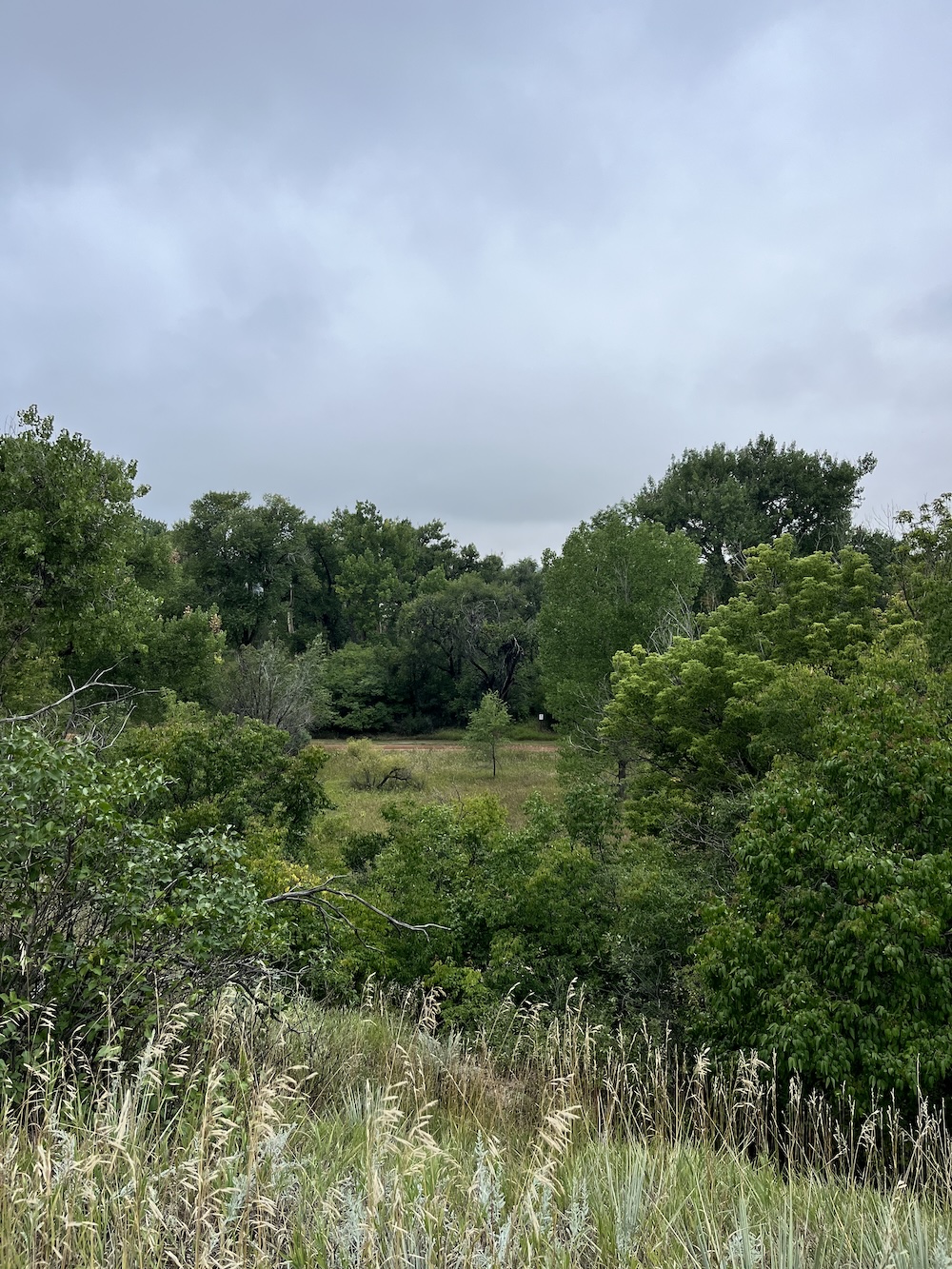
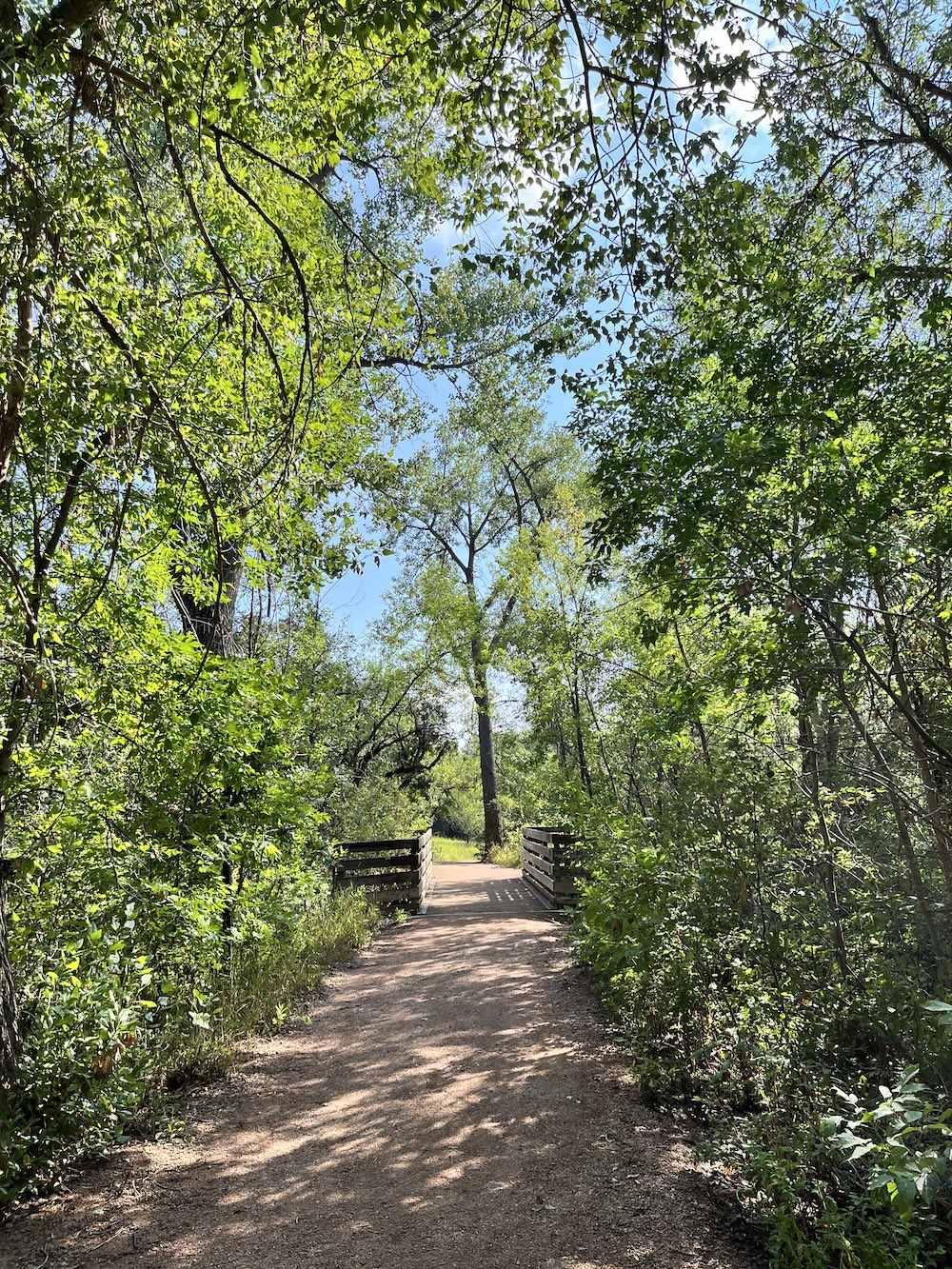
Part of our old circuit in Bear Creek Regional Park.

During my most recent visit, it seemed nearly every street in town was either broken or being rebuilt. Whether this was due to decades of “conservatism” or the ravages of an unusually wet summer remains a mystery. I know the town pretty well and have more than one way to get from point A to point Z. But this trip all the letters of the alphabet were buried under orange cones.

Happily, Palmer’s parks seemed in great shape as per usual. In Monument Valley Park, I saw hard-hats using the trail-maintenance equivalent of ice-rink Zambonis to groom the goo right out of them.

Classic Bibleburg, man. Can’t keep the lights on, the fascists out, or the potholes patched, but when it comes to Gen. Palmer’s parks, it’s nothing but happy trails to you. He must’ve written it into his will.

Notes from the road

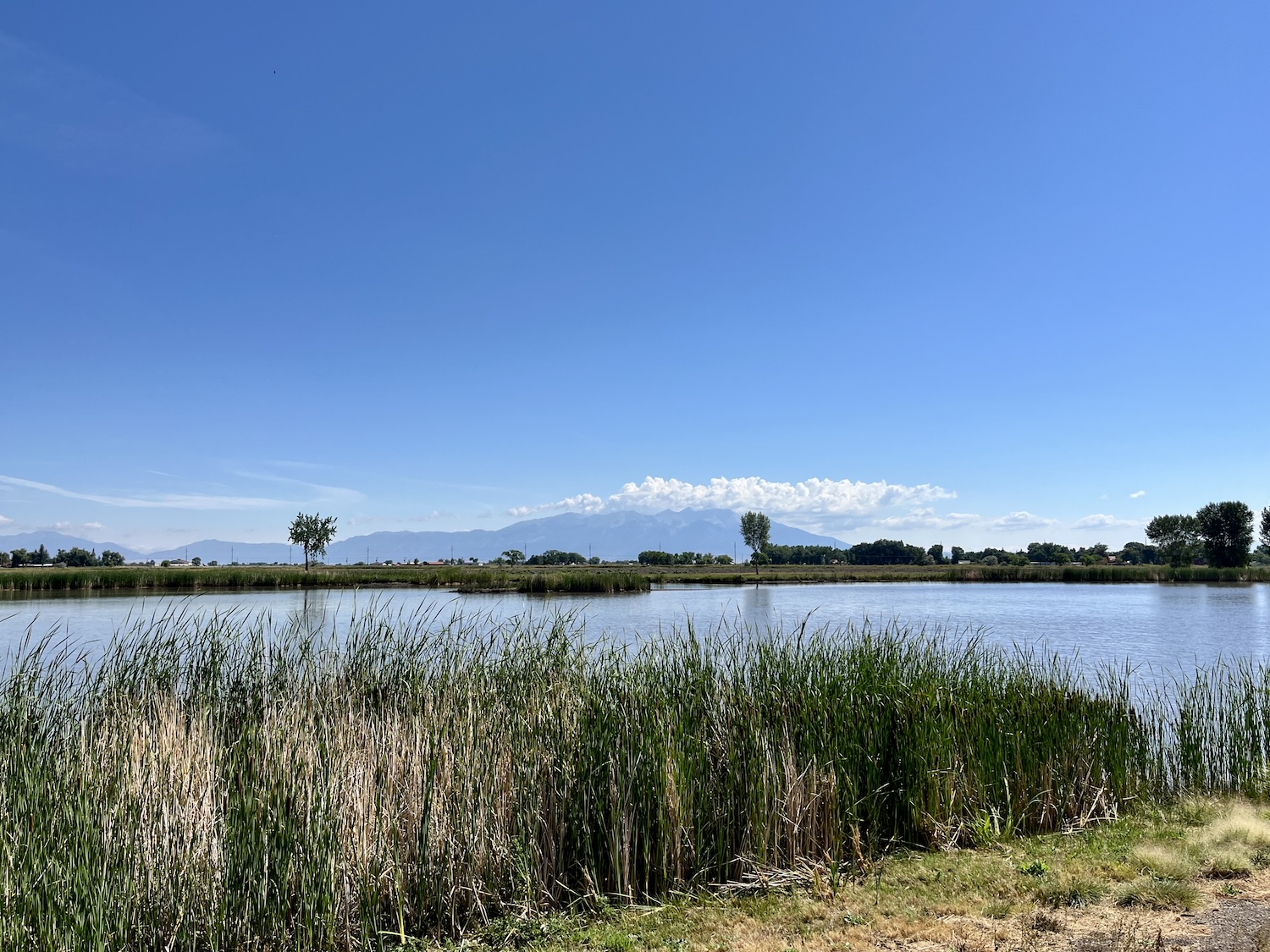
Water? In the Rio? ¡Que milagro!

In Alamosa, the Rio Grande is actually a rio.

Killing time between breakfast and burial last Saturday I drove out State Avenue to River Road and parked at a little pullout across from the Cattails Golf Course, where a couple sat chatting as a kid fished.

Alamosa didn’t seem much changed from 1971, when I was a freshman at Adams State College, the only school in the state that would have me.

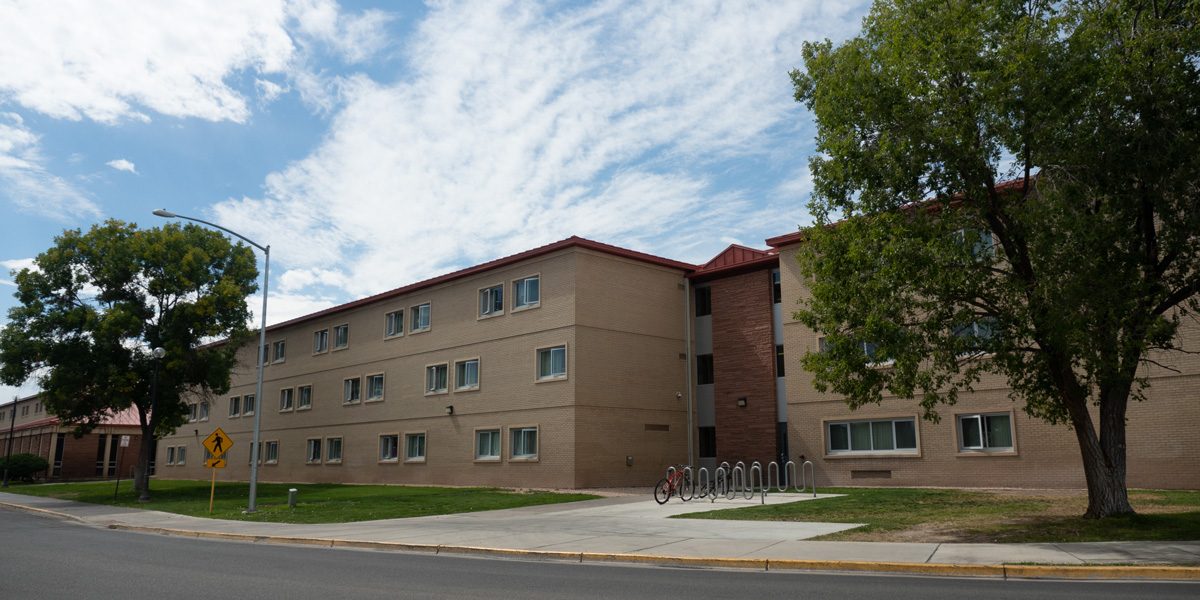
The school is called Adams State University now, but that seems a little grandiose. It’s still a small college in a small town, and the dorms — from the outside, anyway — seemed untouched, save by the ravages of time and undergraduates.

Coronado Hall, undated; shoplifted from the Adams State website.

Coronado Hall still has that generic Fifties-to-Seventies vibe. Could be anything from a budget apartment building in a Seventies sitcom to a residential treatment facility to a nursing home.

But the McCurry-Savage-Moffat-Houtchens L-block apartments would embarrass an East German, even before the Berlin Wall came down.

I took no pix of this academic detour down memory lane, not eager to be dubbed an elderly perv’, or worse, a narc.

“Do you have any children here, sir?”

“Uh, no, officer, not that I know of. If I did, they’d be in their 50s, and I could see their pictures any old time down at the post office.”

I don’t recall which of these hovels was my last known residence at Adams State — but Savage would seem appropriate, so I’ll take it. My roommates and I broke all the written rules and some of the unwritten ones, too, until I dropped out after two years and discovered the wonderful world of work. This sent me shrieking back to school in a year. Not to Alamosa, though. To Greeley, where I met all these Martinezes.

A half-century later, as I hauled bike and baggage into my motel, a man and a couple of women were discussing in low tones some loved one bound for a stretch in the federal pen. Could’ve been me in ’73. Stay in school, kids. And don’t deal drugs from your dorm room.

In other news, the Safeway has moved across the street. The Campus Cafe, Bank Shot, and Purple Pig are still around, but the Ace Inn is not. The Rialto, where I saw The Firesign Theatre’s “Martian Space Party” — double-billed with “Zachariah,” written by the Firesigns — is no longer a theater.

Tell me my man Jim isn’t gonna set this big ol’ cigar to smoking. …

And everyone still does their serious shopping in Pueblo or Santa Fe. In Alamosa, a Martinez cousin groused, “There’s nothing.”

Well, that’s not entirely true. There was a big gay-pride rally just down the alley from William’s house on Saturday. The youngsters dashed over to buy a rainbow flag and T-shirt to prank their elders.

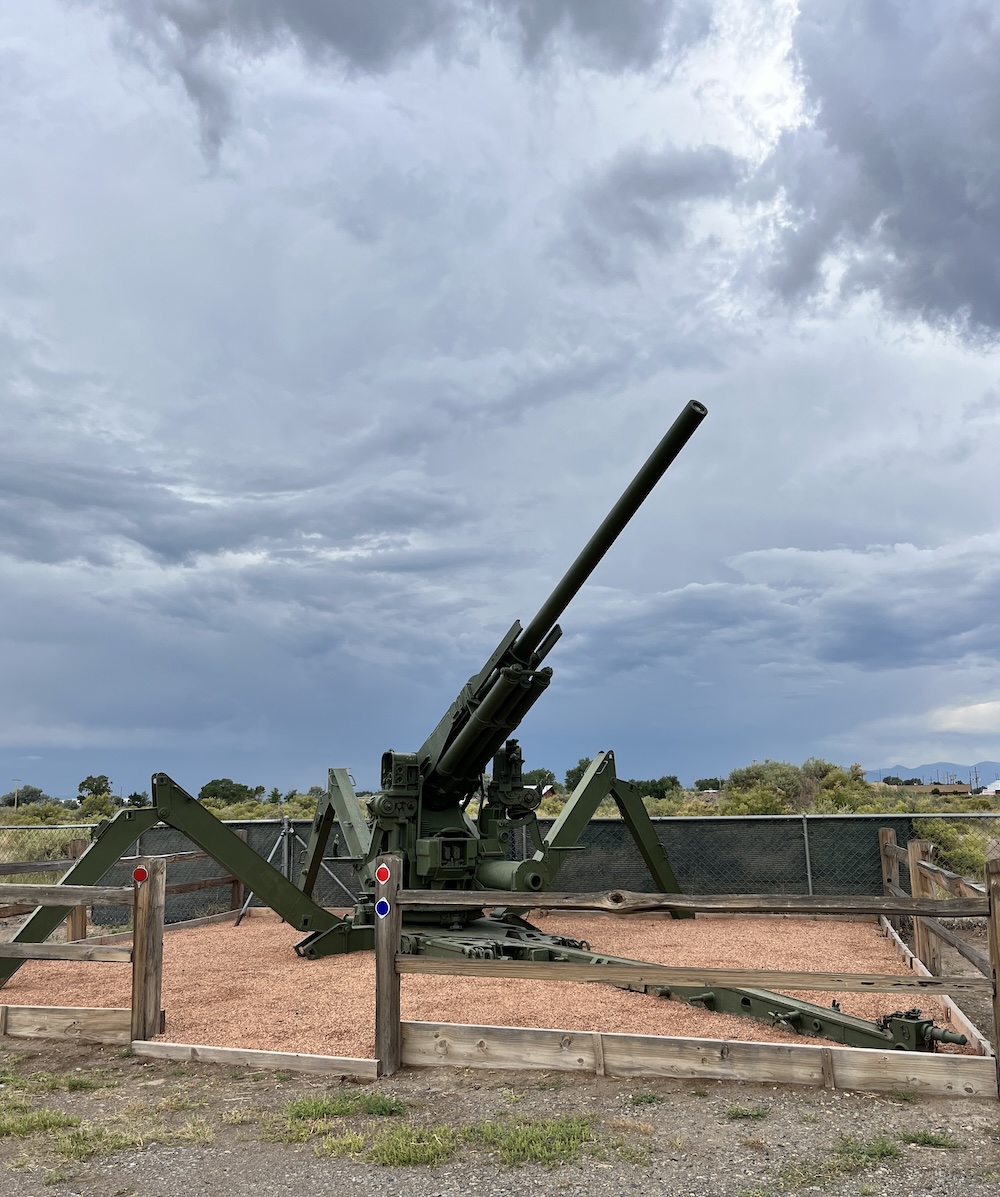
Speaking of pranks, there’s a largish artillery piece not far from where Jim and Lucy were laid to rest. I can see Jim having some fun with that on Halloween, New Year’s Eve, maybe Super Bowl Sunday if the Broncos ever get there again.

I can hear Lucy telling him to knock it off, too. “Cállate, mijo, people are trying to sleep here.”

Stoned again

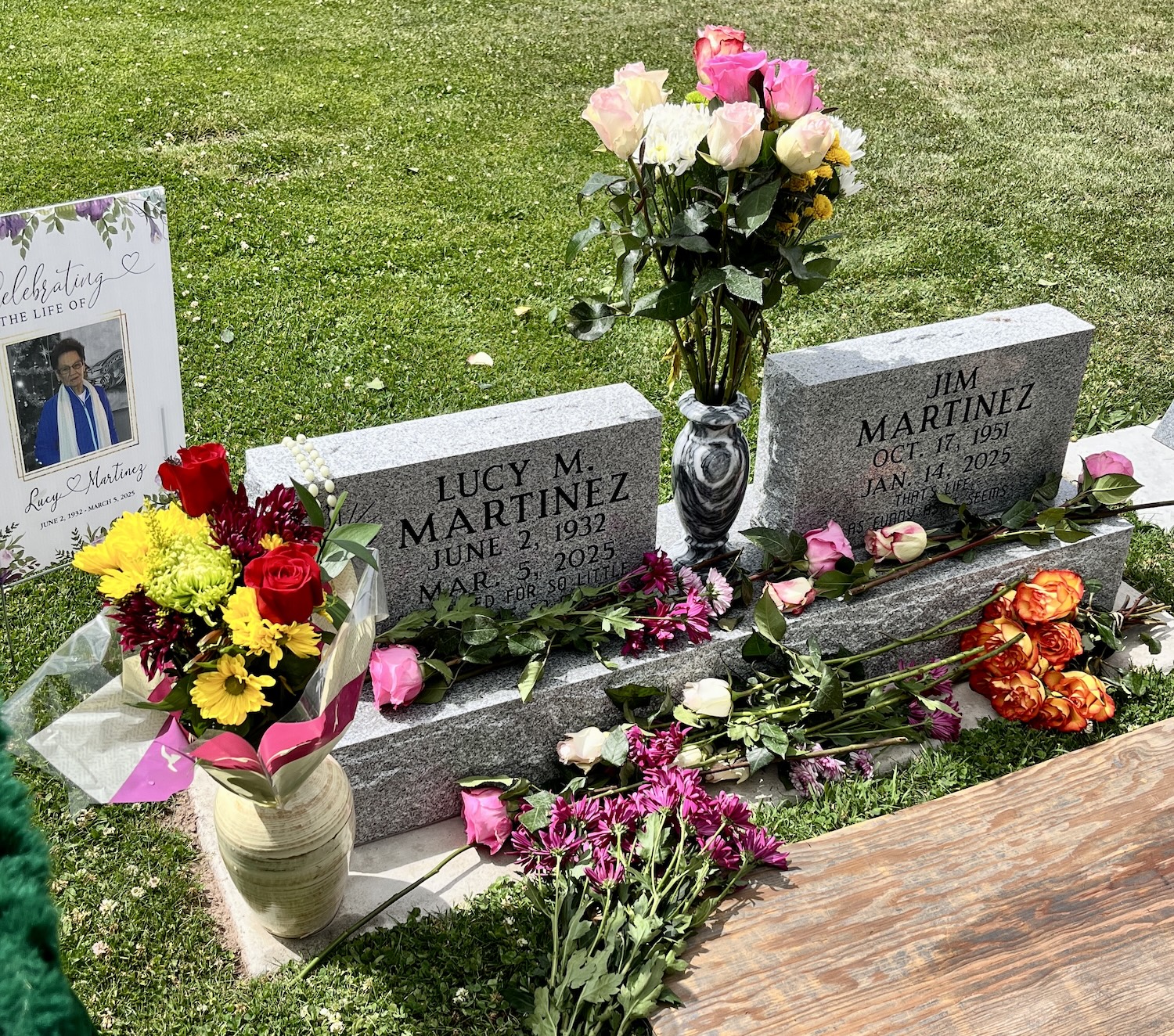
Lucy and Jim Martinez, together again in Alamosa.

This past weekend it struck me that I’ve probably spent more of my life with Martinezes than O’Gradys.

More waking hours, anyway. Not necessarily conscious, but in motion, for good or ill.

Lawrence Martinez, ex-cop, telling jokes to an ex-dope dealer he’d just met while taking five from his backyard grill in Alamosa, Colo. His wife, Lucy, making breakfast for the same ne’er-do-well and her eldest son, Jim, after their feeble attempt to follow in the oversized footprints of Hunter S. Thompson in Las Vegas.

The family came together again on Saturday as Lucy and Jim joined Lawrence at the Alamosa municipal cemetery.

Whenever I hear of a friend’s passing I always hope it’s a case of mistaken identity, or someone’s idea of a joke, and that we’ll see each other again.

But when I’m standing in front of a big stone with the name chiseled in … well, that’s one hell of a fact-check.

At graveside Larry Martinez spoke briefly of his father, mother, and brother. Sister BettyJo and her husband, Tom, were there, as were Larry’s wife, Sherry; their sons, Will and Stefan; daughter-in-law Kaitlyn and baby Delilah May; Jim’s son, Kelly; the resident wildman William, a.k.a. Guillermo; the fabulous Leonard R. Dogg; and a moderately sized coterie of other family members, friends, and hangers-on, among them Your Humble Narrator.

During a Friday-night barbecue at William’s and a late lunch Saturday at Nino’s Del Sol, old feats of dubious valor were revisited and new tales added to the family mythology. Some made me wish I was still a youngster sucker-punching his liver; others, not so much. Ditched in a small-town bar, stuck for a ride? The woman with four kids who says her place is a lot closer than yours? It makes for a good story later over margaritas, as long as the kids aren’t calling you daddy when the ex shows up unexpectedly.

I settled for writing a note to Jim that went into the earth with him, and placed a flower at graveside. And I bowed thrice to Lawrence, Lucy, and Jim, thankful to the universe for giving me two families — the one I was born into, and the other I stumbled into.

• • •

After lunch, pursued by an electrical storm, I drove to Colorado Springs to pay my respects to another friend, from another life.

I’m on a first-name basis with a lot of the ghosts in that haunted house of a town, enough of them to launch a chain of Overlook hotels.

There’s my dad, Col. Harold J. O’Grady, USAF (ret). And mom, Mary Jane (Dickey) O’Grady. My first dog, Jonathan, a.k.a. Jojo (William in Alamosa still remembers Jojo). Marguerite “Rusty” Mitchell, food editor at the Gazette, who dubbed the burg “a cemetery with lights.” My Zen bro Steve Milligan. My bike bros John “Usuk” O’Neill and Bill Baughman. “Doc” Lori Cohen, who put me back together every time I disassembled myself. Ike, a.k.a. Chairman Meow, the mini-kitty who fought off a coyote only to be felled by an enlarged heart.

Kathy and Andy Bohlmann.

And now Andy Bohlmann has joined the choir invisible.

Andy was a character in the second act of my little theatre of the absurd, in which I played a cycling journalist. A former technical director of the U.S. Cycling Federation who would later be dubbed “a problem promoter” by a top dog at that organization’s successor, USA Cycling, Andy was, simply put, a fool for bicycle racing.

He told me once: “Back, way back, in the late ’50’s through the mid-’70’s, I used my trusty Hallicrafters shortwave receiver to get Tour de France updates from the BBC in London on the hour. There was no other coverage anywhere here. I still have it within arm’s reach, though it’s long broken as tubes and parts are nearly impossible to find.”

Andy not only loved listening to bike racing, he loved watching it, on TV and in person, so much so that starting in 1991 he and his wife, Kathleen, began busting their butts promoting their Sand Creek Series of races in and around Colorado Springs, which despite the presence of USCF, USAC, and the rest of the Olympic “family” was woefully short of, y’know, like, actual bike racing, an’ shit.

The Bohlmann family — Andy, Kathy, and their sons, Matthew and Philip — picked up where that better-known, better-funded family left off.

Like another tireless Colorado race promoter, Boulder’s Chris Grealish, Andy could find a diamond of a course in the dung of unlikely places. The recurring nightmare “Hell on a Hillside,” for instance, which I remember as a vertical mountain-bike crit in Manitou Springs that was not at all tailored to my particular strengths, which were overshadowed by a multitude of weaknesses, primary among them a fear of death and/or dismemberment.

By turns goofy and grumpy this blue-collar bull in cycling’s china shop was forever tilting against the carbon-and-titanium windmills of the sport’s polo-shirt governance, and frequently found himself “in exile,” as he called it in a ceaseless torrent of emails to friends and foes. The Bohlmanns’ Sand Creek and Ascent Cycling races weren’t for the 1 percenters; they were for the rest of us.

Hell, they were there for you even if you didn’t know a chainring from a cassette. A 2013 race in Palmer Park sought donations to the Care and Share Food Bank for the firefighters battling the Black Forest blaze — at the time the state’s most destructive fire ever — and the residents affected by it.

As their sons grew and Kathleen fell ill in the mid-Nineties, Andy took on more responsibilities. There was college, and caregiving; he watched over his wife in their Colorado Springs home for nearly a quarter-century until she passed in 2013. He considered stepping away from cycling after that, but the boys encouraged him to carry on.

And so he did, until his own health took a wrong turn. I last caught his act at round four of the 2014 US Cup Pro Series in Pulpit Rock Park. In 2017, after we relocated to Albuquerque, he emailed to say he’d been out of the game for more than a year.

And then, on Aug. 1, son Matthew wrote to say his dad was gone altogether. A one-two punch — a stroke followed by the diagnosis of an inoperable cancer.

“He passed peacefully and comfortably at home with Philip and I with him,” he said. Good lads. They learned a lot from Kathleen and Andy, and not just about bicycle racing.

So there I was on Sunday, back at the old Bohlmann place on the east side of town, where my high-school pals and I used to act the fool in the boonies now buried under rooftops and retail.

Matthew and Philip had Jimmy Buffett on the stereo (“A White Sport Coat and a Pink Crustacean”) and hoisted a pirate flag to a clangor of cowbells in a driving rain (Andy had taken a nautical turn at one point in his life, and it certainly felt as though we were at sea).

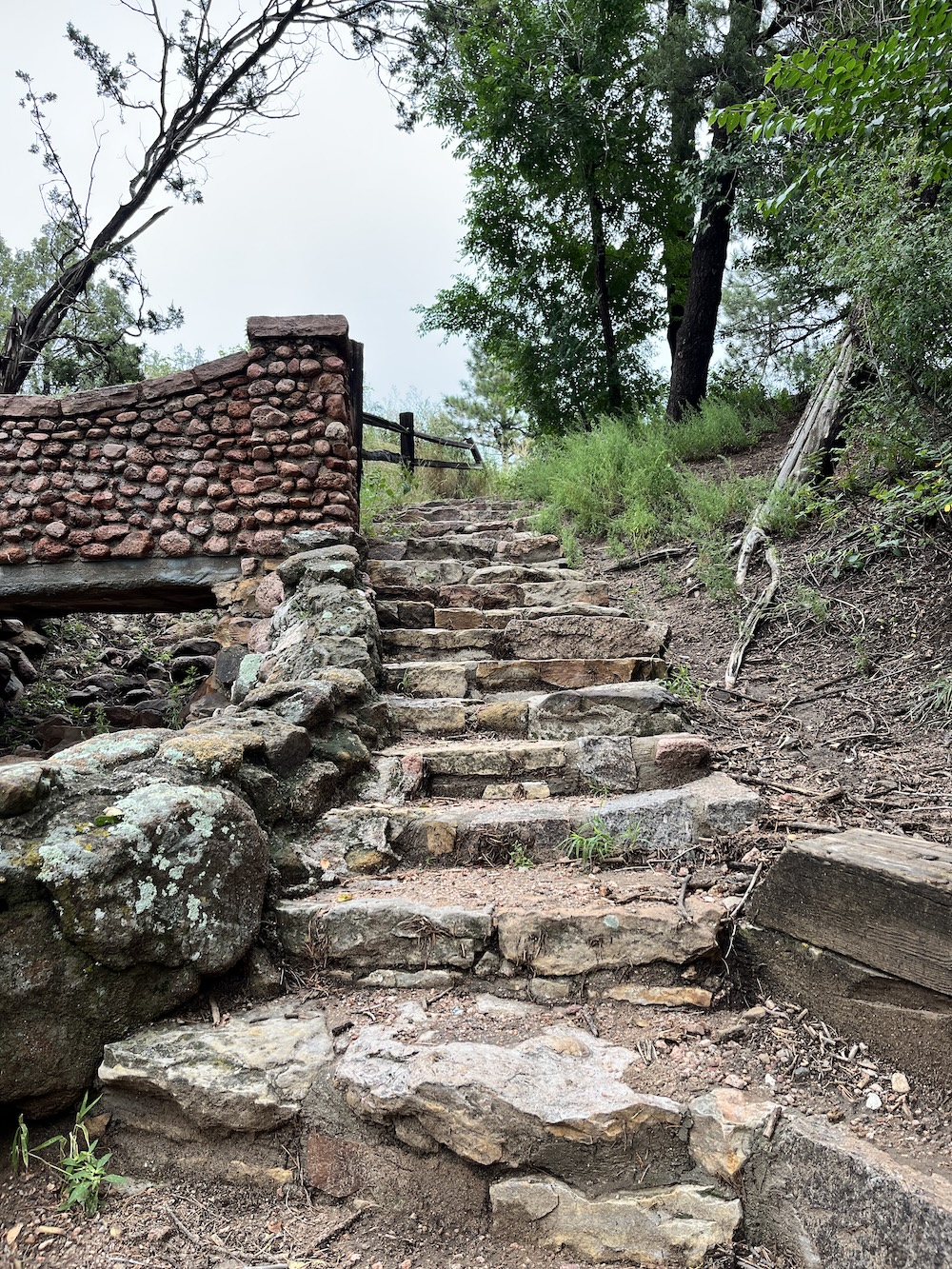
Stairway to heaven? The racers in the Mad Dog cyclocrosses at Monument Valley Park never called it that.

The mourners dined on Cuban sandwiches from a place he favored — call it a “Cuban Crime of Passion,” which of course I did — and shared memories face to face and over an Innertubes hookup for those who couldn’t attend in person. It was a fine sendoff for the old privateer.

Over the next couple of days, as sort of an homage, I visited a few of the courses Andy and I used for our respective events Back in the Day®: Palmer Park; Bear Creek Regional Park; Monument Valley Park

I brought a Steelman Eurocross and running shoes, but couldn’t get a whole lot of use out of either. The sky kept crying.