
Snot takes

Old MacGoblin had a bot, AI AI Ohhhhhhh. …

Hold your water. I’m not dead yet, you ghouls. The dead haven’t the pipes for the lugubrious lung-butter lullabies I’ve been performing nightly for the past couple of weeks.

So, no, this post was not written in memoriam by ChatGPT in goblin mode with art by Lensa AI. It is not about the Tripledemic, the World Cup, who’s gonna die in “The White Lotus,” Sen. Kyrsten Sinema (I-Me Me Mine), Harry and Meghan, Brittney Griner, Ye, or Elon Musk.

What is this post about? you ask. It’s about time I posted, is what it’s about. The Kleenex has been getting all my hot takes lately and you lot have probably begun speculating about whether I left yis any bicycles, and, if not, the location of my final resting place in case you should find yourself in the neighborhood and in need of a vengeful wee.

So, yeah. You’re a bit early for the reading of the will. Please, have a seat. And pass the Kleenex.

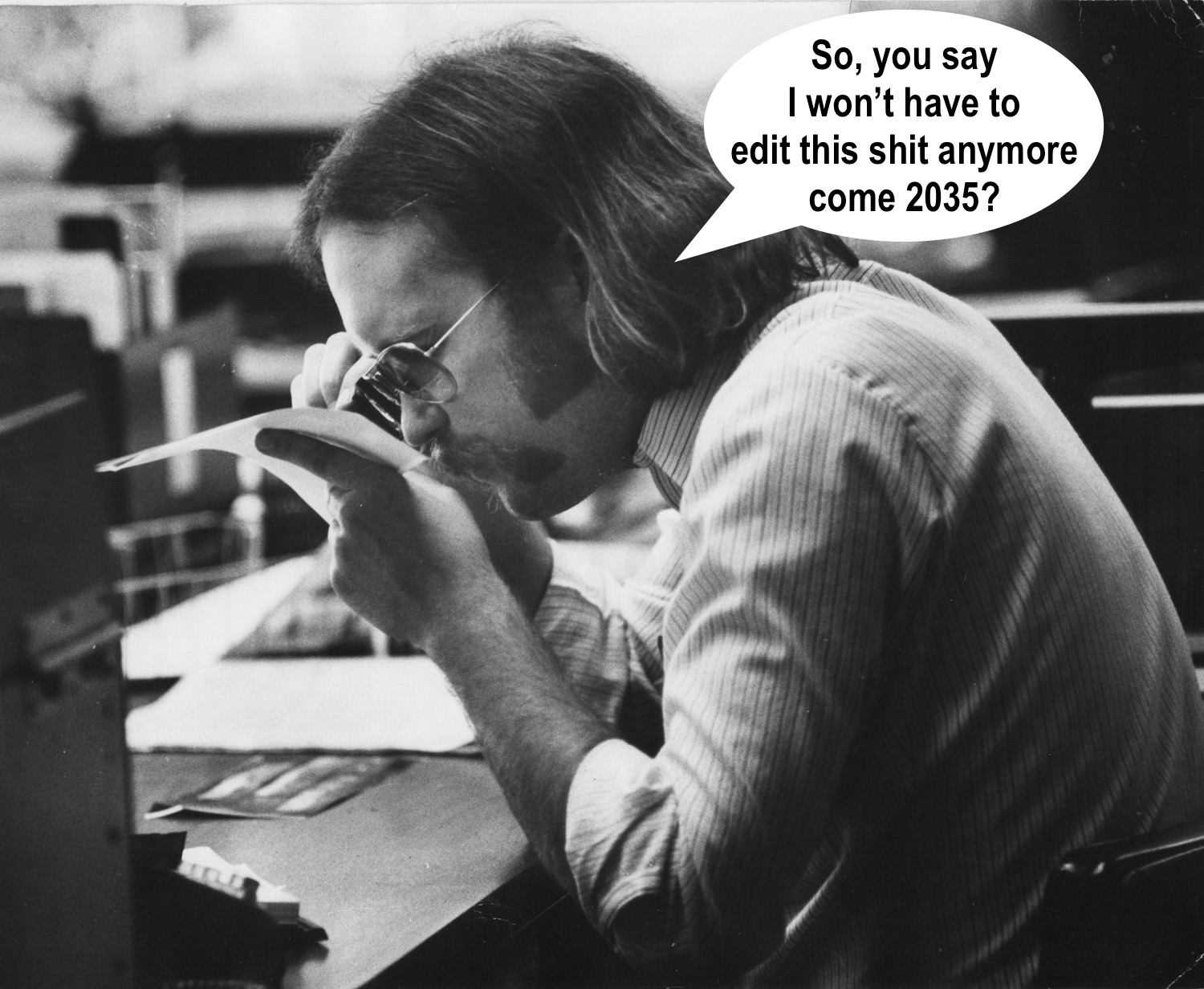
The Terminator is a wordsmith

Sweetheart, give me rewrite … and an oil change.

Ho boy. There goes the neighborhood. The Poindexters are building the next Billy Shakespeare out of 1s and 0s.

In this piece for The New Yorker, John Seabrook wonders:

Could the machine learn to write well enough for The New Yorker? Could it write this article for me? The fate of civilization may not hang on the answer to that question, but mine might.

Sigh. Remember the good old days, when automatic writing was limited to the spirits or subconscious? I have a feeling this new breed of writer will rely on a different solvent than did its human predecessors.

“Gimme a benzene. Make it a double. I’m stalled on this goddamn novel.”

Oh, good

Q: You know why editors die earlier than reporters?
A: Because they want to.
Photos 1981 by Tom Warren, Corvallis Gazette-Times

From Kevin Drum at Mother Jones:

Here’s a guess: the first serious use of AI in the newsroom will be to replace editors, not writers. Roughly speaking, AI will take reporters’ notes or rough copy—or even what we humans laughingly call finished copy—and turn it into great prose. We’ll still need someone around to nag us about issues of substance, but the robots will compose sentences and paragraphs better than us. What’s more, they’ll be able to churn out multiple versions of our writing instantly: the magazine version, the 6th-grade version, the TV script version, the Spanish version, the PowerPoint deck, etc. Just tell it what you need and you’ll get it.

Reporters will last a little longer, but just a little. I’m giving editors until, oh, 2035. I think that’s generous. Reporters will be out of business by 2040. Better get ready.

I’m totally ready. By 2035 I’ll be 81, which in O’Grady years is stone cold dead.