Fortune-telling, chats, and algorithms

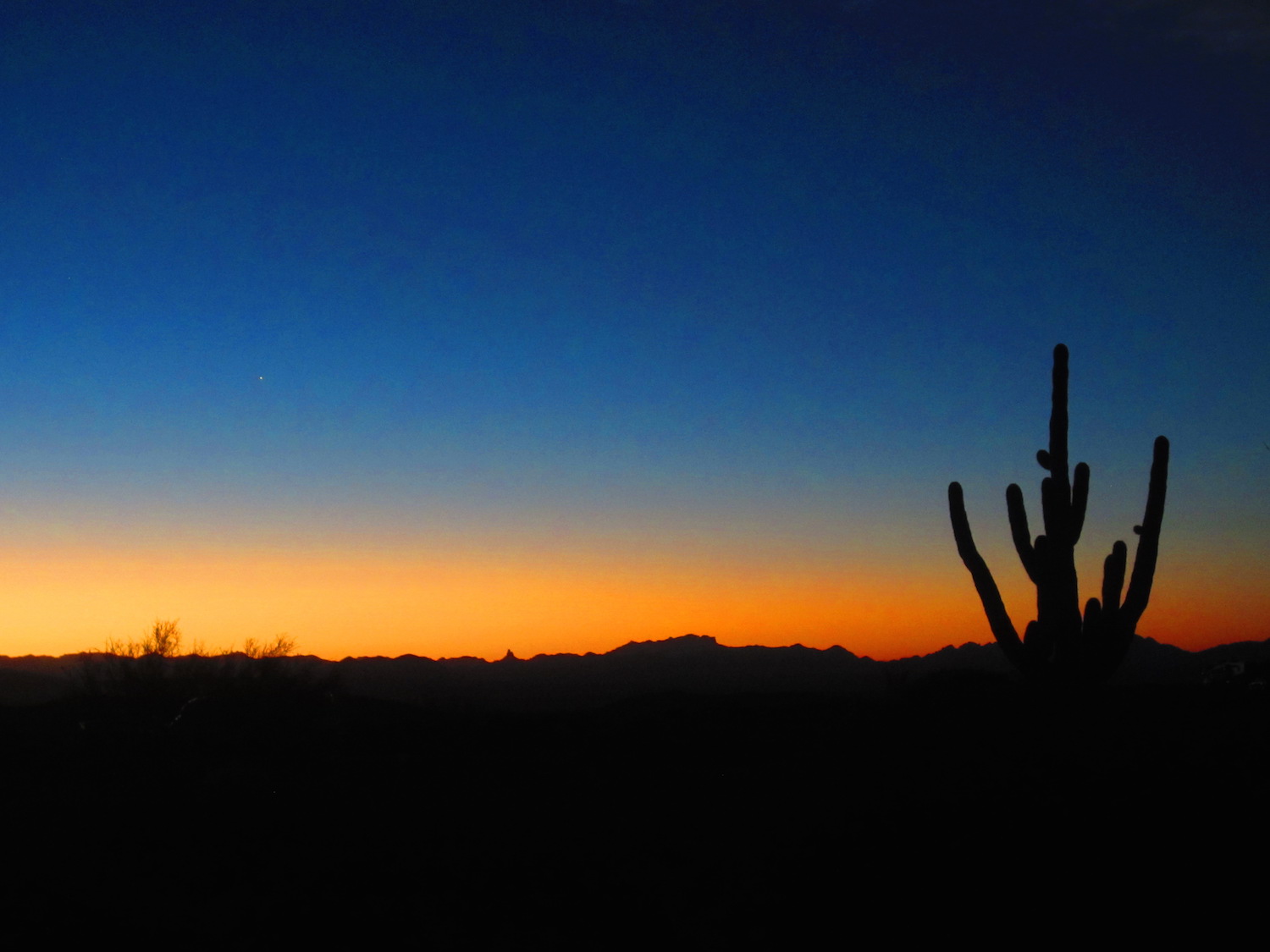
This sunset actually happened. It was not predictive of anything other than the sun setting.

I was wandering idly along the trashy shoulders of the Infobahn this morning, trying to not step in or trip over any particularly toxic bits of debris, when I noticed a newsletter from veteran scribe James Fallows that had gone overlooked in my in-box.

In it, Fallows proposes that cash-poor news organizations invest their limited resources in what’s actually happening now in politics instead of what might happen, “which the reporters can’t know when they’re writing the stories, and which readers will eventually find out anyway.”

For readers, he cites three types of stories that suggest you’ve been lured out of the newsroom and into the fortune-teller’s tent:

  • A story based on polls, which are manufactured “news” for those sponsoring them but only shakily connected to reality;
  • A story based on framing any development in terms of “how this will play” politically, which is the reporter’s guess about what voters will think, and;
  • A story on which candidate has “momentum” or traction” based on the vibe at events.

Predictive stories like these, Fallows says, “are like stock-market picks or the point spread on football games, but with less consequence for being wrong. And if news organizations had limitless time, space, and budgets, you could perhaps say, “What’s the harm?”

Alas, stories like these are also easy and cheap. Any half-bright wordslinger with Internet access and a comfortable chair can shower dubious wisdom upon you from a considerable height, like a buzzard with the runs. Be deeply suspicious of anything slugged “Commentary,” “Analysis,” or “Opinion.” Also, items headlined “Five takeaways from [insert actual news event here].”

However, sometimes the “takeaways” story can contain an actual glimmer of enlightenment. In one such at The New York Times this morning we have the concession — in this case, the fifth of five takeaways — that “Iowa doesn’t mean much for the fall.” This, after wall-to-wall coverage for Christ only knows how long of a non-event that saw 15 percent of registered Republicans (about 110,000 people) turn out to caucus. Thanks for sharing, Lisa, Maggie, and Jonathan.

For my part, I tip my fedora to Fallows and add a prescription of my own: Just because the Internet is endless doesn’t mean a story should be.

I read two things this morning that I knew would piss me off, mostly because I like being pissed off in the morning. That, and two cups of strong black coffee, are the jumper cables that get my heart started.

The first, from The New York Times Magazine, headlined “How Group Chats Rule the World,” was tagged “12 MIN READ.” I won’t link to it. Just because I enjoy spitting coffee into my keyboard and screaming “What the actual fuck?” doesn’t mean everyone does. We must consider the children. Also, cats, houseplants, and the homeowners’ association.

The second, from The Guardian, didn’t give me an ETA. But it was slugged, “The Long Read,” so I knew I was in for it. Headlined, “The tyranny of the algorithm: why every coffee shop looks the same,” this 4,200-word slog should’ve been headlined “I spend far too much time in coffee shops.”

I won’t link to that one, either. If that’s your idea of a good read you can chase it down yourself, or buy Kyle Chayka’s book, “Filterworld: How Algorithms Flattened Culture,” from which it was adapted.

But can you lift this mighty tome to read it? There may not be enough coffee in the shop. Or the world.
Space cowboy

“Night has fallen on the desert.” That’s Ken Layne, beginning each episode of “Desert Oracle Radio.”

Daylight has fallen on the desert — and in celebration, I just dropped a few coppers into Desert Oracle Radio’s tin cup over to Patreon.

It felt overdue. I’ve been eavesdropping for free, the way you do when you can. But suddenly, while listening to this week’s episode, I thought: “If I’m gonna keep riding this old greydog through the Mojave, I should really buy a ticket.” So I did.

There’s a lot of talk lately about what new “technology platforms” are doing to “traditional media companies.” Yeah, I suppose. You get to write, or talk, or whatever, with a minimum of interference from “gatekeepers.” And if you’re lucky, maybe the audience will forget that information wants to be free, become subscribers, and kick a few Dead President Trading Cards your way.

Most of what I read about the newsletter boom centers on its threat to old-school newsgathering operations. But Will Oremus at Slate seems to hit the nail on the head when he notes that the Substackers are mostly about commentary and analysis, not straight, original reportage of the kind we used to get from our daily blats before Gannett snatched ’em up.

It shouldn’t surprise anyone that the commentariat has snuck off the reservation. Even in my little backwater, cycling journalism, management realized early on that “analysis” was a whole lot cheaper than sending staffers to the scene because it could be done on the cheap, at the office, where they could keep both eyes and at least one thumb on the indolent tippling slackers. No airline travel or rental cars, no hotel rooms or restaurant meals, no credentials, no worries. Plus the office has reliable internet. Crank up those MacBooks and pound out the thumbsuckers, bitches.

Now the commentariat has realized they don’t need management skimming the cream from their milking of the audience, assuming they’ve built one and can monetize maybe 10-15 percent of it. Good for them, and good for us, especially if it drives management at “traditional media companies” to think about actually suiting up for the game, which is to say covering the news.

As a bush-league blatherer myself I try to keep semi-informed, so I help nurture a variety of operations, from large to small, outfits and individuals I’d like to see thrive. The New York Times and The Washington Post. The Atlantic. Charles P. Pierce at Esquire. Adventure Journal. Padraig and the gang over at The Cycling Independent. And now Ken Layne at Desert Oracle.

Sometimes it’s about the news. Sometimes it’s about the commentary. I’m a sucker for a nice bit of writing, like I heard in last night’s Desert Oracle Radio episode. It put me in mind of some of the grumbling I’ve heard from Hal Walter lately as Weirdcliffe starts to seem a little too big for its Wranglers.

What if, some day … what if we stopped working hard and stopped doing what we’re told? What if we moved to little specks of towns all over the country? Not the places that already have an organic bakery and four coffee shops with more almond milk than coffee beans, but the places built for things that no longer happen and where nobody ever came up with another workable idea. Old mining towns, old cattle-ranch crossroads, the mostly abandoned towns on Nevada’s U.S. 50 or U.S. 6. The real Las Vegas, an hour east of the wealthy island of Santa Fe. Far-eastern Oregon and Washington state. Places where you could maybe afford a house for your family, your friends, whatever arrangement makes sense. Clean air; hopefully, enough water. Clean streams for fishing. Walk your dog out the back door and into the wild. Keep a garden to attract the bees and the hummingbirds. Why not? What are you waiting for?

Shoveling

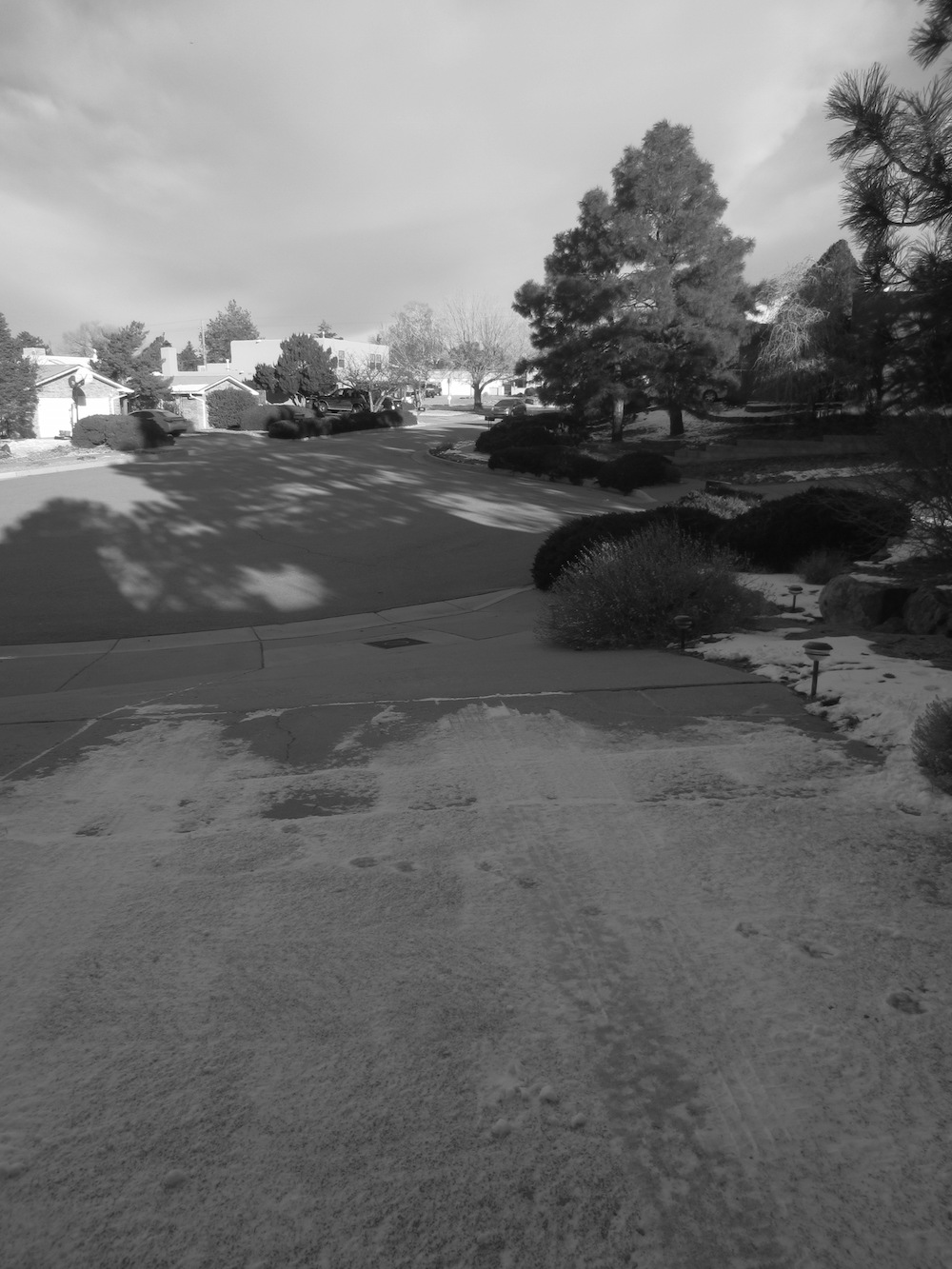
Behold the Driveway of Doom.

Jaysis. Some days, the writing, it goes smooth like butta.

And some days, it goes more like shitting broken bottles into a flaming toilet. Something of a pain in the keister, is what.

This is the grotesquely scenic route toward explaining the recent dearth of bloggery in these environs. With mots of the bon variety proving elusive I felt compelled to corral the few I was able to catch, hoping eventually to assemble them into a remuda of paying copy.

Nix.

Notions kept arising with malicious intent, like Martin Sheen surfacing in the lagoon en route to snuffing Marlon Brando in “Apocalpyse Now.” False paths with bad endings. Curiously shaped bricks that, while fascinating in their own right, didn’t quite fit in the wall.

Gah.

Also, it snowed. One of those obnoxious, featherweight snows that, coupled with a stiff north wind, basically glazes a steep, north-facing driveway like a cop’s donut if the homeowner is distracted by journalism and forgets to clear it first thing.

Sheeeeeeeeeeeeyit.

While all this was going on I was striving mightily to avoid the actual news, which, wow, talk about your false paths and bad endings. The road goes ever on and on. Here be dragons. This way to the Dark Side. Thus I shunned The New York Times and NPR in order to remain blissfully ignorant and focused on the task at hand, viz., to wit, earning the meager handful of coppers I require to purchase my common groats and lentils.

And now I believe I need a break from all that. It’s the weekend, f’chrissakes. The toilet will still be on fire come Monday morning.


The weather is here, wish you were beautiful

One shot, three seasons: Summer in the lawn, fall in the trees and winter on Pikes Peak.

Deadlines suck. Like The Turk, I’ve been indoors more than I care to be lately, in my case generating bicycle comedy for fun and profit (well, for profit, anyway, and only just barely). This is particularly irksome because we’ve been enjoying a stellar fall here in Bibleburg. It’s 76 right now — 76! — at 5:45 p.m. on Oct. 15. Imagine my amazement.

This will change, as it must. Tomorrow and Sunday look pretty damn’ nice, and wouldn’t y’know, I have to clock in for a couple of shifts in the old VeloBarrel. Come Monday, the weather should become a bit more seasonal, as in 50-something with a chance of showers. Ick.

After that, it’s the Colorado lottery, which means exactly what it sounds like — a total meteorological crapshoot, which I must say keeps life interesting, like the wining jug in John Steinbeck’s “Cannery Row,” a punch blended by understudy barkeep Eddie using any booze left in glasses by the patrons of La Ida. A Palace Flophouse roommate, Jones, first pans, then praises the concoction:

“You take whiskey,” he said hurriedly. “You more or less know what you’ll do. A fightin’ guy fights and a cryin’ guy cries, but this —” he said magnanimously — “why, you don’t know whether it’ll run you up a pine tree or start you swimming to Santa Cruz.”

That’s the sad part. Pine trees we got. But Santa Cruz … not so much.