Dead air

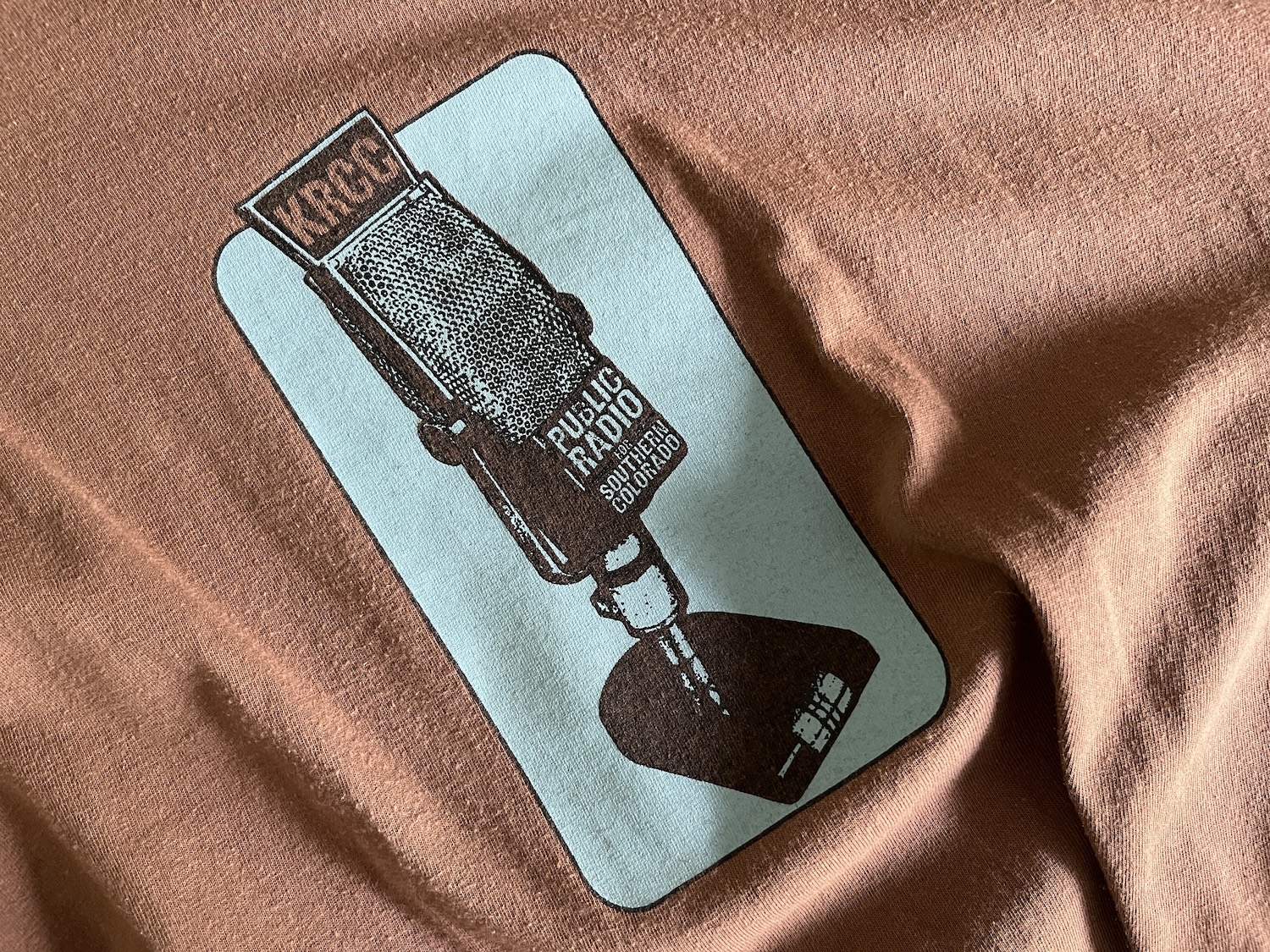
KRCC is just one of the three public broadcasters we support.

CPR, we hardly knew ye.

The Right got another zopilote feather in its asshat with the news that the Corporation for Public Broadcasting will cease operations in 2026.

What’s the problem? Why, money, of course. There’s just not enough to go around! Writes The New York Times:

Hey, $500 million here, $500 million there, and pretty soon you’re talking about real money. Money for stuff like — oh, I don’t know — say, a $30 million military parade to give Felonious Punk a chubby on his birthday. Or $1 billion to refurb’ a Qatari jet that he will take with him to his “library,” which will be a walk-in closet full of fuck books, golf scorecards (see the Fiction stacks), and classified documents (homeless dude thumbing through them whilst on the shitter).

And then there’s the tab for flying this fat cunt around the world to visit his golf courses, where the locals gather to jeer, snigger, and call him a fat cunt. We can call him a fat cunt right here at home for free. See? I just did it. Didn’t cost one of the pennies we won’t be making in 2026.

Maybe that’s why the Corporation for Public Broadcasting got it in the neck. No pennies for that crowd.


R.I.P., Bob Edwards

Bob Edwards (pictured in 1989) started his career at NPR as a newscaster and then hosted All Things Considered before moving to Morning Edition. Photo by Max Hirshfeld for NPR

“The voice we woke up to.” That’s NPR’s Susan Stamberg speaking of Bob Edwards, who for just short of a quarter century was the host of “Morning Edition,” until the bosses gave him the shove in 2004.

Heart failure and complications of bladder cancer gave Edwards his final push on Saturday. He was 76.

I spent a lot of years getting the news from Edwards and his people courtesy of one NPR affiliate or another. KRCC-FM in Bibleburg; KUAZ in Tucson; one or another of the three stations I could get in Corvallis, Ore. (KOAC, KOPB, or KLCC); KCFR in Denver; and others along the long and winding road between newspapers.

“Morning Edition” became particularly important in Corvallis, where I was working for an afternoon paper for the first and last time. Edwards and the NPR news crew gave me a head’s-up as to what might await me when I staggered hungover into the Gazette-Times newsroom at stupid-thirty and started scanning the wires for nightmares to pour into the holes around the ads.

You’d never have known he was from Kentucky (like me, he shed any original-equipment accent). Unlike me, he was drafted and did a hitch in the Army, in South Korea.

Edwards wrote books, hosted a program on SiriusFM, and — according to his wife, Windsor Johnston, a reporter and news anchor for NPR — never got over his dismissal from that outfit, where just four years earlier his work had been honored and described by a Peabody awards committee as “two hours of daily in-depth news and entertainment expertly helmed by a man who embodies the essence of excellence in radio.”

“He was a stickler for even the tiniest of details and lived by the philosophy that ‘less is more,’” Ms. Johnston wrote on Facebook. “He helped pave the way for the younger generation of journalists who continue to make NPR what it is today.”

That’s a helluva mic drop. Peace to him, and to his friends, family, and loyal listeners.

‘The Last Copy Editor’

• Editor’s note: I first saw this Peloton story at NPR, and then went straight to AP to see if the original was this fucked up (it was). Buried the lede. (Who gives a shit about a hapless CEO lateraled over to a cushy gig elsewhere?) Confused “there” for “their” and “its” for “it’s.” It took two people to write this dreck and at least two more to put it online. When the nuts and bolts are this bad, one fears for the solidity of the “content.”

I should pitch a movie, “The Last Copy Editor,” about a tireless comma-chaser, usage Nazi, and AP-style maven who fights tooth and nail against the corporate vultures turning journalism into bung fodder.

I see either Jason Statham or Bruce Willis playing me in the title role, maybe John Goodman as the evil hatchet man from Corporate.

Issa Rae as the sharp young reporter who joins me in my quest for editorial excellence. Bill Burr as the comically inept city editor always hitting on her. Edward James Olmos as the burned-out slot man whose copy of “The Elements of Style” is actually an ingeniously contrived flask of bottom-shelf vodka.

Bill Hader as the online editor, a jagoff whose first language is jargon. Stephen Root as the clueless hack who frequently misspells his own byline and always waits until 30 seconds before deadline to file. Natasha Lyonne as the wisecracking dyslexic photographer who says writing captions is not part of her job description.

And as always, Jerry Mathers as “The Beaver.”

Random acts of radio

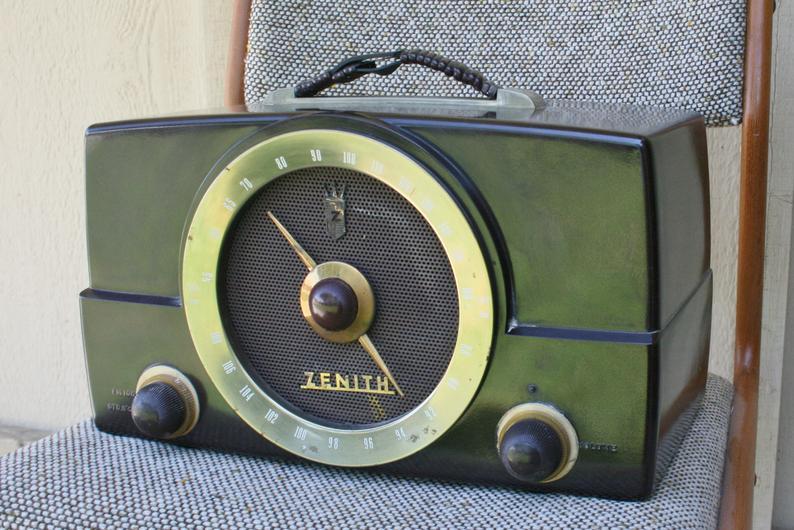
The mighty Zenith K725.

Back in the Day® it seemed some oversensitive jagoff was always shrieking at us to “Turn that noise down!” Or even off.

How little things have changed.

Impeachy the Clown and Porky Pompeo have it in for NPR because a couple of its reporters had the temerity to, like, y’know, report, an’ shit.

And they’ve started cranking up that tired old double-chin music about defunding NPR and the Corporation for Public Broadcasting, because these fatboys can only punch down.

Naturally, this triggered me, because I’m as oversensitive as the next jagoff. Throw in the confluence of Presidents Day and Random Acts of Kindness Day, and boom: Before anyone could tell me to shut my yap I was opening wide to deliver another painful sound bite with the yellowing fangs of Radio Free Dogpatch.

P L A Y    R A D I O    F R E E    D O G P A T C H

• Technical notes: This episode was recorded with a Audio-Technica AT2035 microphone and a Zoom H5 Handy Recorder, then edited in Apple’s GarageBand on the 13-inch 2014 MacBook Pro. Post-production voodoo by Auphonic. The background music was cobbled together by Your Humble Narrator using Apple’s GarageBand and the iMovie effects bin. KRCC operations manager Mike Procell appears through the miracle of Rogue Amoeba’s Audio Hijack.

New coat of paint

“Come On Up To The House: Women Sing Waits,”
is available at Dualtone Music Group.

Tom Waits is an acquired taste (just ask Pat O’B), but Allison Moorer finds him delicious.

Moorer and several other female artists, working with producer Warren Zanes, have released an album of Waits covers titled “Come On Up To The House: Women Sing Waits.”

They lay a sweet, smooth coat of Sherwin-Williams over that weatherbeaten Waits structure, which Zanes describes with all due respect as a “trash-can aesthetic,” and it works beautifully in the cuts I’ve heard.

Roseanne Cash performs a gently reimagined “Time,” one of the Waits songs I like to play badly on guitar. Iris Dement, a frequent John Prine collaborator, takes a deep, Dolly Parton country dive into “The House Where Nobody Lives.” And Patty Griffin’s take on “Ruby’s Arms” strips the original of its instrumental fat and gets right down to the bone.

In an interview on NPR’s “Weekend Edition Saturday,” Scott Simon quotes Moorer describing Waits as “a fully integrated artist who seemingly sees the whole picture at once and knows how to present it so that we do too.”

“He does seem to draw up marginal characters a lot — people who are either stuck in life or we don’t consider them people that we see,” Moorer said. “He exposes the everyday.”

Zanes hopes the album will unearth the lyrical voice that for some may be inextricable from the “grit and the growl” that characterizes Waits’s delivery.

“I think over the years he went deeper into the back of the cave, and sometimes I think people fail to see the very classic nature of the songs because of that ‘trash can’ aesthetic,” he told Simon.

“We viewed it as, ‘His 70th birthday is coming, and it’s a feast day, and we’re gonna take these songs and we’re gonna give them all the sweetness that we can.’ There’s something about the female voice that’s associated with a kind of vulnerability and a kind of emotion that we really wanted to breathe in these songs.”

Meanwhile, here’s the original “Ruby’s Arms,” the closer to 1980’s “Heartattack and Vine.” I was alone and miserable in Tucson when I trudged down Orange Grove Road to some anonymous Oracle Road music shop to buy this one. Still have it, too.