
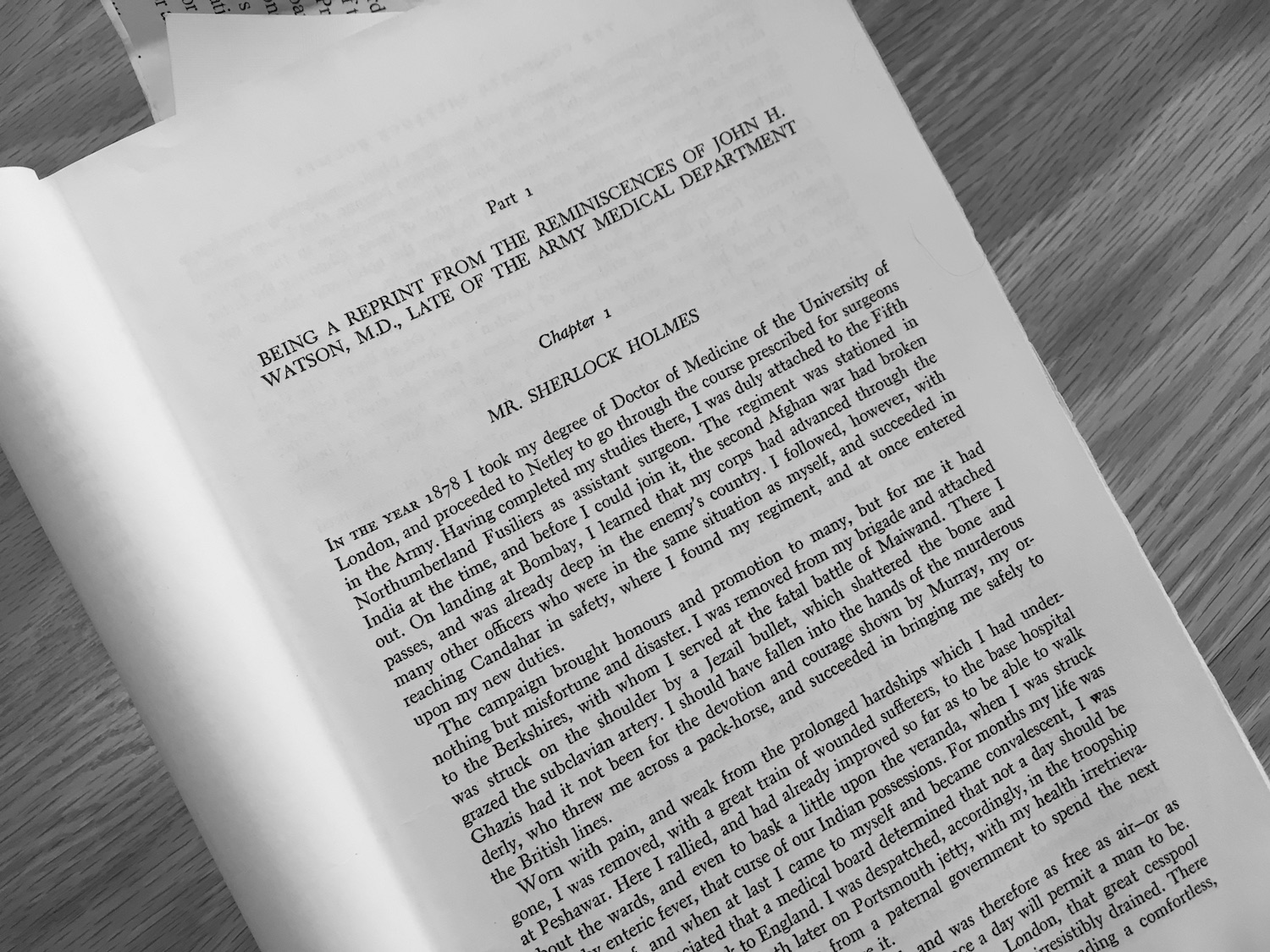
In his piece on the latest proposed withdrawal from Afghanistan, Charlie Pierce recalls a wounded veteran’s bitter assessment of his time in-country.
The disabled vet was Dr. John H. Watson, soon to be introduced to Sherlock Holmes, speaking in “A Study in Scarlet.” The tale was published in 1887.
The Holmes stories, which I first read in the 1960s, may have served as my introduction to warfare in Afghanistan. Later, there was Rudyard Kipling and his “epitaph drear.” The Soviet debacle I observed from a series of newspaper copy desks. Our own I read about courtesy of journalists like C.J. Chivers. A time or two I spoke with American vets about their own experiences.
Very little of what I read or heard inspired confidence in the ability of the American military-industrial complex to effect change — “Peace through superior firepower,” as the old joke goes — in a place where so many armies had had their asses handed to them. Nobody seemed to really want Afghanistan except the Afghans, and only a few of them wanted it badly enough to fight for it.
So here we are, nearly 20 years later, with 2,400 U.S. service members in their graves and $2 trillion pounded down various ratholes. And for what? Another epitaph drear.
Will we ever get the message that no matter how hard we sell it, “democracy” will never be America’s biggest export? When it hits the doorstep it often looks a lot more like vengeance.
God is said to have made us in His image. If so, He likewise has been compelled by circumstances to live with disappointment in His creations.
 Mad Blog Media