Ups and downs

No news is good news.

Wind and other things that blow kept my bike mileage in the double digits last week, which would not be such a bad thing if it weren’t for my addiction to the news.

After spending too much time in front of the monitor and not enough behind the handlebar I came this close (finger and thumb so close together that you couldn’t slip the homepage of the Albuquerque Journal between them) to canceling all my subscriptions. Bad news, badly written, barely edited, and poorly presented.

The motto of The New York Times used to be “All the News That’s Fit to Print.” At lesser journals wiseguys often revised it to “All the News That Fits, We Print.” In the Age of the Bottomless Internet it might be “All the News We Print Gives You Fits.”

Practically nobody needs to know most of this stuff, much less write about it.

“The rise of executive butlers.”

“At-home IV drips are the latest luxury building amenity.”

“We tried to pet all 200 dogs at the [Westminster Dog Show]. Here’s what it all felt like.”

Newspapers have always provided a spoonful of sugar to help the medicine go down, of course. But once the sheer volume of treacle was limited by the traditional 60/40 ratio of ads to news, which constrained page count; editors’ desire to focus on what was actually important, like, uh, the fucking news; and publishers’ insistence that the final package turn a profit.

There is no bottom to the Internet, no satisfying its endless appetite. Ever fed a baby bird? Imagine one the size of NASA’s Vehicle Assembly Building, but with a basement that extends all the way to Hell.

Whew. Now. All this being said, I have stumbled across two items you might enjoy reading over your morning coffee, shot of whiskey, or morning coffee with a shot of whiskey in it. And surprise, surprise: They both come from the godsend that rescued me from pulling an oar in the sinking longboat of daily newspapering, the wonderful world of bicycling.

First: The Washington Post presents a fabulous report by Peter W. Stevenson on Indiana University’s annual Little 500 bicycle race, made famous by the only cycling movie worth the price of a frame pump to put it into the ditch, “Breaking Away.”

It’s not clear who shot all the video and photos — Stevenson, a video producer, is credited on some, but not all — but they really help tell the story. And I love the still of the Kappa Alpha Theta rider hovering in midair over her saddle during a remount.

Second, The Cycling Independent gives us an essay by Laura Killingbeck, “A Good Time at the Dollar Store.” Killingbeck, free to explore after three months of housesitting, sings a soggy hosanna to the joys of the open road, a song I’m always eager to hear.

I’m supposed to do a short ride in the foothills with my fellow geezers this morning, but Killingbeck makes me want to strap some camping gear to a Soma and wobble off on a skull-flushing tour of wherever. Shucks, it’s not even sleeting here.

A sinus of The Times?

I’ve long had a nose for news, but a nose from news?

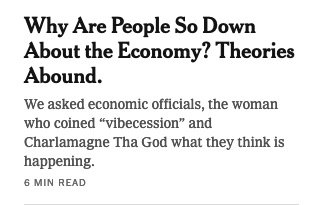
Seasonal allergies may be associated with mood disorders like anxiety or depression, according to The New York Times.

Huh. And here I’d thought my mood had become disordered due to the pain in my ass, an ailment I contracted from reading The New York Times.

I shouldn’t pick on The Ould Gray Hoor here. Anxiety, depression, and ass pain can be acquired just about anywhere, from the lowliest blog (thanks for reading) to the self-anointed Newspaper of Record.

Lately we are presented with a sitting president going all Oprah on his studio audience — Look under your seats! Debt forgiveness for you! No arms for them! — and his predecessor snoozing through court dates, occasionally waking to flash the stink-eye around the room or curse a porn-star paramour. A third candidate for the job has a brain worm, a slow, underhand pitch not even I can take a swing at.

Two rappers are said to be “beefing,” which seems to mean “talking shit about each other from a safe distance.” You’d think these two gents might bump into each other at some social event, like the Met Gala — which is still getting coverage three days later — and then what? An X-slap followed by a virtual duel? Mics at 10 paces?

Speaking of talking shit, slaps, and mics, the House of Reprehensibles gave the back of the hand it wasn’t using to write the Liberty in Laundry Act, the Refrigerator Freedom Act, and the Hands Off Our Home Appliances Act (HOOHAA) to the Creature from the White Lagoon for trying to topple Squeaker Mikey Mouse (hey, if you can’t legislate, defenestrate). MTG couldn’t even get the window cracked, much less toss Mikey out of it. Nevertheless she drew reporters like a dead dog draws … well, reporters. (Hi, Kristi Noem!)

Shoot, we can’t even get a new iPad without drama. Not that I want one.

When not blowing my nose or shifting uncomfortably in my chair I wonder whether in the race to become all things to all people at all times the media have become “a dildo that has turned berserkly upon its owner,” to misuse a Thomas McGuane quote.

McGuane was talking about America. And in some small sense, I suppose, so am I. Back to you, Chet.

Fortune-telling, chats, and algorithms

This sunset actually happened. It was not predictive of anything other than the sun setting.

I was wandering idly along the trashy shoulders of the Infobahn this morning, trying to not step in or trip over any particularly toxic bits of debris, when I noticed a newsletter from veteran scribe James Fallows that had gone overlooked in my in-box.

In it, Fallows proposes that cash-poor news organizations invest their limited resources in what’s actually happening now in politics instead of what might happen, “which the reporters can’t know when they’re writing the stories, and which readers will eventually find out anyway.”

For readers, he cites three types of stories that suggest you’ve been lured out of the newsroom and into the fortune-teller’s tent:

  • A story based on polls, which are manufactured “news” for those sponsoring them but only shakily connected to reality;
  • A story based on framing any development in terms of “how this will play” politically, which is the reporter’s guess about what voters will think, and;
  • A story on which candidate has “momentum” or traction” based on the vibe at events.

Predictive stories like these, Fallows says, “are like stock-market picks or the point spread on football games, but with less consequence for being wrong. And if news organizations had limitless time, space, and budgets, you could perhaps say, “What’s the harm?”

Alas, stories like these are also easy and cheap. Any half-bright wordslinger with Internet access and a comfortable chair can shower dubious wisdom upon you from a considerable height, like a buzzard with the runs. Be deeply suspicious of anything slugged “Commentary,” “Analysis,” or “Opinion.” Also, items headlined “Five takeaways from [insert actual news event here].”

However, sometimes the “takeaways” story can contain an actual glimmer of enlightenment. In one such at The New York Times this morning we have the concession — in this case, the fifth of five takeaways — that “Iowa doesn’t mean much for the fall.” This, after wall-to-wall coverage for Christ only knows how long of a non-event that saw 15 percent of registered Republicans (about 110,000 people) turn out to caucus. Thanks for sharing, Lisa, Maggie, and Jonathan.

For my part, I tip my fedora to Fallows and add a prescription of my own: Just because the Internet is endless doesn’t mean a story should be.

I read two things this morning that I knew would piss me off, mostly because I like being pissed off in the morning. That, and two cups of strong black coffee, are the jumper cables that get my heart started.

The first, from The New York Times Magazine, headlined “How Group Chats Rule the World,” was tagged “12 MIN READ.” I won’t link to it. Just because I enjoy spitting coffee into my keyboard and screaming “What the actual fuck?” doesn’t mean everyone does. We must consider the children. Also, cats, houseplants, and the homeowners’ association.

The second, from The Guardian, didn’t give me an ETA. But it was slugged, “The Long Read,” so I knew I was in for it. Headlined, “The tyranny of the algorithm: why every coffee shop looks the same,” this 4,200-word slog should’ve been headlined “I spend far too much time in coffee shops.”

I won’t link to that one, either. If that’s your idea of a good read you can chase it down yourself, or buy Kyle Chayka’s book, “Filterworld: How Algorithms Flattened Culture,” from which it was adapted.

But can you lift this mighty tome to read it? There may not be enough coffee in the shop. Or the world.

No joke, sport

We did, too. Before they could fire us.

Whew. Rough week in my old bidness.

The New York Times croaked its sports department, and McClatchy sacked three Pulitzer Prize-winning editorial cartoonists — Jack Ohman of the Sacramento Bee, Joel Pett of the Lexington Herald-Leader and Kevin Siers of the Charlotte Observer.

Having worked in one sports department and drawn more than a few editorial cartoons, I naturally view with alarm. Wit is without value but witlessness is rewarded?

When The Washington Post asked for comment on McClatchy’s abrupt erasure of three Pulitzer winners, the company — owned by Chatham Asset Management — supplied this gem from opinion editor Peter St. Onge:

“We made this decision based on changing reader habits and our relentless focus on providing the communities we serve with local news and information they can’t get elsewhere,” the statement said.

Ho, ho. That’s not the dumbest thing I’ve ever heard, but it’s definitely on today’s leaderboard.

What local news and information that can’t be gotten elsewhere might McClatchy be relentlessly focused on providing in Sacramento at 3:10 p.m. Thursday Duck! City time?

And who says there’s no such thing as good news!

“The stories you’re seeing on the homepage are chosen by our local editors with help from an AI algorithm. The display includes the day’s important stories and recommendations for readers like you.”

Anyway, here’s a random selection from AI’s random selections courtesy of your friendly neighborhood carbon-based life form:

• “Cirque du Soleil returns to Sacramento this summer: Here’s where, when and how to get tickets.” Sounds like a free ad to me, but maybe the AI got comped tickets.

• “More than 40% of Californians say they were affected by recent extreme weather, poll finds.” Do tell. I imagine the other 60 percent stayed home or attended an air-conditioned showing of Cirque du Soleil.

• “Prime Day is over, but there are still deals galore.” Any cut-rate Cirque du Soleil tickets?

Well, thank Boss Tweed there ain’t none a them damned pictures taking up space on the Bee homepage. There’s not much to read, either. But then the only reading that interests hedge funders and asset managers is of the bottom line, and McClatchy certainly seems to have gotten to the bottom of something here.

• Addendum: Speaking of bottoms, pour one out for Anchor Brewing, which is going down after 127 years, the final few under a disastrous foreign ownership. Anchor Steam may have been the first proper beer I ever drank, and the porter was superb.