
Peace, pop

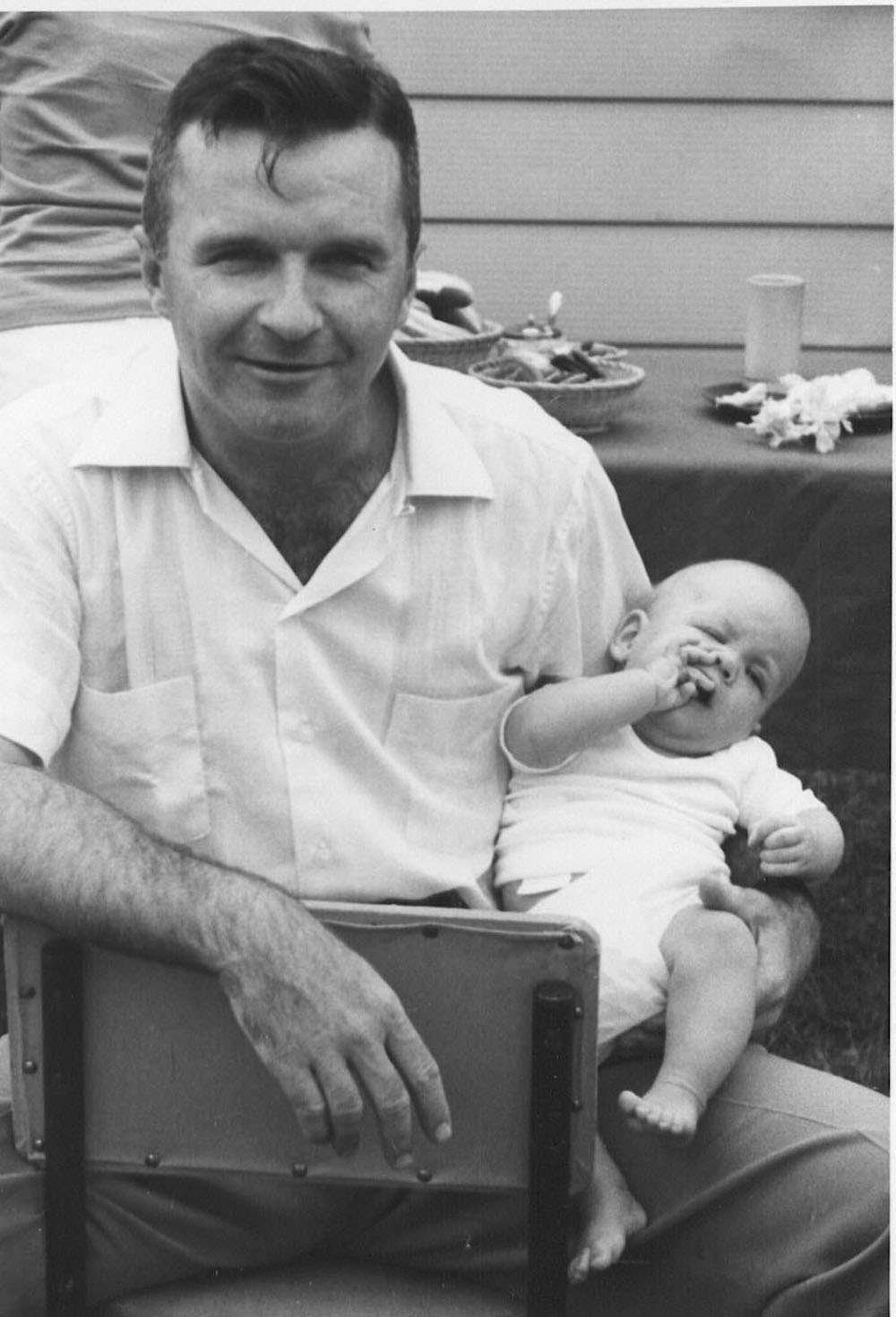
Your Humble Narrator and the old man circa 1954 in Harundale, Md.

When Col. Harold Joseph O’Grady drove his only son downtown to register with the Selective Service System back in 1972 he may have been thinking, “This kid will last about as as long in Vietnam as an ice-cream cone.”

The old man brought some experience to bear, having done his bit in (and above) the jungle during World War II with the New Guinea-based 65th Squadron, 433rd Troop Carrier Group, Fifth Air Force.

Thirty years later, those halcyon days spent rocking a biscuit bomber out of New Guinea must have looked like R&R in Sydney compared to sharing quarters with a smart-ass peace creep/wanna-be hippie who favored Abbie and Jerry over Tricky Dick and Spiro; a hairy asthmatic nuisance who couldn’t mow the grass without wheezing but smoked acres of it without complaint and then ate everything in the house.

Well, now he was 18 and that’s Reveille you hear, son! Just ’cause you had the good fortune to be born into a career Air Force officer’s family doesn’t mean you get to skip your turn in the barrel. Especially with your GPA. Sign here, dismiss, and await your letter from the president.

Thus I duly registered with Selective Service as required; continued my cursory antiwar theatrics at college; and voted for a WWII B-24 pilot in November’s presidential contest.

Then, in December, the last induction call was issued, and the authority to induct expired in July 1973. They may have had my number, but they couldn’t put me in that barrel anymore, and I certainly wasn’t going to get in there by myself. I knew what the knothole was for.

What I don’t know, a half-century down my own long and winding road, is whether my opposition to the Vietnam war was a principled stand or a simple exercise of privilege. Peace for everyone, or just for me?

O, to be a sprat again, with no question weightier than what’s this interesting sticky bit up my nose? My only connection to that plump munchkin above is an unstable and unreliable continuity of memory; I had sinus problems then and I have them now.

When I finally graduated from college at age 23 — about the same age as my old man when he was matriculating at the Pacific Theater — my parents presented me with a used Japanese pickup. That’s was mom’s doing. I never saw the old man driving a Japanese anything. He wanted to buy me an Edsel.

Today, my hiking boots, running shoes, and more than a few of my shirts were made in Vietnam.

There’s a lesson here somewhere, and you’d think I’d have puzzled it out by now. I’ve never been smart, but I’ve often been lucky.

R.I.P., Larry Heinemann

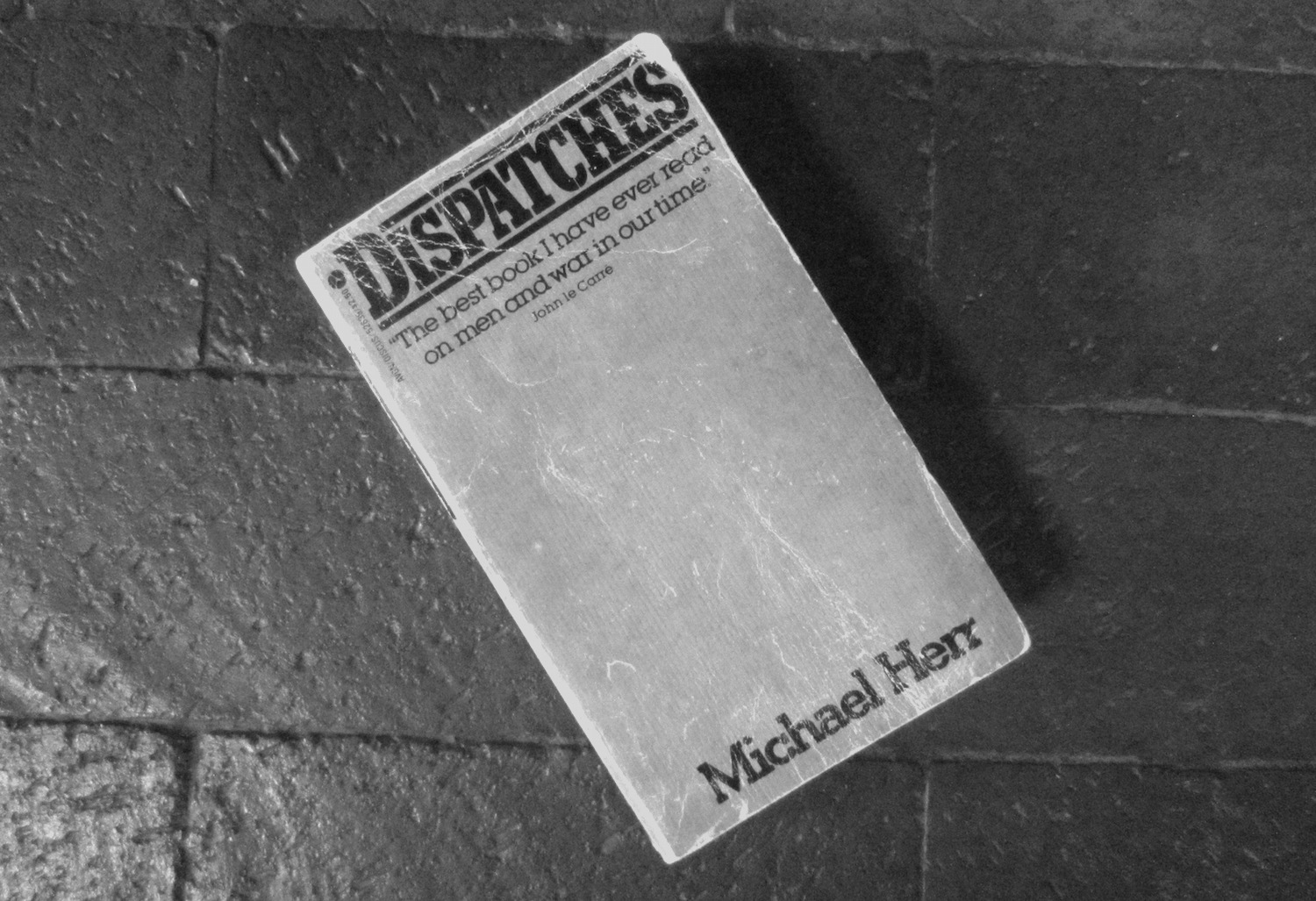
My old paperback copy of “Close Quarters” has taken a beating from reading and re-reading.

Goddamn, this is turning out to be an ugly day.

Larry Heinemann, who was the surprise winner of the National Book Award for fiction in 1987, died Dec. 11 in Texas. He was 75.

Heinemann won the award for “Paco’s Story,” but I read his 1977 novel “Close Quarters” first, and it is one of the best Vietnam War stories out there. Not a pretty story, but it was not a pretty war. None of them is. It was one of the books that made me glad I missed the party.

He did his year in an infantry battalion, then came home, went to school, and started writing.

“I was not one of those guys who got home and went to their room and shut up,” he told The Los Angeles Times in 1988. “I know guys who the war’s been eating up for 20 years. Anybody who asked me about it, I told them. I shot my mouth off about everything — the whorehouses, the endless hatred, the ugliness, the real work of the war. It took two to three years of talking to get the story out.”

Heinemann got more of the story out later, in a memoir, “Black Virgin Mountain: A Return to Vietnam.” His hometown paper wrote about it, and him, even including an excerpt.

Upon his return from Vietnam, he wrote:

I felt joyless and old, physically and spiritually exhausted, mean and grateful and uncommonly sad; relieved as if a stone had been lifted from my heart and radicalized beyond my own severely thinned patience: pissed off and ground down by a bottomless grief that I could not right then begin to express.

So, still sore and raw from the war I began writing.

Illumination rounds

You may never have read "Dispatches" by Michael Herr, but chances are you've shared some of his experiences at the cinema, in "Platoon," "Apocalpyse Now" or "Full Metal Jacket."
You may never have read “Dispatches” by Michael Herr, but chances are you’ve shared some of his experiences at the cinema, in “Platoon,” “Apocalpyse Now” or “Full Metal Jacket.”

Once we fanned over a little ville that had just been airstruck and the words of a song by Wingy Manone that I’d heard when I was a few years old snapped into my head, “Stop the War, These Cats Is Killing Themselves.” Then we dropped, hovered, settled down into purple lz smoke, dozens of children broke from their hootches to run in toward the focus of our landing, the pilot laughing and saying, “Vietnam, man. Bomb ’em and feed ’em, bomb ’em and feed ’em.”

That quote from Michael Herr’s “Dispatches” just snapped into my head as I read this New York Times piece about the prez authorizing the sale of “lethal military equipment” to Vietnam.

Pretty much describes our entire foreign policy, doesn’t it?

Bomb ’em and feed ’em; bomb ’em and feed ’em.