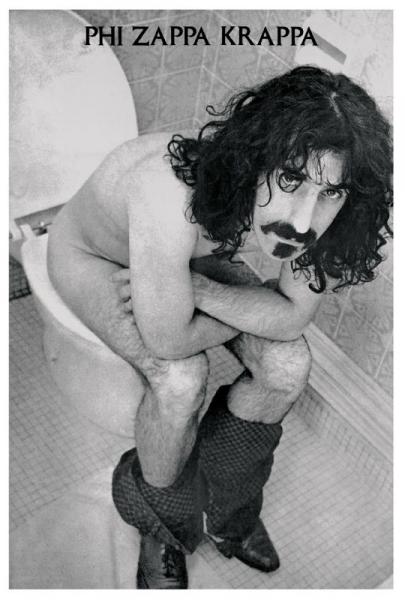
Thanks to Sandy Underpants at The Aristocrats for the reminder. I first saw this poster at a head shop in downtown Bibleburg waaaaay back in the day. We thought the shit was deep back then, but it seems the torture never stops.
While we were amusing ourselves with rich people who trade our newspapers, websites and magazines like po’ folks do tips for making a tasty stew from a handful of weeds, a sheaf of unpaid bills and the family pet, a friend who works for The New York Times wrote to note that another round of buyouts is in progress, the fourth in five years, to be followed by layoffs if enough employees don’t take them.
In other words, jump or be pushed.
“Merry Christmas,” notes my friend, sourly. Indeed.
Things appear even grimmer in Cleveland, where the staff of The Plain Dealer is fighting back against cuts planned by Advance Publications by taking their case to the paper’s dwindling readership. They’ve produced a TV ad, created a Facebook page and plan a “Save The Plain Dealer” party on Thursday at the Market Garden Brewery and Distillery, co-owned by ex-paperboy Sam McNulty. The New York Times reports that the brewery is releasing a new beer, 7-Day Lager, which it says is “best when enjoyed daily, because one a day keeps ignorance at bay.”
Advance has already cut back several papers to three days per week, among them the storied Times-Picayune in New Orleans. With that in mind, McNulty invited Steve Newhouse, chairman of Advance’s pixel pirates, to join the party. Newhouse would not say whether he would attend, though McNulty offered to underwrite the trip.
However, Newhouse did say that the company was “working to develop a localized approach that will allow us to continue to fulfill our commitment to quality journalism in an increasingly digital world,” adding, “I support the work of our team in Cleveland and have passed on your input to them.”
This, of course, is chairman-speak for “Fuck you.” Eschew obfuscation, Stevie old scout. In other words, speak (and deal) Plain-ly.
• Late update: Also going tits-up: The Daily, Rupe Murdoch’s iPad-only daily “newspaper.” Nieman Journalism Lab takes some lessons from its surprisingly successful failure.
It’s official — Competitor Group Inc., which owns Velo magazine and VeloNews.com, has been sold to Calera Capital.
All you’ll ever need to know about the corporate buccaneers who did for VeloNewswhat Bain Capital did for Ampad is contained in the press release issued today from CGI HQ in San Diego. David Moross, chairman of Falconhead Capital, which owned CGI before the sale to Calera, made sure to give credit where credit was due:
“Five years ago we set out to build a leading company in an industry that was highly fragmented, but well positioned for tremendous growth,” said Falconhead Chairman David Moross. “Competitor Group has grown dramatically during this period and realized much of the potential we originally envisioned. This success is due to the original strategy we developed to create the company, and the hard work of our very talented management team and our board of directors.”
Emphasis mine. Yes, sacking cancer victims, veteran Tour correspondents and crackerjack ad salesmen takes talent and hard work, like hitting your own thumb with a five-pound sledge, setting yourself ablaze while trying to drink a Flaming Jesus, or stepping on your dick while fleeing a raid at a Vegas whorehouse. I expect that no matter what the future holds, the boyos in Boulder will be glad to see the last of Cap’n Moross and his pirate crew. Arrr.
As with the sale of the Gazette to Denver billionaire Philip Anschutz, I know nothing about what this may mean for Velo/VeloNews.com’s readers and advertisers. Based on a casual glance at its website, Calera, like Anschutz, appears to have a wide range of financial interests, from banking to forest products to truck stops. Unlike Anschutz, it appears to have had no interest or involvement in media prior to this purchase.
The reports remain unconfirmed by corporate spokescreatures, save for one anonymous insider who told Bicycle Retailer and Industry News that “it’s a done deal. …”
That “Colorado company” just happens to be owned by Forbes 400 stalwart Philip Anschutz.
Our “local” daily newspaper just got sold for the second time this year. The lucky suitor this time around was Denver billionaire Philip Anschutz, who has a variety of interests, from Industrial Christianity to oil-and-gas exploration to bicycle racing.
His Anschutz Entertainment Group owns, among other things, the Tour of California, which last year concluded in spectacularly uninteresting fashion at L.A. Live, AEG’s HQ in Los Angeles, on the same day as the NHL Western Conference finals between the Phoenix Coyotes and the L.A. Kings at the Staples Center (the latter two being AEG properties) and game four of the NBA Western Conference semis between the Clippers and San Antonio Spurs (also at the Staples Center).
AEG, a wholly owned subsidiary of The Anschutz Company — which has its corporate fingers in everything from agriculture and real estate to the gathering, blending, transportation and storage of crude oil — has been for sale since mid-September.
Forbes estimates its annual operating income to be “in excess of $300 million,” so whoever wants to spring for AEG will need to write a bigger check than Anschutz did for the Gazette (the terms of the deal were not disclosed). The Wall Street Journal expects the price to be “several billion dollars,” according to the Denver Business Journal. Forbes guesses it to be in the range of $8 billion to $10 billion. Among the players said to be interested are Oracle’s Larry Ellison and that fabled private-equity powerhouse Bain Capital, according to Forbes.
And mind you, AEG is just one of Anschutz’s cookie jars. The 72-year-old has a net worth of $7.6 billion and sits 44th on the 2012 Forbes 400. He’s No. 133 on the magazine’s billionaires list.
So why does a player like this want to add a struggling newspaper in a smallish metro area to his Clarity Media Group? To have something to read while he’s hanging around the Broadmoor, which he bought last year? Beats the shit out of me. All the stories I’ve read are overflowing with the usual marketing gibberish — expanding product and market reach, creating a new level of excellence, having a passion for the paper and its community — but the “why” of the deal remains unanswered.
Speaking with the Denver Business Journal, former Gazette vice president and editor Jeff Thomas — who was laid off a year ago — said Anschutz “is making a bet that’s largely been decided to no longer pay off.”
“There’s no question readers will like a paper that’s fatter, and better and has more coverage,” he continued. “But that’s not the question to ask. Will they pay … and will advertisers pay to advertise in a paper that’s fatter, better and has more coverage?”
Indeed. And how much of that coverage will be devoted to the issue of oil-and-gas exploration via hydraulic fracturing — a.k.a., “fracking” — in a town whose city council just voted to approve a set of rules that would allow energy companies to drill for oil and gas within the city limits — a dubious practice wholeheartedly endorsed by the Gazette‘s editorial board?
I think I’ll stick with our locally owned paper for now. The Gazette is still in the hands of out-of-town right-wingers, and the only significant difference I see at the moment is that we don’t know what this new lot is up to yet.

 Mad Blog Media