The cat’s meow

It’s all uphill from here?

Mack awakened, started up, stretched, staggered to the pool, washed his face with cupped hands, hacked, spat, washed out his mouth, broke wind, tightened his belt, scratched his legs, combed his wet hair with his fingers, drank from the jug, belched and sat down by the fire.

— John Steinbeck, “Cannery Row”

“Men all do about the same things when they wake up,” Steinbeck continued.

Maybe so. But my morning ritual departs from the norm in subtle ways.

There is no pool, jug, or fire by the bed; the nightstand holds a lamp and glass of water, and a sink is just a few steps away.

Once I’ve tumbled out of bed I snatch up bits of clothing at random and dress in the dark just to see what happens. This morning when I turned on the bathroom light I saw the pea-green T-shirt I’d selected complemented my fetching pallor. Thanks to an overlong winter that has spilled over into spring I looked like a scoop of pistachio ice cream with eyes.

It didn’t help that Miss Mia Sopaipilla had begun singing “Happy Birthday” to me around 2:30. I thought I was prepared, having gone to bed early, but nothing prepares you for a cat singing “Happy Birthday” at 2:30 in the morning. Especially when you know it’s not “Happy Birthday” she’s singing.

Who knows what makes a cat sing anything at 2:30 in the morning? Not me, because I refuse to get up and find out. I rolled myself up like a burrito in the blankets, put a pillow over my head, and stayed put until 5.

Shortly after I finally arose to serve Her Majesty I heard an ambulance, but I wasn’t in it.

At least I don’t think I was. But I’ve only had two cups of coffee so all bets are off.

Up from the grave

I got swept away. So sue me.

This is what comes of watching zombie shows on TV.

Turn your radio on.

Radio Free Dogpatch keeps trying to claw its way out from under its tombstone, and I guess I got tired of beating on it with a shovel and burying the sonofabitch again.

Basically, I just wanted to see whether I (a) could remember how to do a podcast after taking two years off, and (2) could keep from getting too deep into the audio-technical weeds.

There’s something about having a dedicated “podcast studio” with a Zoom PodTrak P4 hooked up to a MacBook Pro lashed to a 27-inch monitor and Hindenburg and cables running ever’ whichaway that leads to delusions of grandeur, is what. Chiseling away at the stone, you think you’re Michelango revealing his David, but what you you wind up with is Clarabell honking his horn.

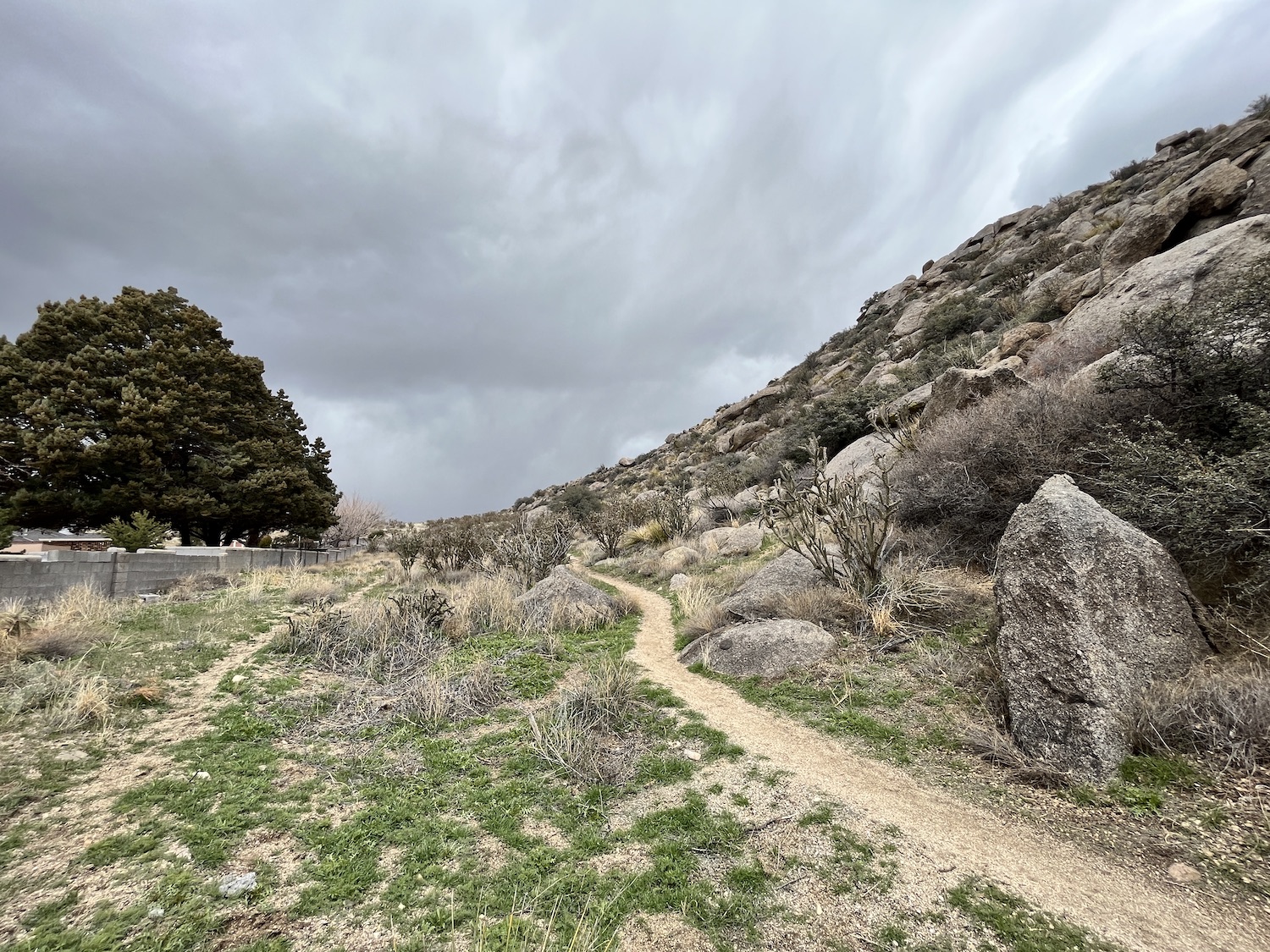
Anyway, a small notion caught up with me while I was running the trails on Tuesday and when I got home I just kept on running with it. Ira Glass is still out there somewhere. Dude just couldn’t keep up. Sucks to be him, hah?

Anyway, this is the scenic route to announcing: Yes, yes, yes, it’s time for a special Undead Episode of Radio Free Dogpatch, another toot on the rusty tin whistle souring the globe-spanning, star-studded orchestra that is podcasting. My heartfelt apologies in advance.

P L A Y    R A D I O    F R E E    D O G P A T C H

• Technical notes: I didn’t know how into it I’d be after two years off, so I set up shop on the dining-room table, using a Shure SM58 mic and the Zoom H5 Handy Recorder. Editing was in Apple’s GarageBand, with a sonic bump from Auphonic. Zapsplat, Freesound and Voice Memos on the iPhone provided the music and sound effects, with the late Donna “Hot Stuff” Summer singing backup for Thomas “Keep the Change” McGuane, who remains very much with us.

Resurrection

Desert Oracle, Vol. 1. May there be many, many more.

Weirdos and those who love them, rejoice: Ken Layne says he’s reviving his Desert Oracle quarterly, which many of us thought had died and was buried without ceremony somewhere in the desert, like Cactus Ed Abbey.

I bought and enjoyed the first book, a collection, compendium, companion, whatevs. And I help underwrite Desert Oracle Radio, the only audio project I support, though I subscribe to a wide range of virtual and actual magazines.

My next step along this twisted trail is probably subscribing to the quarterly. In for a penny, in for a pound, as the fella says.

In his “An Ode to ‘Desert Oracle'” in Alta Journal, Layne cuts straight to the heart of the beast:

Publishing a little magazine is attractive to exactly one kind of person: a writer who doesn’t want to work for somebody else’s magazine.

My old Pueblo Chieftain bro’ Hal Walter, who didn’t want to work for somebody else’s newspaper anymore, did something similar with Mountain Athlete, which lasted about six or seven years back in the late Eighties and into the early Nineties. Denver Post columnist Ed Quillen did likewise with Colorado Central, which has outlived him.

I contributed to both efforts in small ways, once loaning Ed one of my trucks so he could make it to a speaking engagement.

“Now remember, Ed, you can’t smoke in my truck,” I told him before he motored off. The trip took him about twice as long as it would have taken me because I wouldn’t have stopped and climbed out to burn one at every other mile marker.

But the closest I ever came to “publishing a little magazine” is this comosellama you’re looking at right now. The deadlines are flexible and the audience tolerant, and I can bear the small expense without having to sell a few bikes or vintage Macs.

Not adding books, podcasts, and road shows to the to-do list helps, of course. Saves trees, eardrums, and gasoline, too.

Besides, someone’s got to rustle up the grub around here. There are only so many hours in the day.

Someone’s looking for me

Book ’im, Dan-o.

Just ’cause you’re paranoid, etc.

I was browsing the Books section at The New York Times a couple weeks ago and stumbled across a blurb for a book that looked interesting — “No One Left to Come Looking for You,” by Sam Lipsyte — so I ordered it from Page 1 Books, my fave local bookseller.

It was a special order, wouldn’t even be released until Dec. 6, so immediate gratification would not be mine. No worries; no hurry. And so I went about my business.

Then, yesterday, I wandered back to the Books section and spotted a “By the Book” Q&A with Lipsyte, in which he drops a reference to a song that knocked me out the first time I heard it way back when — “Birth, School, Work, Death” by the Eighties alt-rockers the Godfathers.

So naturally I dialed it up on the old YouTube and commenced rocking out, which was about when my email went “Ping!” It was Page 1 informing me that my book was ready to be picked up.

I think my next purchase will be a rear-view mirror for the MacBook Pro.

R.I.P., Thomas Cahill

Ah, sure, an’ in what class of a donnybrook would ye be without us so?

The scholar and scribe Thomas Cahill has gone west. He was 82.

Cahill is perhaps best known for his book, “How the Irish Saved Civilization: The Untold Story of Ireland’s Heroic Role from the Fall of Rome to the Rise of Medieval Europe.” (You’re welcome, by the way.)

It was to be the kickoff to a seven-part series about critical moments in Western European civilization, according to The New York Times; he wrote six before his death Oct. 18 in Manhattan.

In his introduction, Cahill argues:

“And yet … Ireland, a little island at the edge of Europe that has known neither Renaissance or Enlightenment — in some ways, a Third World country with, as John Betjeman claimed, a Stone Age culture — had one moment of unblemished glory. For, as the Roman Empire fell, as all through Europe matted, unwashed barbarians descended on the Roman cities, looting artifacts and burning books, the Irish, who were just learning to read and write, took up the great labor of copying all of western literature — everything they could lay their hands on. These scribes then served as conduits through which the Greco-Roman and Judeo-Christian cultures were transmitted to the tribes of Europe, newly settled amid the rubble and ruined vineyards of the civilization they had overwhelmed.”

Without “the Mission of the Irish Monks,” he continues, “the world that came after them would have been an entirely different one — a world without books. And our own world would never have come to be.”

By the end of “How the Irish Saved Civilization,” Cahill seems to wonder whether the worlds of then and now are really all that different.

He writes:

“As we, the people of the First World, the Romans of the twentieth century, look out across our Earth, we see some signs for hope, many more for despair. …

“Perhaps history is always divided into Romans and Catholics — or better, catholics. The Romans are the rich and powerful who run things their way and must always accrue more because they instinctively believe that there will never be enough to go around; the catholics, as their name implies, are universalists who instinctively believe that all humanity makes one family, that every human is an equal child of God, and that God will provide.

“The twenty-first century, prophesized (André-Georges) Malraux, will be spiritual or it will not be. If our civilization is to be saved — forget about our civilization, which, as (St.) Patrick would say, may pass “in a moment like a cloud or smoke that is scattered by the wind” — if we are to be saved, it will not be by Romans but by saints.”