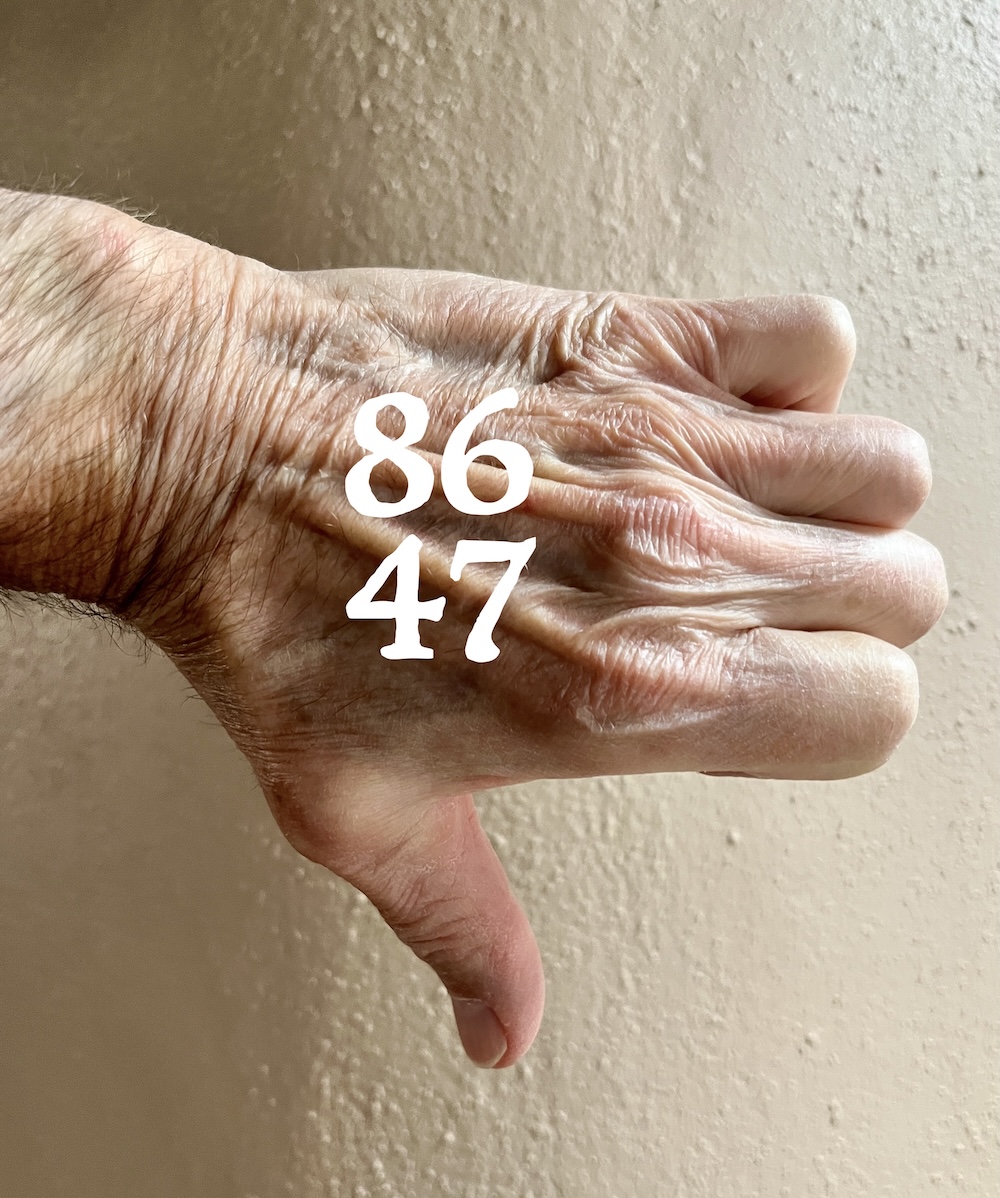
This is what comes of watching zombie shows on TV.
Turn your radio on.
Radio Free Dogpatch keeps trying to claw its way out from under its tombstone, and I guess I got tired of beating on it with a shovel and burying the sonofabitch again.
Basically, I just wanted to see whether I (a) could remember how to do a podcast after taking two years off, and (2) could keep from getting too deep into the audio-technical weeds.
There’s something about having a dedicated “podcast studio” with a Zoom PodTrak P4 hooked up to a MacBook Pro lashed to a 27-inch monitor and Hindenburg and cables running ever’ whichaway that leads to delusions of grandeur, is what. Chiseling away at the stone, you think you’re Michelango revealing his David, but what you you wind up with is Clarabell honking his horn.
Anyway, a small notion caught up with me while I was running the trails on Tuesday and when I got home I just kept on running with it. Ira Glass is still out there somewhere. Dude just couldn’t keep up. Sucks to be him, hah?
Anyway, this is the scenic route to announcing: Yes, yes, yes, it’s time for a special Undead Episode of Radio Free Dogpatch, another toot on the rusty tin whistle souring the globe-spanning, star-studded orchestra that is podcasting. My heartfelt apologies in advance.
P L A Y R A D I O F R E E D O G P A T C H
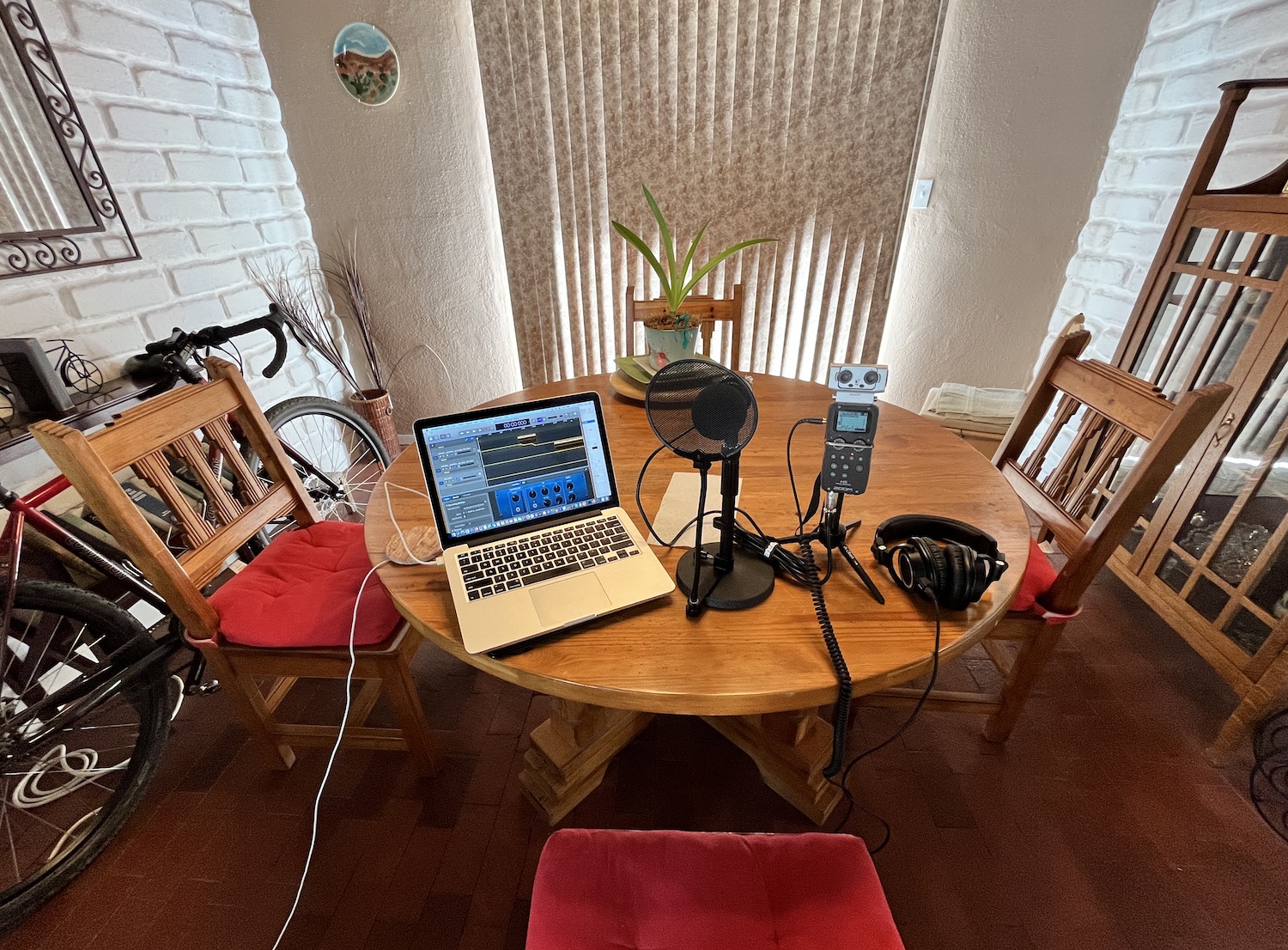
• Technical notes: I didn’t know how into it I’d be after two years off, so I set up shop on the dining-room table, using a Shure SM58 mic and the Zoom H5 Handy Recorder. Editing was in Apple’s GarageBand, with a sonic bump from Auphonic.Zapsplat,Freesound and Voice Memos on the iPhone provided the music and sound effects, with the late Donna “Hot Stuff” Summer singing backup for Thomas “Keep the Change” McGuane, who remains very much with us.
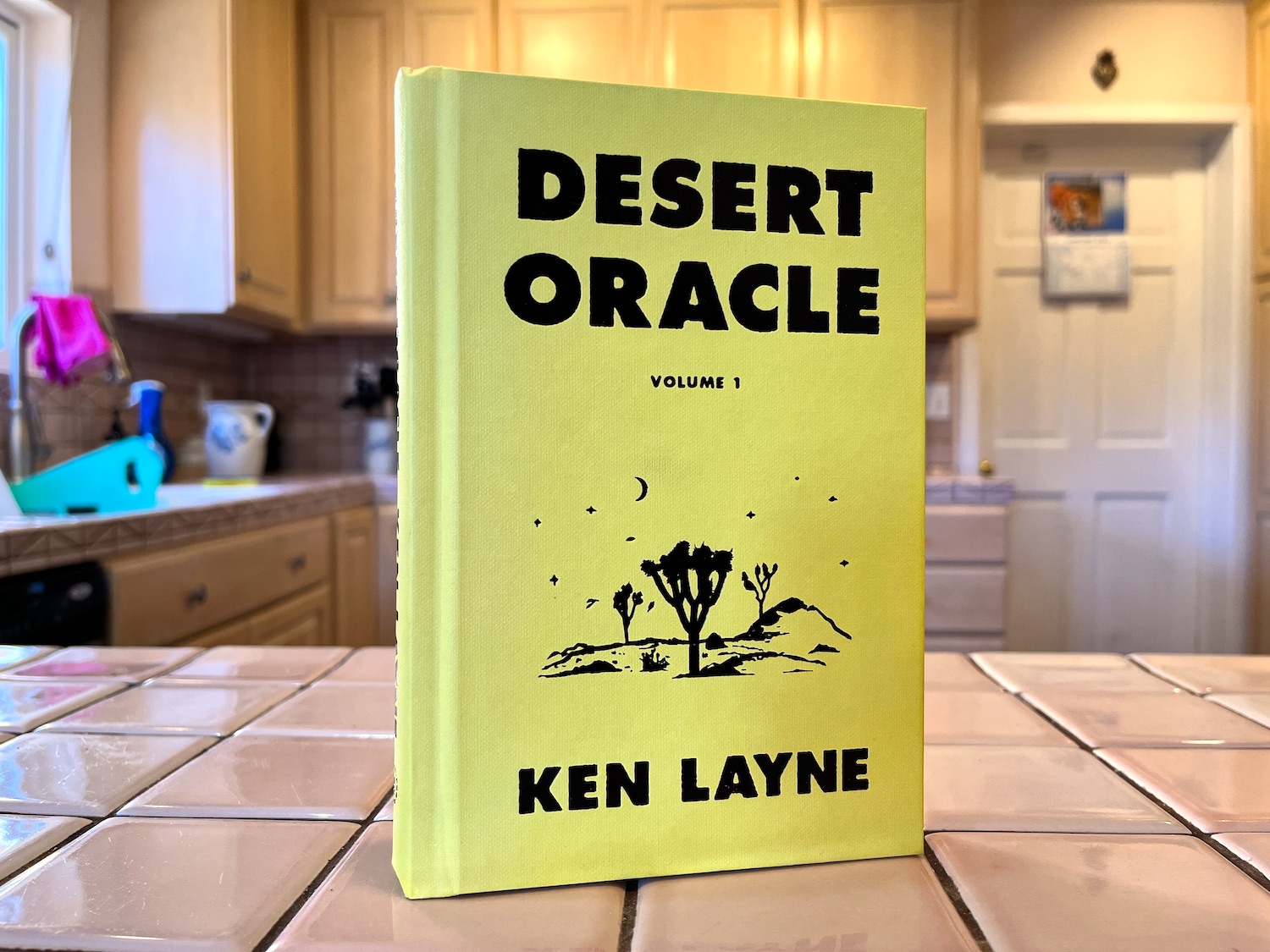
Desert Oracle, Vol. 1. May there be many, many more.
Weirdos and those who love them, rejoice: Ken Layne says he’s reviving his Desert Oracle quarterly, which many of us thought had died and was buried without ceremony somewhere in the desert, like Cactus Ed Abbey.
I bought and enjoyed the first book, a collection, compendium, companion, whatevs. And I help underwrite Desert Oracle Radio, the only audio project I support, though I subscribe to a wide range of virtual and actual magazines.
My next step along this twisted trail is probably subscribing to the quarterly. In for a penny, in for a pound, as the fella says.
In his “An Ode to ‘Desert Oracle'” in Alta Journal, Layne cuts straight to the heart of the beast:
Publishing a little magazine is attractive to exactly one kind of person: a writer who doesn’t want to work for somebody else’s magazine.
My old Pueblo Chieftain bro’ Hal Walter, who didn’t want to work for somebody else’s newspaper anymore, did something similar with Mountain Athlete, which lasted about six or seven years back in the late Eighties and into the early Nineties. Denver Post columnist Ed Quillen did likewise with Colorado Central, which has outlived him.
I contributed to both efforts in small ways, once loaning Ed one of my trucks so he could make it to a speaking engagement.
“Now remember, Ed, you can’t smoke in my truck,” I told him before he motored off. The trip took him about twice as long as it would have taken me because I wouldn’t have stopped and climbed out to burn one at every other mile marker.
But the closest I ever came to “publishing a little magazine” is this comosellama you’re looking at right now. The deadlines are flexible and the audience tolerant, and I can bear the small expense without having to sell a few bikes or vintage Macs.
Not adding books, podcasts, and road shows to the to-do list helps, of course. Saves trees, eardrums, and gasoline, too.
Besides, someone’s got to rustle up the grub around here. There are only so many hours in the day.
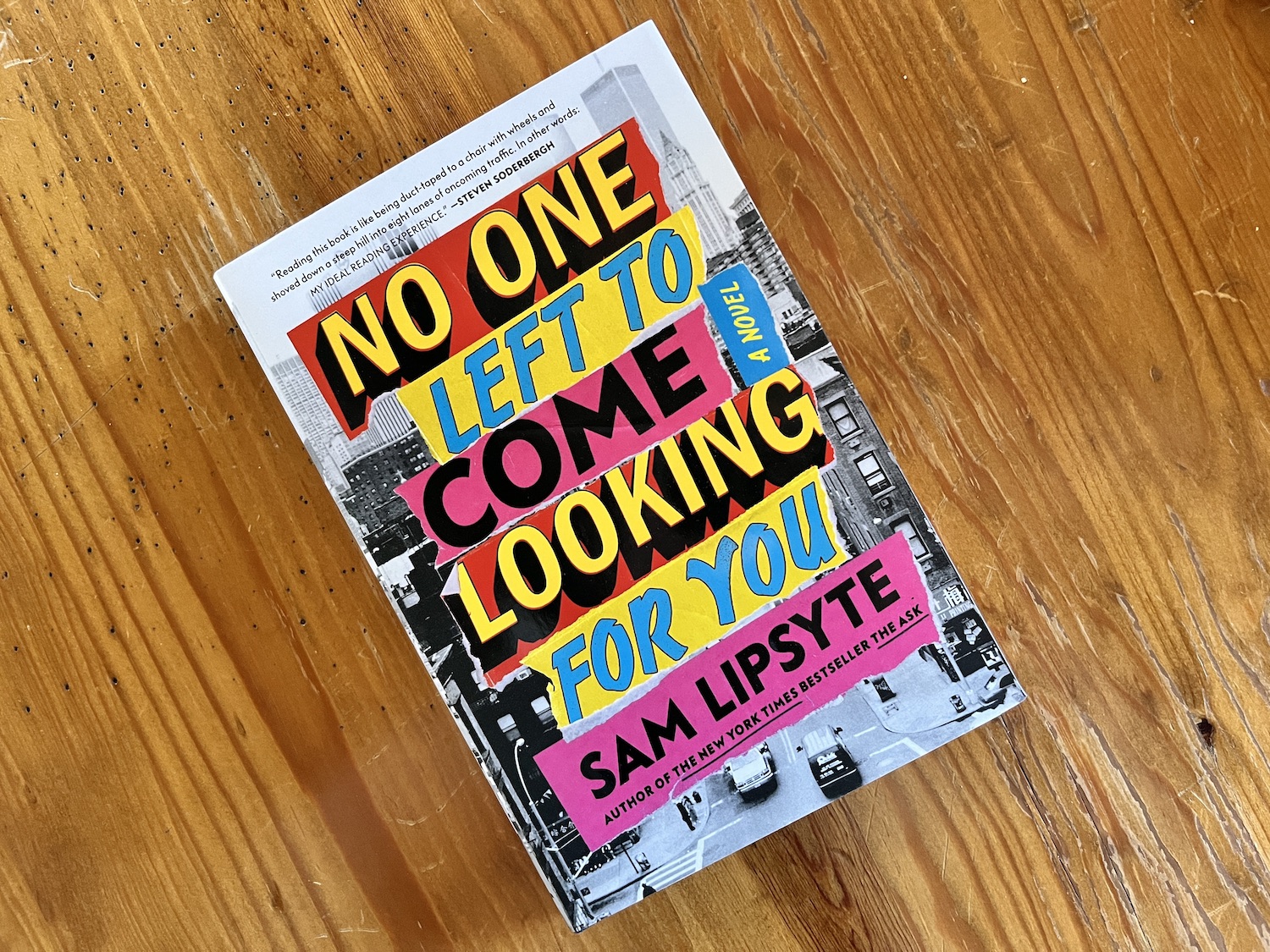
I was browsing the Books section at The New York Times a couple weeks ago and stumbled across a blurb for a book that looked interesting — “No One Left to Come Looking for You,” by Sam Lipsyte — so I ordered it from Page 1 Books, my fave local bookseller.
It was a special order, wouldn’t even be released until Dec. 6, so immediate gratification would not be mine. No worries; no hurry. And so I went about my business.
Then, yesterday, I wandered back to the Books section and spotted a “By the Book” Q&A with Lipsyte, in which he drops a reference to a song that knocked me out the first time I heard it way back when — “Birth, School, Work, Death” by the Eighties alt-rockers the Godfathers.
So naturally I dialed it up on the old YouTube and commenced rocking out, which was about when my email went “Ping!” It was Page 1 informing me that my book was ready to be picked up.
I think my next purchase will be a rear-view mirror for the MacBook Pro.
Ah, sure, an’ in what class of a donnybrook would ye be without us so?
The scholar and scribe Thomas Cahill has gone west. He was 82.
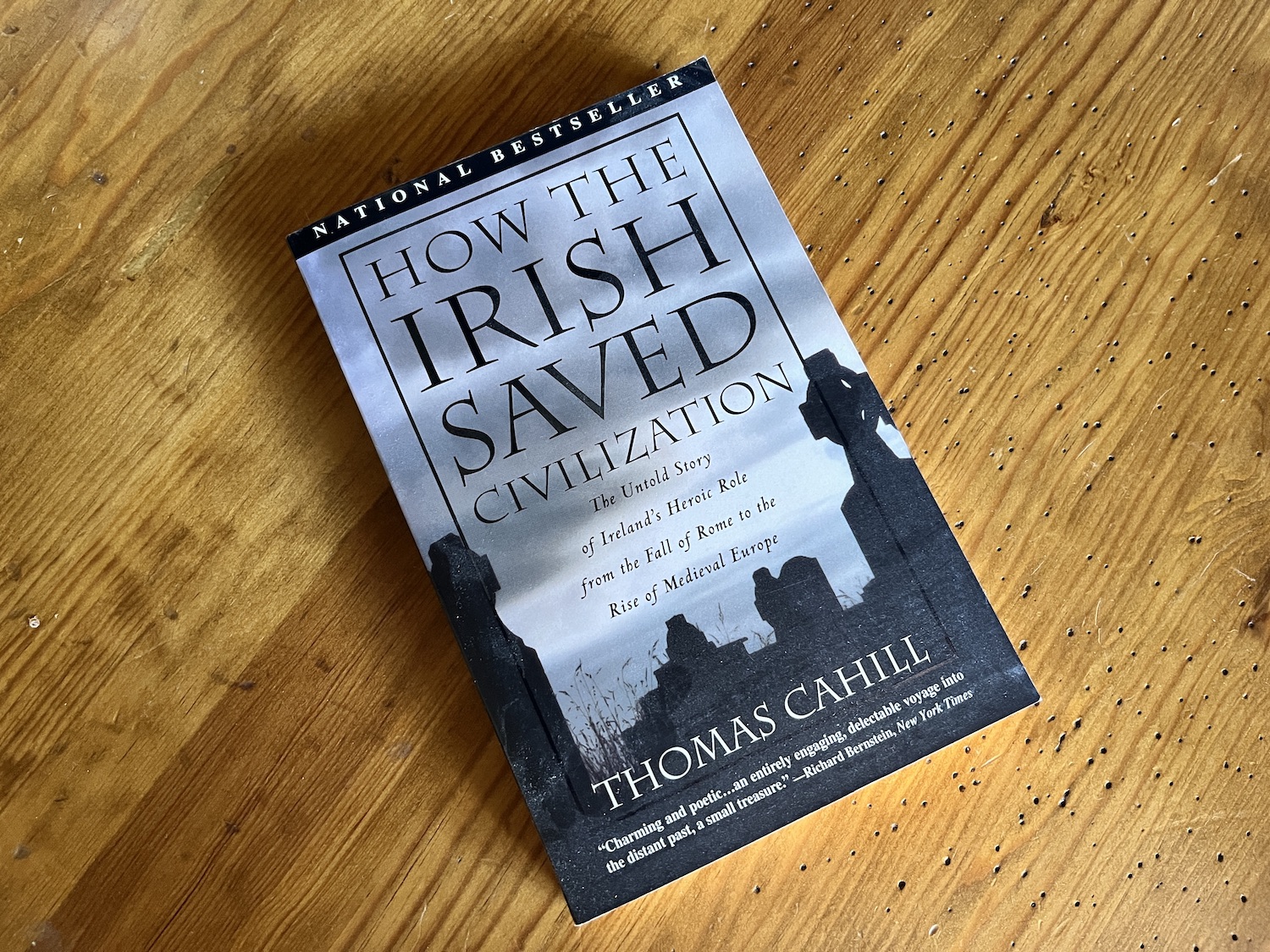
Cahill is perhaps best known for his book, “How the Irish Saved Civilization: The Untold Story of Ireland’s Heroic Role from the Fall of Rome to the Rise of Medieval Europe.” (You’re welcome, by the way.)
It was to be the kickoff to a seven-part series about critical moments in Western European civilization, according to The New York Times; he wrote six before his death Oct. 18 in Manhattan.
In his introduction, Cahill argues:
“And yet … Ireland, a little island at the edge of Europe that has known neither Renaissance or Enlightenment — in some ways, a Third World country with, as John Betjeman claimed, a Stone Age culture — had one moment of unblemished glory. For, as the Roman Empire fell, as all through Europe matted, unwashed barbarians descended on the Roman cities, looting artifacts and burning books, the Irish, who were just learning to read and write, took up the great labor of copying all of western literature — everything they could lay their hands on. These scribes then served as conduits through which the Greco-Roman and Judeo-Christian cultures were transmitted to the tribes of Europe, newly settled amid the rubble and ruined vineyards of the civilization they had overwhelmed.”
Without “the Mission of the Irish Monks,” he continues, “the world that came after them would have been an entirely different one — a world without books. And our own world would never have come to be.”
By the end of “How the Irish Saved Civilization,” Cahill seems to wonder whether the worlds of then and now are really all that different.
He writes:
“As we, the people of the First World, the Romans of the twentieth century, look out across our Earth, we see some signs for hope, many more for despair. …
“Perhaps history is always divided into Romans and Catholics — or better, catholics. The Romans are the rich and powerful who run things their way and must always accrue more because they instinctively believe that there will never be enough to go around; the catholics, as their name implies, are universalists who instinctively believe that all humanity makes one family, that every human is an equal child of God, and that God will provide.
“The twenty-first century, prophesized (André-Georges) Malraux, will be spiritual or it will not be. If our civilization is to be saved — forget about our civilization, which, as (St.) Patrick would say, may pass “in a moment like a cloud or smoke that is scattered by the wind” — if we are to be saved, it will not be by Romans but by saints.”
• Editor’s note: It’s a gray, gloomy day here at El Rancho Pendejo, and Hal Walter’s road-trip tale has put me in mind of my own meditation from the spring of 2000, when the vile Crusty County weather had me thinking about snorting that long white line to wherever.
“I have been buggered to near death by the clock.”— Jim Harrison in “The Beige Dolorosa,” from the novella collection “Julip”
“How do I shut this alarm off?” my wife asked some years back. Her sports watch was cheeping incessantly, like a baby bird in a sack of crack.
“Like this,” I replied, snatching the watch from her, placing it on the kitchen floor and pounding it into a flattened silence with a claw hammer. We both laughed, but warily; killing time just isn’t that easy.
Still, when you see time limping along like it does in a snowbound April in the Colorado mountains, scraping the slush off its boots on the welcome mat of spring, there arises a murderous desire to put it out of its misery. So Shannon has begun hiding the hammers as I glare at the clock, as if I could will its crawling hands into picking up the pace, spinning me up some sunshine.
• • •
“We’re going to be late,” I warned my friends Hal and Mary as we dawdled first over stout, then over coffee, in a succession of Bibleburg bistros. It was my 46th birthday, and we were headed to Colorado College for a poetry reading by one of my favorite authors, Jim Harrison. Harrison seems the sort to bark at nitwits who interrupt his work, and I wanted his autograph, not his antipathy.
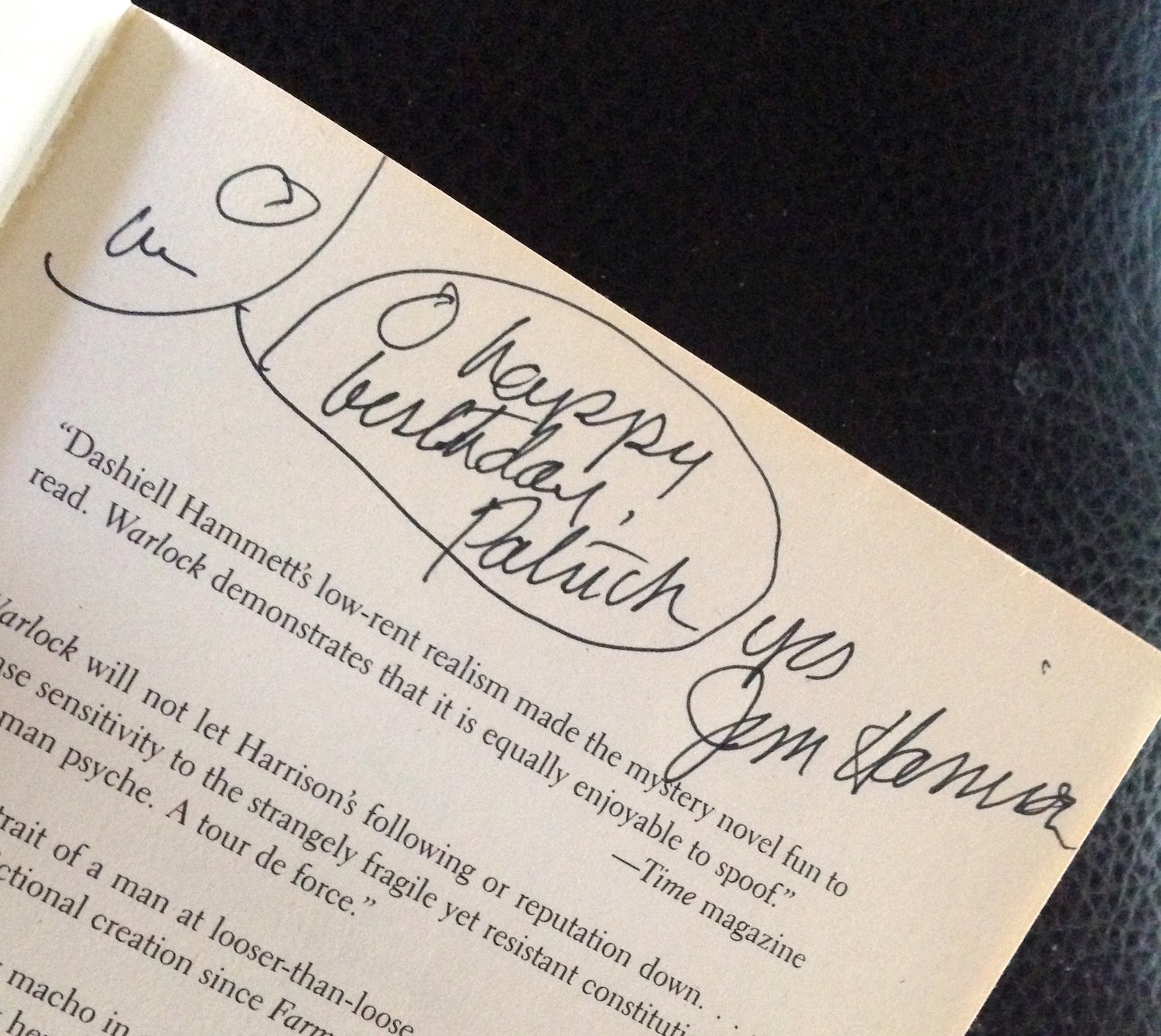
Jim Harrison laid his Jim Hancock on my copy of “Warlock,” though it was not among his favorite works.
As it turned out, we were right on time, and Harrison was late. A student of Zen Buddhism with his own temporal compulsions, Harrison announced: “I’m not a long reader. This will be exactly 52 minutes.” A koan for a birthday present.
Frankly, I’d have settled for a little less light and a little more warmth. Spring brings Colorado the heavy snows that we used to get in winter like everybody else, and the way my mental batteries were running down under the gray-flannel skies had me convinced that I was solar-powered.
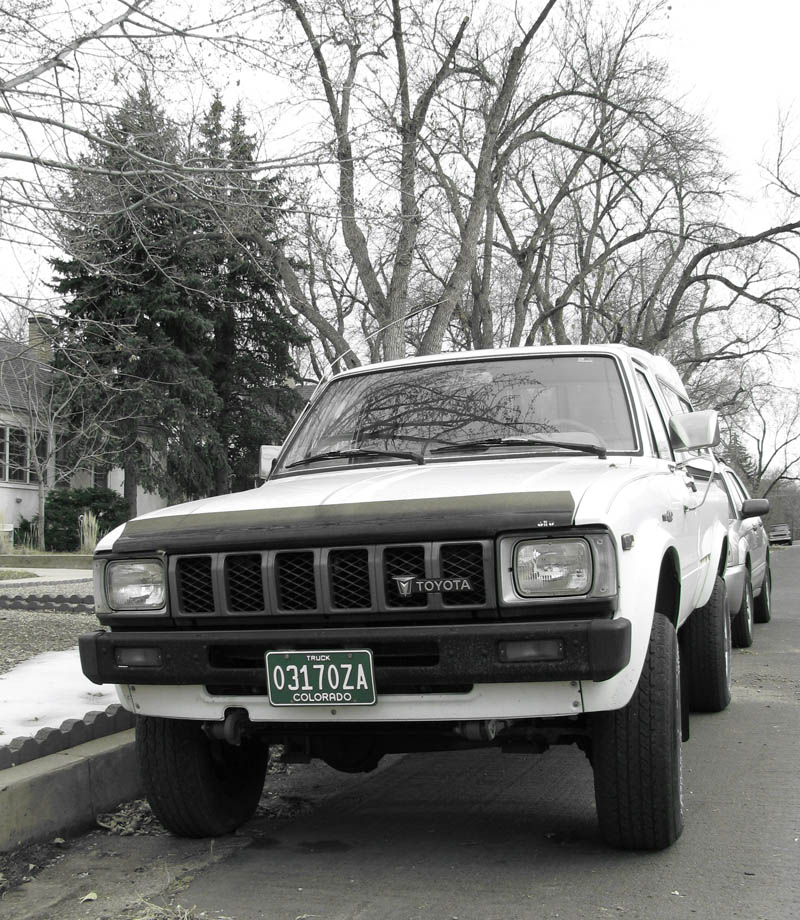
My last escape attempt, a mid-March road trip to a cycling festival in California, was too short and not nearly sweet enough. I’ve been contemplating another to someplace where the locals’ knowledge of snow is limited to what they’ve been able to glean from the Encyclopedia Britannica, but you can’t pilot a Toyota truck to the Virgin Islands, not even in four-wheel drive.
And then there’s the expense. The rising price of gasoline aside, it’s not always possible or desirable to sleep in a pickup, which lacks certain amenities — like a toilet, shower, sink, stove, furnace and elbow room, especially when the camper shell is stuffed fore to aft with a bicycle, a cooler full of beer and a day pack crammed with computer gear and drawing tools.
Even if you pack camping gear and spend your nights outside the truck, you’re doomed to an occasional Motel 666 if for no other reason than hygiene, an impulse that will cost you anywhere from $30 to $60 a pop, depending upon your ZIP code at the time.
So lately I’ve been eyeballing used RVs and wondering whether I’m old enough to own one. This is not unlike like cigar-smoking; you have to be of a certain age to pull it off without looking ridiculous.
Too, as a cyclist who has played mirror-tag with many a blue-haired land-yacht captain over the years, the notion leaves me feeling a little like a Lakota warrior applying to join Custer’s 7th Cavalry.
And the entry fee for the RV lifestyle is a high curb to hop — even an elderly, smallish Toyota RV can run from five to ten large, while free-lance cycling journalism pays on the small side.
• • •
In the essay “Going Places,” from his collection “Just Before Dark,” Harrison advises: “Do not scorn day trips. You can use them to avoid nervous collapse.” So with a light snow falling and the promise of more on the way, I jumped into my ’83 Toyota 4WD and headed north to talk to a guy who had a used, slide-in, pop-up camper for sale.
As I bounced crazily down our steep, corrugated goat path to the county road — this truck, which under a previous owner carried a camper, has springs apparently salvaged from a buckboard — I realized I’d forgotten my watch. A moment of dismay, then satori; I had more than enough time to make the noon appointment, and there was nothing of pressing urgency requiring a timepiece, so screw it.
So, after checking out the camper — affordable and nicely minimalist, with a cabover bed, a small sink and stove, a pedestal table and bench, and a furnace — I spent the afternoon idling around downtown Bibleburg, where it was not snowing, the roads were paved, and distractions were available in variety.
Drank a pint of Guinness and ate a burger in Jack Quinn’s; looked for Harrison books in the cavernous used-book store Gateways; sipped a tall Americano in a Starbucks staffed by two pleasant young women chattering away like magpies. Then I took my sweet time getting home, and not just because I was following a snowplow and an 18-wheeler up a slushy Hardscrabble Cañon.
Again, Harrison, in “The Beige Dolorosa” from “Julip”: “The clock is the weapon with which we butcher our lives.”
The character who writes this line on an index card — an academic rebelling against the tyranny of the clock as he comes to terms with a vastly altered life — then wraps his watch around the cord of his Big Ben electric clock and dangles both in the toilet, flushing and laughing.
He continues: “The damnable watch still worked. I put it on the floor, stepped up on the toilet seat and jumped, smashing the watch to bits. It occurred to me that I was getting a little excitable, so I took the remnants of the two timepieces outside and peed on them to complete the scene appropriately. I reached back in the cabin and turned off the light, the better to see the stars. They were so dense they made the sky look flossy, almost a fog of stars which had drawn infinitely closer to me than ever before, as if my destruction of time had made me a friendlier object for their indeterminate powers.”
Smash your watches. Pee on your clocks. Go look at the stars.