Double dumbstruck

Gassing up for the long commute.

“This heat’s not good for the brain. Turns out nothing much is good for the brain in the 2020s. TV rots it, the Internet turns it to jelly, the miserable climate bakes it, 90 percent of what we call ‘work’ is deliberately designed to actually erase the human brain; this has been proven. Podcasts: Now there’s a guaranteed way to reverse years of book-learning and social skills. There’s online gambling, TikTok … and then Queen Elizabeth II passed away and it was like a Bat-Signal in the sky to make everybody go extra double-dumb. … Only in Ireland did they seem to sort of be enjoying it all.” — Ken Layne, “Like a Hurricane,” Desert Oracle Radio

You said a mouthful, brother.

The news has been so relentlessly grotesque that I found myself double-dumbstruck, which is to say rendered speechless by astonishment while simultaneously catching a puck in the gob from a wildly flailing eejit.

The prospect of commenting on any of our ongoing Dumpster fires felt like pissing into the drinking water in Jackson, Mississippi — an enhancement, to be sure, but not a solution any sane person would swallow.

So I kept it zipped. Averted my eyes. Instead I watched the hummingbirds mobbing our feeders; the little buzzbombs will be leaving us shortly. Played with Miss Mia Sopaipilla, who remains extraordinarily kittenish for a 15-year-old cat. Rode the bike(s) — 130 miles last week, 140 this week.

With “Better Call Saul” in the rear view we branched out a bit in our evening TV-watching. I can recommend “Letterkenny,” (absurdly funny Canadians); “This Fool” (snarky South Central working-class vatos); “Belfast” (The Troubles through a child’s eyes); and “The Sandman,” derived, like “Watchmen,” from a high-gloss DC comic of which I had been ignorant.

• Honorable mention: “Funny Pages,” a bent coming-of-age story about a teenage cartoonist who gets an up-close-and-personal look at the subterranean bits of “underground comics.” Could be straight out of “Zap,” “Bijou,” or pretty much any other comic you read back when weed was still illegal. And yes, Your Humble Narrator recognized more than a few unsavory aspects of himself in this film.

What about literature, you ask? Check out a couple road-trippers on the ragged edge: the cabbie Lou in Lee Durkee’s “The Last Taxi Driver,” and the shaggy mercenary Will Bear in Dan Chaon’s “Sleepwalk.”

• Honorable mentions: “Night of the Living Rez” by Morgan Talty (his first book; dark tales of a Native community in Maine) and “Homesickness” by Colin Barrett (his second; darkly funny tales of the Irish at home and abroad).

If none of these diversions from the daily disaster does the trick for you, find a hummingbird to watch or a cat to play with.
R.I.P., Barbara Ehrenreich

She took what they were giving ’cause she was working for a living.

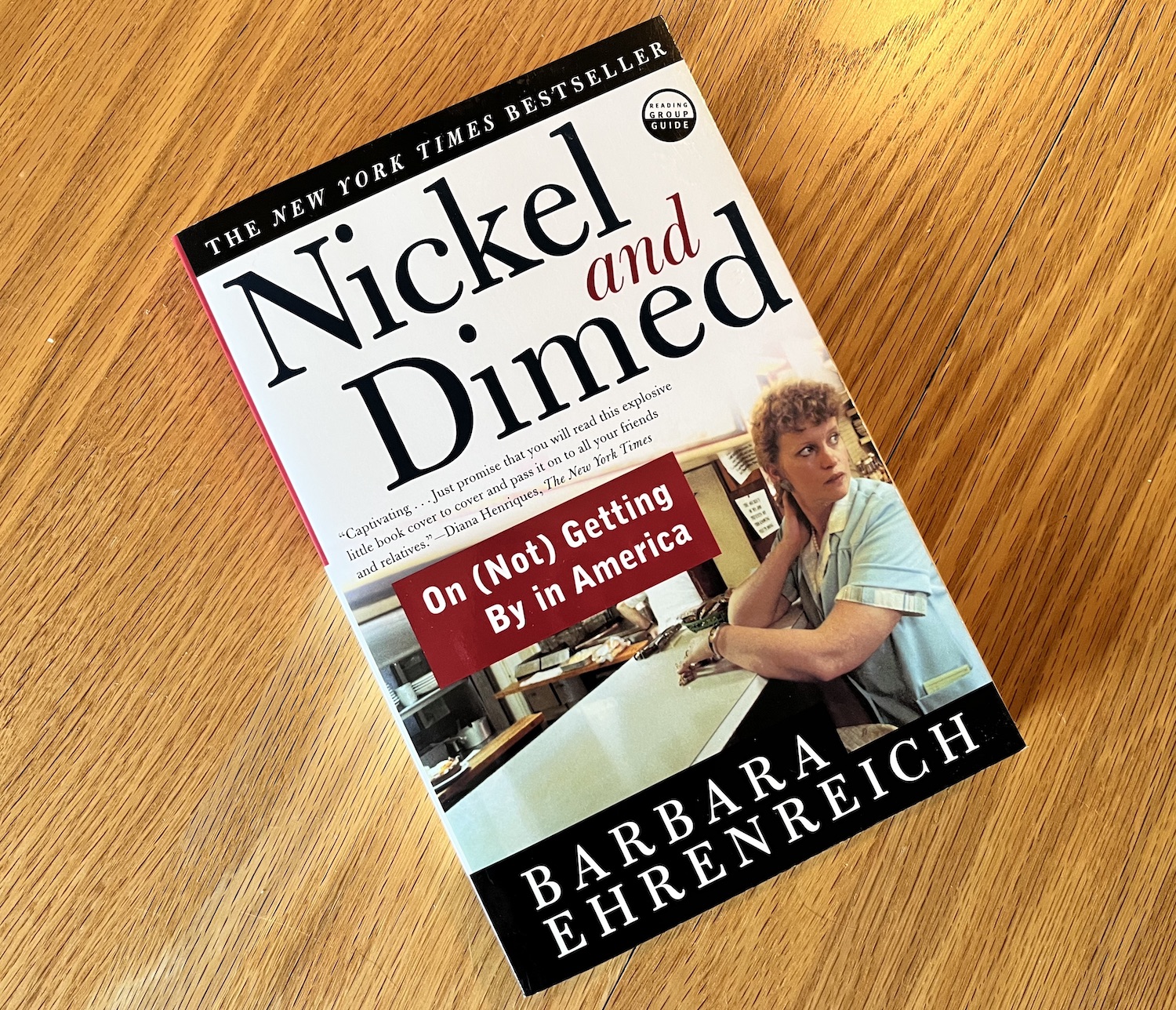
Barbara Ehrenreich, the journalist, activist, and author who never lost touch with her working-class roots, has clocked out. She was 81.

Her New York Times obit draws from the introduction to “Nickel and Dimed: On (Not) Getting By in America,” in which she recounts wondering with a magazine editor how the unskilled survive on the wages paid them and then blurting out something that she “had many opportunities to regret: ‘Someone ought to do the old-fashioned kind of journalism — you know, go out there and try it for themselves.'”

Which is exactly what Ehrenreich did, of course, working and living as a waitress, hotel maid, nursing-home aide, and Walmart “associate,” among other things. Then she came back and told us all about it.

And though she would be writing it up, she wasn’t phoning it in:

People knew me as a waitress, a cleaning person, a nursing home aide, or a retail clerk not because I acted like one but because that’s what I was, at least for the time I was with them. In every job, in every place I lived, the work absorbed all my energy and much of my intellect. I wasn’t kidding around. Even though I suspected from the start that the mathematics of wages and rents were working against me, I made a mighty effort to succeed.

She was not, and is not, alone. And in her Evaluation at the end of the book, Ehrenreich proposed that those of us who live in comfort while others barely scrape by should feel not just guilt, but shame.

When someone works for less pay than she can live on — when, for example, she goes hungry so that you can eat more cheaply and conveniently — then she has made a great sacrifice for you, she has made you a gift of some part of her abilities, her health, and her life.

What a gift was Ehrenreich’s life. Peace unto her, her family, friends, and readers.

Talking shit

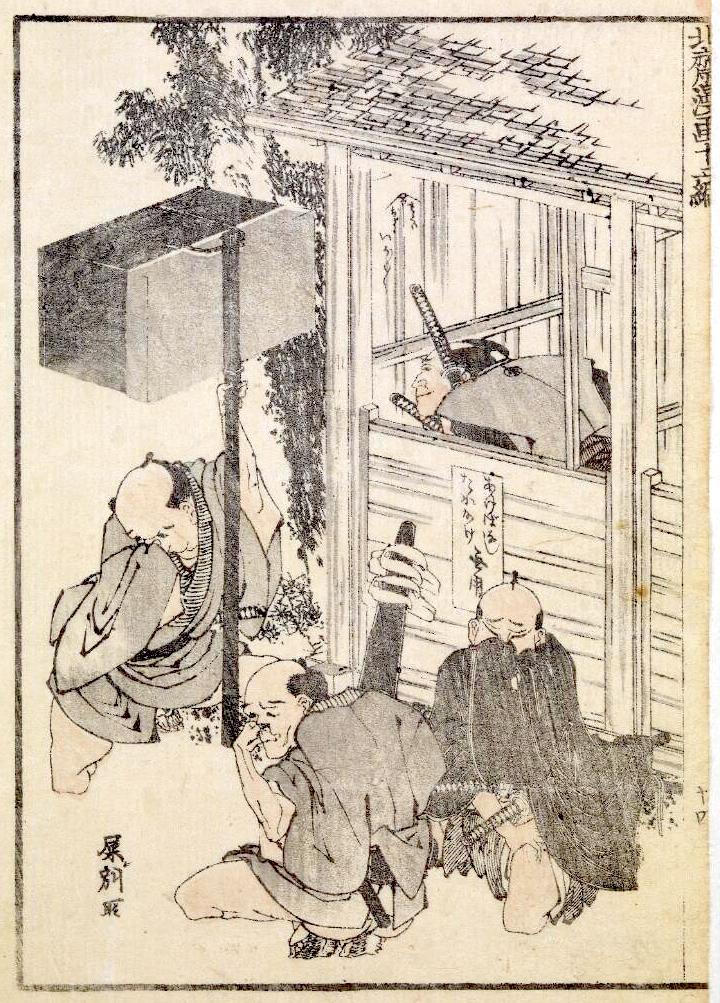
A samurai in a latrine; outside, his three attendants hold their noses. Coloured woodcut by Hokusai, 1834. Credit: Wellcome Collection. Attribution 4.0 International (CC BY 4.0).

I stumbled across an item from the Poetry Foundation, “Haiku on Shit” by Masaoka Shiki, in my virtual wanderings and thought it a delightful departure from the daily shit monsoon, against which a parasol, a wetsuit, or a subterranean bunker are no defense.

R.I.P., Neal Adams

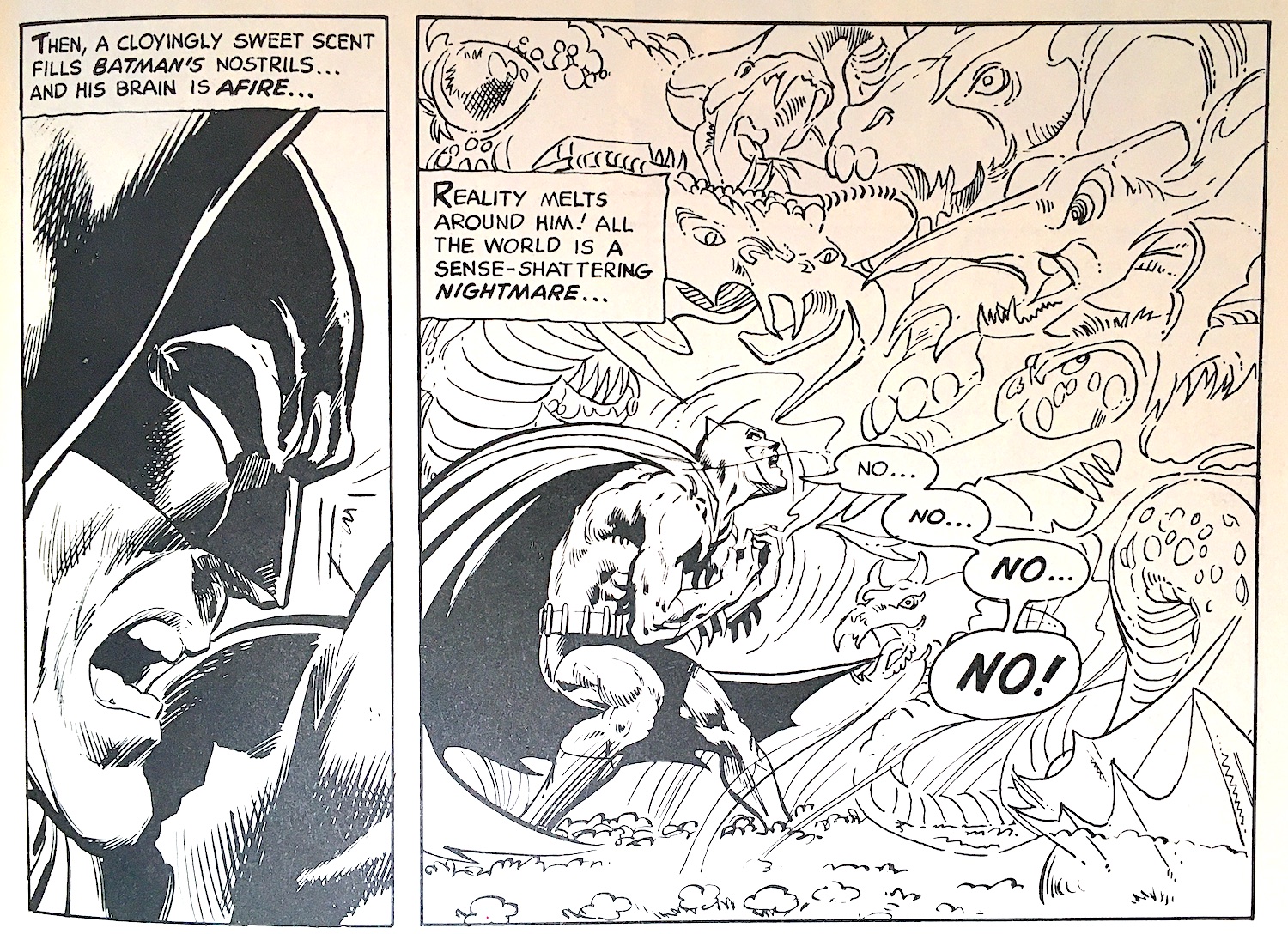
The Batman got a chance to feel what it was like to be me in 1969. From “The Secret of the Waiting Graves,” drawn by Neal Adams and Dick Giordano, story by Denny O’Neil, © 1969 National Periodical Publications, Inc.

The inimitable Neal Adams has finally stepped away from the drawing board. He was 80.

Adams was, in a word, a legend. I devoured comic books from my early childhood through college, from Superman to the X-Men, the Fabulous Furry Freak Brothers to Mr. Natural, and I’d never seen anything like his art. When Adams took on a character, he nailed it.

“Yeah, that’s how [insert your hero here] is supposed to look,” I’d think. And if some other artist took over, I’d be all like, “Nope.”

Adams helped put the dark back in the Dark Knight, a.k.a. The Batman; made the Green Lantern-Green Arrow series actually worth a look (a not inconsiderable chore); and fought Frank Frazetta to a draw when it came to depicting Conan the Barbarian.

The Batman may have been his crowning achievement, but Adams didn’t limit himself to Gotham City. He drew for both DC and Marvel, tackling Deadman, the X-Men, the Avengers, Superman, even the gleefully blasphemous Son O’ God Comics for National Lampoon. He was like the Buddhist deity Avalokiteshvara, with a pen in each of his one thousand hands. And like Chickenman, he was everywhere.

He was also a pain in the ass, which as you may imagine only further endeared him to me. He worked to see that creators were treated better than Manpower temps and helped win some long-overdue recognition for “Superman” visionaries Jerry Siegel and Joe Shuster, without whom we’d all have been stuck reading “Archie” comics … another title Adams had a hand in early on.

Peace to him and to his family, friends and fans.

Be here when?

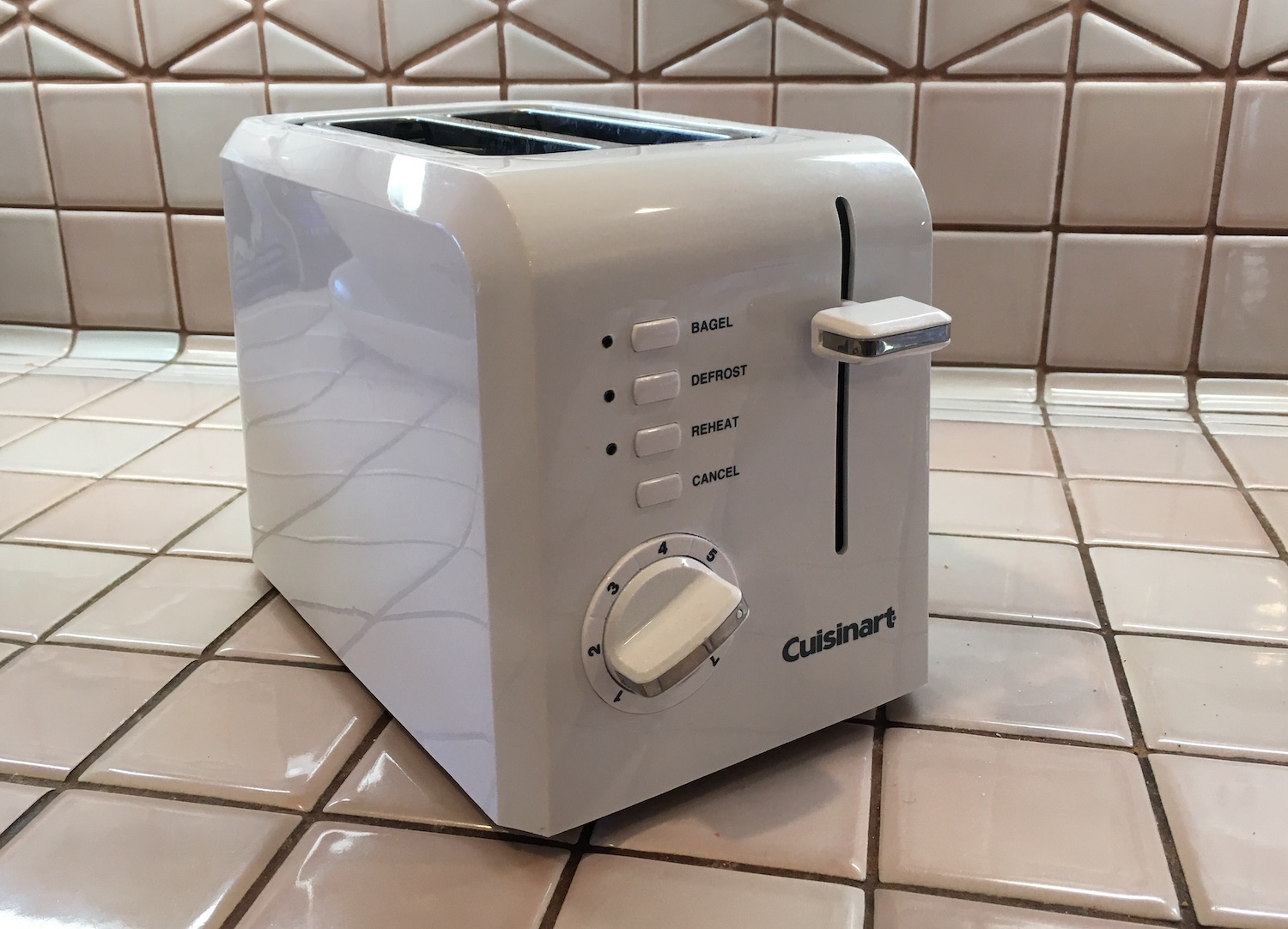
The Cuisinart bread warmer/scorcher.

On Saturday I was making breakfast and mulling over Ken Layne’s latest Desert Oracle podcast when I smelled something burning.

The Wirecutter boyos say you can’t buy a proper toaster anymore, whether you spend a lot or a little, and I believe them. If I don’t keep an eye on and make adjustments to this cheapo Cuisinart what I wind up with is either lightly dried bread or a blackened slab that looks like a smoking shake shingle from a lightning-fried cabin.

A little thing, to be sure. Hardly the foundation for a thumbsucker The New Yorker might buy. And never mind writing about it — simply thinking about it may be a red flag, or so posits the Desert Oracle:

If you don’t have any sense of mission or destiny, or religious faith, or really any sort of sustainable lifetime philosophy, then the small stuff is all you can think about. Because no matter where you are in life, at one time or another you are going to have all the usual problems: health, money, sorrow, disgust, anger, gum disease, athlete’s foot, too much house or none at all. Your dog either up and died or it’s neurotic and full of hate and will outlive you by decades. Everybody’s out to get you or nobody pays any attention at all. The entirety of modern technological society has brushed away and marginalized the personal practice of philosophy. So we lose the plot while we’re in it. It’s like one of those Disney “Star Wars” movies.

I’ve had all of these problems, except being outlived by dogs. And that rough beast is bound to come slouching around one of these days, because Herself wants one, even more than she wants properly toasted bread in the mornings, slathered with Irish butter and French spread.

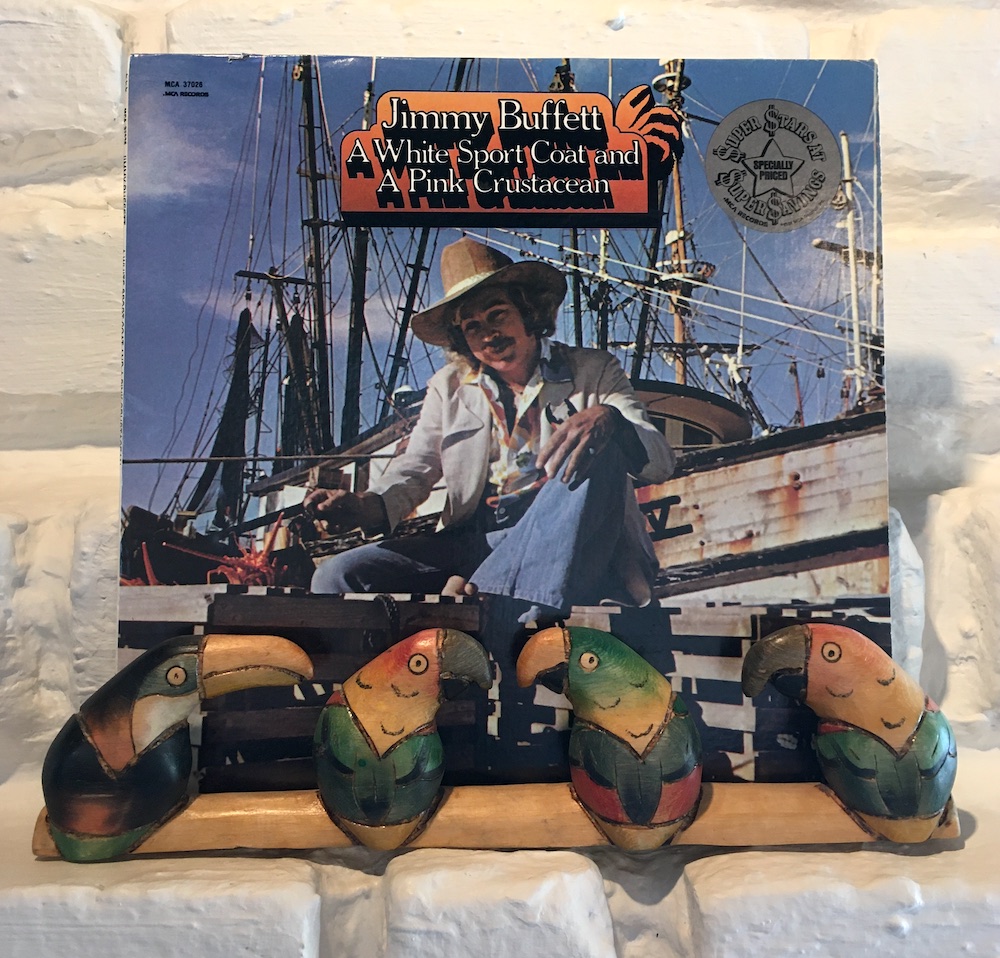
Maybe I should relocate to one of Jimmy Buffett’s Margaritaville-branded “active-living communities,” a paradise for Parrotheads, which is a philosophy of sorts, maybe even a religion.

I had a brief Buffett period, and still enjoy his early works, like “He Went to Paris,” “Cuban Crime of Passion,” and “Death of an Unpopular Poet.” He may have foreshadowed his future as a geezer miner with the lyrics to “I Have Found Me a Home”:

And I have found me a home

Yes, I have found me a home

And you can have the rest of everything I own

’Cause I have found me a home.

I think we’re all bohos on this bus.

That song and the rest of my best-of-Buffett list are from his 1973 breakout album, “A White Sport Coat and a Pink Crustacean,” which features, among others, Steve Goodman on acoustic lead guitar, Vassar Clements on fiddle, and Thomas McGuane on liner notes (“We are beset by the quack minstrels of a non-existent America, bayed at by the children of retired orthodontists about ‘hard times’ and just generally depleted by all the clown biographies and ersatz subject matter of the drugs-and-country insurgence that is replacing an earlier song mafia,” and if that isn’t vintage Captain Berserko I’m a Daytona Beach Realtor.).

The folks who live in Buffett’s beach-bum burgs out there in Disney country certainly seem to have a philosophy that works for them. In his New Yorker piece Nick Paumgarten quotes Stuart Schultz, Latitude Margaritaville’s head of residential community relations (and a former summer-camp director), as saying that living in a Margaritaville property is “like being in college, but with money and without having to study. You have a great dorm room, you never have to go to class, and there’s always a party.”

Hm. I dunno. An earlier version of me never went to class but took in many a party, so I feel like I’ve done my time in that dorm room. And like the toast from my Cuisinart I have the scorch marks to show for it.

It’d probably be smarter to stay put. Get a philosophy. And maybe a dog.