Happy Juneteenth

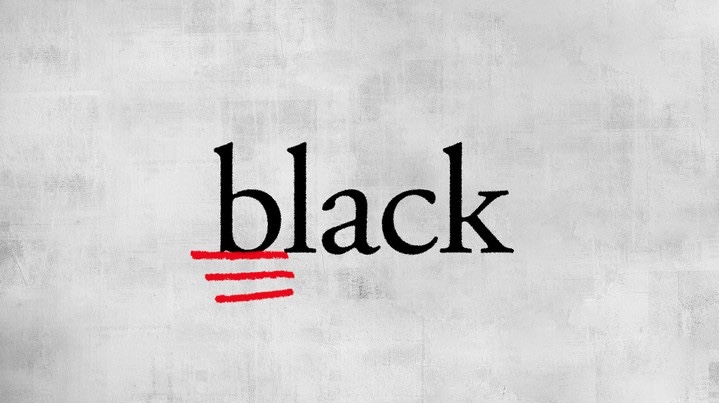
What a brilliantly simple illustration for an essay on whether the “b” in “black” should be capitalized. I appropriated it from The Atlantic.

I made Juneteenth very famous, as you know.

No, I didn’t. And neither did that other peckerwood.

I’m not big on holidays. They were nothing to look forward to in the newspaper biz. Whether it’s Arbor Day or Zoo Lovers Day, the paper must appear. And no matter what capitalist fantasies motivate the business decisions at Gannett and Alden Global Capital, a newspaper won’t publish itself. Yet.

Once you’ve eaten a few dozen “holiday” meals at your desk while decoding a school-board story written by a functional alcoholic the term “holiday” loses all meaning.

Most holidays are dubious, anyway. Christmas? Sorry, not one of mine. Thanksgiving? Is that the one where George Washington threw his wooden teeth across the Potomac and killed a turkey perched in a cherry tree? Fourth of July? That’s the “Life, Liberty and the Pursuit of Happiness” one, right? Except for, you know, those people.

Then there’s Juneteenth. LIke Independence Day, it commemorates a beginning, a first step on a long march to a battle that seems to have no ending.

Though the celebration has its roots in Texas, I don’t recall hearing about it when I was in school down there. Too busy teaching us about how John Wayne fought Communism at the Alamo, I guess.

We never heard anything about the 1921 Tulsa Massacre, either.

And so I suffered from ignorance, a condition with which I continue to struggle. It, too, is a long march. The trick is to keep putting one foot ahead of the other while keeping your eyes, ears, and mind open.

Here’s something I stumbled across along the path. It drew my attention because I’m an old newshound, a retired copy editor, and I love watching the language as it tries to evolve to meet the times. It’s an article in The Atlantic by Kwame Anthony Appiah, a professor of philosophy and law at New York University, and it’s titled “The Case for Capitalizing the ‘B’ in ‘Black.'”
R.I.P., Mort Drucker

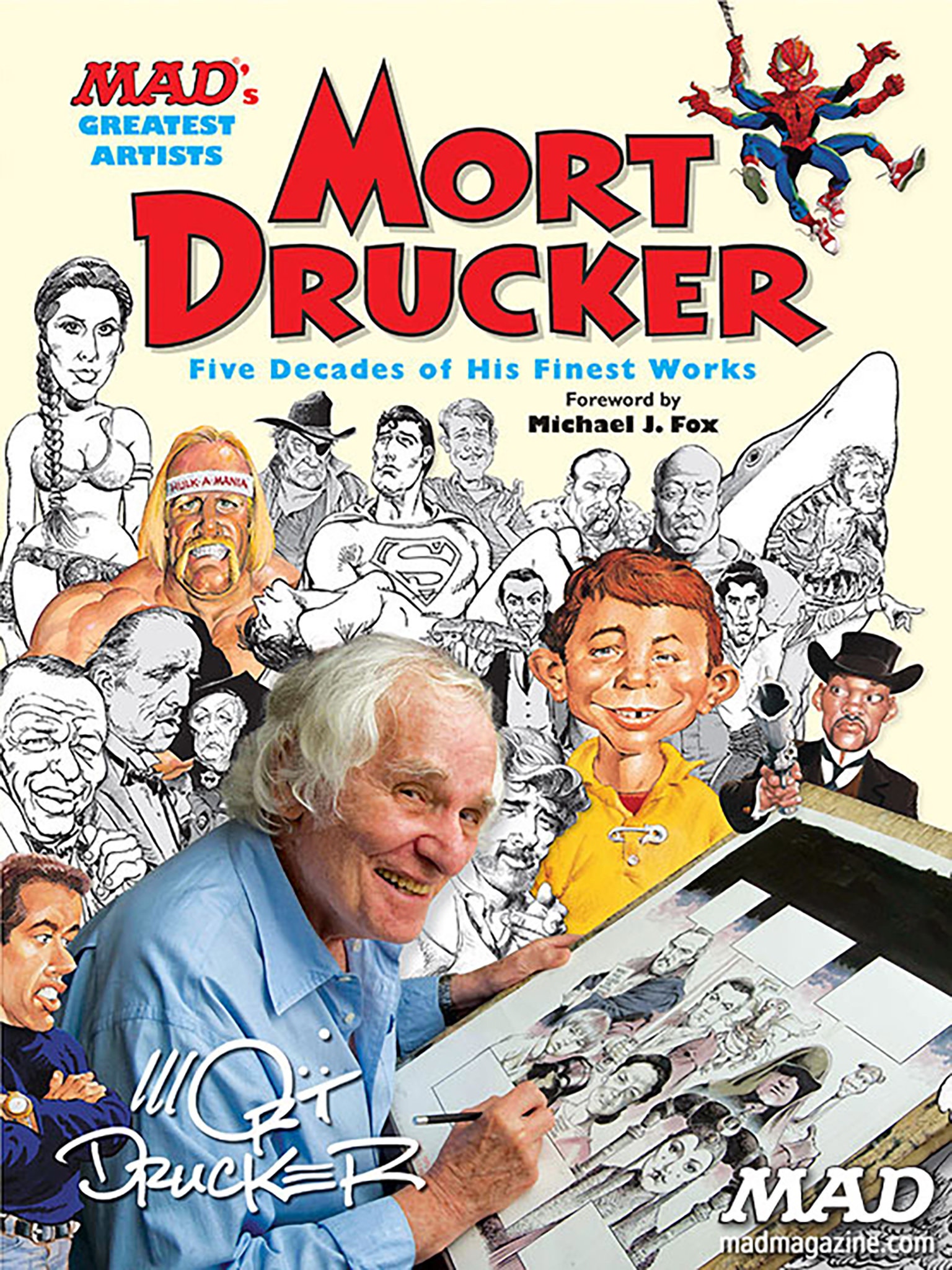
Mort Drucker at work.

Another of Mad magazine’s “usual gang of idiots” has shuffled off.

Mort Drucker made it to 91 before the Source called his name. And damn, was he ever good.

You know you’re good when Will “The Spirit” Eisner gives you your first recommendation.

Also, when the lawyers send you cease-and-desist orders without consulting the boss first. Quoth The New York Times:

According to [Grady] Hendrix, Mad’s 1981 parody of “The Empire Strikes Back,” “The Empire Strikes Out,” prompted the Lucasfilm legal department to send a cease-and-desist letter demanding that the issue be recalled. “Mad replied by sending a copy of another letter they had received the previous month — from George Lucas, offering to buy the original artwork for the ‘Empire’ parody and comparing Mort Drucker to Leonardo da Vinci.”

Mr. Lucas knew Mr. Drucker’s work well. He had commissioned one of Mr. Drucker’s classic multicharacter pileups as the poster for his first hit, “American Graffiti” — a nostalgic movie set in the same summer “The JFK Coloring Book” was a best seller. And, of course, Mr. Drucker had illustrated Mad’s sendup, “American Confetti.”

I bet John Prine is offering him a vodka and ginger ale for a caricature right now.

‘The excitement is contagious. …’

Dr. Memory … paging Dr. Memory. …

I woke up singing, “Make the World Go Away.”

It wouldn’t, of course. The world is remarkably persistent. Always up in your grille with its pestilence, stock-market crashes, toilet-paper shortages, leadership vacuums, Darth Gimp boots, doctor’s appointments, and stupidity.

For, like the poor, ye have the stupid always with you.

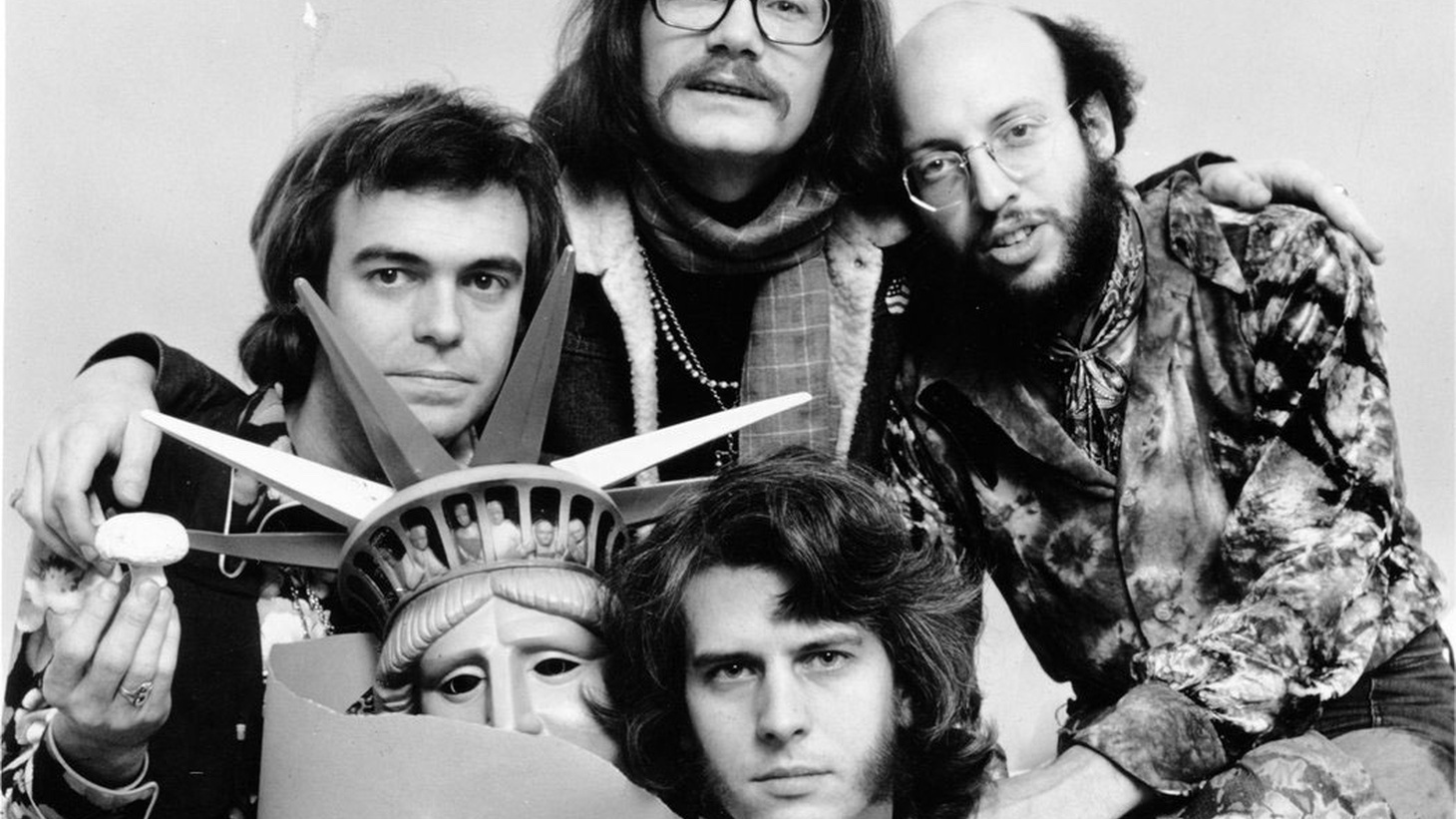
Sometimes, a guy wants a little smart. And so, after a consultation with Dr. Memory, and in keeping with the general plague theme, we present for your listening enjoyment “Waiting for the Electrician or Someone Like Him” by The Firesign Theatre.

If only we had a generated, veneered leader. (Hear, hear!) Our own “Fighting Jack.” (Where, where?) But nope — all we have is a pestilence (There, there).

Good news

“The unthinkable had always been thinkable.”
Edward Abbey wasn’t just a writer, he was a prophet.

Anyone in the mood for a bit of apocalyptic fiction in these dark days could do worse than “Good News,” by Cactus Ed Abbey, who died on this day in 1989.

Like Michael Moorcock’s Eternal Champion, Abbey’s Jack Burns took many forms (and many beatings) over the years, from “The Brave Cowboy” through “Hayduke Lives!” in which the titular character, George Hayduke, says with a grin, “See you in Hell, Jack Burns.”

He might just see the rest of us there, too.