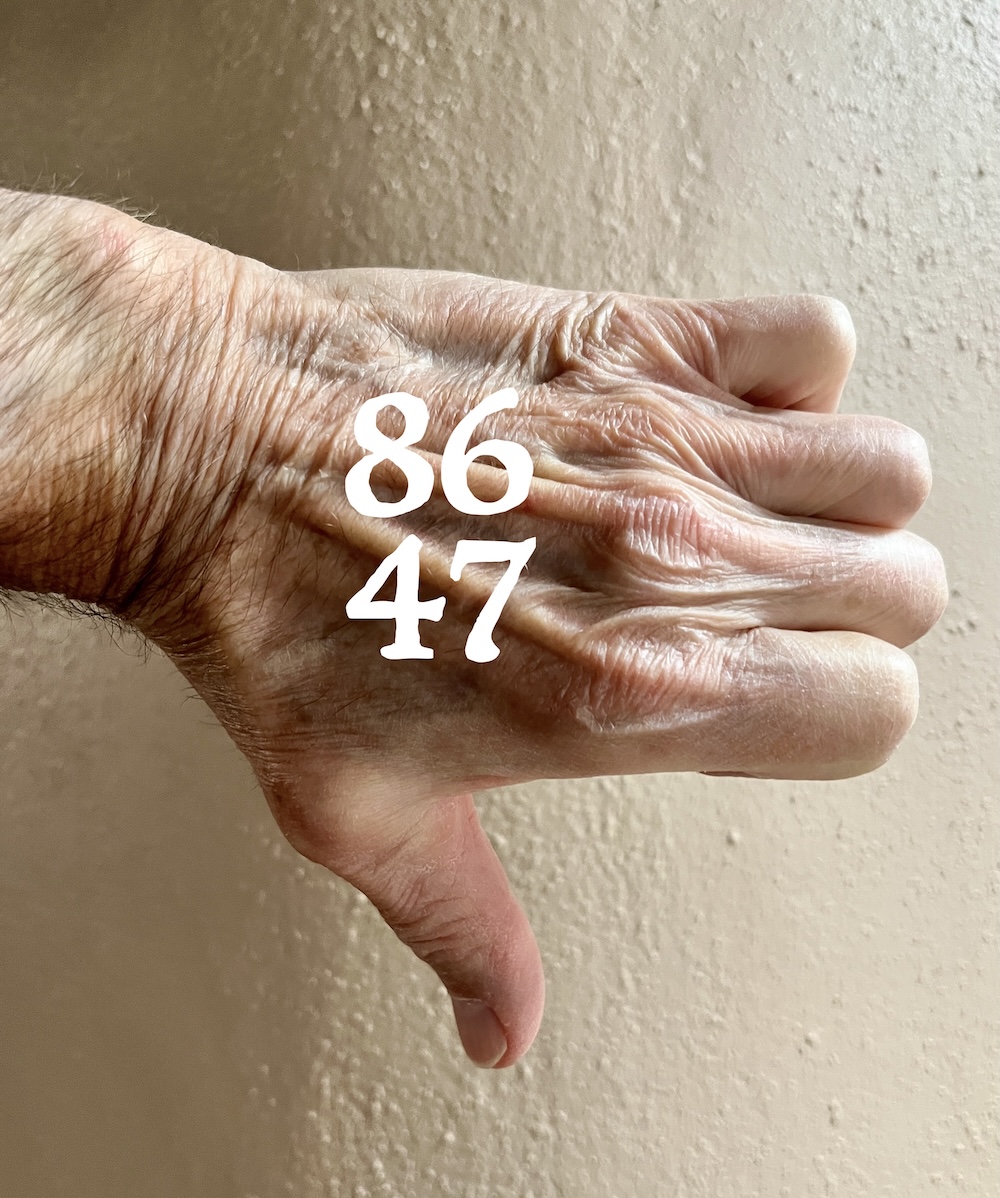

Neil Young is still rockin’ in the free world.
Neil Young is still rockin’ in the free world.
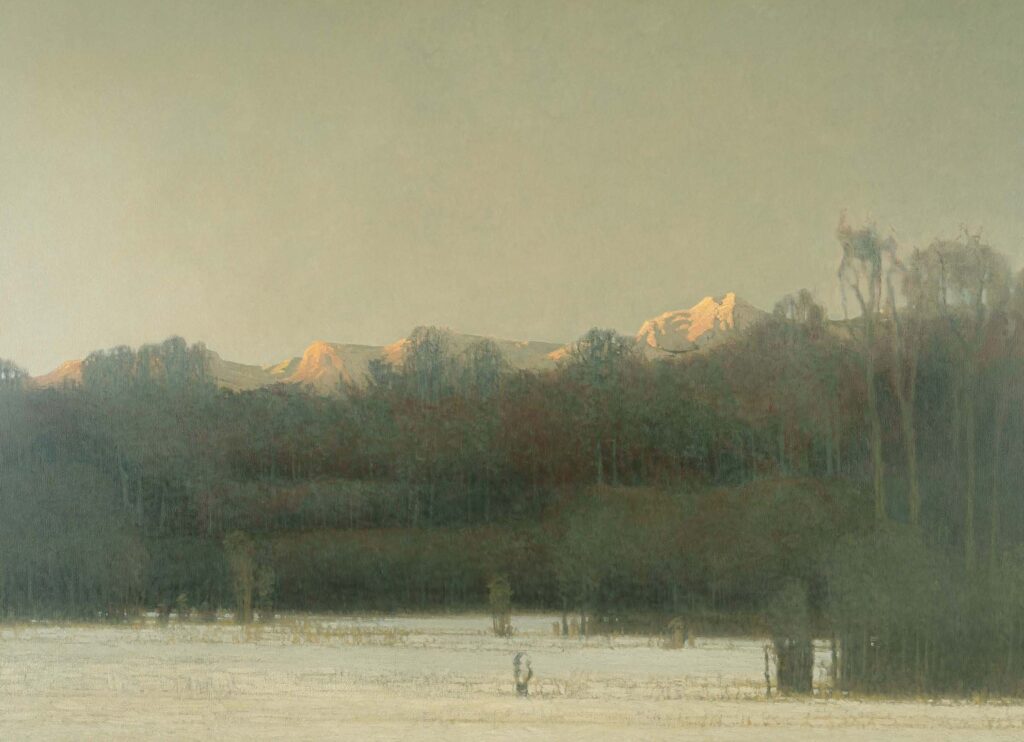
The IRS can’t get Russell Chatham now. He’s skedaddled with his paints and brushes, vamoosed to a secret place where his creditors will never find him.
His flight west hasn’t interested the big boys yet. The New York Times, once Johnny-on-the-spot when it came to obits, hasn’t uttered a peep.
But his old hometown newspaper finally got around to writing a little something, days after the San Francisco Chronicle noted his passing.
It was apparently the dementia that got him, among other things. Once a Montanan and rounder, an artist and writer whose running mates included the likes of Jim Harrison, Thomas McGuane, and Rick Bass, Chatham died Nov. 10 in a memory-care facility in Marin County, Calif. He was 80.
Chatham’s landscapes adorn many a book cover, when they aren’t busy elsewhere, selling for tens of thousands of dollars. Indeed, it’s hard to find a Harrison book without one, and he dedicated “Sundog” to Chatham.
The artist also makes frequent guest appearances in Harrison’s essays. While fly-fishing for billfish off Costa Rica both men contracted bad cases of turista, but Chatham’s was by far the champeen, if you believe Harrison. In “The Tugboats of Costa Rica,” he wrote:
“I shall never forget his pathetic yelp in the night as he pooped his bed during a feverish dream about trying to eat a giant Mindanao clam that wouldn’t stop moving,” Harrison wrote. “This artist is a walking field day for a psychotherapists’ convention.”
In his essay “Seasons Through the Net” McGuane described Chatham as “a man who has ruined his life with sport,” a relentless angler and shootist “who “skulks from his home at all hours with gun or rod.”
“Russ never thought of painting as a career. It was just something he did,” said McGuane.
Bass called him “the greatest living landscape painter in America, famous for his outlandish appetites for food, wine, travel, art, music, literature, and the sporting life.”
And Chatham? He was busy doing the somethings he did, sport and art. Working without a net. Everything else would have to take care of itself.
“I’m not a businessman,” he told Charles Schultz for the Point Reyes Light. “If any money crosses my path, it is gone faster than butter in an oven. I have no savings, no retirement. I have whatever’s in my wallet. To a lot of people that would be frightening.”
He added: “The artist has absolutely no safety net.”
This didn’t mean that he was unaware of the ground down there waiting for him. In a chat with Todd Wilkinson for the Mountain Journal, Chatham said:
“Early on, I was never concerned about having a career, so I didn’t have one. And now nothing could interest me less. But I think we all have a programmed tape running inside us, and most of mine is now stored on the right hand side of the cassette. I finally feel I know enough to paint what I could only dream about in my twenties. People say it’s time to slow down, relax, go fishing. Well, I took the first forty years of my life off and went fishing, and now my tape is telling me to finish what I was put on earth to do. Before, time didn’t matter. Now it does.”
It’s fish-thirty, Russell. Time to wet a line.

Ho boy. There goes the neighborhood. The Poindexters are building the next Billy Shakespeare out of 1s and 0s.
In this piece for The New Yorker, John Seabrook wonders:
Could the machine learn to write well enough for The New Yorker? Could it write this article for me? The fate of civilization may not hang on the answer to that question, but mine might.
Sigh. Remember the good old days, when automatic writing was limited to the spirits or subconscious? I have a feeling this new breed of writer will rely on a different solvent than did its human predecessors.
“Gimme a benzene. Make it a double. I’m stalled on this goddamn novel.”
Sports Illustrated has gotten the VeloNews-CGI treatment: Pharaoh bids them make bricks without straw.
I’m not and never have been a sports fan, though I appreciate certain subsets of sportswriting (see Dr. Hunter S. Thompson, et al.). Thus I can’t speak to the quality of today’s Sports Illustrated, though the new management’s strategy certainly sounds familiar.
“Bricks, bitches. Chop chop. No, you don’t get straw. Who do you think you are, Frank Deford?”
But boy howdy, have some big hitters ever swung through SI’s pages over the years.
I’m talking Deford, Roy Blount Jr., Dan Jenkins, George Plimpton, Rick Reilly, Kurt Vonnegut … that’s right, Kurt fuckin’ Vonnegut. Not your basic dime-store jargon-jockeys, is what.
Over at Deadspin, Ray Ratto posits that the gutting, as has become traditional, “was pointless, needlessly cruel, stupid and thoroughly corporate.”
And Ratto expects more of the same:
I want to be more depressed and affected by what seems to have happened to Sports Illustrated, but it is the fate that awaits everything. Some corporate lamprey is coming for every generation’s best and brightest, dimmest and thickest, because you can count money and clicks but not curiosity and discovery. Others will have to provide those last two things now, and will have to do so while knowing that it’s a finite world out there. We will lament its passing too late because we have come to accept the mortality of things we thought would never die, and watch with a shrug as the monuments of our formative years are demolished and turned into Stalin’s Finest coffee stands, and eventually into parking lots.
I’d say that about sums it up. Back to you, Jamie “Mr. Awesome” Salter.

In the August 2019 issue of The Atlantic, Michael LaPointe muses at some length on “The Unbearable Smugness of Walking,” as performed by the literati.
Following his examination of two recent books arguing for “walking’s invigorating literary power” and capacity for resistance to “the desire of those in power that we should participate in growing the GDP … as well as the corporate desire that we should consume as much as possible and rest whenever we aren’t doing so,” LaPointe wonders whether, for the writer, walking to work is really nothing more than another day at the office, albeit a larger, airier one.
And he poses the question: “What would it mean, for once, simply to walk and say nothing about it?”
What it would mean, Michael old sock, is that you would not get paid.
“Ah, fill the Cup:—what boots it to repeat
How Time is slipping underneath our Feet. …

