R.I.P., Robert and Jesse

Robert Duvall, climbing to the top in “Tender Mercies.”

Two stunning performers have left the stage: Robert Duvall and Jesse Jackson.

The two men were so very different in so many different ways — one a conservative white, born into an admiral’s family in San Diego; the other a liberal Black, spurned by birth father and stepfather in the segregated South — yet both came to immerse themselves completely in their respective roles, impatient with and often heedless of direction.

My favorite version of Duvall was Mac Sledge, the washed-up, alcoholic country singer-songwriter in the 1983 film “Tender Mercies.” He looked like post-Muskogee Merle Haggard and sounded like — well, like Robert Duvall if he’d gone outlaw with Willie and Waylon, because he sang the damn’ songs, after test-driving his pipes with a country band and motoring around East Texas “looking for accents,” according to The New York Times.

But Duvall likewise was top-notch — or maybe top gun — in “The Great Santini,” a 1979 movie based on the book of the same name by Pat Conroy. The titular character he portrayed, Marine fighter pilot Lt. Col. Wilbur “Bull” Meecham, reminded me very much of a certain Southern-fried Air Force colonel who flew C-47s out of New Guinea during World War II.

Duvall’s favorite role was that of Augustus McCrae, a crusty old ex-Texas Ranger in the 1989 TV miniseries “Lonesome Dove,” based on the Larry McMurtry novel … a revelation that weirded me right the hell out because that book is on my nightstand right now, as I’m between books I haven’t already read a few hundred times. Gus is right up there as characters go, and Duvall knew it.

“Let the English play Hamlet and King Lear,” he told interviewers, “and I will play Augustus McCrae, a great character in literature.”

Jackson had the misfortune of being the understudy to the Rev. Dr. Martin Luther King Jr., and after King’s assassination he spent the rest of his life auditioning for that elusive starring role. Some in the Southern Christian Leadership Conference thought him a spotlight hog, and some outside the SCLC found him easy to caricature, especially the white folks who ran the big casino — though plenty of them stopped laughing after he turned in strong performances as a presidential candidate in 1984 and ’88.

He lost the nominations to Walter Mondale and Michael Dukakis, who went on to get beaten like rented mules by Ronald Reagan and George H.W. Bush, and Jackson gave up tilting at that particular windmill.

Jackson continued trying to remind America that there were choices other than wrong right, hard right, and centrist, though as The Times notes, “for all his rhetorical thunder the Democrats never fully embraced his vision of an unashamedly liberal party based not on the white middle class but rather on his coalition of poor and working-class people of all colors.”

More’s the pity.

I don’t remember who I voted for in 1984. I was in a union then, and it’s possible that I pulled the lever for the old commie Gus Hall, because after brief flirtations with the Socialist Workers Party, the October League and the Communist Party (M-L) I occasionally enjoyed being a red pain in the ass. And no way was I gonna vote for a Hollywood cowboy who wasn’t Robert Duvall.

Four years later I was all about Gary Hart, until he self-destructed, and then I caucused for Jackson, for all the good it did him. His people charged that Colorado slow-walked its count to give Dukakis a boost going into the Wisconsin primary, but in the end, Jackson lost the caucus and the nomination to Dukakis.

Later that year at the behest of political pals I worked one event for the Democratic candidate. The people his campaign sent to Denver proved to be outlandish assholes, so much so that I didn’t bother to vote come November. It seemed pointless, another dry well in a decades-long drought. Barack Obama was light-years away.

But Jackson didn’t give up. And neither did Duvall. Both continued to find roles to play, and both helped make our lives worth the price of admission. Peace to them, their families, fans, and friends.


Friday ‘news’ dump

“Epstein files … awaaaay!

It’s Shiny Object Day again at Der Orange Haus.

Hoping to distract the media from the masked, murderous ICEholes goosestepping around Minneapolis, His Excremency’s Injustice Department has ordered a massive dump of Epstein files — “more than 3 million pages of documents … as well as more than 2,000 videos and 180,000 images,” according to The Associated Press.

“I’m shocked! — shocked! — to find that perversion is going on in here!”

“Your underage victim, sir. …”

“Oh, thank you very much. …”

Thank you very much not at all, you oinking fucking swine. Here at El Rancho Pendejo we supply our own, wholesome pasatiempos.

Save for Monday, the weather has been suitable for cycling and running, which, yay. Soon as I post this mess I plan to get right back after it, too.

Between bouts of healthful outdoor exercise, “Mel Brooks: The 99-Year-Old Man” on HBO is a must-see, as is the Oscar-nominated “Train Dreams” on Netflix, though the adaptation of Denis Johnson’s novella doesn’t come close to challenging Mel in the yuks department.

After abandoning a second crack at the source material for another Oscar nominee — “Vineland,” by Thomas Pynchon, the inspiration for “One Battle After Another” — I’ve been reading “The Five Wounds” by Kirstin Valdez Quade, which has taken me on a backstage tour of my old stomping grounds around Española, N.M. My favorite restaurant from those days, El Paragua, gets a shout-out, as does Saints and Sinners. I took Herself to our first date at the former, where we later had our pre-wedding dinner, and once bought her a T-shirt from the latter.

So, no. We are not buying what these fascists are selling. Mel taught us how to deal with Nazis — by mocking them, savagely and relentlessly. He’s still at it. And so are we, though at times we wish we had his stamina.

And now I’m off for a ride. It feels like springtime out there right now. Not for Hitler, though. Especially if he’s just some half-baked orange understudy who can’t sing or dance worth a shit.

Awaiting enlightenment

Strictly ornamental.

Author George Saunders is much in the news of late, chatting up the press in preparation for going on tour to promote his latest book, “Virgil,” due out later this month.

Speaking with The Guardian, Saunders said he was still trying to decide how to speak about politics when he hits the road. Preaching to the converted feels “a little too good, like it’s too much sugar,” he said, adding that while his nature is to seek peace, “that’s dangerous right now because I don’t want to be a peacemaker for this regime.”

I’m not a celebrated author, prepping for a book tour, or a Tibetan Buddhist. I blog irregularly and without distinction, the only tours I take are by Subaru, and the only thing I’m promoting is my own mental health. My devotion to Zen is sporadic at best.

But I sure dig where Saunders is coming from when he says The Work is the thing.

It reminds me of the Zen proverb, “Before enlightenment, chop wood, carry water. After enlightenment, chop wood, carry water.” Also, and too, of the Epistle of James, which goes, “For as the body without the spirit is dead, so faith without works is dead also.”

And I was pleasantly surprised to see Saunders prescribe a spoonful of sugar to help his medicine go down: “Also start weightlifting, build a machine-gun turret. …”

Sounds like the right sort of work for an old blogger short on faith as the reign of His Excremency Donald the Dozy barrels along unhindered. We’re running out of water to carry in the Southwest, and we don’t burn wood. But you never know when a buffed-up bod’ and a machine-gun turret are liable to come in handy.

Great minds

The luck of the (southern) Irish.

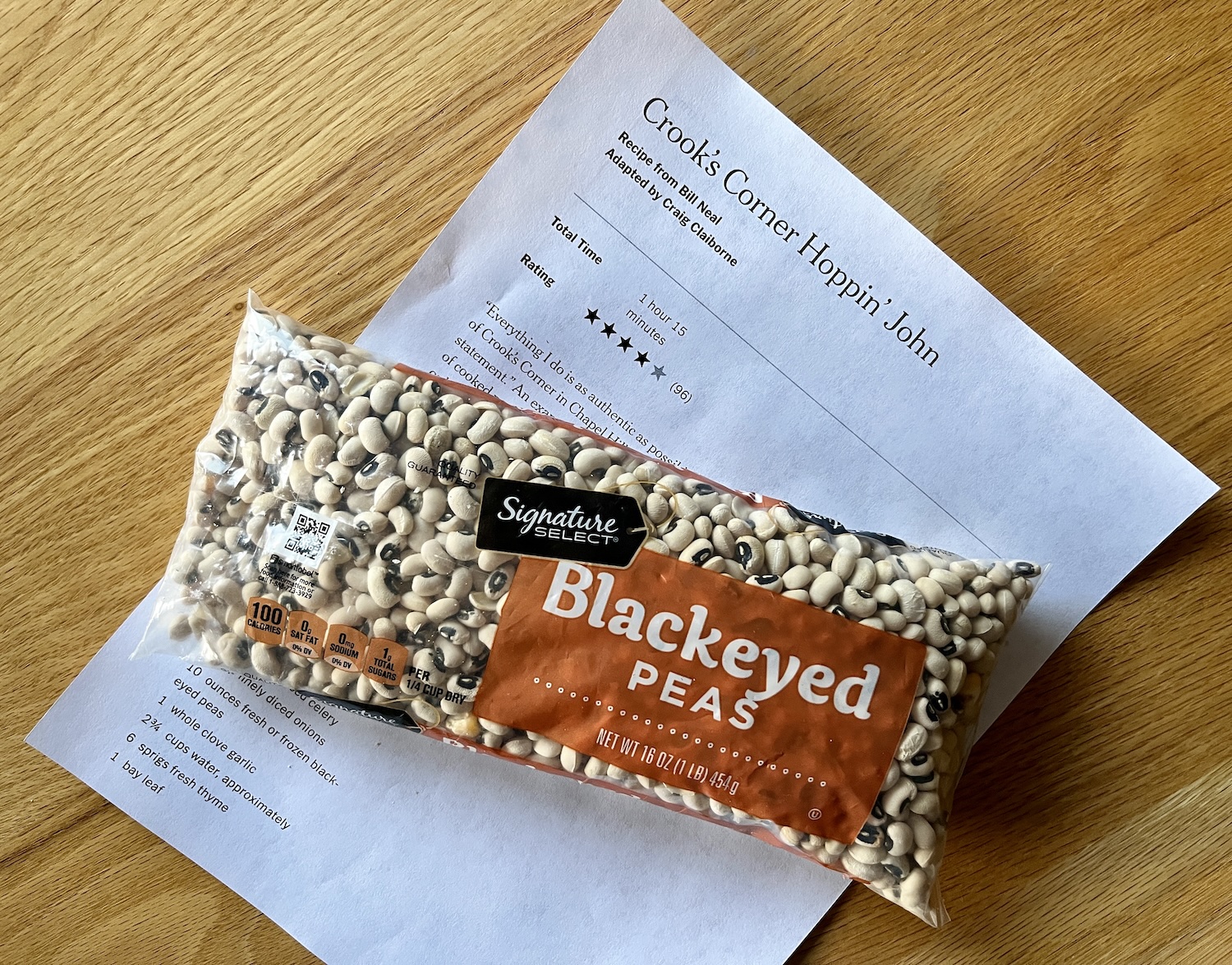
Rooting around the Innertubes for some New Year’s recipes I was congratulating myself on picking a couple of winners, both from The New York Times Cooking section, which by itself is worth the price of a subscription.

One was a simple Hoppin’ John recipe from Bill Neal of Crook’s Corner in Chapel Hill, N.C., as adapted by Craig Claiborne in 1985. The other was a jalapeño cheddar cornbread from Melissa Clark, the franchise player on my pro cooking squad.

But when I crowed about this to Herself I found she’d beaten me to the punch. She’d already found her own recipe and acquired the ingredients for it, too.

Good thing I shot off my big bazoo before heading for the grocery. We’d have been eating Hoppin’ John and cornbread from New Year’s right through St. Patrick’s Day.

Meanwhile, I had to quickly re-establish my primacy as tenzo of this zendo. Facing an economy of scarcity — a lack of fresh red grapes, which I dice up for the morning oatmeal — I displayed my resourcefulness in the kitchen, or “skillful means,” as defined by the late poet-gourmand and Zen student Jim Harrison, by locating a wrinkled honeycrisp apple in the crisper and chopping that up instead. In your face! as the sage Dogen has taught us.

Jimbo hated oatmeal. But he’s dead and didn’t have to eat any of it.

One bodhisattva for Katmandu, please

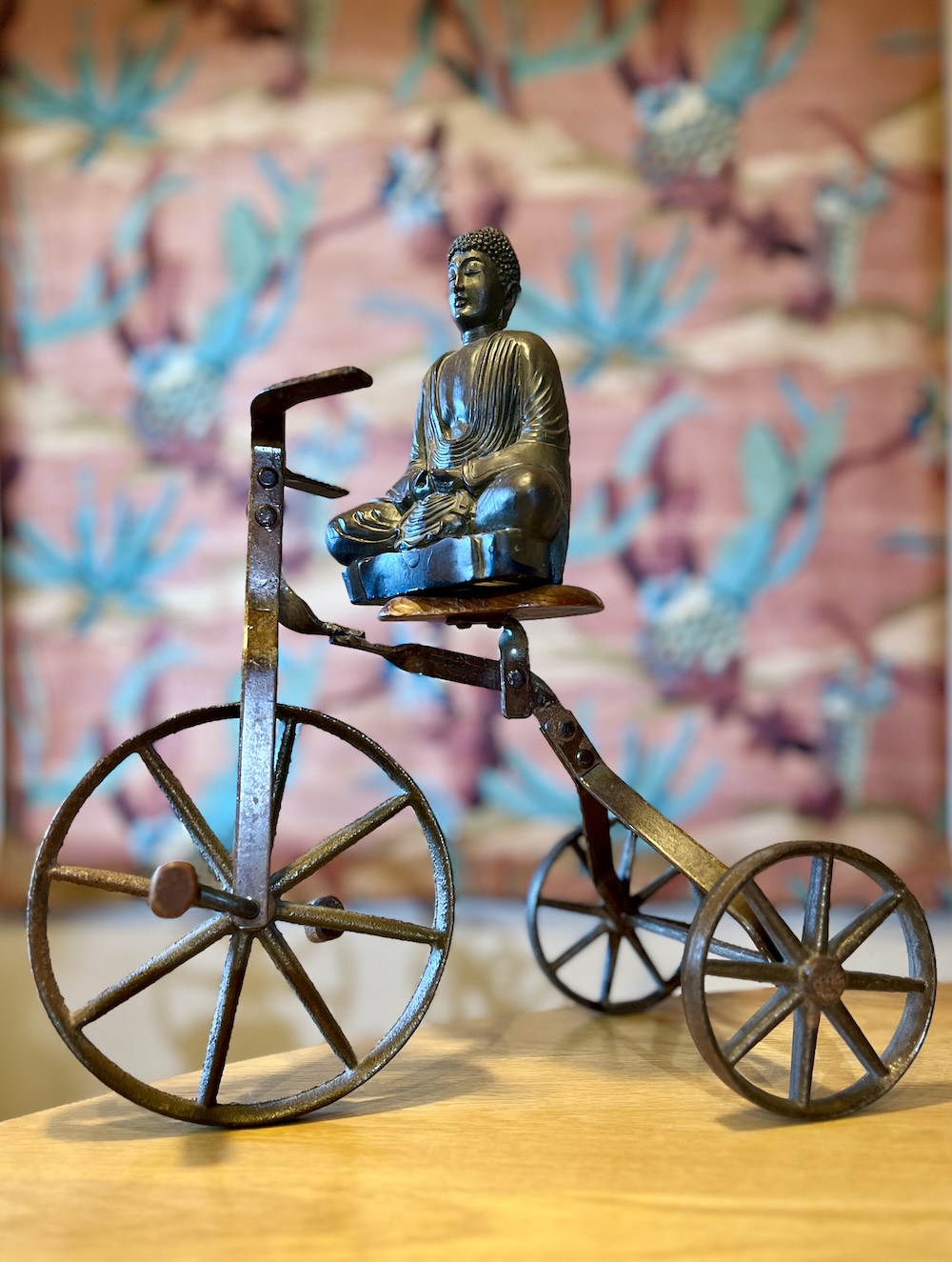
Buddha don’t need no Rand McNally, yo.

The body may be at rest, but the mind wanders as it will.

Two songs have been getting heavy play on my cranial jukebox: “Katmandu,” by Bob Seger, and “Bodhisattva,” from Steely Dan.

The first, from 1975, ostensibly about salvation via relocation, is actually what Seger described as “an exasperated song” written near the end of a decade-long stretch “where I was going nowhere fast. …  I still had some of that defeatist mentality and you can hear it in there.”

The second is a 1973 critique of cookie-cutter spiritualism and its related divestiture of worldly goods that co-writer Donald Fagen once summarized as: “Lure of East. Hubris of hippies. Quick fix.”

Thomas McGuane was scouting that territory even earlier, in his 1971 novel “The Bushwhacked Piano,” in which the peripatetic Nick Payne’s father tells his wayward son: “I just find the Rand McNally approach to self-discovery a little misguided. … My rather ordinary human response has been to resent having to go to work in the face of all that leisure.”

That these musical and literary ingredients are suddenly bubbling to the top of my consciousness, such as it is, may be a consequence of having just finished McGuane’s latest story collection, “A Wooded Shore,” in which a selection of the damned find themselves adrift in various fashions and locations, Dante’s Sea of Excrement being among the hot spots. “I’m a realist, you see,” says that particular voyager.

“Sure rings a bell these days,” as McGuane told The New York Times. On the mark as usual, Tommy me boyo.

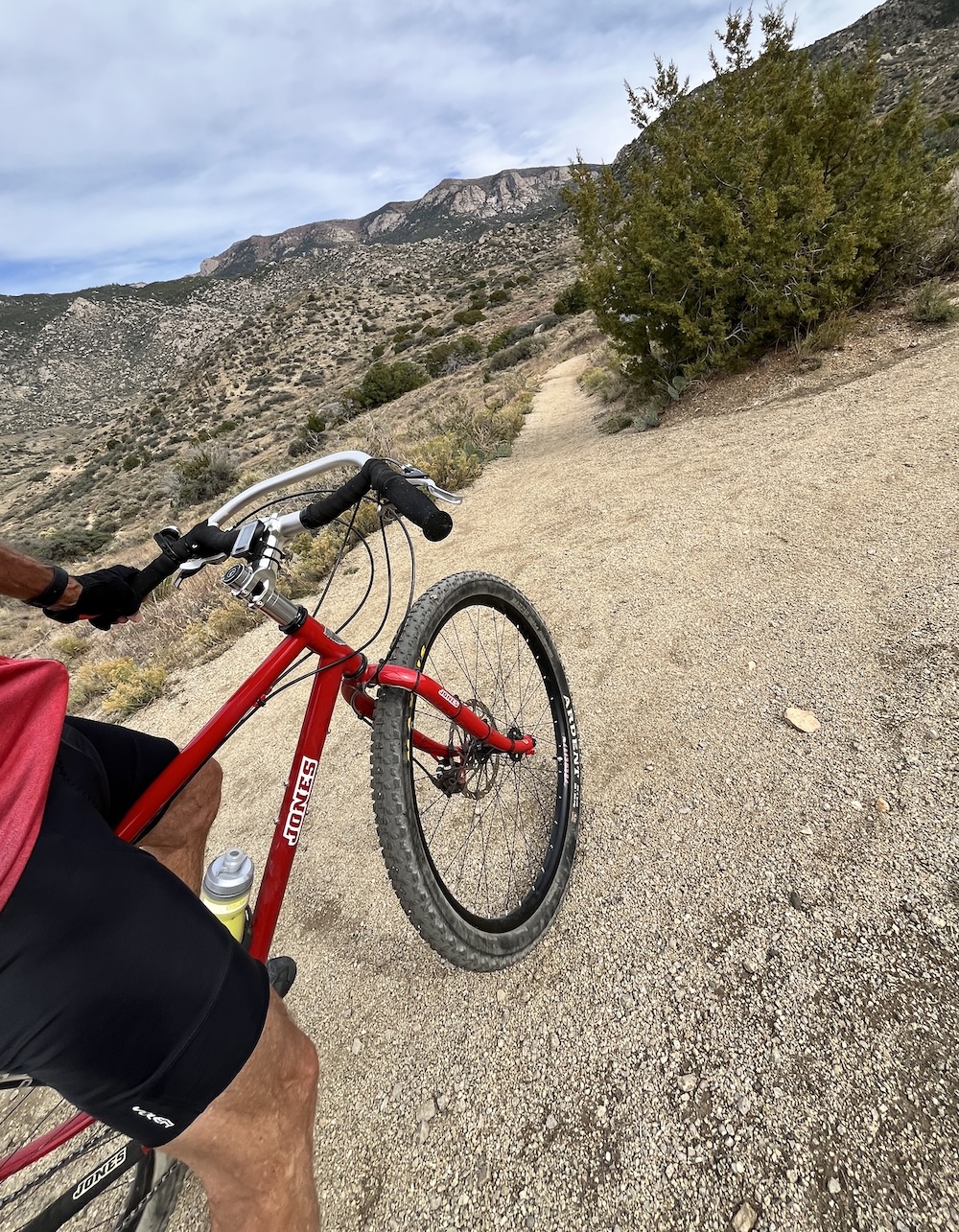
Or perhaps it’s that I’m rocking a streak of vivid dreams about bicycling in outlandish circumstances, perhaps as a reaction to getting myself locked into a small selection of predictable 20-milers, your basic hamster-wheel loops, for no good reason that I can think of beyond sloth and convenience. An assist from Rand McNally is not required for this sort of tour de meh. Trying to break the chain I recently took two rarely ridden bikes on short outings, one of them involving a few miles of singletrack I hadn’t ridden since January. I dabbed frequently and shamelessly.

I suppose it could just be that fall is upon us, and with it our local elections and the fabled “fall back,” slated for Sunday, Nov. 2. Oh, good, an extra hour of nightmares.

When swimming the Sea of Excrement, I recommend the backstroke.