
2024: A Spaced Odyssey

“Uhhhh … what was the question again?”

I am not a senile old fool.

Anyone who suggests otherwise is simply taking a cheap political shot, hoping to stop me from serving another term as Your Humble Narrator here at whatever the hell it is that we, or you, or I am doing at this whatchamacallit, the thing. The … bog? You know.

Now, it’s true that I may occasionally stare blankly at my iPhone, the way that monkey did at the glossy black rectangle in that movie — c’mon, you know the one — because the nice lady on the phone asked me for my phone number and I’m trying to look it up in Settings without hanging up on her because hey, I never call myself. Do you?

Hello? Hello?

Shit.

But I can assure you that while I’m pawing helplessly at that glossy black rectangle I no longer make the plaintive hooting sound. Like the monkey. The one in the movie. You know, where the bone turns into a spaceship and Siri or Alexa or Elon is trying to kill everyone and the young guy in the spaceship turns into an old guy in a Home who can’t remember his phone number? Is it HAL9000? No?

I do? I’m making it right now? I’m sure you’re mistaken. Whoever you are. Ook ook ook.

And sometimes I may forget who the president is, but only because I’m pretty sure it’s not the Red Skull or Pumpkinhead or Dick Tater, whatever the crazy orange fella’s called, the one who looks like a giant circus peanut with beady little eyes like a big fat rat with a mouth like an asshole and is always in the news because he keeps doing stupid shit and getting caught at it but nobody seems to be able to put him in jail and somehow they all think the other fella is the problem because he can’t remember who the King of the Moon is or the name of that movie with the monkey who can’t remember his phone number or how to find it in that big black iPhone that the Space Baby left somewhere around Barstow, on the edge of the desert, where the bones turn into Great Red Sharks driven through Bat Country by Hunter S. Thompson to Las Vegas, where an infinite number of monkeys are writing “Fear and Loathing on the Campaign Trail ’24.”

Anyway, whoever’s president now seems to be a little quieter and more laid back and I don’t have to think about him all the goddamn time and I kind of like that because it’s restful and I seem to need a lot of naps lately. Like right now.
Parliament O’Hoors

A Parliament sans Funkadelic.

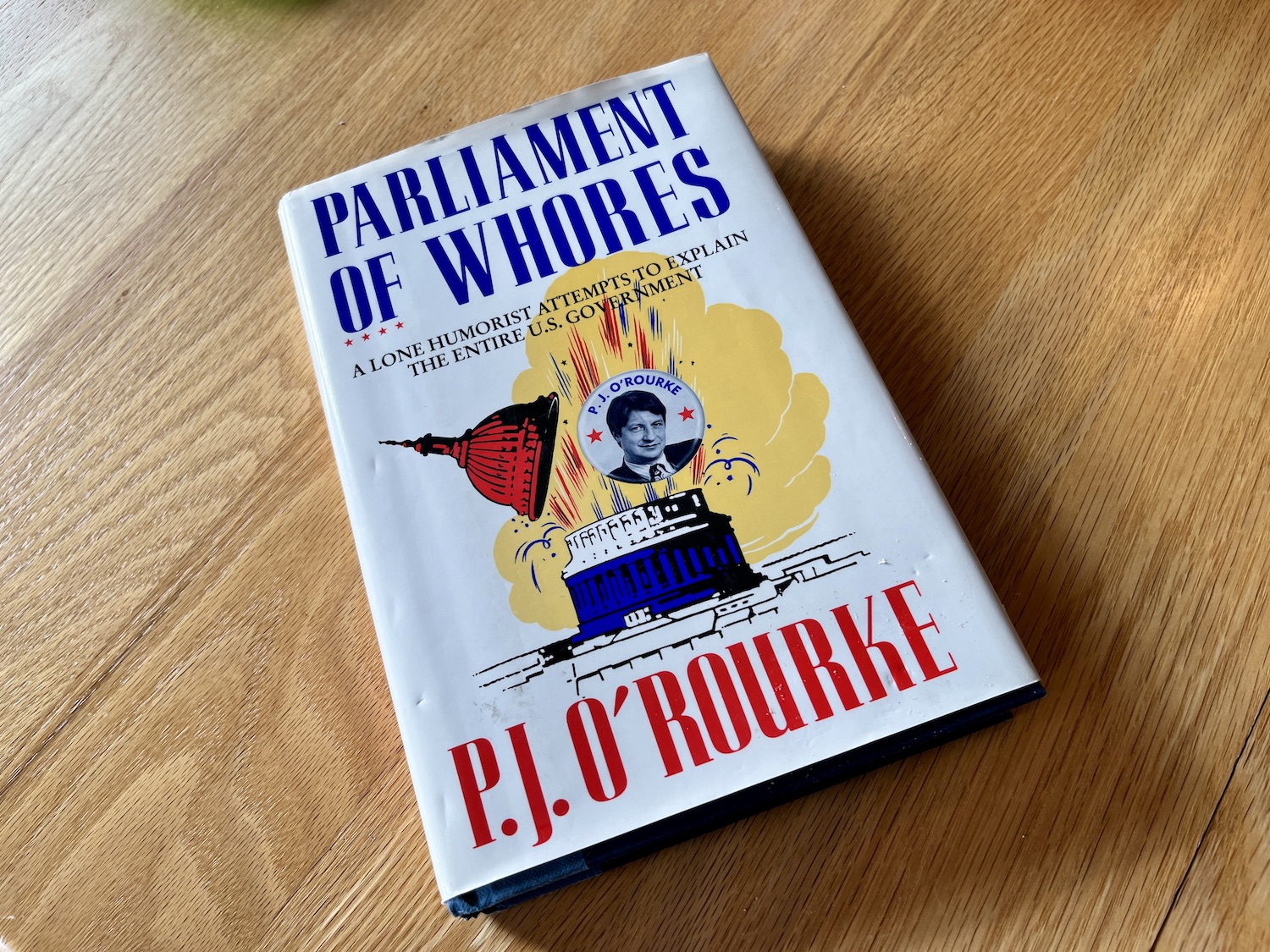
In his classic examination of the U.S. government, “Parliament of Whores,” P.J. O’Rourke included a section titled “The Three Branches of Government: Money, Television and Bullshit.”

If P.J. were writing what he called his “Devil’s Civics Text” today, his three branches might be the Fed, the Supreme Court, and social media.

The Fed decides which of your dreams you won’t be able to afford as it arranges soft landings for Wall Street. The Supremes decide which ones won’t come true at any price, unless you’re one of their deep-pockets pals. And then everybody hollers about it all on social media, which seems to be one-third Nazis, one-third child molesters, and one-third people who just like to watch.

Money, television and bullshit are still very much with us, of course. P.J. is not, more’s the pity. I’m thinking we could all use a good chuckle right about now.

Hasta la vista, John Nichols

John Nichols goes west.

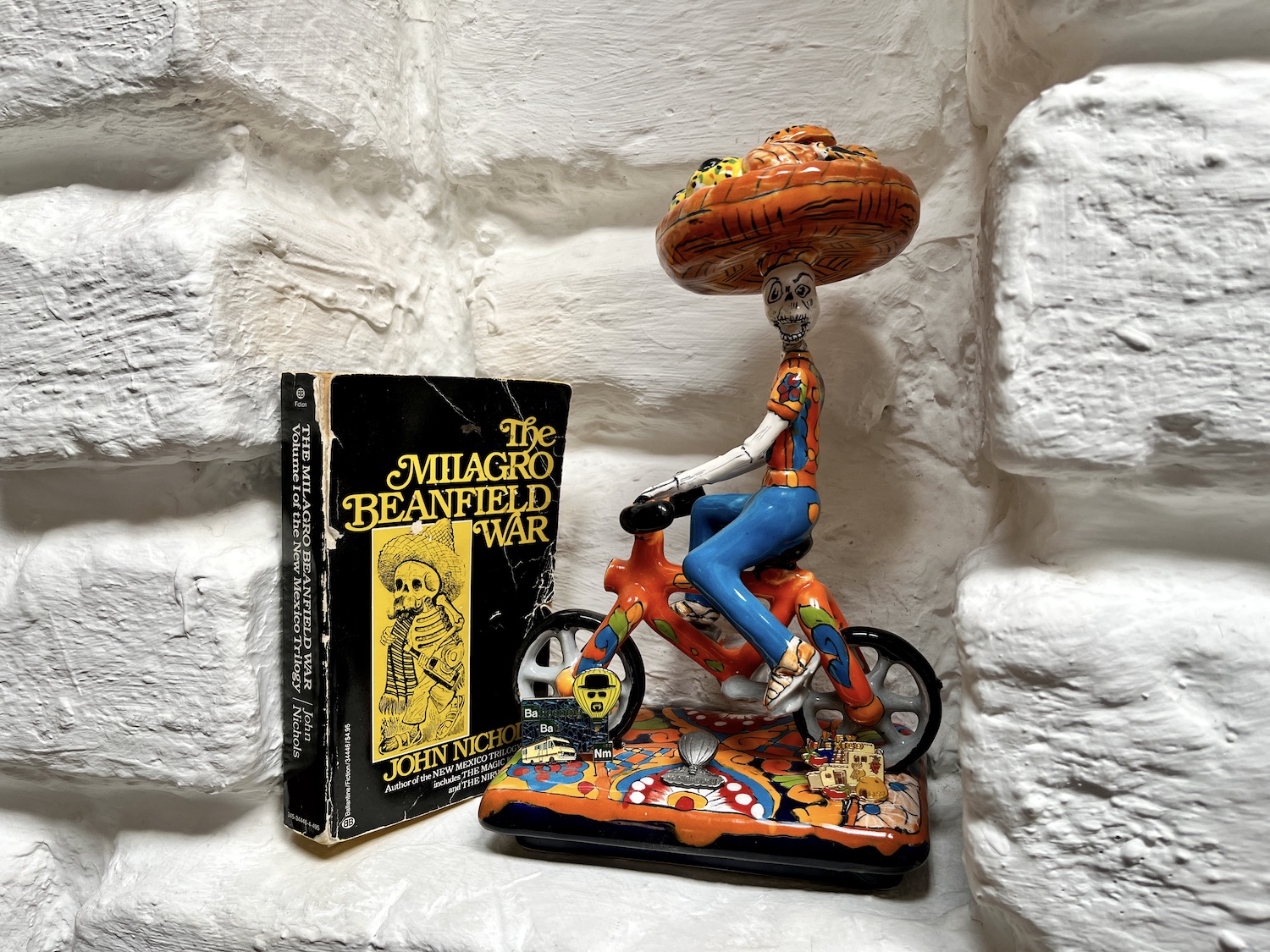
When I bought my first copy of “The Milagro Beanfield War” by John Nichols — I have bought several over the years, replacing copies rumpled, thumbed and dog-eared half to death — the clerk at the Alamosa bookstore confided, “You know, this is about us.”

I bet a lot of people thought that, from Saguache to Socorro. “This is about us.”

The New York Times was not impressed. Reviewer Frederick Busch, himself a writer of novels and short stories, observed: “Nichols’s attempt to make his love for an area and his social concern coincide with his often celebrated sense of humor is doomed by his own always visible hand.”

Well, I never read any of Fred’s work. But I read a shitload of John Nichols. And I always came back to “Milagro.”

It wasn’t a great novel. As an editor I wanted to run through it with a cleaver, dispatching various digressions, superfluous characters, and a general flowery wordiness that must have caused a thesaurus or three to burst into flames from overuse. And the movie was pretty awful.

But “Milagro” gave me my first hint that water was not just something that came out of a faucet whenever and wherever you wanted it. And I met some of its characters — Joe Mondragon, Horsethief Shorty, Amarante Cordova, Charley Bloom — in places like Alamosa, Greeley, Española, Santa Fe, and Albuquerque.

Most of all, I enjoyed their wandering, collective story, in which The Little Guys go toe to toe with The Man. Damn the torpedoes, full speed ahead. ¡Vamanos! They won a battle, but the war continues.

Alas, John Nichols does not. He has gone west after a long illness, according to his family. He was 83.

Someone’s looking for me

Book ’im, Dan-o.

Just ’cause you’re paranoid, etc.

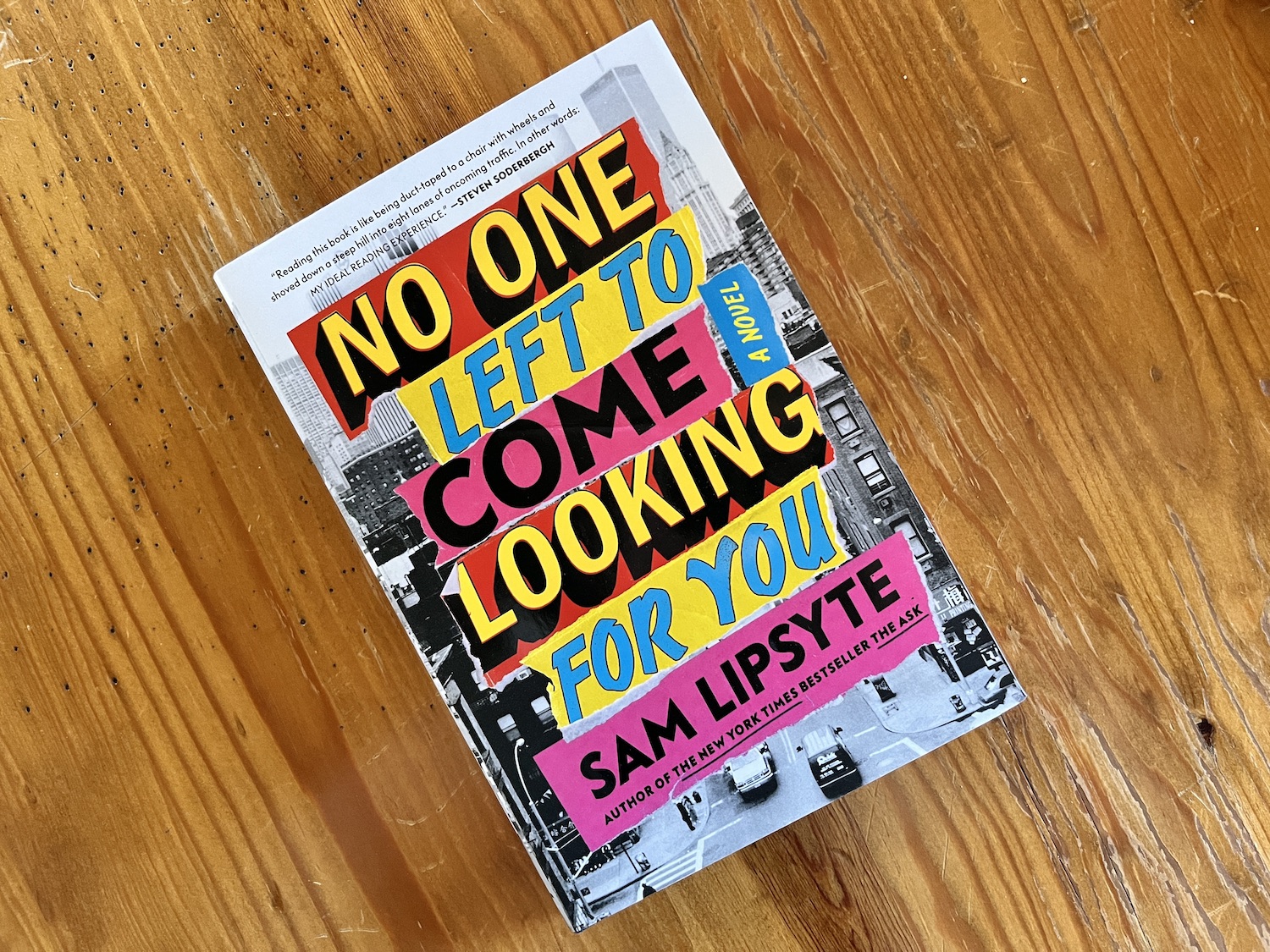
I was browsing the Books section at The New York Times a couple weeks ago and stumbled across a blurb for a book that looked interesting — “No One Left to Come Looking for You,” by Sam Lipsyte — so I ordered it from Page 1 Books, my fave local bookseller.

It was a special order, wouldn’t even be released until Dec. 6, so immediate gratification would not be mine. No worries; no hurry. And so I went about my business.

Then, yesterday, I wandered back to the Books section and spotted a “By the Book” Q&A with Lipsyte, in which he drops a reference to a song that knocked me out the first time I heard it way back when — “Birth, School, Work, Death” by the Eighties alt-rockers the Godfathers.

So naturally I dialed it up on the old YouTube and commenced rocking out, which was about when my email went “Ping!” It was Page 1 informing me that my book was ready to be picked up.

I think my next purchase will be a rear-view mirror for the MacBook Pro.

R.I.P., Thomas Cahill

Ah, sure, an’ in what class of a donnybrook would ye be without us so?

The scholar and scribe Thomas Cahill has gone west. He was 82.

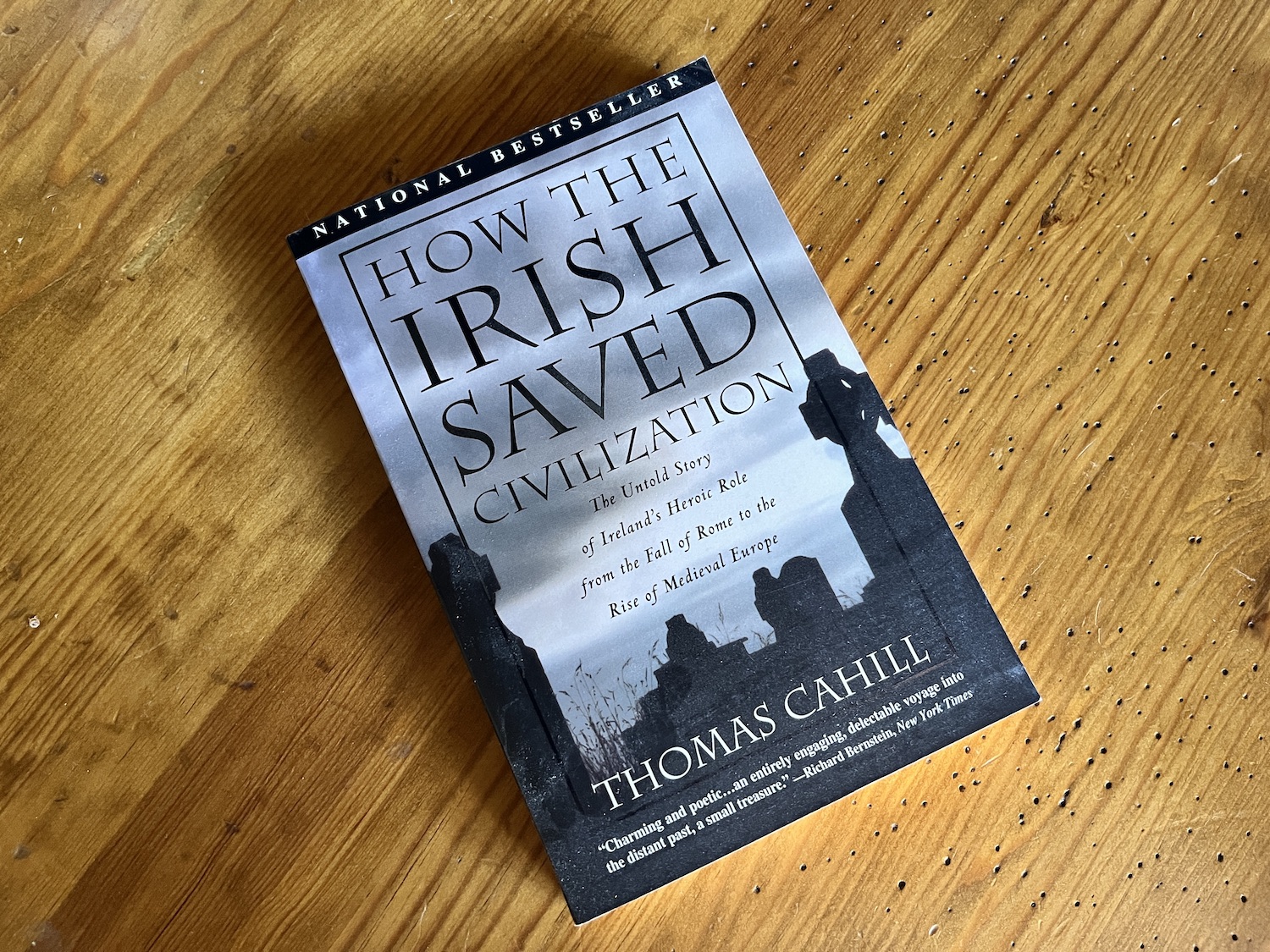
Cahill is perhaps best known for his book, “How the Irish Saved Civilization: The Untold Story of Ireland’s Heroic Role from the Fall of Rome to the Rise of Medieval Europe.” (You’re welcome, by the way.)

It was to be the kickoff to a seven-part series about critical moments in Western European civilization, according to The New York Times; he wrote six before his death Oct. 18 in Manhattan.

In his introduction, Cahill argues:

“And yet … Ireland, a little island at the edge of Europe that has known neither Renaissance or Enlightenment — in some ways, a Third World country with, as John Betjeman claimed, a Stone Age culture — had one moment of unblemished glory. For, as the Roman Empire fell, as all through Europe matted, unwashed barbarians descended on the Roman cities, looting artifacts and burning books, the Irish, who were just learning to read and write, took up the great labor of copying all of western literature — everything they could lay their hands on. These scribes then served as conduits through which the Greco-Roman and Judeo-Christian cultures were transmitted to the tribes of Europe, newly settled amid the rubble and ruined vineyards of the civilization they had overwhelmed.”

Without “the Mission of the Irish Monks,” he continues, “the world that came after them would have been an entirely different one — a world without books. And our own world would never have come to be.”

By the end of “How the Irish Saved Civilization,” Cahill seems to wonder whether the worlds of then and now are really all that different.

He writes:

“As we, the people of the First World, the Romans of the twentieth century, look out across our Earth, we see some signs for hope, many more for despair. …

“Perhaps history is always divided into Romans and Catholics — or better, catholics. The Romans are the rich and powerful who run things their way and must always accrue more because they instinctively believe that there will never be enough to go around; the catholics, as their name implies, are universalists who instinctively believe that all humanity makes one family, that every human is an equal child of God, and that God will provide.

“The twenty-first century, prophesized (André-Georges) Malraux, will be spiritual or it will not be. If our civilization is to be saved — forget about our civilization, which, as (St.) Patrick would say, may pass “in a moment like a cloud or smoke that is scattered by the wind” — if we are to be saved, it will not be by Romans but by saints.”