Oh, eat me

“No one wants to work anymore.” And yet somebody posted this sign at a place of business. ’Ees a puzzlement, to be sure.

Here’s an interesting story. Not “interesting” in the sense that it was solidly reported, written, and edited, which it was not. Interesting in that it calls into question the business model of the fast-food industry.

The story — headlined “We’re competing with unemployment” — focuses on the hiring problems that outfits like Fresquez Companies, Twisters, and Sonic-Inspire Brands are having locally in Year Two of The Plague®.

Back in the day, when newspapers still had copy desks, a cynical old rim rat might have wondered at some volume whether the corporate types quoted in the piece had coordinated their tales of woe.

Says one: “Why would anybody want to, I guess, start at a minimum-wage job when they can be earning more money … on unemployment?”

Adds another: “People are making a lot more money being unemployed than employed, and the world is coming back to dine-in and eat-in a little bit at a time, so the stimulus really paused people applying to jobs.”

And a third: “I think it’s pretty easy to connect … unemployment benefits to it. I think a lot of us feel like a lot of people have chosen not to go back to work yet, because they’re still receiving the benefits.”

Well, shucks. It makes a man’s eyes damp, for sure.

My first question was, “How many of these struggling companies have received SBA Paycheck Protection Program funds or some other form of governmental assistance to make ends meet in these troubled times?” The story doesn’t say.

Nor does the reporter speak with any current, former, or potential employees. The one nod to working people came in a quote from OLÉ Education Fund executive director Matthew Henderson, who said: “Essential workers have risked their lives to keep New Mexico running during the pandemic. Some have decided, however, that the risk to their family’s health is not worth the poverty wages and lack of benefits that many employers offer. Don’t fault workers for refusing to be exploited.”

When I was young and even dumber than I am now, I briefly dated a single mom who availed herself of the various forms of governmental assistance to be had at the time. She was always strapped for cash, and since I was young and dumb, I asked her why she didn’t just get a job.

She explained patiently that the kind of job she would be able to get wouldn’t begin to pay the bills, much less the cost of child care while she worked. So she chose to keep jumping through the hoops of public assistance and raising her child. Damned if you do, damned if you don’t.

How many potential recruits for the Paper Hat Platoon have decided to stay home, collect assistance, and help their kids navigate remote learning with the goal of giving them a future that doesn’t involve pitching greaseburgers through windows at the Duke City’s drive-thrus? I mean, you don’t need a Ph.D in Google Search to find horror stories about the life and times of the fast-food worker.

I suspect this story may have had its roots in the photo above, posted on Twitter by a local TV reporter. Snapped at a local Sonic, it shows a sign reading: “We are short staffed. Please be patient with the staff that did show up. No one wants to work anymore.”

Wrong, pendejo. They just don’t want to work for you.

Kibboleth

I had one of these back in 2001. I got all the strength training I needed pushing the sonofabitch when it broke down.

Top-shelf “van life?” Four-figure “smart” strength-training equipment?

Betimes one wonders whether The New York Times ping-pongs back and forth between Manhattan and San Fran without paying much attention to what’s in between.

Clearly, what Joe and Jane Sixpack are crying out for in Middle America is a Mercedes-Benz Sprinter with a factory-installed Tonal.

Either that or, y’know, like, a Bug vaccine, dinner with friends, and maybe a fucking job.

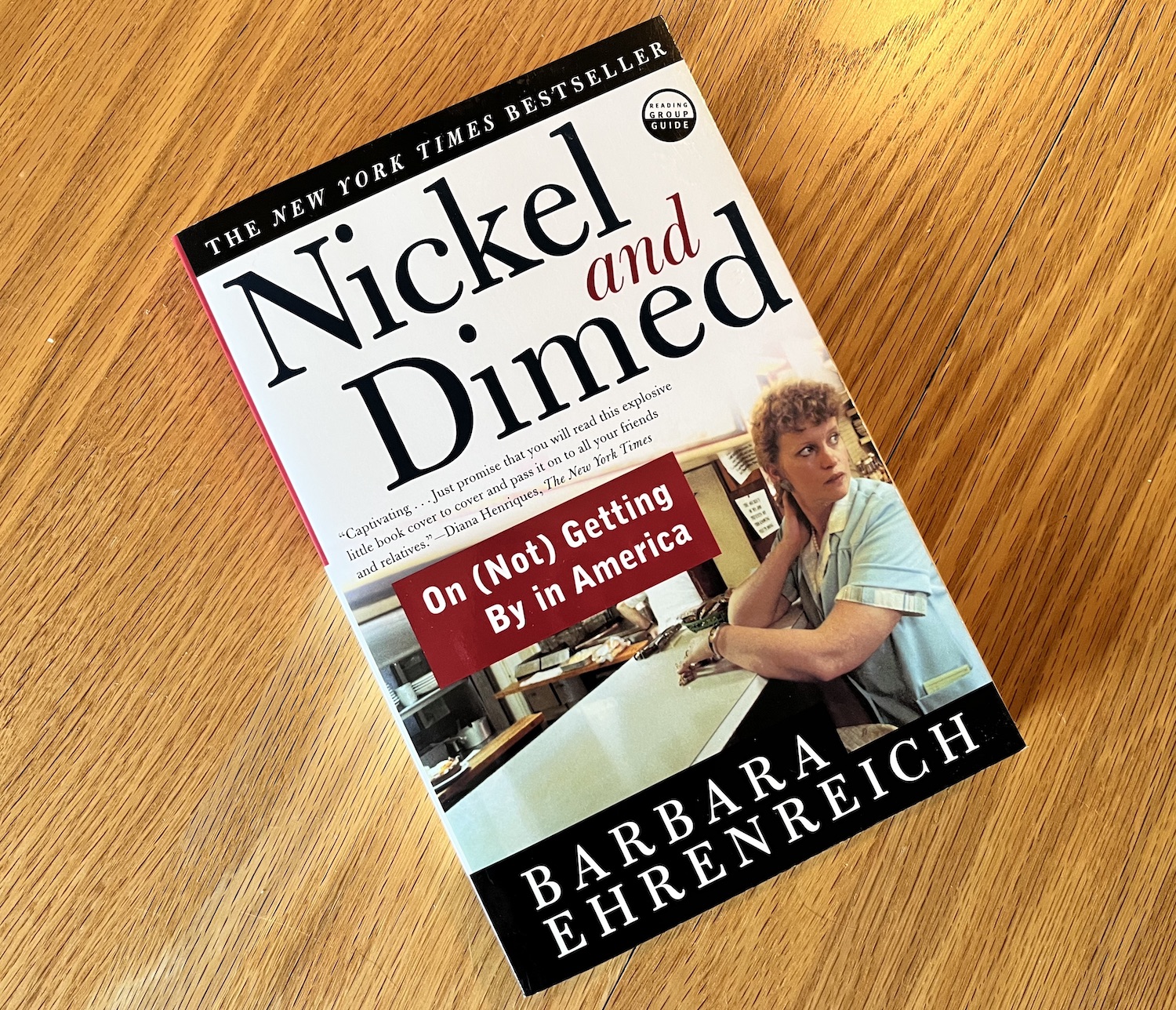
Let’s ask Studs Terkel, shall we?

Masque of the Red … Revolution?

¡Viva la huelga!

I’ve been wondering when someone in the mainstream media would write something about the potential for increasing union membership and labor strength in the Year(s) of the Plague.

Here’s a start. It’s short, focused largely on the so-called “gig economy,” and written before a Washington Post-Ipsos poll that indicates some laid-off and furloughed workers may be overly optimistic about whether they will be able to return to their old jobs.

How does an activist pitch a union to a worker with no job? Is a patchwork of small, decentralized, tightly focused labor organizations preferable to One Big Union? Are people ready to rethink their notions of who is an “essential” worker? Will stock clerks trump stockholders?

Nick French at Jacobin gives us a look at the protests that arose shortly after the Great Depression took hold. He argues that radical groups, among them the Thirties-vintage Communist Party, forged a bond of solidarity between the jobless and those still working that helped make FDR’s New Deal possible.

The conditions are different today, he concedes. But the public-health issue may give workers more leverage this time around. Writes French:

By forcing sick people to come to work, or by unnecessarily exposing people to coworkers or customers who might be infected, employers are hastening the spread of the coronavirus and putting everyone at risk. This means that all workers, employed or unemployed, have a common interest in these workers winning their demands.

Boy howdy. Dead broke is bad enough. I hear dead is worse.

• Addendum: As white-collar types join workers from the restaurant, travel, hospitality, and retail industries on the sidelines, experts say there’s no way to calculate how many jobs might come back as states consider lifting shelter-in-place rules. according to The New York Times.

Many businesses, particularly small ones, may not survive, while others are likely to operate with reduced hours and staff. The job search site Indeed reports that postings are down nearly 40 percent from a year ago.

“We don’t know what normal is going to look like,” said Martha Gimbel, an economist and a labor market expert at Schmidt Futures, a philanthropic initiative.

• Addendum the Second: How should unions organize? From The Nation.

• Addendum the Third: Comrades, identities, and attachments. Also from The Nation.