Go run. Or not.

Run? On a day like this? I think not.

The weather was supposed to be taking a turn for the worse after a short stretch of sunny skies, and so I had planned to go for a short trail run this first day of February.

Instead, the sun leapt out from behind the clouds, the temp shot upward into the mid-50’s, and I called an audible: “Ride today, run tomorrow.”

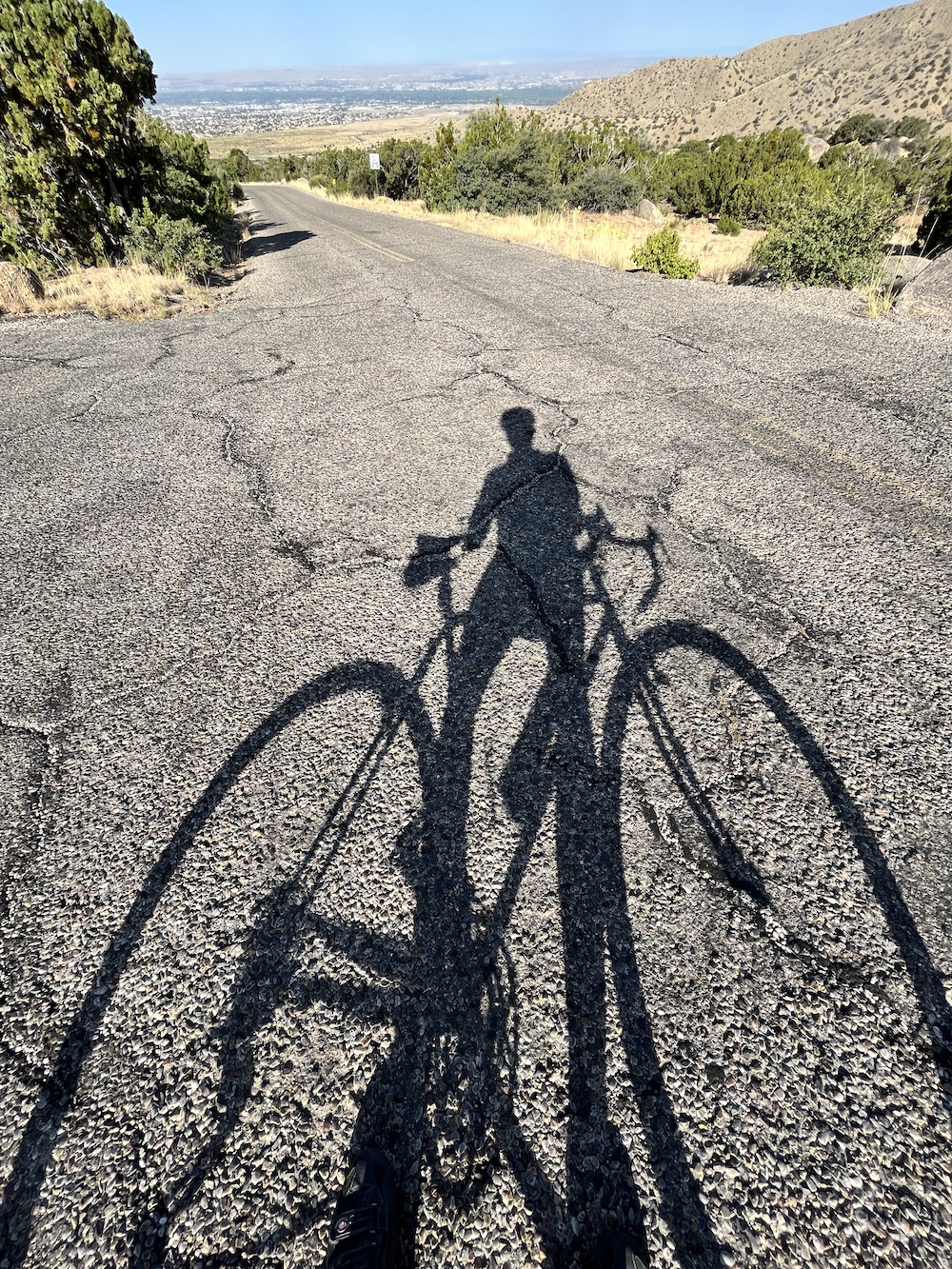
I’ve had the old Steelman Eurocross out twice this week, and it was leaning against the Subaru just waiting to have another go, so I grabbed it and did a quick 90 minutes on the foothills trails, which have finally firmed up a bit since last week’s rain and snow.

It was just the ticket, especially since I was feeling unkindly toward running after reading about the Outside Hyperactive Currency Furnace’s latest scheme — to transform the ridiculously simple act of putting one foot in front of another into a mighty revenue stream through the miracle of MarketSpeak®.

Running is one of the most basic acts imaginable, and humans have been doing it since we first came down from the trees, which is starting to seem like a really bad idea. As soon as we hit the deck we were running toward things we wanted to kill, eat, and/or fuck, and away from things that wanted to do likewise to us.

Like I said, basic.

No longer. According to a press release whose author(s) should have “The Elements of Style” tattooed on their foreheads with a jackhammer, we runners have been blessed with a new “Running Media Platform” intended to meet us on our running journey and elevate, empower, build community, and disrupt through a one-stop shop of iconic brands delivering gender-equitable and inclusive best-in-class, world-class content.

Or something very much like that. I don’t know for sure. I blacked out somewhere in the middle of it and when I came to I was butt-ass nekkid with blue paint on my face and a big knife in one hand, shrieking and dancing around a fire built of old running shoes.

I showed the press release to my buddy Hal Walter, who has been running for something like 45 years, everything from 5Ks to marathons to the World Championship Pack-Burro Race in Fairplay — he guesses maybe some 65,000 miles all told — and he was immediately unimpressed.

“Jesus,” he said. “Go run for fuck’s sake.”

Paging Vince Gilligan

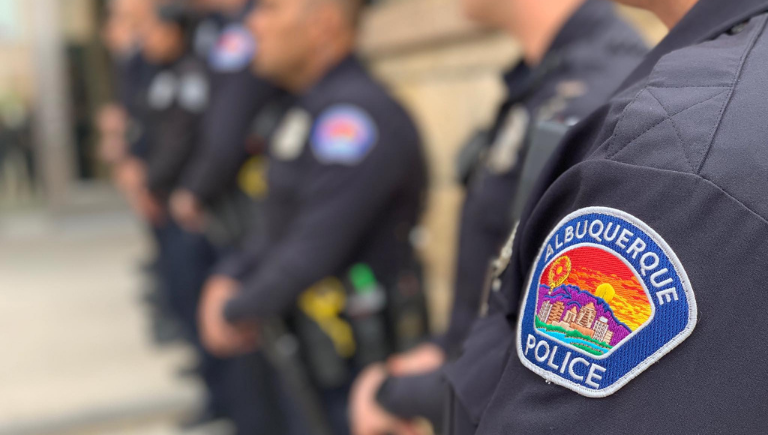
Image lifted from the City of Albuquerque website.

O, Lord, it must be fun around the ol’ cop shop these days.

Take two steps forward toward getting out from under a Justice Department consent decree, take one back over some nonspecific fishiness involving DUIs, at least one local attorney, and an FBI investigation.

Online reports are light on details — more than 150 pending DUI cases dismissed, a number of Albuquerque Police Department officers placed on paid leave or reassigned, a lawyer’s office raided, etc. — and long on speculation. The Albuquerque Journal‘s print edition is a tad more specific, but it seems nobody feels very chatty in the early days of whatever this turns out to be.

APD spokesman Gilbert Gallegos told the Journal that APD had been working with the FBI “for the past several months on an investigation involving members of the department” and that “several” officers have been placed on paid administrative leave while the inquiry continues.

Of the 152 pending DWI cases dismissed, 136, or nearly 90%, were filed by three Albuquerque police officers, according to court records. One officer was responsible for 67 of the cases; another had 41; and the third was listed as the arresting officer on 28.

The Albuquerque Journal

Attorney Kari Morrissey, who has one client whose case was dismissed, told City Desk ABQ, “I will say that as a lawyer who has been practicing criminal defense in Albuquerque for almost 25 years, I am not surprised as to these developments.” 

John D’Amato, an attorney with the Albuquerque Police Officers’ Association, told City Desk ABQ he was aware of a pending criminal investigation, adding: “No comment is the word of the day. It’s developing and the facts are unclear.”

One thing is clear. We have statues of Walter White and Jesse Pinkman here in The Duck! City. But not of Frank Serpico. Or Saul Goodman, now that I think of it. That dude couldn’t even get an Emmy.

Fortune-telling, chats, and algorithms

This sunset actually happened. It was not predictive of anything other than the sun setting.

I was wandering idly along the trashy shoulders of the Infobahn this morning, trying to not step in or trip over any particularly toxic bits of debris, when I noticed a newsletter from veteran scribe James Fallows that had gone overlooked in my in-box.

In it, Fallows proposes that cash-poor news organizations invest their limited resources in what’s actually happening now in politics instead of what might happen, “which the reporters can’t know when they’re writing the stories, and which readers will eventually find out anyway.”

For readers, he cites three types of stories that suggest you’ve been lured out of the newsroom and into the fortune-teller’s tent:

  • A story based on polls, which are manufactured “news” for those sponsoring them but only shakily connected to reality;
  • A story based on framing any development in terms of “how this will play” politically, which is the reporter’s guess about what voters will think, and;
  • A story on which candidate has “momentum” or traction” based on the vibe at events.

Predictive stories like these, Fallows says, “are like stock-market picks or the point spread on football games, but with less consequence for being wrong. And if news organizations had limitless time, space, and budgets, you could perhaps say, “What’s the harm?”

Alas, stories like these are also easy and cheap. Any half-bright wordslinger with Internet access and a comfortable chair can shower dubious wisdom upon you from a considerable height, like a buzzard with the runs. Be deeply suspicious of anything slugged “Commentary,” “Analysis,” or “Opinion.” Also, items headlined “Five takeaways from [insert actual news event here].”

However, sometimes the “takeaways” story can contain an actual glimmer of enlightenment. In one such at The New York Times this morning we have the concession — in this case, the fifth of five takeaways — that “Iowa doesn’t mean much for the fall.” This, after wall-to-wall coverage for Christ only knows how long of a non-event that saw 15 percent of registered Republicans (about 110,000 people) turn out to caucus. Thanks for sharing, Lisa, Maggie, and Jonathan.

For my part, I tip my fedora to Fallows and add a prescription of my own: Just because the Internet is endless doesn’t mean a story should be.

I read two things this morning that I knew would piss me off, mostly because I like being pissed off in the morning. That, and two cups of strong black coffee, are the jumper cables that get my heart started.

The first, from The New York Times Magazine, headlined “How Group Chats Rule the World,” was tagged “12 MIN READ.” I won’t link to it. Just because I enjoy spitting coffee into my keyboard and screaming “What the actual fuck?” doesn’t mean everyone does. We must consider the children. Also, cats, houseplants, and the homeowners’ association.

The second, from The Guardian, didn’t give me an ETA. But it was slugged, “The Long Read,” so I knew I was in for it. Headlined, “The tyranny of the algorithm: why every coffee shop looks the same,” this 4,200-word slog should’ve been headlined “I spend far too much time in coffee shops.”

I won’t link to that one, either. If that’s your idea of a good read you can chase it down yourself, or buy Kyle Chayka’s book, “Filterworld: How Algorithms Flattened Culture,” from which it was adapted.

But can you lift this mighty tome to read it? There may not be enough coffee in the shop. Or the world.

R.I.P., George Gladney

My old mentor George Gladney.
Photo uwyo.edu

George Gladney has gone west.

You won’t know the name, unless you worked with him or read him at the Los Angeles Times, the Colorado Springs Sun, the Gazette Telegraph, The Denver Post, or the Jackson Hole News, or studied under him at the University of Wyoming in Laramie.

But George stands tall in my personal history. He was one of the people who showed me by word and deed that there was a place in the newspaper game even for those of us who were a bubble or two off plumb.

When I got hired as a copy boy at the Colorado Springs Sun I was at loose ends following a brief tour of the dead-end gigs available to a dropout from a third-rate college. George was the police reporter, as I recall, and came to the Sun from the L.A. paper.

Back in 1974 the newsroom was stiff with talent, the best possible haven for a wannabe cartoonist shambling out of his teens into nowhere special if he didn’t pull his hairy head out of his hippie arse.

Bill Woestendiek and his wife, Kay, ran the outfit, sister paper to the Las Vegas Sun in Sin City. Carl Miller, who would move on to helm The Denver Post, was city editor. Bill Buzenberg, who would rise to veep of news at National Public Radio, was his assistant and an investigative reporter.

Bill McBean, another reporter, would abandon his typewriter for a paper route, claiming afterward that he made more money from delivering the Sun than he ever did writing for it. That didn’t last; he eventually got back on the scribbler’s horse in Denver, at the Post.

I was an actual scribbler; a cartoonist, or so I thought. But an adviser at Adams State College had told me just how few full-time, paid editorial cartoonists there were in the country and suggested that I cast a wider loop, maybe consider taking a reporter’s job as my entrée, a foot in the door.

Well, there I was, with both feet in and my dumb ass for company. Not a reporter; just a copy boy. And I didn’t even have the chops for that. When Carl handed me a stack of press releases to rewrite I told him I didn’t know how to type.

“Better learn,” he replied. And I did, whenever I wasn’t stripping and sorting copy from the wire-service teletypes, running copy and art to and from composing and engraving, and doing other scutwork so real journalists didn’t have to.

I learned something from all these people, starting with typing, thanks to Carl, who also passed on some firm hints about how to write for newspapers. Bill Buzenberg let me tag along and watch him interview hookers for a piece on the massage parlors infesting Bibleburg. The Woestendieks let me sit in on the copy desk on slow nights, learning how to fit copy, size art, and write heds.

George and Bill McBean took me out for drinks, told me war stories, had me over to their houses for dinner, introduced me to their wives; I soaked up their experience like a bar rag and felt as though I had become part of a family.

When I left the Sun to go back to school, this time at the University of Northern Colorado, George told me he hoped I’d come back as a reporter. And I did. But not to the Sun — to the Gazette, the bigger of the two papers in town. Because George was there, this time on the city desk.

He helped me sneak in the back door as a contractor — a little glimpse of the future there, yeah? I compiled the annual industrial edition, drew a few cartoons, and even wrote a couple of stories before getting hired in early 1978 as a for-reals general-assignment reporter at $155 a week.

And that’s where the rubber met the road. As George’s obit notes, he was “a meticulous editor and dedicated teacher.” He was not above crumpling up your copy and tossing it back to you. (We were still working on typewriters in 1978, and other people in the newsroom could actually see it when an editor threw your copy back at you.)

After a few rounds of journalism badminton George would call me over and explain in detail, citing irrefutable examples, precisely why I was a toothless cog in the Gazette‘s well-oiled machinery. Sometimes he and his opposite number Joe Barber would tag-team me. This could be like getting tossed around the ring by Mad Dog and Butcher Vachon.

It was the school of hard knocks, for sure. But man, if you don’t get kayoed, you learn how to roll with the punches and throw a few of your own. As Carl had told me once at the Sun, “We can teach you more about newspapering in a year than you’ll learn in four at college.”

But Carl also insisted I go back to college. Once again, good advice at the precise moment it was needed. Because without that journalism degree I would not have been able to stay and learn at the Sun, or follow George to the Gazette, where I learned even more, in the company of comrades from other schools, other papers.

Sadly, I suspect Carl’s advice is no longer relevant. Back in the early Seventies, at the minor-metro papers that hired me, editors like Carl and George could spend some time breaking in the noobs. An assistant city editor would call you over to demand an act of contrition for some sin of commission or omission. A copy editor might have some thoughts about condensation and clarification. A typesetter could catch an error that had eluded everyone else and that observation would find its way back to you like a bad check.

If the error slipped past the typesetter, the page proofer, and the press check, and actually made it into print, the managing editor might want a word. This would be truly educational. Envision a very angry principal, swinging a larger “board of education.”

Even George made a few mistakes, and like good students we did too. (Actually, we did not require coaching in making these kinds of mistakes, but we were finally getting paid, and could afford to make bigger and better ones.)

This was why the list of phone numbers taped to a drawer at the city desk listed as many taverns, titty bars, alehouses, grog shops, gin mills, cantinas, and buckets o’ blood as it did home numbers. In extreme cases some expenditure of shoe leather was required, but by then we were seasoned reporters, kinda, sorta, and dogged in the pursuit of The Story, or whoever was supposed to write or edit it.

After a few years we all moved on to other opportunities, because in the newspaper game this is how you get a raise or a better job, or at least a different one. If you’re inclined to keep making some of the old mistakes or maybe acquire a few new ones, it’s also how you get a fresh nest to shit in.

George suggested I start keeping a journal, and Lord, have I ever kept ’em.

George eventually left the newsroom entirely and settled down in academia, where he could continue gently and relentlessly squeezing the dumbass out of young eejits afflicted with delusions of grandeur.

One of his students recalls: “I learned so much from that man that I still find myself quoting him and referring to him as someone who influenced my life in important and meaningful ways.”

Me too. And you as well. You probably never read George Gladney, or worked with him, or studied under him. But if you’re reading this, you are under his influence.

Because it was George who told me back in 1974 that I should start keeping a journal. And that’s just another word for “blog.”