Fear and loathing in 2024

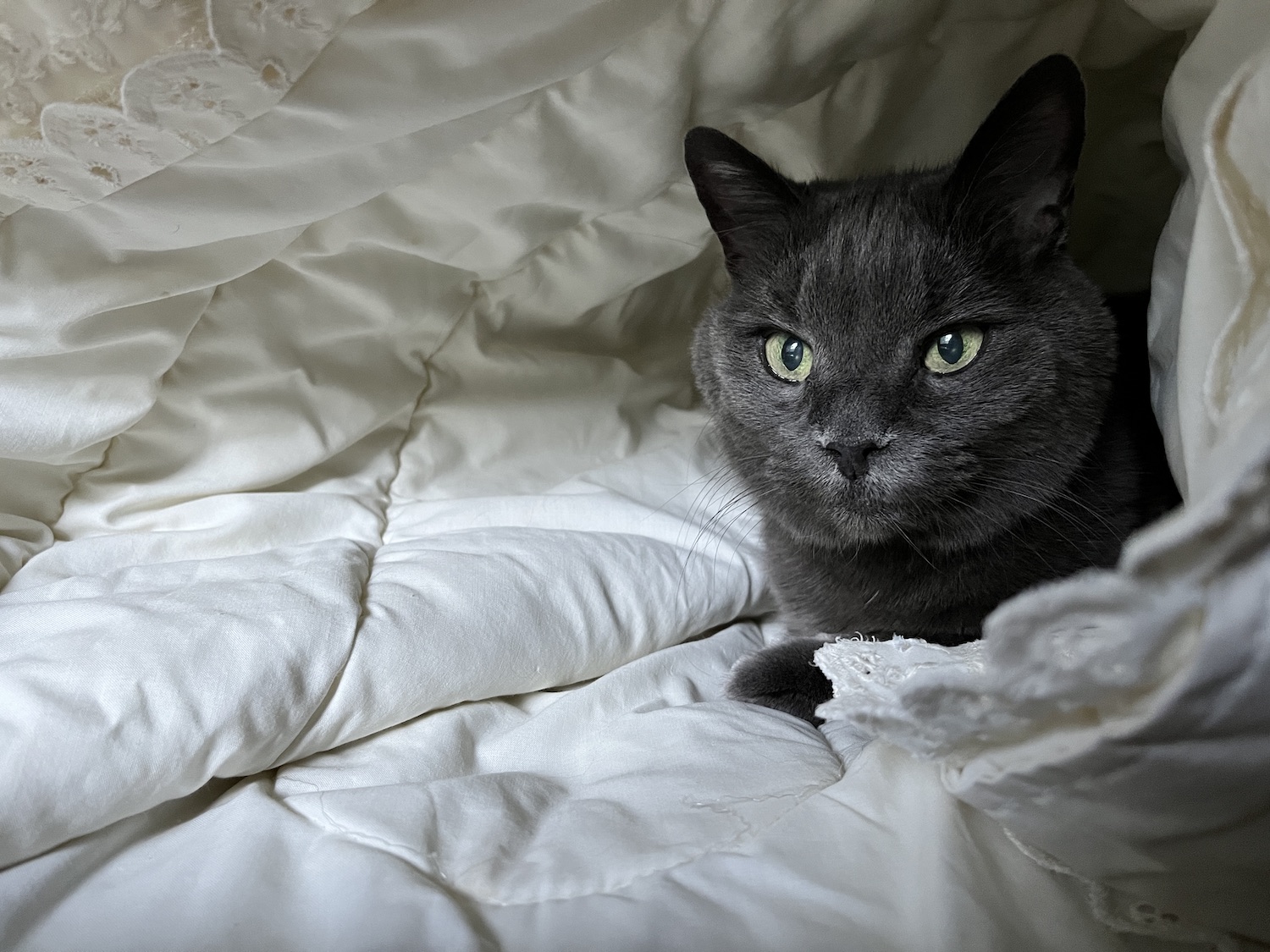
Miss Mia Sopaipilla mans (cats?) the National Affairs Desk in our bedroom.

It was not quite 4:30, and I was not quite up.

I was awake, rolled up in the blankets like a strip of bacon in a breakfast burrito. But I was in no rush to get unwrapped, gnawed on, and shat out by Election Day 2024.

My Gonzo pin, a gift from a friend during my own Gonzo period.

Like Mike’s bankruptcy in “The Sun Also Rises,” it has finally arrived: “Gradually and then suddenly.”

Don’t worry. I haven’t been reading Ernest Hemingway in the run-up to The Big Show. No, I’ve been wallowing in bits of this and that from Dr. Hunter S. Thompson.

The Good Doktor wrote madly about The Edge, until he finally stepped over it. Nineteen years later, dead by suicide, cremated, and shot from a cannon by Johnny Depp, he still has more class — albeit in a certain Hell’s Angels style — and gave more service to his country than many a president.

Writing about the Hell’s Angels in his book of the same name, HST described people like the ones Herself recently saw herding flamboyantly Trump-flagged pickups up and down Tramway, horns honking:

“They are out of the ball game and they know it, (so) they spitefully proclaim exactly where they stand … Instead of losing quietly, one by one, they have banded together with a mindless kind of loyalty and moved outside the (establishment) for good or ill. (That) gives them a power and a purpose that nothing else seems to offer.”

He may have been a bit premature with the second volume of his “Gonzo Papers,” titled “Generation of Swine: Tales of Shame and Degradation in the ’80s.” If he had kicked his dope-soaked alter ego Raoul Duke to the curb and survived to see this generation of swine — HST would be 87 today — he might have looked back on the ’80s with a certain fondness, even longing.

Describing the difference between the ’60s and the ’80s, between the Watergate and Iran-Contra scandals, he wrote:

The criminals in Watergate knew they were guilty and so did everybody else; and when the dust cleared the crooked president was gone and so were all the others. They were criminals and they had the same contempt for the whole concept of democracy that these cheap punks have been strutting every day. …”

Don’t you wonder what he’d have had to say about the 45th president — impeached twice, beaten in his bid for re-election, tried to reverse the defeat with violence and chicanery, obviously insane, declining hourly — and still within a whisker of winning a second term, going two for three? I know I do.

HST mentioned that guy only in passing, as far as I can recall. But he took note of Joe Biden’s first major presidential-election meltdown over a plagiarism scandal at law school in the ’60s. The candidate who hopes to succeed Biden, Vice President Kamala Harris, had won her first election — as San Francisco district attorney — just three years before HST died in 2005.

So, yeah. HST left the party too early for a change, and more’s the pity. He wasn’t always right, and sometimes wasn’t even readable. But when he was on his game the Good Doktor could walk with the King. Or savage him. I can’t think of anyone I’d rather be reading right now as we all tiptoe toward The Edge once again.

Here he is again, quoting John Keats instead of his personal fave, the Book of Revelation:

“Beauty is truth, truth beauty,”—that is all
        Ye know on earth, and all ye need to know.”

Selah.

• Late update: Seems Charlie Pierce had HST on the brain today too.
Labor Day in the rear view

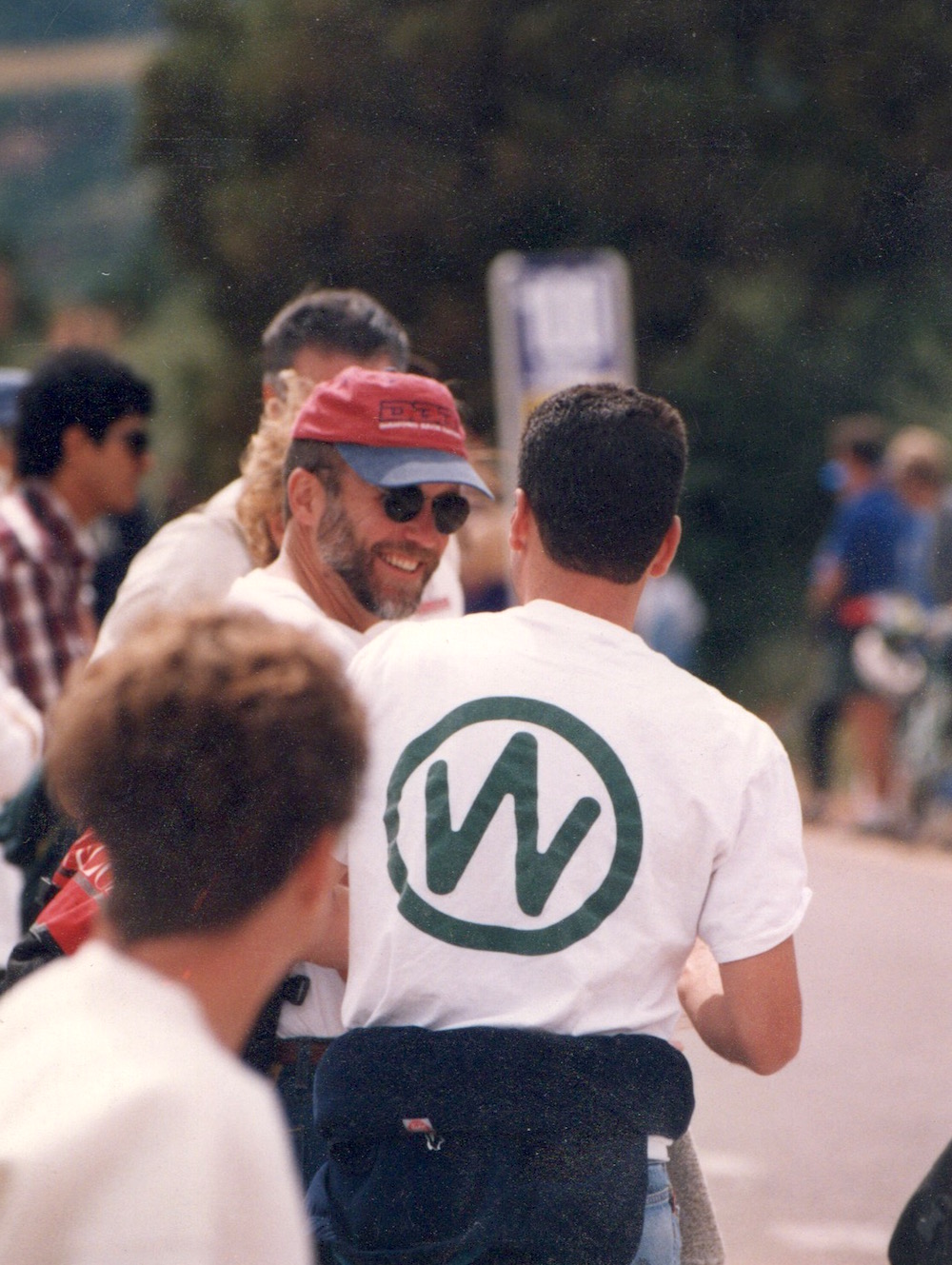
Your Humble Narrator in the salad days, covering a race in Bibleburg.

“Man is so made that he can only find relaxation from one kind of labor by taking up another.” — Anatole France, “The Crime of Sylvestre Bonnard.”

Whenever I think of myself as a “worker” I have to smile.

Oh, sure, I have worked, for short stretches, whenever there was no suitable alternative available. Drug dealer. Janitor. Installer of storm windows and patio covers. Appliance deliveryman. Dishwasher. Schlepper of pizzas and sandwiches.

But I spent the bulk of my worklife scribbling silly-ass pictures and/or arranging words in some particular order with malicious intent, to wit, attempting to convey an idea to an invisible audience.

This is right up there with tagging freeway overpasses and howling at the moon. But it pays slightly better, and mostly you can do it in the shade, sitting down.

There is a game-show quality to journalism. Your team has to collect, confirm, compose, and condense a mind-boggling overabundance of information, then stuff as much of it as possible into a sack that keeps changing size until the buzzer sounds, heralding the start of that night’s press run.

If you beat the clock, you “win” and get to come back tomorrow to play another round.

The word “play” is used deliberately. There were some long hours spent shoveling, to be sure, but they were easy on the lower back and the calluses formed mostly on the mind.

If journalism truly was a game, for me it was the only one in whichever town I was inhabiting at the moment. Composing the first draft of history day in and out in the company of (mostly) like-minded maniacs.

On my third daily and already thinking about jumping ship, arr.

The U.S. Navy used to sell itself by crooning, “It’s not just a job, it’s an adventure.” Journalism’s pitch was that it wasn’t just a job, or even a game, but a Calling — to preach the Gospel daily in the Church of What’s Happening Now (tip of the stingy-brim to Flip Wilson and the Rev. Leroy).

Now, if you think you are Called to preach, you are easy to exploit. And the gods could be  unimpressed and indifferent.

“Fine sermon, Reverend. But that was yesterday. What have you done for Me lately?”

So, yeah. Long hours, and you frequently took the Work home with you. Sometimes it dragged you in early, or on a day off. Often it took you someplace you didn’t want to go, not even for money. Especially when you considered the paucity of coins in your collection plate.

But the Work found me when I was teetering along one of those ragged edges that beckon to oddballs like me. And it kept me in bacon, beans, and beer for nearly 15 years, though I backslid to the edge from time to time.

Living on the edge.

Finally I decided I liked the edge and set up shop nearby. A small chapel, nothing serious. My sermons were unorthodox, but so was the congregation. Same old gods, but hey, whaddaya gonna do? I dodged their lightning and kept that shtick up for 30 years.

Fortune eluded me, but I got all the low-rent fame I could handle, more than I deserved. God’s honest truth? I got lucky. In the right place at the right time, with friends in high places, and more than once, too.

Could a 20-year-old stoner with zero skills wander into the smaller of two daily papers in a medium-size city today and set his wandering feet upon a path that kept him out of jail for nearly a half-century?

Never fucking happen, to coin a phrase. There are no more two-newspaper towns, and damn few newspapers, period. Most are the journalistic equivalent of dollar stores, all owned by the same two or three outfits, all selling the same two-bit expired horseshit. And magazines are following them down the Highway to Hell, which is no longer paved with good intentions.

In 2023 the 20-year-old me couldn’t even go back to selling weed, because that’s just another job now. And you know how I feel about jobs.

I once was lost, but I was found. Can I get a hallelujah?

R.I.P., Barbara Ehrenreich

She took what they were giving ’cause she was working for a living.

Barbara Ehrenreich, the journalist, activist, and author who never lost touch with her working-class roots, has clocked out. She was 81.

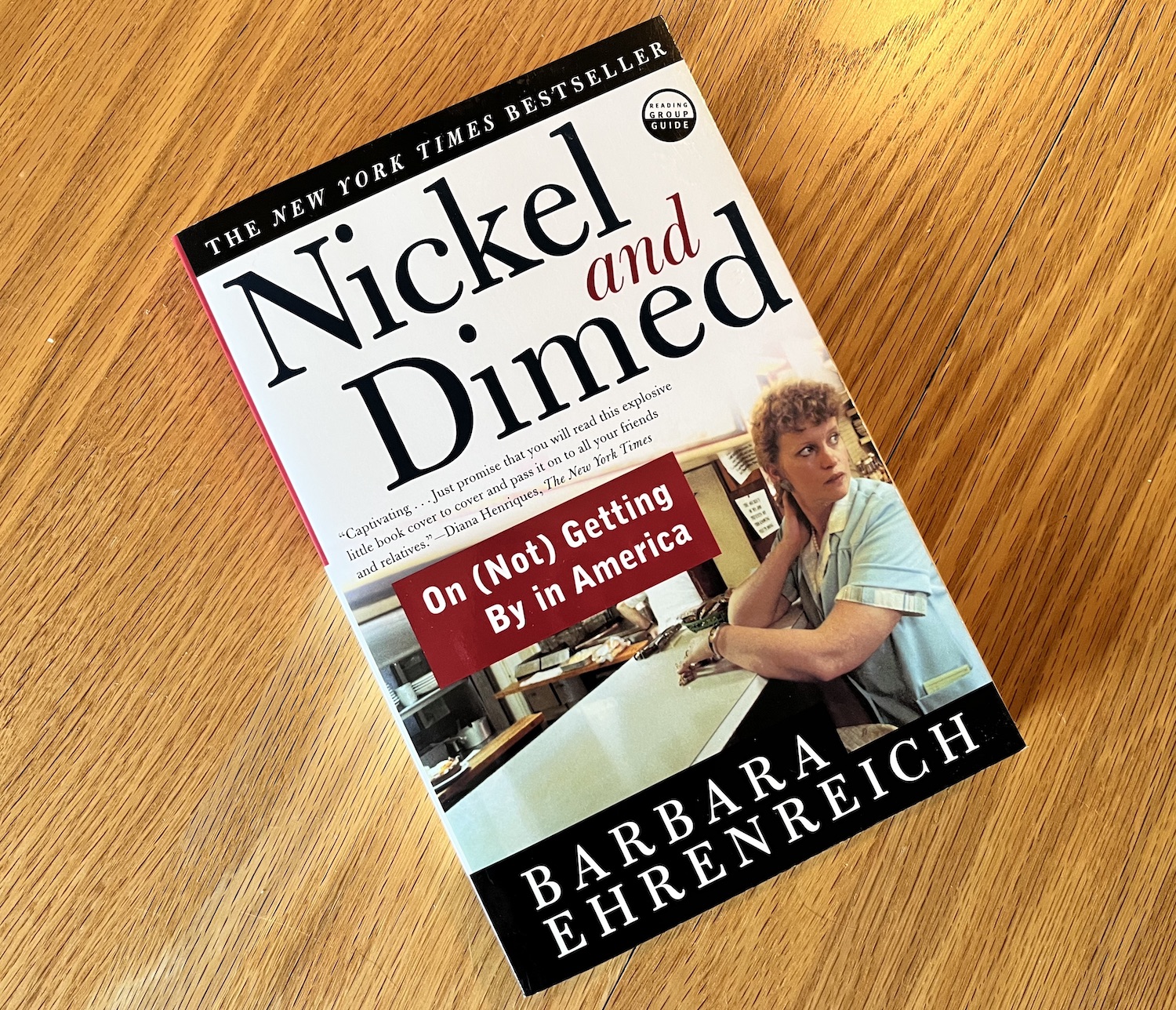
Her New York Times obit draws from the introduction to “Nickel and Dimed: On (Not) Getting By in America,” in which she recounts wondering with a magazine editor how the unskilled survive on the wages paid them and then blurting out something that she “had many opportunities to regret: ‘Someone ought to do the old-fashioned kind of journalism — you know, go out there and try it for themselves.'”

Which is exactly what Ehrenreich did, of course, working and living as a waitress, hotel maid, nursing-home aide, and Walmart “associate,” among other things. Then she came back and told us all about it.

And though she would be writing it up, she wasn’t phoning it in:

People knew me as a waitress, a cleaning person, a nursing home aide, or a retail clerk not because I acted like one but because that’s what I was, at least for the time I was with them. In every job, in every place I lived, the work absorbed all my energy and much of my intellect. I wasn’t kidding around. Even though I suspected from the start that the mathematics of wages and rents were working against me, I made a mighty effort to succeed.

She was not, and is not, alone. And in her Evaluation at the end of the book, Ehrenreich proposed that those of us who live in comfort while others barely scrape by should feel not just guilt, but shame.

When someone works for less pay than she can live on — when, for example, she goes hungry so that you can eat more cheaply and conveniently — then she has made a great sacrifice for you, she has made you a gift of some part of her abilities, her health, and her life.

What a gift was Ehrenreich’s life. Peace unto her, her family, friends, and readers.

Green Hills of Albuquerque

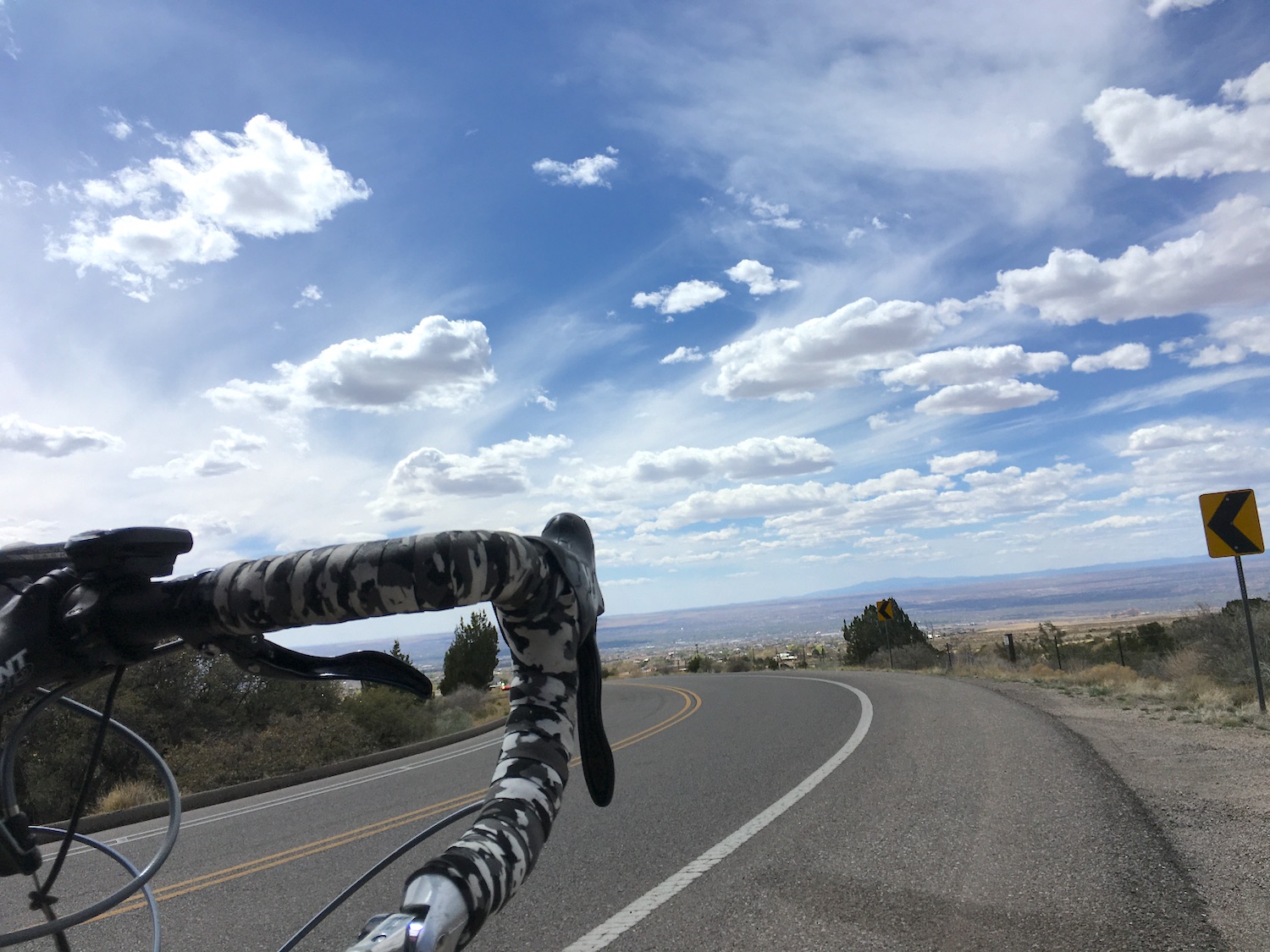
Descending Tramway Road to Tramway Boulevard.

Down, down, to Goblin-town, you go, my lad!

Well, not exactly. There’s some gobblin’ at the corner of Tramway Road and Tramway Boulevard, all right, but it involves barbecue at The County Line.

The place smells wonderful when your snotlocker works, which mine mostly does not, thanks to seasonal allergies (oak, cottonwood, juniper, mulberry, grass, etc.).

Between being all boogered up and tweaking my lower back the other day I have been in something of a mood. Maybe watching part one of the Hemingway documentary on PBS last night helped a bit. Wasn’t anyone pulling a couple hundred bits of shrapnel out of my legs in an Italian hospital, and I’ve managed to hang on to my first wife, too. So, yeah, winning, an’ shit.

True, global literary fame has proven elusive, but that’s not exactly a surprise. My agent warned me against titling my debut novel “A Farewell to Arfs.”

Adios, Larry McMurtry

My Larry McMurtry collection falls far short of his actual output.

Larry McMurtry has loaded up his last rented Lincoln Continental and rolled west, into the sunset.

I didn’t come close to reading his entire output, but I managed more than a few of his novels; it’s a habit I have, working my way steadily through an author’s collected works.

Got started with “The Last Picture Show,” as I recall, after seeing the movie of the same name. Finished with “Duane’s Depressed.”

And is there anyone who didn’t read “Lonesome Dove?” As Skip Hollandsworth writes in his remembrance of McMurtry at Texas Monthly:

McMurtry had spent years railing against writers who produced clichéd novels about the Old West. He swore he would never stoop to writing a western. But he did, and the novel he produced gripped the public’s imagination. “Lonesome Dove” won the Pulitzer Prize and sold nearly 300,000 copies in hardcover and more than a million copies in paperback. It spawned a sequel as well as prequels, and became one of the most popular miniseries of all time, starring Tommy Lee Jones and Robert Duvall. To Texans, went one joke, “Lonesome Dove” was the third-most-important book in publishing history, right behind the Bible and the Warren Commission Report.

Like Stephen King, McMurtry was too preposterously prolific for some critics. Also like King, he wasn’t always winning Pulitzers for his work.

But he buckled down and got to ’er anyway. As his writing partner Diana Ossana told Hollandsworth: “Larry is like an old cowboy who has to get up in the morning and do some chores. He has to get up and write.”

Not anymore, he doesn’t. He can pull off the boots, put up his feet, and enjoy a well-deserved rest.