R.I.P., Barbara Ehrenreich

She took what they were giving ’cause she was working for a living.

Barbara Ehrenreich, the journalist, activist, and author who never lost touch with her working-class roots, has clocked out. She was 81.

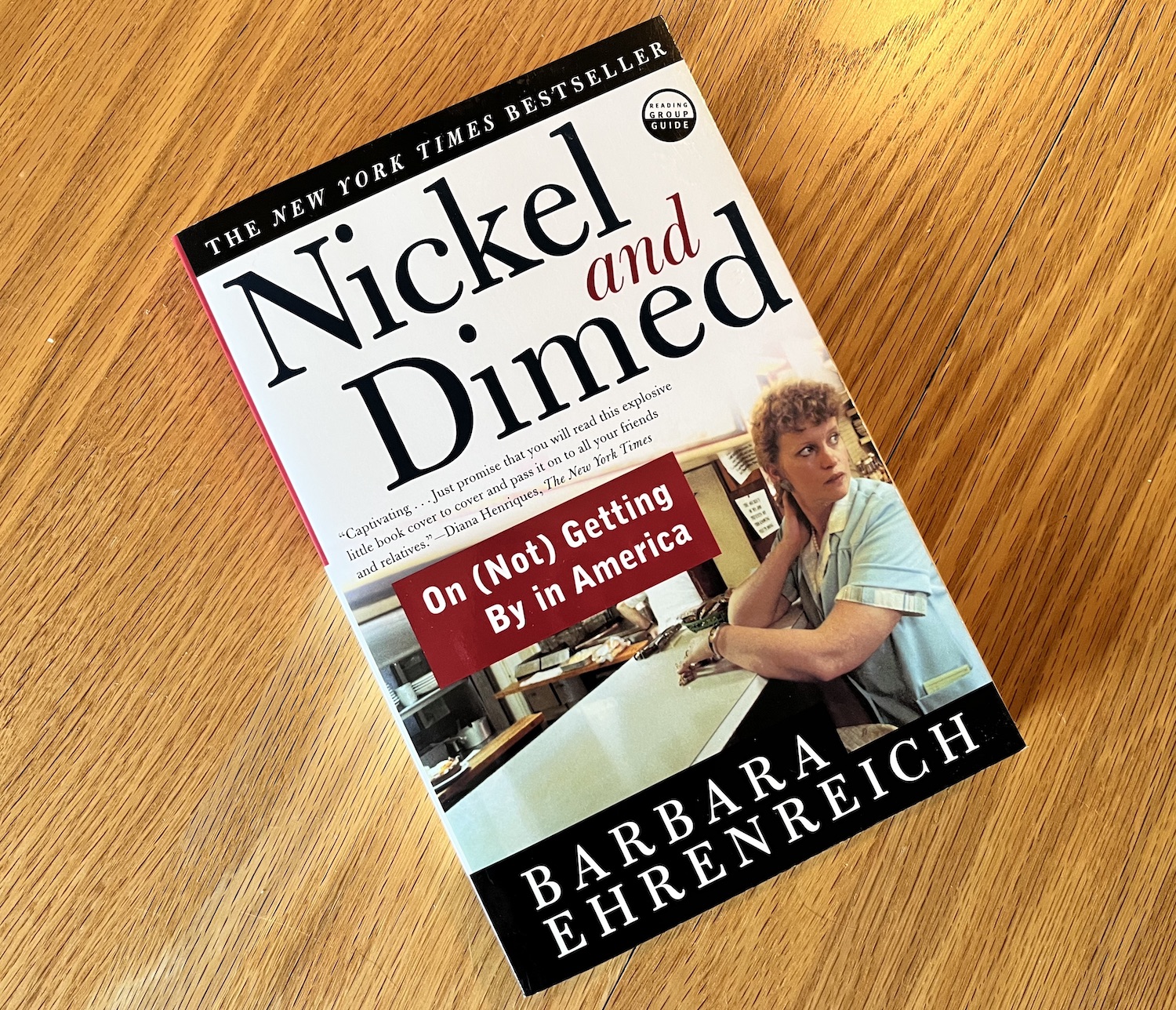
Her New York Times obit draws from the introduction to “Nickel and Dimed: On (Not) Getting By in America,” in which she recounts wondering with a magazine editor how the unskilled survive on the wages paid them and then blurting out something that she “had many opportunities to regret: ‘Someone ought to do the old-fashioned kind of journalism — you know, go out there and try it for themselves.'”

Which is exactly what Ehrenreich did, of course, working and living as a waitress, hotel maid, nursing-home aide, and Walmart “associate,” among other things. Then she came back and told us all about it.

And though she would be writing it up, she wasn’t phoning it in:

People knew me as a waitress, a cleaning person, a nursing home aide, or a retail clerk not because I acted like one but because that’s what I was, at least for the time I was with them. In every job, in every place I lived, the work absorbed all my energy and much of my intellect. I wasn’t kidding around. Even though I suspected from the start that the mathematics of wages and rents were working against me, I made a mighty effort to succeed.

She was not, and is not, alone. And in her Evaluation at the end of the book, Ehrenreich proposed that those of us who live in comfort while others barely scrape by should feel not just guilt, but shame.

When someone works for less pay than she can live on — when, for example, she goes hungry so that you can eat more cheaply and conveniently — then she has made a great sacrifice for you, she has made you a gift of some part of her abilities, her health, and her life.

What a gift was Ehrenreich’s life. Peace unto her, her family, friends, and readers.
Green Hills of Albuquerque

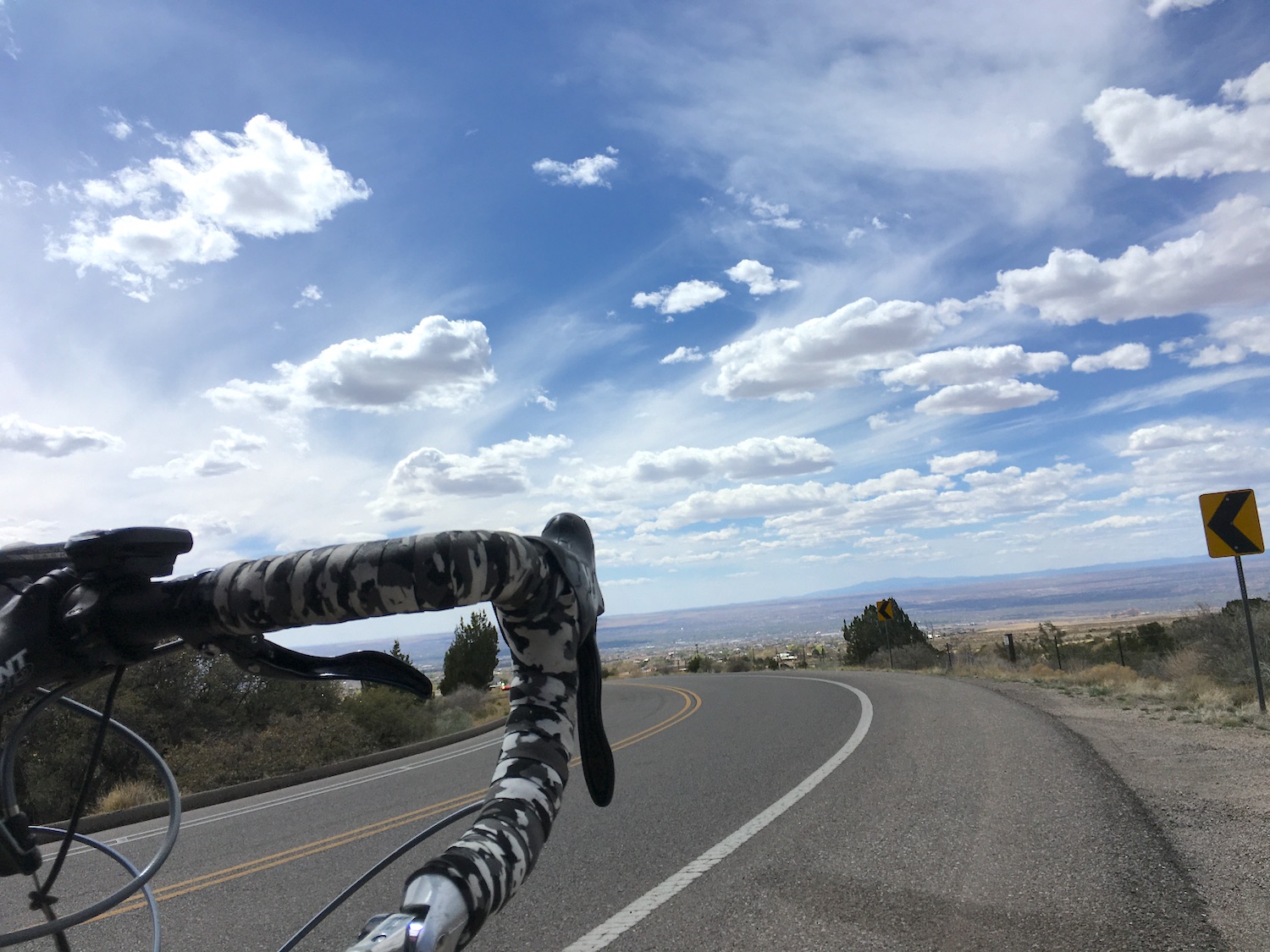
Descending Tramway Road to Tramway Boulevard.

Down, down, to Goblin-town, you go, my lad!

Well, not exactly. There’s some gobblin’ at the corner of Tramway Road and Tramway Boulevard, all right, but it involves barbecue at The County Line.

The place smells wonderful when your snotlocker works, which mine mostly does not, thanks to seasonal allergies (oak, cottonwood, juniper, mulberry, grass, etc.).

Between being all boogered up and tweaking my lower back the other day I have been in something of a mood. Maybe watching part one of the Hemingway documentary on PBS last night helped a bit. Wasn’t anyone pulling a couple hundred bits of shrapnel out of my legs in an Italian hospital, and I’ve managed to hang on to my first wife, too. So, yeah, winning, an’ shit.

True, global literary fame has proven elusive, but that’s not exactly a surprise. My agent warned me against titling my debut novel “A Farewell to Arfs.”

Adios, Larry McMurtry

My Larry McMurtry collection falls far short of his actual output.

Larry McMurtry has loaded up his last rented Lincoln Continental and rolled west, into the sunset.

I didn’t come close to reading his entire output, but I managed more than a few of his novels; it’s a habit I have, working my way steadily through an author’s collected works.

Got started with “The Last Picture Show,” as I recall, after seeing the movie of the same name. Finished with “Duane’s Depressed.”

And is there anyone who didn’t read “Lonesome Dove?” As Skip Hollandsworth writes in his remembrance of McMurtry at Texas Monthly:

McMurtry had spent years railing against writers who produced clichéd novels about the Old West. He swore he would never stoop to writing a western. But he did, and the novel he produced gripped the public’s imagination. “Lonesome Dove” won the Pulitzer Prize and sold nearly 300,000 copies in hardcover and more than a million copies in paperback. It spawned a sequel as well as prequels, and became one of the most popular miniseries of all time, starring Tommy Lee Jones and Robert Duvall. To Texans, went one joke, “Lonesome Dove” was the third-most-important book in publishing history, right behind the Bible and the Warren Commission Report.

Like Stephen King, McMurtry was too preposterously prolific for some critics. Also like King, he wasn’t always winning Pulitzers for his work.

But he buckled down and got to ’er anyway. As his writing partner Diana Ossana told Hollandsworth: “Larry is like an old cowboy who has to get up in the morning and do some chores. He has to get up and write.”

Not anymore, he doesn’t. He can pull off the boots, put up his feet, and enjoy a well-deserved rest.

Vox clamantis in deserto

If you’re feeling the strain of a year spent sheltering in place, occasionally pulling on the mask(s) and nitrile gloves before carrying your 10-foot pole into the grocery store like Little John facing off with Robin Hood over the last sack of whole-wheat flour in Sherwood Forest, you’ll appreciate this week’s episode of Desert Oracle Radio, “Out of Our Holes.”

Ken Layne talks about the urge to join the coyotes on the night shift, the struggle to write in an age when the word has faded, and the joy of finally coming out of our holes to once again tell strange stories around the fire.

The sky’s the limit

And the skies are not cloudy all day? Where’s the fun in that?

My man Hal Walter hasn’t been writing a ton lately. But when he settles down to it, he does a job of work.

His latest can be found over at Substack, a platform that helps free-range weirdos like Hal and me crank out whatever for a small fee. But you needn’t reach for your wallet quite yet — you can have a look around without signing up for a newsletter subscription.

I’m not certain that email newsletters are the way to go. Not for me, anyway. Unlike Hal, I’m fairly comfortable with the WordPress platform, and I’m not really interested in trying to make money off this little one-ring circus of mine.

Anyway, does anyone really need another newsletter cluttering up the in-box? That’s pretty much all I get anymore, or so it seems. I have to scroll a long way down the in-box to find an email from an actual human being.

Hal’s Substack presence is very much a work in progress — at the moment, it’s a blog without the email newsletter. But while you’re waiting on the mail, you might pop round to see what he’s nailed to the wall.