The Bravo Foxtrot Hotel

Every day a little less green and a little more gold.

Thursday has its roots in the Old Norse for “Thor’s Day” (thōrsdagr), and it was definitely hammer time round El Rancho Pendejo today.

I burned a bunch of daylight polishing the penultimate “Mad Dog Unleashed” screed of 2017 for Bicycle Retailer and Industry News, then scribbled a “Shop Talk” cartoon for the same outfit. No work, no eating, as the Zen master Hyakujo has taught us.

This shot makes the Elena Gallegos Open Space look a lot less active than it was.

Then it was 90 minutes on the Voodoo Nakisi, chasing myself around the dusty trails of the Elena Gallegos Open Space. Next to nobody in there yesterday and today it looked like the Big Eye at rush hour. Go figure. Are there no prisons? No workhouses?

The Boo requires a variety of medications and we were short one, so off to the vet I did go, flushing still more dinero down the medical loo that is our smelly little one-eyed pee-weasel.

And I checked in with friends in Santa Rosa to gauge the state of affairs out there. Not good, as you probably already know. Nearly 3,000 homes destroyed, 29 people dead, and both numbers expected to rise.

Among the houses incinerated was one belonging to the late Charles M. Schulz, creator of the fabled “Peanuts” strip.

My man Merrill is planning another cross-country run before settling into his new life on the Left Coast and hopes to pass through the Duke City this time around, so I’ll get a full report sometime next week from a former New York Times man. Right now he’s couch-surfing at the mayor’s digs and resting up for the final push.

And my old buddy Miz Lo is hiding from the smoke down Petaluma way but hopes to return to the Pink Palace soon. She knows many people who won’t be so fortunate.

Gassho, Peter Matthiessen

Author, naturalist and Zen teacher Peter Matthiessen has gone west.

Jeff Himmelman recently wrote a piece on Matthiessen for The New York Times Magazine — I just read it last night, and a good read it is — and today an obit followed in the news columns.

Zen is a tough nut to crack, but I think Matthiessen did a pretty fair job of it while arranging what seems to have been a graceful departure given his circumstances (more than a year spent battling leukemia). Discussing radical experimental measures that might have helped keep him around a while longer, he said,  “I don’t want to hang on to life quite that hard. It’s part of my Zen training. … The Buddha says that all suffering comes from clinging. I don’t want to cling. I’ve had a good life, you know. Lots of adventures. It’s had some dark parts, too, but mainly I’ve had a pretty good run of it, and I don’t want to cling too hard. I have no complaints.”

Speaking with The Guardian newspaper in 2002, he said that Zen “is really just a reminder to stay alive and to be awake.”

“We tend to daydream all the time, speculating about the future and dwelling on the past,” he continued. “Zen practice is about appreciating your life in this moment. If you are truly aware of five minutes a day, then you are doing pretty well. We are beset by both the future and the past, and there is no reality apart from the here and now.”

In the here and now, Matthiessen’s final novel, “In Paradise,” is to be published on Tuesday.

The summer grasses remain

I neglected to post something yesterday about Veterans Day, thinking I didn’t have anything fresh to say, and finding the outpouring of social-media thank-yous to the military slightly irksome. I never served, but if I had, I expect I might not enjoy being pandered to any better than I would being ignored.

Like Charles P. Pierce, when I was a squirt I didn’t know anyone whose father was not a veteran. Since the old man was career Air Force, we mostly knew the kids of Blue Zoomies, but in the course of affairs we would meet others; sons and daughters of soldiers, sailors, Marines.

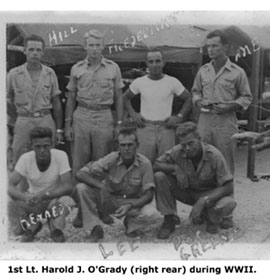
dad2We’d hear the tales secondhand (none of the dads I knew bragged to kids about his service, so the kids bragged for them). This one was at Omaha Beach, that one at the Battle of the Bulge; this one got shot down in a B-29 after bombing Tokyo, that one flew unarmed Gooney Birds out of New Guinea.

It all sounded really cool, especially while consuming a steady diet of war movies at the base theater, like “The Longest Day,” “The Dirty Dozen,” or “PT 109.” And then we got a little older, and a little smarter, and we came to realize that going to war involved a strong probability of getting one’s arse shot off.

We realized that we never got to hear kids tell about their dads who didn’t make it back, because those kids died unborn with their would-be fathers, figments of an unrealized imagination. And we didn’t get to hear about the men who returned from war damaged in body, mind or spirit, or meet them; not until our own war, Vietnam, came along.

Books like “All Quiet on the Western Front” took on new meaning. And there were others, like “Dispatches,” by Michael Herr; “A Rumor of War,” by Philip Caputo; and “Everything We Had,” by Al Santoli.

In “Narrow Road to the Interior,” Japanese poet Matsuo Bashō (1644-94), following a visit to the ruins of Yasushira — and riffing off a line from the Chinese master Tu Fu about how war had left “the whole country devastated,” a place where “only mountains and rivers remain” — wrote:

Summer grasses:
all that remains of great soldiers’
imperial dreams

In “The Poetry of Zen,” co-author Sam Hamill calls this poem “a brilliant indictment of the stupidity and cruelty of war,” one that reminds us how little we have learned over the millennia. How does one say “Thank you for your service” to the grass?

By seeing to it that subsequent generations get to spend as much time as is humanly possible enjoying the sunny side of it, I suppose.

Peace to those to served, and especially to those who never came home.