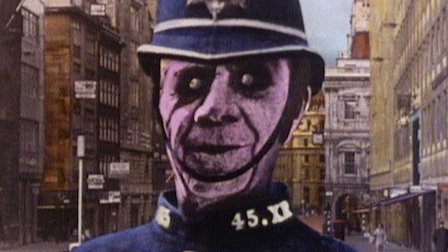
Fortune-telling, chats, and algorithms

This sunset actually happened. It was not predictive of anything other than the sun setting.

I was wandering idly along the trashy shoulders of the Infobahn this morning, trying to not step in or trip over any particularly toxic bits of debris, when I noticed a newsletter from veteran scribe James Fallows that had gone overlooked in my in-box.

In it, Fallows proposes that cash-poor news organizations invest their limited resources in what’s actually happening now in politics instead of what might happen, “which the reporters can’t know when they’re writing the stories, and which readers will eventually find out anyway.”

For readers, he cites three types of stories that suggest you’ve been lured out of the newsroom and into the fortune-teller’s tent:

  • A story based on polls, which are manufactured “news” for those sponsoring them but only shakily connected to reality;
  • A story based on framing any development in terms of “how this will play” politically, which is the reporter’s guess about what voters will think, and;
  • A story on which candidate has “momentum” or traction” based on the vibe at events.

Predictive stories like these, Fallows says, “are like stock-market picks or the point spread on football games, but with less consequence for being wrong. And if news organizations had limitless time, space, and budgets, you could perhaps say, “What’s the harm?”

Alas, stories like these are also easy and cheap. Any half-bright wordslinger with Internet access and a comfortable chair can shower dubious wisdom upon you from a considerable height, like a buzzard with the runs. Be deeply suspicious of anything slugged “Commentary,” “Analysis,” or “Opinion.” Also, items headlined “Five takeaways from [insert actual news event here].”

However, sometimes the “takeaways” story can contain an actual glimmer of enlightenment. In one such at The New York Times this morning we have the concession — in this case, the fifth of five takeaways — that “Iowa doesn’t mean much for the fall.” This, after wall-to-wall coverage for Christ only knows how long of a non-event that saw 15 percent of registered Republicans (about 110,000 people) turn out to caucus. Thanks for sharing, Lisa, Maggie, and Jonathan.

For my part, I tip my fedora to Fallows and add a prescription of my own: Just because the Internet is endless doesn’t mean a story should be.

I read two things this morning that I knew would piss me off, mostly because I like being pissed off in the morning. That, and two cups of strong black coffee, are the jumper cables that get my heart started.

The first, from The New York Times Magazine, headlined “How Group Chats Rule the World,” was tagged “12 MIN READ.” I won’t link to it. Just because I enjoy spitting coffee into my keyboard and screaming “What the actual fuck?” doesn’t mean everyone does. We must consider the children. Also, cats, houseplants, and the homeowners’ association.

The second, from The Guardian, didn’t give me an ETA. But it was slugged, “The Long Read,” so I knew I was in for it. Headlined, “The tyranny of the algorithm: why every coffee shop looks the same,” this 4,200-word slog should’ve been headlined “I spend far too much time in coffee shops.”

I won’t link to that one, either. If that’s your idea of a good read you can chase it down yourself, or buy Kyle Chayka’s book, “Filterworld: How Algorithms Flattened Culture,” from which it was adapted.

But can you lift this mighty tome to read it? There may not be enough coffee in the shop. Or the world.

GFYS

The managing editor would like a word.

As a rootless former newspaperman turned blogger I have the unfortunate habit of doomscrolling the Innertubes as though I were still slumped at a copy desk, trolling for eye-grabbers to dump onto the front page.

This was bad enough when the choices were limited to The Associated Press, a smattering of lesser wire services, and the local sots slobbering into their keyboards after an early dinner of budget lager with a side of Marlboro.

Today the well is bottomless, and anyone with a cheap phone can haul up a bucket of something better left unseen and unremarked upon.

But now and then something of another quality entirely turns up, and the search proves worthwhile.

Case in point: At The Atlantic, Anne Applebaum writes that Ukrainians, like the Irish, have long been the subjects of other empires and have evolved something of a go-fuck-yourself attitude as regards authority, duly constituted or otherwise.

And according to The Guardian, that’s exactly what a baker’s dozen of border guards on Snake Island told the Russian navy when it came calling and ordered their surrender.

They died for their impertinence. But man, what a way to go.

Take it to the bridge

Sonny Rollins doesn’t play anymore because he can’t.

But there was a time when he stepped out of the jazz spotlight voluntarily, because he felt he wasn’t living up to his own musical expectations.

Rollins spent the next two years playing to the sky from the Williamsburg Bridge, spanning the East River in New York City. And 60 years ago this month, he returned to the studio for a session that led to his comeback album, “The Bridge.”

“What made me withdraw and go to the bridge was how I felt about my own playing,” says Rollins, now 91. “I knew I was dissatisfied.”

John Fordham of The Guardian has the story here.

Wot’s all this then?

Officer Friendly is here to rifle through your Google user data.

“Probable cause? We ain’t got no probable cause. We don’t need no probable cause. I don’t have to show you any steenkeeng probable cause!”

Zachary McCoy was Just Riding Along™, not unlike thee and me, when the John Laws came calling for his Google user data. According to The Guardian:

McCoy later found out the request was part of an investigation into the burglary of a nearby home the year before. The evidence that cast him as a suspect was his location during his bike ride – information the police obtained from Google through what is called a geofence warrant. For simply being in the wrong place at the wrong time, McCoy was being investigated and, as a result, his Google data was at risk of being handed over to the police.

No thank you, please, and fuck right off with that noise, Officer Friendly. How’s the song go? “Let me ride through the wide open country that I love / Don’t geofence me in.”

This can’t go on forever

Back in August Friend of the Blog Carl Duelmann asked: “Do you ever listen to Jason Isbell? He might be too country for you but he is one of the best songwriters I’ve ever heard.”

The Guardian’s David Taylor caught up with the Grammy-winning Nashville musician and former Drive-By Trucker ahead of a gig today in Noo Yawk City and the interview is well worth your time.

Isbell is critical of our current “administration” without being shrill, and he doesn’t waste a lot of thought on the “shut up and sing” crowd. (Just how the hell are you supposed to shut up and sing at the same time, anyway?)

Isbell doesn’t even try, though he does prefer to let his music do the heavy lifting.

Asked if he intended to get political during an upcoming six-night run at the Ryman Auditorium, Isbell replied: “Well, my job is to write songs and if I feel like it is an emergency and I feel like I need to say something political between the songs, then I’ll do that.

“But normally, if it doesn’t rhyme and it doesn’t involve me introducing my band, I’m not gonna say it, because I’m not a standup comedian, I’m not a lecturer and I don’t give TED talks. If there’s not a melody and some rhyme there then you probably won’t hear it from me. But I think the songs speak enough.”

While we’re on the topic of songs that speak enough, FOTB Pat O’B. forwards an NPR note about a music video for John Prine’s song “Summer’s End,” the centerpiece to his latest release, “The Tree of Forgiveness.”

It must take a lot of practice to sing a song like this without bursting into tears.