This was one of the albums I used to drive my parents insane, along with Iron Butterfly’s “In-a-Gadda-Da-Vida” and Led Zeppelin’s and Steppenwolf’s respective self-titled debuts. I’m surprised the family Telefunken stereo hi-fi console survived the prolonged and vicious beating I gave it.
Later, of course, I mellowed into the quiet flower child you’ve all come to know and love.
Before the feds drove protesters from Lafayette Square in June, according to an Army National Guard major who was there, the Defense Department’s top military police officer in the Washington region emailed officers in the D.C. National Guard to ask whether the unit had “a microwave-like weapon called the Active Denial System, which was designed by the military to make people feel like their skin is burning when in range of its invisible rays.”
According to The Washington Post:
The technology, also called a “heat ray,” was developed to disperse large crowds in the early 2000s but was shelved amid concerns about its effectiveness, safety and the ethics of using it on human beings.
Pentagon officials were reluctant to use the device in Iraq. In late 2018, The New York Times reported, the Trump administration had weighed using the device on migrants at the U.S.-Mexico border — an idea shot down by Kirstjen Nielsen, then the Homeland Security secretary, citing humanitarian concerns.
But in the email, on which DeMarco was copied, the lead military police officer in the National Capital Region wrote the ADS device “can provide our troops a capacity they currently do not have, the ability to reach out and engage potential adversaries at distances well beyond small arms range, and in a safe, effective, and nonlethal manner.”
Federal police ultimately were unable to obtain a heat ray device — or an LRAD — during the early days of protests in D.C., according to the Defense Department official.
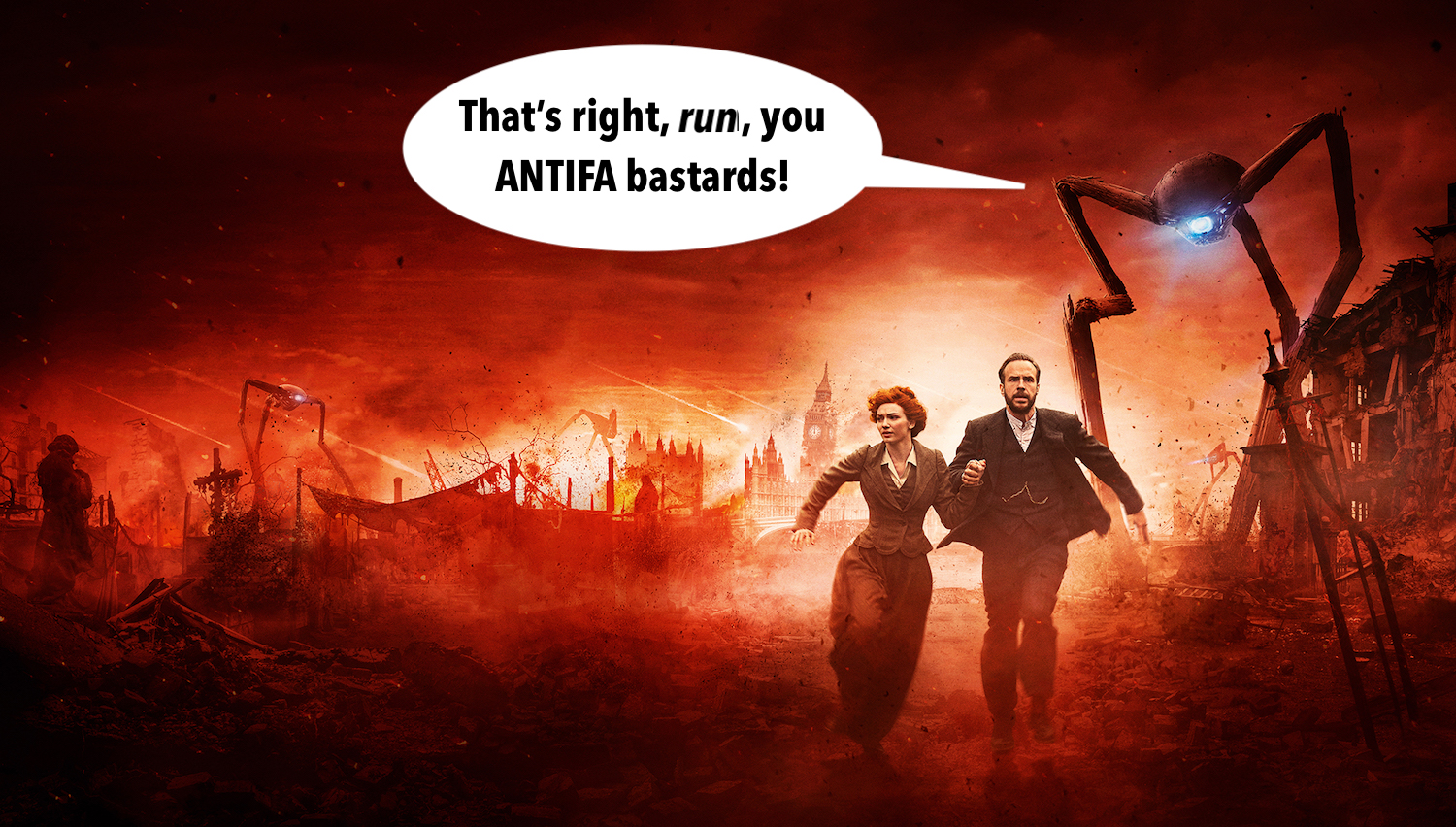
“During the early days,” hey? Don’t forget to wear your Alcoa cammies when you’re out smashing the state, boys and girls. And spray yourself with a little olive oil, maybe stuff a few onions, taters, and carrots into your undies. The “Martians” are going to need a lunch break at some point.
I’ve somehow gotten myself on Patagonia’s mailing list, probably through buying stuff from them — and good stuff it is, too — and they sent me a note the other day linking to a piece by Mike Ferrentino.
Yes, that Mike Ferrentino, he of the Grimy Handshake. His stuff is even better than Patagonia’s.
Anyway, Mike wrote about wilderness, and why he no longer poaches trails there, and it’s worth your attention.
In my mind Oregon remains a damp, dreary place where I spent a lot of time indoors, either working, hammered, or both. The only place I never owned a bicycle. Occasionally I walked, but only if I was too drunk to drive.
All my people were back in Colorado or in California, where I spent some months trapped in a Simon and Garfunkel song:
Asking only workman’s wages I come looking for a job
But I get no offers
When an offer finally came the job was in Corvallis, in Oregon’s Mid-Willamette Valley. It was good to be working again instead of sponging off friends and family, but the baggage I brought with me held more than T-shirts and jeans.
I made some friends, most of them on the job, your typical newsdog. And we had some laughs, catching Andy Irvine and Paul Brady in concert at a tiny venue downtown, or motoring to Portland to hear Johnny and the Distractions.
Occasionally I’d meet my old buddy Merrill in Seattle, a change of scenery for us both. He was trapped at a newspaper in eastern Washington, which was another sort of hell altogether.
But I spent a lot more time slouched in Squirrel’s Tavern or in my tiny apartment, huddled with my dogs next to the wood stove, or taking aimless solo drives out to the coast, places like Newport or Depoe Bay.
Mostly I remember rain, damp, the kind of cold that a Colorado winter doesn’t prepare you for, the sort that settles right down into your bones and makes itself at home. I got fat in self-defense, trying to make my bones harder to find.
If you’d told me the place would burn I’d have laughed out loud and poured another one. But I don’t drink anymore, and I’m not laughing, either.

 Mad Blog Media