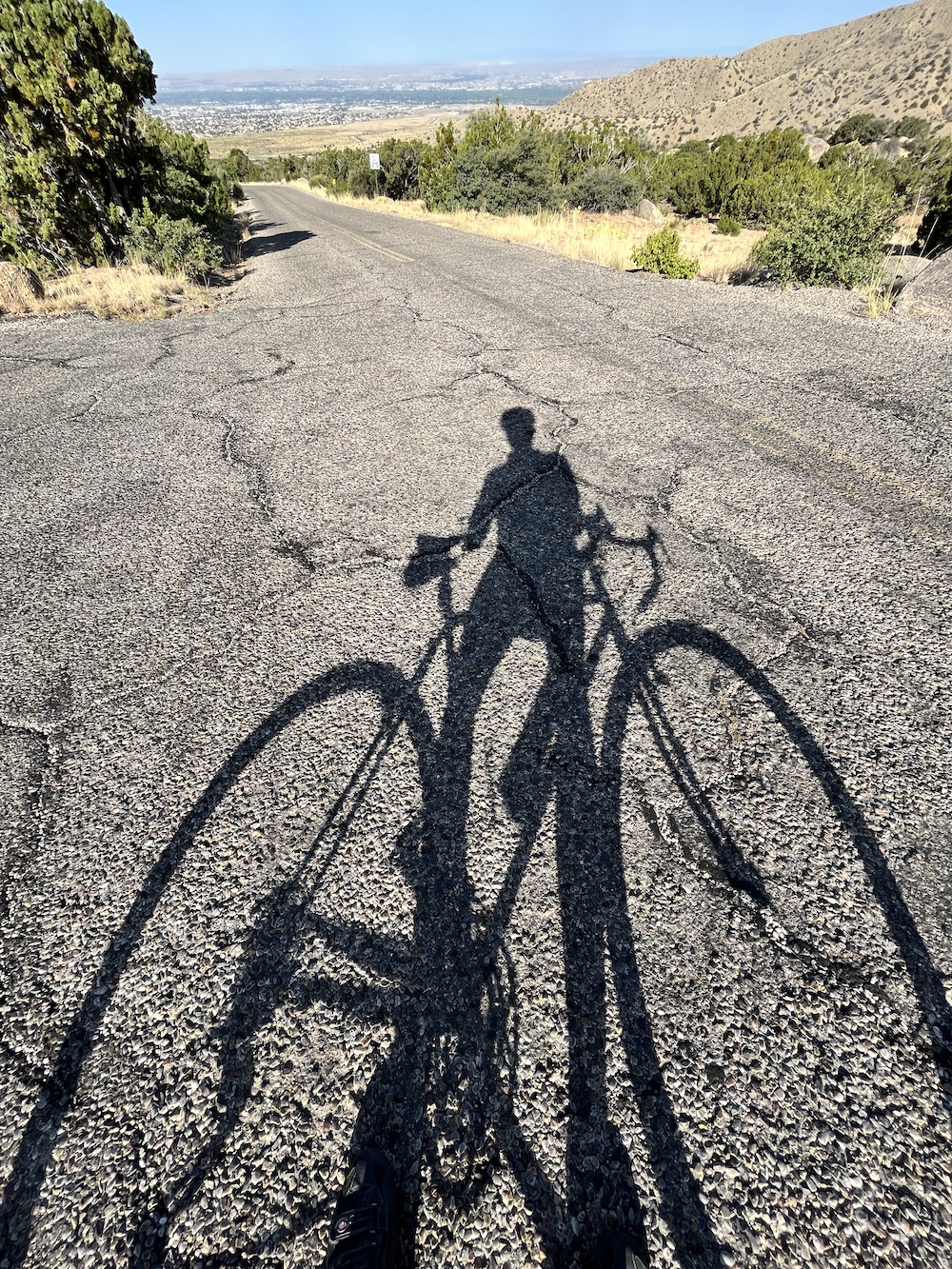
You can’t go wrong with a good T.S. Eliot reference.
Hunter S. Thompson, whose larger-than-life shadow often fell between the idea and the reality, was fond of quoting “The Hollow Men.”
Francis Ford Coppola gave a strong nod to that one as well, along with “The Love Song of J. Alfred Prufrock,” in “Apocalypse Now.”
Crash Test Dummies likewise put “Prufrock” to work, in “Afternoons & Coffeespoons.”
Lately, of course, the news is distinctly more William Butler Yeatsish, with things falling apart, mere anarchy loosed on the world, and the worst filled with passionate intensity.
It all makes me wish I’d paid more (which is to say “some”) attention during my high-school English classes. And that some other, more prominent slackers had gotten more out of history and civics.
 Mad Blog Media
For some reason, can’t put my finger on it, this post and references remind me of the song ”The Boxer” by Simon and Garfunkle.
https://www.lyrics.com/lyric/32451700/The+Boxer
One of my all-time faves, Paddy me boyo. And what a strong start:
Well….there’s this
“ The sun was like a huge fifty-cent piece that someone had poured kerosene on and then had lit with a match and said, “Here, hold this while I go get a newspaper,” and put the coin in my hand, but never came back.”
― Richard Brautigan, Trout Fishing in America
Brautigan. There’s a name nobody’s pitched at me in a long, long time, since I was in college, mebbe.
Speaking of poetry and suns, how about a little Tom Waits?
I read Trout Fishing in America the year between undergrad and grad school when I worked graveyard shift for university security. Not sure I ever figured out what it meant but maybe that is because it was two in the morning.
Don’t forget The Waste Land. Read that in high school and thought I understood it. Recently took an adult returning education short course, or whatever they call it, studying Waste Land and realized I was in over my head as an eighteen year old. Or for that matter, as a 68 year old.
I don’t understand poetry. It obfuscates where journalism reveals (or should, when it’s sober and unbought by vulture capitalists).
But I like to read it anyway, mostly for wordplay and imagery.
One of my favorites comes from “Braided Creek: A Conversation in Poetry,” by Ted Kooser and Jim Harrison. The individual poems are uncredited and it’s something of a challenge to decide who wrote what.
I’ll say that poem is a lot more straightforward than much of Eliot, but still makes you think.
Sometimes a cat is just a cat and there is no way in hell he’s going to get his tail caught again in that goddamned door.
You can see why the Zen Buddhists liked poetry so much. You can really get yourself a good brain cramp turning these things over and over in your head.
Check out “Cold Mountain Poems,” credited to Han Shan and Shih Te, who are likely composites of various Zen weirdos messing with people’s minds over the centuries. I have the J.P. Seaton translation and maybe Gary Snyder’s as well, though I can’t find that one.
Lately when I think of Shelley’s “Ozymandias” a certain orange fellow comes to mind.
“Look on my Works, ye Mighty, and despair!” Yeah, right. You have the right to remain silent. And please do so.
My dog has no nose
How does it smell
Awful
“There can be no god when there is nothing but god.”. Stephen Mitchell
Sorry. Its Friday.